Bulk Pet Bag Orders: Consolidating Mixed Styles
A 40ft high-cube container gives roughly 60-68 cubic metres of usable space, which is typically 700-1,100 pet bag cartons depending on construction. Four to six styles across two or three colourways is the practical ceiling: it fills the container while keeping each style at or above a workable per-colourway minimum.
Consolidation is the point at which a range plan meets a shipping container, and it is where most first programmes discover that the two were never reconciled. A buyer wants eight styles in three colourways; the arithmetic wants four styles in two. The gap is not a supplier's rigidity, it is the combination of a per-colourway minimum, a carton cubage that does not compress, and a freight cost that is charged by volume rather than by ambition. Understanding which of those three is binding tells a buyer where the flexibility actually is, and in most programmes it is in the component list rather than in the style count. Our production team builds mixed-style runs against MOQ 500 pieces per colourway, with samples in 6-10 working days, bulk production 35-50 days after approval and release at AQL 2.5, and the reason those numbers matter to consolidation is that the per-colourway figure multiplies: three colourways of one style is three minimum commitments, not one. The four decisions that follow are how many styles the container will carry, which components can be shared across them, how the run is sequenced on the line, and how inspection sampling is applied across a mixed carton population.
Most buyers source pet bags from china through a mix of catalogue review and sample rounds, and Market & Business Strategy decisions sit in the middle of that sequence. Pet bag wholesale suppliers who publish a price list with the fabric spec attached save a full round of email, and bulk pet bag orders then move on carton weight rather than on unit count.
Consolidation Is a Volume Problem Wearing a Variety Problem's Clothes
Buyers experience consolidation as a frustration: they want a range and they are told they cannot have it in one shipment. Anyone who has tried to source pet bags from China with a full range plan in a single container has met this, and it is worth understanding before arguing about it. Suppliers experience it as arithmetic. Both are describing the same constraint from different sides, and the constraint is that a per-colourway minimum multiplied across styles and colours produces a total that either fills a container or leaves it half empty, with no third option.
Run the multiplication once and the problem becomes visible. Four styles, three colourways each, at 500 pieces per colourway is 6,000 pieces before any size banding. Add two size bands to the two styles that need them and the same plan is closer to 9,000. At a typical packed carton count of eight to twelve pieces depending on construction, that is somewhere near 900 cartons, which is at the upper end of what a 40ft high-cube will take of a bulky, low-density article. The buyer did not ask for anything unreasonable; the multiplication did the work. Pet bag manufacturers in China quote the same minimums to everyone, and the plan is what turns those minimums into a container.
The useful reframe is that consolidation is a volume decision expressed as a variety decision, and it is the reason pet bag wholesale vendors ask about the range plan before they ask about the quantity. A buyer who wants more styles has to fund them with volume per style, and a buyer who cannot fund them has to reduce the variety, share components, or accept a second shipment. Those are the only three levers and none of them are negotiable with a supplier, because none of them belong to the supplier.
This is also why the conversation should happen at range-planning stage rather than at booking stage. By the time a buyer is asking whether eight styles fit in one container, the samples have been approved and the styles are fixed; asking earlier, when the range was four styles with two optional ones, would have made the question a choice rather than a constraint.
One further point on freight economics. Pet bags are bulky relative to their weight, so sea freight is charged effectively by volume and air freight by volumetric weight. A consolidation decision that looks generous by carton count can be expensive by cubic metre, and the two numbers should be tracked together.
Consolidation is arithmetic wearing a marketing decision's clothing, and it should be done on paper before it is done in a container.
The Multiplier: Styles, Colourways and Size Bands
Three variables multiply and buyers usually model only the first. Understanding all three is what turns a rejected range plan into a revised one that ships.
Styles are the visible variable and the least problematic. A style is a distinct construction with its own pattern, its own Bill of Materials and its own line setup. Four styles means four setups, and the setup cost is amortised over the units of that style only.
Colourways are the expensive variable, because each colourway is a material lot. Three colourways of one style is three fabric purchases, three dye considerations and, in practice, three positions in the cutting schedule. This is why the per-colourway minimum exists and why it does not bend much: below it, the supplier is buying a partial lot at full lot economics.
Size bands are the variable buyers forget entirely. A carrier offered in small, medium and large is three patterns and three cutting nests, and while they share the fabric lot, they do not share the cutting marker or the hardware set. Two styles with three size bands each carry more production complexity than four styles in one size, and the former is routinely planned as though it were the latter.
| Range plan | Styles | Colourways each | Size bands | Total pieces at minimum |
|---|---|---|---|---|
| Focused | 2 | 2 | 1 | 2,000 |
| Balanced | 4 | 2 | 1 | 4,000 |
| Broad | 4 | 3 | 1 | 6,000 |
| Broad with sizing | 4 | 3 | 2 | 12,000 |
| Ambitious | 8 | 3 | 2 | 24,000 |
The last two rows are where first programmes quietly break. A buyer who wants 24,000 pieces is welcome to order them, but that is not a container, it is three or four, and the cash cycle of a first order rarely supports it. The plan that fits is usually the balanced row, which is two-thirds of the variety and a sixth of the commitment, and it is the plan most pet bag wholesale suppliers would design if asked rather than presented.
There is a legitimate way to get closer to the broad plan: accept a higher unit cost on the low-volume styles. A supplier can often make 300 pieces of a fourth style at a surcharge, because the surcharge covers the lot and setup economics. Whether that is worth paying is a decision about the range's role, and a buyer should make it knowingly rather than assuming the minimum is a wall. The pet bag moq is a cost, not a refusal, and pet bag manufacturers in China will usually price the shortfall if asked directly.
The pet bag moq is a per-colourway figure, and the range plan is where it multiplies into a number the buyer has to fund. Where bulk pet bag orders carry several colourways per style, that multiplication is the whole consolidation problem.

Carton Cubage and Container Geometry: The Hard Constraint
Everything else in consolidation is negotiable; container geometry is not. A 40ft high-cube container offers a nominal internal volume in the mid-seventies of cubic metres and a usable figure nearer 60-68 once packing inefficiency, carton shapes and the need to leave the door area workable are accounted for. That usable figure is the real budget.
Carton cubage is the unit of that budget and it is specific to construction. A soft-sided carrier that folds flat packs efficiently; the same article with a semi-rigid base packs worse; a wheeled format with a handle assembly packs worst of all. Buyers should ask for the carton dimensions and pieces per carton for each style at specification stage, because those two numbers determine the whole plan and they are rarely volunteered. The method for computing them is set out under ordering bulk pet carriers by carton volume.
| Container | Usable cubic metres | Typical cartons of soft carriers | Styles feasible at minimum | Notes |
|---|---|---|---|---|
| 20ft standard | 25-28 | 280-360 | 1-2 | Rarely economic for this category |
| 40ft standard | 54-58 | 620-780 | 3-4 | Weight usually not binding |
| 40ft high-cube | 60-68 | 700-1,100 | 4-6 | Default for mixed-style runs |
| Less-than-container load | Shared | By allocation | Any | Higher per-unit freight, flexible |
Weight is almost never the binding constraint on soft pet bags, which surprises buyers who are used to dense cargo. Volume binds first, and a container that is full by volume is typically at a fraction of its payload by weight. The exception is a range with rigid shells or wheeled frames, where weight can start to matter in a high-cube.
Less-than-container load is the option buyers forget. It costs more per cubic metre and involves handling at both ends, but for a first order it converts a container constraint into a budget question, and it lets a buyer test four styles without funding four minimums at once. The right comparison is not freight per unit against the full container, it is freight per unit plus the carrying cost of the extra inventory.
Air consolidation is a different instrument entirely and should be reserved for top-ups. Volumetric weight rules applied by the International Air Transport Association charge on the greater of actual and volumetric weight, and a bulky pet bag is almost always charged volumetrically, which makes air several times the sea cost per unit on a full order.
Container geometry is the one number in a consolidation plan that no negotiation moves.
Shared Components: The Lever That Actually Buys Variety
If a buyer wants more styles without more volume per style, the answer is almost always in the component list. Two styles that share a shell fabric, a lining, a zipper specification and a hardware finish are, from the material and scheduling point of view, one purchase and two patterns. That is where variety becomes affordable.
The mechanism is lot consolidation. If four styles all use the same 600D polyester in the same three colours, the supplier is buying three fabric lots rather than twelve, and each lot is large enough to be bought at mill pricing, a point covered in more depth in the note on fabric grade selection for 600D carriers. The saving is not a courtesy, it is the arithmetic of a larger purchase, and it shows up directly in the pet bag wholesale price quoted for each style. Buyers who source pet bags from China on a shared component platform see the same effect on every style in the range.
Hardware is the second shared component and the one with the most leverage. A single zipper specification, one buckle family and one D-ring finish across a range reduce the number of purchased items dramatically and, more importantly, reduce the number of things that can be wrong. A range with one hardware family is easier to inspect, easier to repair and easier to re-order.
Shared components also compress the line schedule. Two styles using the same fabric and hardware can run back to back with a short changeover, because the material presentation at the line does not change. Two styles with different fabrics and different hardware need a fuller changeover, and changeover time is capacity that is not making bags.
The discipline is to design the range around a component platform rather than around individual styles. Decide the fabric, the hardware finish, the webbing and the labelling approach once, then vary the pattern, the ventilation layout and the size. Buyers who design this way get four styles at the cost of roughly two and a half.
Variety is bought with shared components, not with volume, and the component list is decided at design stage rather than at order stage.
Scheduling a Multi-Style Run on One Line Plan
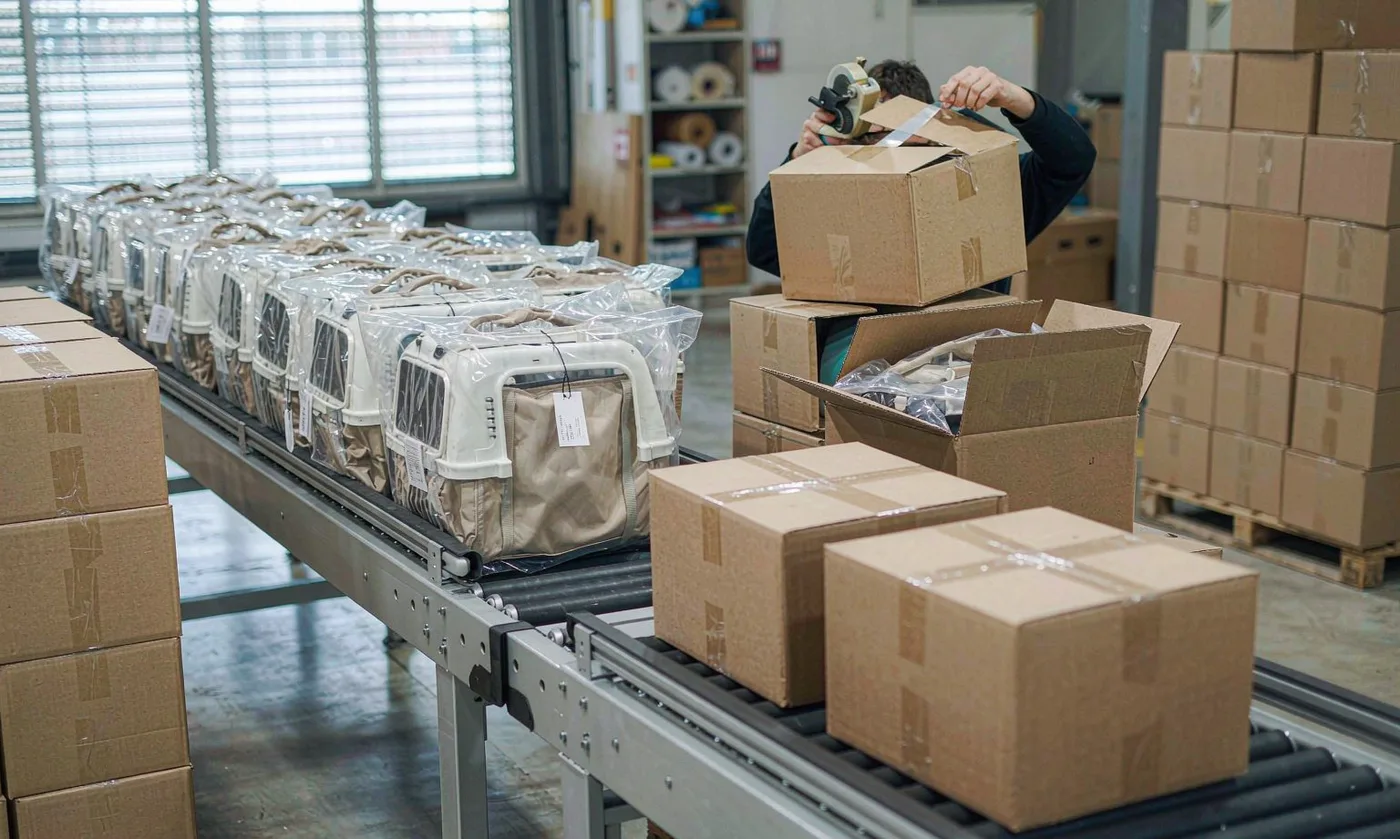
A mixed-style order is a scheduling problem before it is a production problem, and the schedule is where consolidation either succeeds or quietly produces a partial shipment. Four key decisions govern it.
The first is sequence. Styles should run in the order that minimises changeover, which usually means grouped by fabric and then by hardware, with the largest volume style first. Running the largest first also means that if the schedule slips, the slip lands on the smallest style rather than on the one that matters most to the season.
The second is whether styles run concurrently or consecutively. On a multi-line site, two styles can run in parallel and finish together; on a single-line plan they run in sequence and finish in sequence. Buyers should ask which applies, because the answer determines whether a late start on style four delays the whole container or only part of it.
The third is the partial-shipment question, and it should be answered before production rather than during it. If one style is going to be short, does the buyer want the rest shipped and the balance followed, or does the buyer want the container held complete? Both are legitimate, and the cost difference is real: a held container accumulates storage, while a split shipment pays two freight minimums.
The fourth is the re-run decision. Where a style misses its quantity by a small margin, the choice is between making the balance in a short re-run, which carries another setup, or shipping short and topping up next season. The economics usually favour topping up, because a 50-piece re-run carries the setup cost of a full run.
Ask for a line plan with dates per style rather than one date for the order, since bulk pet bag orders are only as fast as the style on the critical path. A single completion date for four styles is a summary that hides the thing a buyer most needs to see, which is which style is on the critical path, and the same logic is set out in pet bag production time and bulk lead.
A mixed run is one container and several schedules; only the per-style plan shows where the risk is.
Inspection Sampling Across a Mixed Carton Population
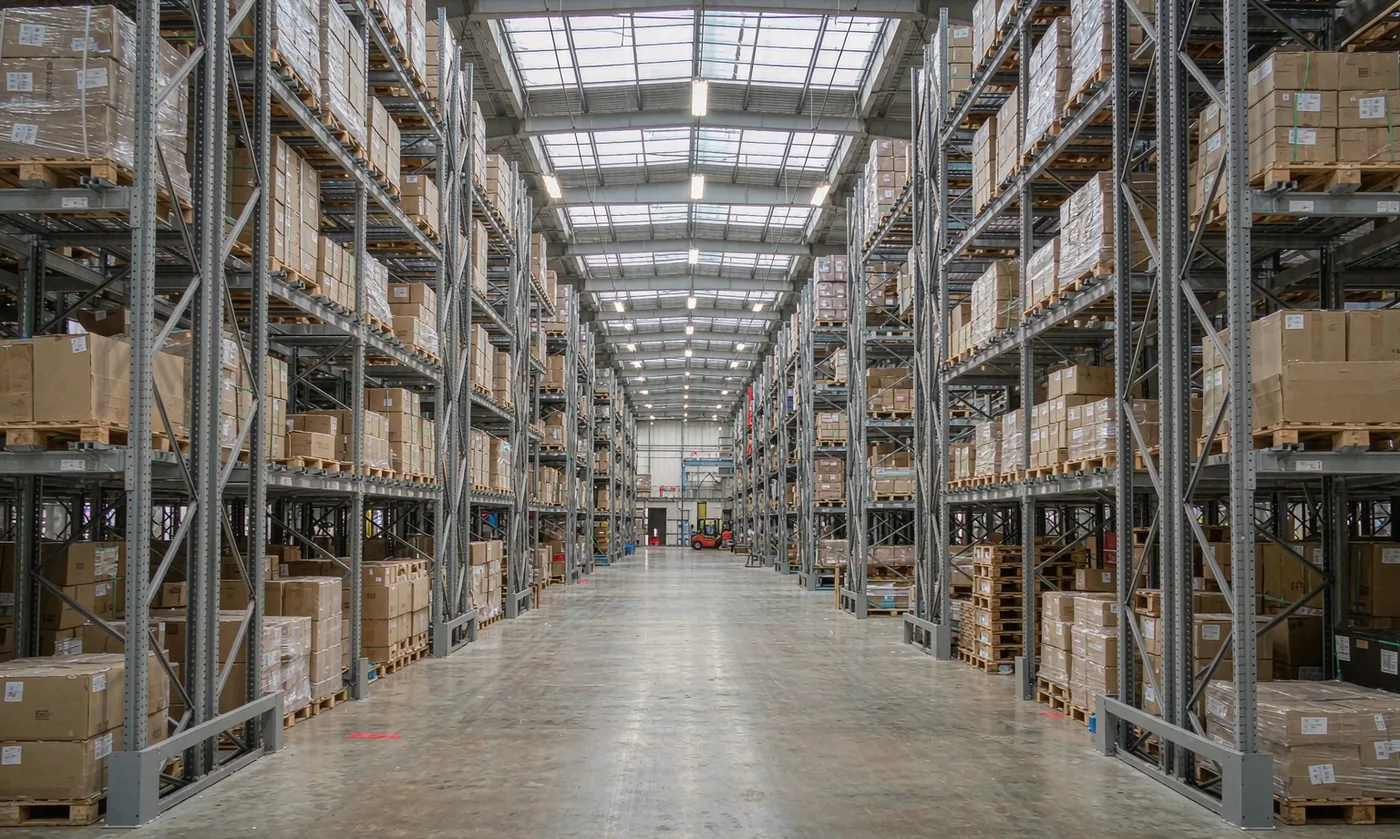
Inspection on a mixed-style order is where consolidation produces a genuine complication, and it is often handled badly. The principle of a sampling plan is that a sample drawn at random is representative of the population it is drawn from. Four styles in one container are not one population; they are four, and treating them as one produces a result that is not valid for any of them.
The correct approach is stratified sampling: draw the sample per style rather than across the container, using the carton count for each style as the basis. If style A is 40% of the cartons and style D is 10%, the sample should reflect that, and each style should have enough cartons opened for the result to mean something. A plan that opens two cartons of a small style has not inspected that style.
Acceptance limits apply per style as well. Under a standard such as ISO 2859-1, the sample size and the accept and reject numbers depend on lot size, and a mixed container should be treated as a set of lots. Agreeing this before the inspection is what prevents the argument that follows when a buyer rejects a container and a supplier points out that the sample was not style-representative.
Defects also need attributing per style. A hardware defect concentrated in one style is a component problem specific to that style, and it should be dispositioned that way, not averaged across the container. Averaging hides it, and hiding it means the same defect appears in the re-order.
Mixed packing creates one more risk worth naming: carton mix errors. Where several styles share a container, the most common failure is not a defective bag, it is a carton marked as one style containing another, or a master carton with a mixed inner pack. Check carton markings against contents at a higher rate than the appearance inspection requires, because this error is invisible in a visual check of a single unit and very visible to a customer unpacking a pallet.
Sample per style, not per container; a mixed population inspected as one produces a number nobody can act on.
When Consolidation Stops Paying
Consolidation has a clear economic limit and buyers should know where it is, because past that point the variety is being paid for twice: once in unit cost and once in risk.
| Styles in the run | Units per style | Total pieces | Indicative unit cost index | Schedule risk |
|---|---|---|---|---|
| 2 | 2,000 | 4,000 | 100 | Low |
| 4 | 1,000 | 4,000 | 106 | Low to moderate |
| 6 | 670 | 4,000 | 114 | Moderate |
| 8 | 500 | 4,000 | 124 | Moderate to high |
| 12 | 335 | 4,000 | 140 | High |
The pattern in that table is the whole argument. Total volume is constant at 4,000 pieces; only the distribution changes, and the unit cost rises by roughly 40% between two styles and twelve. That increase is not supplier margin, it is setup amortisation and material lot economics, and it is the same arithmetic whether the buyer is working with one supplier or comparing several.
The second cost is schedule risk, which does not appear in a price at all. Every additional style is another chance for a component to be late, a pattern to need correction, or a style to fail inspection and hold the container. Eight styles at minimum volume carry four times the failure surface of two styles, and the container ships only when all eight are right.
The third is inventory risk after arrival. Twelve styles at 335 pieces each sell out unevenly, and the buyer ends up with eleven slow lines and one stockout long before the re-order can arrive. A focused range re-orders cleanly; a broad one leaves working capital in the slow movers, and the pet bag wholesale price penalty for the broader range is paid again on every re-order.
The practical rule is that a style should justify its place with a volume that clears the minimum with margin, not exactly at it. Four styles at 1,000 each is a healthier programme than eight at 500, and it costs less per unit into the bargain.
Consolidation pays up to the point where variety stops being free, and that point is visible in the unit cost index long before it is visible in the warehouse.
A Consolidation Worksheet Worth Reusing Every Season
The output of all this should be one page, built at range-planning stage and updated before each order. It has eight fields and takes about an hour to complete the first time and twenty minutes thereafter.
List each style with its carton dimensions, pieces per carton, colourways, size bands and target units. Compute total cartons and total cubic metres, and compare against the usable figure for the container you intend to book. Compute total pieces and compare against the per-colourway minimum multiplied out. Record which components are shared across which styles. Note the line sequence you have agreed and the completion date per style. Note the inspection plan per style with sample sizes. Record the partial-shipment decision. And record the re-order trigger per style.
Two derived numbers make the worksheet useful rather than descriptive. The first is cost per style, meaning the total units divided by the number of styles, which tells you immediately whether the range is focused. The second is cubic metres per style, which tells you whether the plan is volume-bound or piece-bound; a plan that is volume-bound should reduce bulky styles first, and one that is piece-bound should reduce colourways first.
Update it after the first shipment with actual carton dimensions and actual pieces per carton. Quoted figures are usually optimistic by a few percent, and a worksheet built on actual data stops producing containers that are 4% over.
Share it with the supplier. A one-page plan that states carton dimensions, sequence and inspection approach is the most efficient brief a production planner can receive, and it removes most of the clarification traffic that delays mixed runs. Pet bag wholesale suppliers respond to a clear plan with a clearer schedule, and pet bag wholesale vendors who receive carton dimensions and a sequence in the brief rarely need a second clarification round.
Finally, keep it across seasons. The worksheet is the record of what the range actually costs to ship, and it is the fastest way to answer next year's question about whether the eighth style is worth it.
Build the worksheet once and the consolidation argument stops being a negotiation and becomes a calculation.
Order and quality terms
- MOQ 500 pieces per colourway; samples in 6-10 working days
- Bulk production 35-50 days after approval; AQL 2.5 inspection standard
- T/T 30/70 terms, FOB Xiamen, full document set per shipment
People Also Ask
How many pet bag styles fit in one container?
Usually four to six at meaningful volume in a 40ft high-cube, which offers 60-68 usable cubic metres and roughly 700-1,100 cartons. More styles are possible but each additional one raises unit cost through setup and material lot economics.
What is a per-colourway minimum and why does it multiply?
It is the smallest fabric lot and line setup a style can be run at economically, commonly 500 pieces per colourway. Three colourways of one style is three commitments, so the range plan multiplies it by styles and colours.
Does weight or volume limit a pet bag container?
Volume almost always. Soft pet bags are bulky and light, so a container fills by cubic metre while carrying a fraction of its payload weight. Rigid shells and wheeled formats are the exception.
How do you inspect a container with mixed styles?
Use stratified sampling per style rather than one sample across the container, size the sample from each style's carton count, and attribute defects per style. Check carton markings against contents at a higher rate.
Is less-than-container load sensible for a first order?
Often yes. It costs more per cubic metre but converts a container constraint into a budget question, letting a buyer test four styles without funding four minimums at once. Compare it against the carrying cost of extra inventory.
How can I reduce the cost of a mixed-style order?
Share components. One shell fabric, one hardware family and one zipper specification across the range consolidate material lots and shorten line changeovers, which lowers the unit cost of every style in the run.
Frequently Asked Questions
What is the usable volume of a 40ft high-cube container?
Nominally in the mid-seventies of cubic metres, with a realistic planning figure of 60-68 once packing inefficiency, carton shape and door access are allowed for. Use the lower figure when planning a first shipment.
Why does adding a colourway cost more than adding units?
Because each colourway is a separate fabric lot and usually a separate position in the cutting schedule. Adding units to an existing colourway amortises the same lot over more pieces, which is why it is cheaper.
Do size bands count as separate styles for planning?
Not as styles, but they do add production complexity. Each size is a separate pattern and cutting nest, and two styles in three sizes can carry more complexity than four styles in one size.
What is volumetric weight and when does it matter?
It is the chargeable weight used in air freight, calculated from dimensions rather than scale weight and applied at the greater of the two. Bulky pet bags are almost always charged volumetrically, which is why air freight suits top-ups rather than full orders.
Should I allow a partial shipment if one style runs short?
Decide before production. Holding the container accumulates storage and delays the styles that are ready; splitting pays two freight minimums. The right answer depends on whether the short style is needed for the selling window.
How do I decide the running order of styles in a mixed run?
Group by fabric and hardware to minimise changeover, and run the largest style first so that any slip lands on a smaller style. Ask for a completion date per style rather than one date for the whole order.
What is the cost penalty for splitting volume across more styles?
At constant total volume, moving from two styles to eight can raise unit cost by roughly a quarter, and to twelve by around forty percent. The increase is setup amortisation and material lot economics rather than supplier margin.
How do shared components reduce cost in practice?
Four styles using one fabric in three colours means three fabric lots instead of twelve, purchased at mill pricing, plus shorter line changeovers because the material presentation at the line does not change.
What carton information should I request at specification stage?
Carton dimensions in centimetres, pieces per carton, carton weight, and the packing configuration, meaning flat-packed, assembled or nested. Those numbers determine the entire consolidation plan and are rarely volunteered.
Why is a mixed carton population harder to inspect?
Because a random sample drawn across the container is not representative of any individual style. Sampling must be stratified by style with sample sizes derived from each style's carton count, or the result is not valid for any of them.
What is the most common packing error in mixed containers?
Carton marking errors: a carton labelled as one style containing another, or a master carton with a mixed inner pack. It is invisible when checking a single unit and obvious to a customer unpacking a pallet.
How often should a consolidation worksheet be updated?
Before each order and again after the first shipment, when quoted carton dimensions and pieces per carton are replaced with actual figures. Quoted numbers are usually optimistic by a few percent, which is enough to overfill a container.
Talk to QUANZHOU JUNYUAN BAGS about a wholesale pet bag order: MOQ 500 pieces per colourway, samples in 6-10 working days, bulk production in 35-50 days under AQL 2.5 inspection.
Get a free quote Request a sample