Material & Technology programmes run at MOQ 500 pieces per colourway with samples in 6-10 working days and bulk production in 35-50 days. Fabric, coating, hardware and testing technology, specified to a standard rather than a trade name.
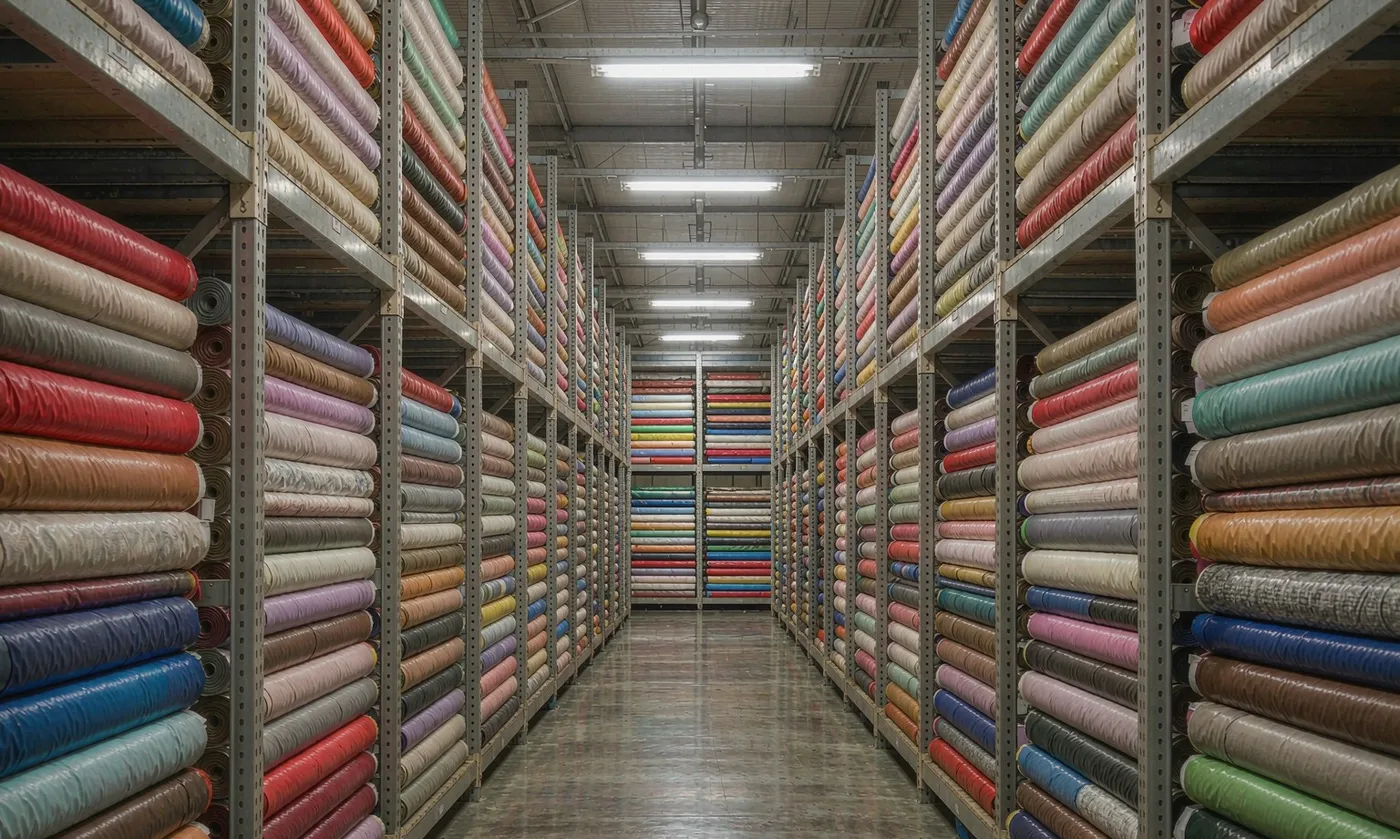
Specification baseline
| Item | Figure | Note |
|---|---|---|
| Shell fabric | 300D-900D polyester, nylon, canvas | Denier set by abrasion target |
| Coating | PU, PVC, TPU laminate | Hydrolysis resistance checked |
| Hardware | Named zipper and buckle models | Cycle and salt-spray tested |
| Testing | ISO 105 rub, AATCC wash, REACH, CPSIA | Report tied to production batch |
| Sustainability | Recycled PET, OEKO-TEX option | Documentation on request |
| MOQ | 500 pcs / colourway | Custom colourways need dyed minimums |
Specifying material to a standard
Trade names are the enemy of a repeatable programme. A "600D polyester" from two mills can differ by 15% in weight and by a full grade in colour fastness, which is why we specify measurable targets: abrasion cycles to a stated endpoint, hydrostatic head where water resistance is claimed, and rub fastness where the fabric meets a light interior or a retail shelf. The table below is the working library; every line has a tested alternative in case a dye lot or a freight budget moves.
| Material | Weight | Where it is used | Cost band | Typical programme |
|---|---|---|---|---|
| 300D polyester PU | 300 g/m² | Light shells and linings | Low | Entry price points |
| 600D polyester PU | 360 g/m² | General pet bag shells | Medium | Core wholesale programmes |
| 900D Oxford PVC | 480 g/m² | Abrasion-prone bases | Medium-high | Outdoor and working lines |
| 420D nylon ripstop | 320 g/m² | Packable lightweight styles | Medium-high | Travel and airline lines |
| TPU laminate | 520 g/m² | Wipe-clean, machine washable | High | Clinical and grooming channels |
| Recycled PET | 350-420 g/m² | Sustainability-led ranges | Medium-high | Retail chain programmes |
Testing, compliance and documentation
Testing exists to make claims defensible. Colour fastness runs to ISO 105 and AATCC methods, restricted substances are screened against REACH Annex XVII and California Proposition 65, and US-bound children's product classifications are checked against CPSIA limits. Reports are tied to the dye lot and hardware batch actually shipped rather than to a generic certificate, which is what a retail compliance reviewer will ask for.
Where a buyer sells into the EU, EN standards and CE-adjacent documentation are added to the file; where a buyer sells through a marketplace, the requirement is usually narrower but stricter - a single scannable barcode, correct country-of-origin marking and, for some categories, tracking labels applied in line.
Fabric specification: 300D, 600D and 900D polyester versus nylon, and PU, PVC or TPU coatings
Denier is the weight in grams of 9,000 metres of a single filament, so a higher number means a thicker filament and generally a heavier, more abrasion-resistant cloth. Two 600D fabrics from different mills can differ by 30 per cent in tear strength. The specification that protects a buyer is therefore a compound one: denier, weave, filament type, coating chemistry, coating weight, and the test method with a numeric limit for each property that matters.
| Fabric and coating | Hand and weight | Typical use | Main watch-outs |
|---|---|---|---|
| 300D polyester, PU coated | Light, soft, folds flat | Cat sling, small tote, fold-flat marketplace packs | Abrasion at base corners; low tear strength at strap roots |
| 600D polyester, PU or TPU | Workhorse balance | Backpack, tote, airline-style carrier | Ester-based PU hydrolysis in humid containers |
| 900D polyester, PVC backed | Stiff, heavy, holds shape | Wheeled base, structured carrier | Plasticiser migration, odour, low-temperature cracking |
| 420D or 840D nylon, TPU | High tensile per gram, premium hand | Premium backpack, weight-sensitive travel | Cost, dye-lot control, higher water pickup |
Polyester and nylon behave differently in service. Nylon 6.6 gives higher tensile and abrasion resistance per gram and a softer hand, but it absorbs more water, shows more dye-lot variation and costs more. Polyester holds colour better under light, resists ultraviolet degradation more effectively and is easier to match across repeat orders. For an own-brand programme that reorders a colourway season after season, polyester is usually the safer choice; for a premium travel product where weight matters, nylon earns its premium.
Coating chemistry is where most field failures originate. Ester-based polyurethane is inexpensive and tough, but it hydrolyses under heat and humidity and can flake or turn tacky after a long sea voyage in a closed container. Polyvinyl chloride is cheap and stiff, but plasticiser content creates odour and regulatory exposure under REACH restricted substance lists, and it stiffens in cold climates. Thermoplastic polyurethane resists hydrolysis best and stays flexible, at a higher material cost. Choose the coating for the route and the climate, not only for the price.
Test the fabric as a system. Colour fastness to light is assessed under the ISO 105 series, rubbing fastness under AATCC 8 or ISO 105-X12, and laundering under AATCC 61. Coating integrity is checked by hydrostatic head and by an accelerated ageing screen in high humidity. Where a retailer asks for restricted substance assurance, OEKO-TEX Standard 100 on the textile input is the fastest way to answer, and it complements rather than replaces the finished-product testing required for the destination market.
Write the requirement into the tech pack as a line item with a limit, for example: 600D polyester, PU coating, Martindale abrasion no fewer than 20,000 cycles, colour fastness to light no lower than grade 4 under the ISO 105 method, rubbing no lower than grade 4 under AATCC 8. A vague instruction such as heavy duty fabric is not enforceable and will be interpreted differently every season. Minimum order quantity is 500 pcs per colourway, first sample takes 6-10 working days, and bulk production runs 35-50 days once the fabric specification is frozen.
Hardware and trims: zipper back-drive, buckle fracture, webbing and mesh failure modes
Hardware failures account for a disproportionate share of warranty claims, because the fabric is rarely the part that breaks. A slider that walks open, a buckle that fractures in cold weather, or a mesh panel that snags under a claw will each generate a return. The discipline that prevents these failures is to specify each component by class and gauge, name the failure mode being guarded against, and attach a test method with a numeric acceptance limit.
| Component | Typical specification | Primary failure mode | Test method and gate |
|---|---|---|---|
| Coil zipper, gauge 5, 8 or 10 | Nylon or metal coil, auto-lock slider, branded puller | Slider back-drive under load; tape tear at the stop | Cycle test of 500 to 1,000 cycles plus back-drive load check; no slider creep at rated load |
| Side-release buckle | POM body, 25 or 38 mm | Brittle fracture in cold; gate flash cutting webbing | Tensile pull to failure plus cold drop at minus 10 degrees Celsius |
| Webbing | Polyester, 25, 38 or 50 mm | Edge fray; ultraviolet degradation; colour bleed | Tensile and abrasion test; light fastness under the ISO 105 series |
| Mesh panel | Polyester knit or PVC-coated grid | Claw snag; tear propagation from one hole | Snag resistance and tear strength; aperture checked against paw size |
| D-ring and adjuster | Welded steel or cast alloy | Weld crack; plating peel and rust | Salt spray per ASTM B117 for 24 to 48 hours plus pull test |
Zipper back-drive deserves specific attention because it is the most common single defect on pet carriers. Under vibration and cyclic load, a slider without a functioning lock walks backwards along the chain and opens the bag. Three mitigations work together: an auto-lock slider, a locking stitch or stop box at the top of the chain, and an inverted coil construction so the load pulls against the closed end. We run a cycle test on every new zipper specification.
Plated metal parts fail by corrosion rather than by overload. Salt spray testing per ASTM B117 for 24 to 48 hours is the standard screen. Where a programme ships to a humid or coastal market, specify the plating thickness and the undercoat in the tech pack.
Mesh selection is a design decision disguised as a trim decision. An aperture large enough to ventilate may also be large enough to catch a claw, and once a single thread is pulled the panel can unzip across the whole opening. Specify the aperture, the yarn denier and the snag resistance together, and remember that a coated grid mesh differs from a knitted mesh on the same frame. Where an airline-compliant carrier is required, the ventilation area on three sides is checked against the IATA Live Animals Regulations as part of the same review.
Every approved component gets a sealed gold sample and a written specification, and incoming lots are checked against that sample under ISO 9001 documented inspection. Finished shipments are inspected to AQL 2.5 pre-shipment under ISO 2859-1 sampling, with hardware-specific checks on zipper travel and buckle engagement. First sample takes 6-10 working days and bulk production runs 35-50 days, so hardware approval should be closed before the bulk window opens.
Structure and process: baseboards, stays, stitch density, binding and decoration yield
Two bags built from identical fabric and hardware can perform very differently, and the difference almost always lives in process variables: how the seams are built, how many stitches per inch, whether the edges are bound, and how the board is supported. These variables also drive unit cost, because they are mostly labour and cycle time rather than material. A buyer who understands this trade-off can spend money exactly where durability is needed and take cost out where it is not, instead of negotiating a blanket price cut that degrades the whole product.
| Process variable | Typical setting | Effect on cost | Effect on yield and field failure |
|---|---|---|---|
| Stitch density on load seams | 7 to 9 stitches per inch | Higher density raises cycle time | Too high perforates the coating; too low allows seam slippage |
| Seam construction | Bound and double-needle on load paths | Additional labour and thread | Prevents seam grin and seam slippage under load |
| Baseboard | 4 to 8 mm PP honeycomb or laminated EVA | Material plus freight weight | Controls deflection and permanent set |
| Perimeter stay | Aluminium or steel strip | Tooling and insertion labour | Holds the opening shape under load |
| Edge binding | 20 to 25 mm bias tape | Labour intensive | Prevents edge fray and water ingress |
| Decoration | Screen print, heat transfer or embroidery | Setup per colour, cycle time | Registration loss, needle holes in coated fabric |
Stitch density is the clearest example of a variable with an optimum rather than a direction. Below roughly seven stitches per inch, a load seam can slip and open under repeated stress. Above roughly nine, the needle perforates the coating closely enough to create a tear line, and cycle time rises without any durability gain. Specify stitch density together with needle size and thread count, because a fine needle with heavy thread cuts the yarn it should lock.
Baseboard and stay selection determine whether a structured carrier keeps its shape after a season. Our production team screens board constructions by loading to 1.5 times the rated weight for 24 hours and measuring permanent deflection, rejecting above 3 mm. A perimeter stay is what keeps a top opening from collapsing inward when the bag is lifted by a single handle, and it is the reason two carriers with the same board can feel completely different in the hand.
Binding and decoration carry the highest yield risk. Embroidery perforates a coated shell and can wick water into the laminate, so it belongs on panels rather than on load paths or on the base. Heat transfer needs an adhesive matched to the coating chemistry or it lifts in the first wash, checked under AATCC 61. Screen print needs a cure test and a written registration tolerance.
The cost and yield decision should be made on a tiered basis: full specification on load-bearing and visible surfaces, economy on internal and hidden ones. Our SGS-verified production base operates 149 machines across 7 assembly lines with capacity of 200,000 units per month, and process settings are documented under ISO 9001. Bulk production runs 35-50 days and every shipment is inspected to AQL 2.5 pre-shipment under ISO 2859-1 sampling.
Specification and engineering guides
All Material & Technology articles
- Pet Bag Materials: Complete Guide
- Oxford Fabric: Durable and Waterproof
- Nylon Fabric: Lightweight and Strong
- Polyester Fabric: Affordable and Durable
- Canvas Fabric: Natural and Stylish
- Cotton Fabric: Soft and Breathable
- Mesh Fabric: Ventilation
- Vinyl Fabric: Easy Clean
- Neoprene Fabric: Wetsuit Material
- Neoprene Pet Bag: Warm and Flexible
- Insulated Pet Bag: Temperature Control
- Cooling Pet Bag: Heat Relief
- Heated Pet Bag Warmth: Wholesale Specs, MOQ and Lead Times
- Waterproof Pet Bag Rain Protection: Specs for Bulk Buyers
- Water Resistant vs Waterproof: Splash Proof Pet Bag Specs
- Quick Dry Pet Bag: Fast Drying Fabric Specs for Wholesale
- Stain Resistant Pet Bag: Easy Clean Finishes for Bulk Orders
- Odor Resistant Pet Bag: Anti-Bacterial Specs for Wholesale
- Anti-Microbial Pet Bag Hygiene: Wholesale Specs and Testing
- Fade Resistant Pet Bag: Color Fastness Specs for Bulk Buyers
- UV Resistant Pet Bag Sun Protection: Specs for Wholesale
- Tear Resistant Pet Bag Durability: Specs for Bulk Orders
- Abrasion Resistant Pet Bags: Wear Proof Sourcing Guide
- Puncture Resistant Pet Bags: Claw Proof Sourcing Guide
- Chew Resistant Pet Bags: Dog Proof Build and Sourcing Guide
- Scratch Resistant Pet Bags: Cat Proof Material and Sourcing
- Slip Resistant Pet Bags: Non-Slip Bottom Sourcing Guide
- Shock Absorbing Pet Bags: Impact Protection Sourcing Guide
- Crash Tested Pet Bags: Car Safety Sourcing and Compliance
- ECE Certified Pet Bags: European Safety Compliance Guide
- FMVSS Certified Pet Bags: US Safety Compliance Guide
- Center for Pet Safety Tested Pet Bags: Buyer Compliance Guide
- SGS Tested Pet Bags: Quality Certification Guide
- BSCI Certified Pet Bag Supplier: Social Compliance
- ISO 9001 Pet Bag Manufacturer: Quality Management
- ISO 14001: Environmental Standards for Pet Bags
- SEDEX Ethical Audit: Pet Bag Supply Chain Guide
- WRAP Certified: Worldwide Responsible Production
- REACH Compliant Pet Bags: EU Chemical Rules
- RoHS Compliant Pet Bags: Hazardous Substances
- CPSIA Compliant Pet Bags: US Children's Rules
- ASTM Standards for Pet Bags: American Test Methods
- EN Standards: European Norms for Pet Bag Sourcing
- GB Standards: Chinese National Standards for Pet Bags
- JIS Standards: Japanese Industrial Norms for Pet Bags
- AS Standards: Australian Standards for Pet Bag Imports
- UL Certified: Safety Listed Pet Bag Components
- ETL Listed: Electrical Safety in Heated Pet Bags
- FCC Certified: Electronic Modules in Pet Bags
- CE Marking: European Conformity for Pet Bags
- FCC ID: Federal Communications Compliance for Pet Bags
- IC Certified: Industry Canada Rules for Pet Bags
- TELEC Certified Pet Bags: Japan Radio Compliance
- KC Certified Pet Bags: South Korea Market Access
- RCM Mark Pet Bags: Australian Compliance Rules
- BIS Certified Pet Bags: Which India Standards Apply
- SNI Certified Pet Bags: Indonesia Import Compliance
- SIRIM Certified Pet Bags: Malaysia Import Rules
- TISI Standards for Wholesale Pet Bags in Thailand
- PSB Certified Pet Bags: Singapore Sourcing Rules
- BIS Standards for Wholesale Pet Bags in India
- ZLS Safety Standards for Wholesale Pet Bags
- CCC: China Compulsory Certification for Wholesale Pet Bags
- CQC: China Quality Certification for Pet Bag Suppliers
- CTA: China Textile Approval for Pet Bag Fabrics
- CIQ: China Inspection and Quarantine for Pet Bag Exports
- FDA Food Contact: US Food Grade Rules for Pet Bags
- EU Food Contact: European Food Safe Rules for Pet Bags
- LFGB: German Food Grade Rules for Pet Bag Parts
- FDA 21 CFR: US Regulation for Pet Bag Food Parts
- EC 1935: EU Regulation for Pet Bag Food Parts
- GB 4806: Chinese Food Standard for Pet Bag Parts
- OEKO-TEX Pet Bags: Textile Safety for Wholesale Buyers
- GOTS Organic Cotton Pet Bags: Sourcing Spec Guide
- GRS Recycled Pet Bags: What Wholesale Buyers Verify
- RCS Recycled Claim Standard: Pet Bag Buying Guide
- Better Cotton Pet Bags: BCI Sourcing for Wholesalers
- Fair Trade Pet Bags: Ethical Sourcing Cost Model
- B Corp Pet Bag Suppliers: What Certification Proves
- 1% for the Planet Pet Bags: Buyer Due Diligence
- Carbon Neutral Pet Bags: Offsets vs Real Cuts
- Plastic Neutral Pet Bags: Offset Math for Buyers
- Zero Waste Pet Bags: A Practical Wholesale Sourcing Guide
- Circular Economy Pet Bags: Recyclable Sourcing Guide
- Biodegradable Pet Bags: What Wholesale Buyers Must Verify
- Home-Compostable Pet Bags: Claims, Materials, and Sourcing
- Recycle-Ready Pet Bags: Material and Packaging Decisions
- Upcycled Pet Bags: Pricing Deadstock Programmes
- Renewable Pet Bag Materials: Supply and Pricing
- Eco-Friendly Pet Bags: Substantiating Claims
- Sustainable Pet Bag Ranges: SKU and Margin Plan
- Ethical Pet Bag Sourcing: Social Audit Scope
- Vegan Pet Bags: Animal-Free Materials for Wholesale Buyers
- Cruelty-Free Pet Bags: No Animal Testing Sourcing Guide
- Hypoallergenic Pet Bags: Allergy-Friendly Material Sourcing
- Medical Grade Pet Bags: Hospital Quality Sourcing Standards
- Therapeutic Grade Pet Bags: Medical Use Sourcing Guide
- Food Grade Pet Bags: Safe for Food Contact Wholesale
- Wholesale Waterproof Pet Bags: Hydrostatic Head Specs
- Wholesale 600D Pet Carrier: Fabric Grade Selection
- Wholesale Heavy Duty Pet Carrier: Reinforcement Points
Frequently asked questions
What is the minimum order for a custom material?
500 pieces per colourway, because dyed fabric and coated runs carry their own minimums.
How do you verify material claims?
Measurable targets - abrasion cycles, hydrostatic head, ISO 105 rub fastness - with reports tied to the shipped batch.
Do you offer recycled or certified materials?
Yes. Recycled PET and OEKO-TEX options are available with documentation, subject to dyed minimums.
How long does sampling take?
First prototypes ship in 6-10 working days after the tech pack is confirmed; revisions typically add 3-5 working days per round.
What about bulk lead time?
35-50 days after sample approval, depending on material availability and order size.
Planning a material & technology programme? MOQ 500 pieces per colourway, samples in 6-10 working days, bulk production in 35-50 days under AQL 2.5 inspection.
Request a quote Ask for samples