Hypoallergenic Pet Bags: Allergy-Friendly Material Sourcing
A hypoallergenic pet bag is built to minimise the chemical and material triggers that cause skin and respiratory complaints: residual formaldehyde, disperse dyes, nickel-releasing hardware, fragrance finishes, and shedding fibres. For a buyer the claim rests on testing rather than on material names, with OEKO-TEX screening and nickel-release data as the usual evidence. Budget 4-11% above a standard build, at MOQ 500 pieces per colourway.
Allergy-friendly positioning sells, but it is the claim most often rejected by retail reviewers because the word hypoallergenic implies a medical guarantee that a sewn textile article cannot carry. The defensible route is a low-residue build evidenced by testing: restricted-substance screening on every shell and lining colour, nickel-release data on metal hardware, and a documented no-fragrance finishing route. Our production team builds these programs at MOQ 500 pieces per colourway, with samples in 6-10 working days and bulk production in 35-50 days after approval, inspected to AQL 2.5 before release. The commercial logic is straightforward: an allergy-friendly pet bag supports a price step in specialty and pharmacy-adjacent channels, and the same testing file also satisfies the restricted-substance questions a generalist retailer asks anyway. The risk sits in the wording and in lot-to-lot consistency, because a single reformulated dye can change the residue profile of a shade that has been selling for two seasons. The sections below set out where allergy triggers actually originate in a pet bag, which tests answer them, what the low-residue build costs, and how to keep the claim true across reorders.
Pet bag tiered pricing usually breaks at three quantity points, and Material & Technology determines which point is realistic for a first order. Cheap pet carriers wholesale quotes that ignore carton cubage tend to lose their advantage once freight is added, so pet bag unit cost wholesale is the only number worth comparing.
What Hypoallergenic Means When You Buy Pet Bags Wholesale
Hypoallergenic is a comparative claim, not an absolute one. Strictly, it means the product is formulated to produce fewer allergic responses than comparable products, which is a statement about the residue profile of the finished article rather than about any single material. Buyers who treat it as an absolute guarantee set themselves up for a substantiation failure, because no textile can be certified free of all possible allergens.
In pet bag terms, the triggers worth engineering out fall into five groups. The first is residual chemistry from dyeing and finishing: formaldehyde resins, disperse dyes that migrate under heat, and carriers left in the fibre. The second is metal release from hardware, overwhelmingly nickel from plated fittings and from some zipper sliders. The third is fragrance and antimicrobial finishes, which are added for showroom appeal and are a frequent source of complaint. The fourth is fibre shedding and dust retention in linings and padding. The fifth is adhesive off-gassing from laminated panels.
Each of those groups has a different control, and none of them is controlled by choosing a nicer fabric name. Low-residue dyeing is a process choice at the mill, nickel control is a hardware specification, fragrance control is a finishing instruction, and shedding control is a construction and fibre-length decision. The claim is therefore a specification document with five clauses, not a marketing line added at the end.
Buyers should also decide who the claim is aimed at. In practice the purchaser is a household where someone has sensitive skin or where the pet has a documented contact sensitivity, and the shopper reads the claim as reassurance. That buyer segment is real and it pays, but it is also the segment most likely to return a product that smells of finishing chemicals on opening, which is why odour control belongs in the specification alongside the chemistry.
Hypoallergenic in wholesale terms is a tested low-residue profile across five trigger groups, not a guarantee, and it should be specified as five separate clauses rather than claimed as a single adjective.
The Chemistry Behind Allergy Complaints: Residues, Dyes, and Finishes
Residual formaldehyde is the most cited trigger and the easiest to control. It originates from easy-care and anti-crease resins applied at the mill, and it is measurable on the finished fabric. Specifying a low-formaldehyde route and requiring a test result per colour is cheap and settles the question. Buyers sourcing darker shades should pay particular attention, because deep dyeing often involves more auxiliaries and therefore a heavier residue load.
Disperse dyes are the second issue. These colourants can migrate out of the fibre under heat and friction, which is why colourfastness to rubbing is both a quality metric and an allergy metric. A shade that crocks onto a light lining will also transfer onto skin. Requiring a wet and dry rub result of grade four or better serves both purposes and costs one test.
Fragrance finishes deserve a specific prohibition. Scented finishes are sometimes applied to mask the smell of adhesives or of a new coating, and they are a common cause of return in the sensitive-skin segment. A written no-fragrance instruction in the specification is free; discovering the finish after goods land is not.
Antimicrobial finishes are the nuanced case. They support a hygiene story, which pairs well with allergy positioning, but some agents are themselves sensitisers. Buyers who want both claims should choose the agent deliberately and screen it, rather than accepting whatever the mill proposes. Our notes on antimicrobial hygiene finishes cover the trade-off in more detail.
Finally, adhesive off-gassing matters in laminated constructions. Water-based lamination adhesives have largely replaced solvent systems on modern lines, and specifying water-based removes a whole class of odour and residue complaints at no cost penalty on a current production line.
Hardware and Nickel: The Overlooked Allergy Source
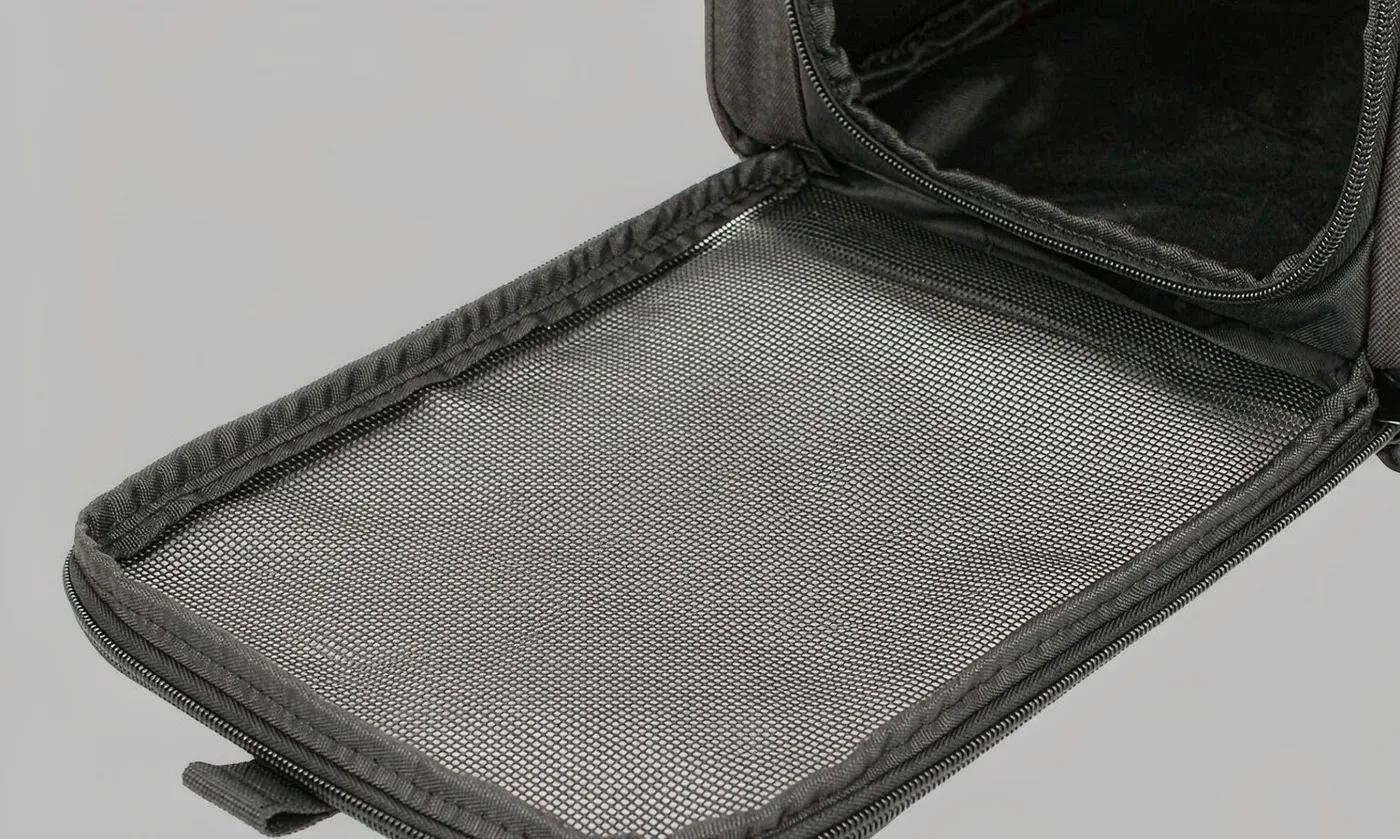
Nickel is the single most common contact allergen in soft goods, and pet bags are full of it by default. Plated D-rings, rivets, buckles, snap hooks, and zipper sliders can all release nickel under sweat and humidity. A buyer can screen every fabric and still ship a product that triggers a reaction through a hardware component nobody specified.
The control is simple to write and occasionally awkward to buy: specify nickel-free or low-release plating, and require a release test result for the metal components as supplied. Common routes include stainless hardware, zinc alloy with a sealed topcoat, and plastic acetal components where the design allows. Each has cost and durability implications, and the right answer depends on the price tier rather than on the claim alone.
Stainless is the cleanest but the most expensive and the heaviest. Sealed zinc alloy offers the best balance for mid-tier programs, provided the topcoat specification includes abrasion resistance so the seal survives use. Acetal plastic is the cheapest and lightest, and it is entirely adequate for internal adjustment hardware where load is low.
There is also a procurement sequencing point. Low-release hardware has longer lead times than catalogue fittings, particularly in stainless, and a buyer who confirms the hardware only at sample approval can lose two weeks waiting for plating. Locking hardware at quotation stage, alongside the fabric, keeps the 6-10 working day sampling window intact and avoids the compressed bulk schedule that follows any late trim decision. Where a program uses one hardware finish across several SKUs, consolidating to a single approved finish reduces both the testing bill and the lead-time risk at the same time.
Zipper sliders are the component most often missed. Buyers specify nickel-free rings and buckles and then accept a standard slider, which sits against the hand every time the bag is opened. Writing the requirement for all metal, including sliders, pullers, and rivets, closes the gap and costs a small premium on the trim line.
Testing and Certification That Support an Allergy-Friendly Claim
The evidence set for an allergy-friendly pet bag has three parts. The first is finished-article screening against a recognised restricted-substance list, which covers formaldehyde, heavy metals, pesticide residues, chlorinated phenols, and the dye classes of concern. The most widely accepted route is OEKO-TEX testing for textile safety, which a retail reviewer will recognise immediately and which answers most of the questions in one certificate.
The second part is nickel-release data for metal components, tested as supplied rather than as catalogued. This is a small additional cost and it removes the largest single allergy risk in the product. Buyers should require it once per hardware finish rather than once per SKU, which keeps the cost proportionate across an assortment.
The third part is a chemical compliance screen for the destination market. In the European Union that means alignment with REACH chemical requirements, and in the United States it means awareness of the consumer product rules administered by the Consumer Product Safety Commission where the product is positioned for children or for sensitive use.
Testing should be planned per colour, not per program. A six-colourway launch needs six screens, because the residue profile is a property of the dye lot rather than of the base fabric. Buyers who test one shade and claim six are running a documentation gap that a reviewer will find, particularly if a darker shade is involved.
The practical schedule is to test at sample approval and to repeat annually, or immediately after any reformulation. That cadence keeps the file current without turning testing into a per-order tax.
Material Selection for Allergy-Friendly Pet Bags
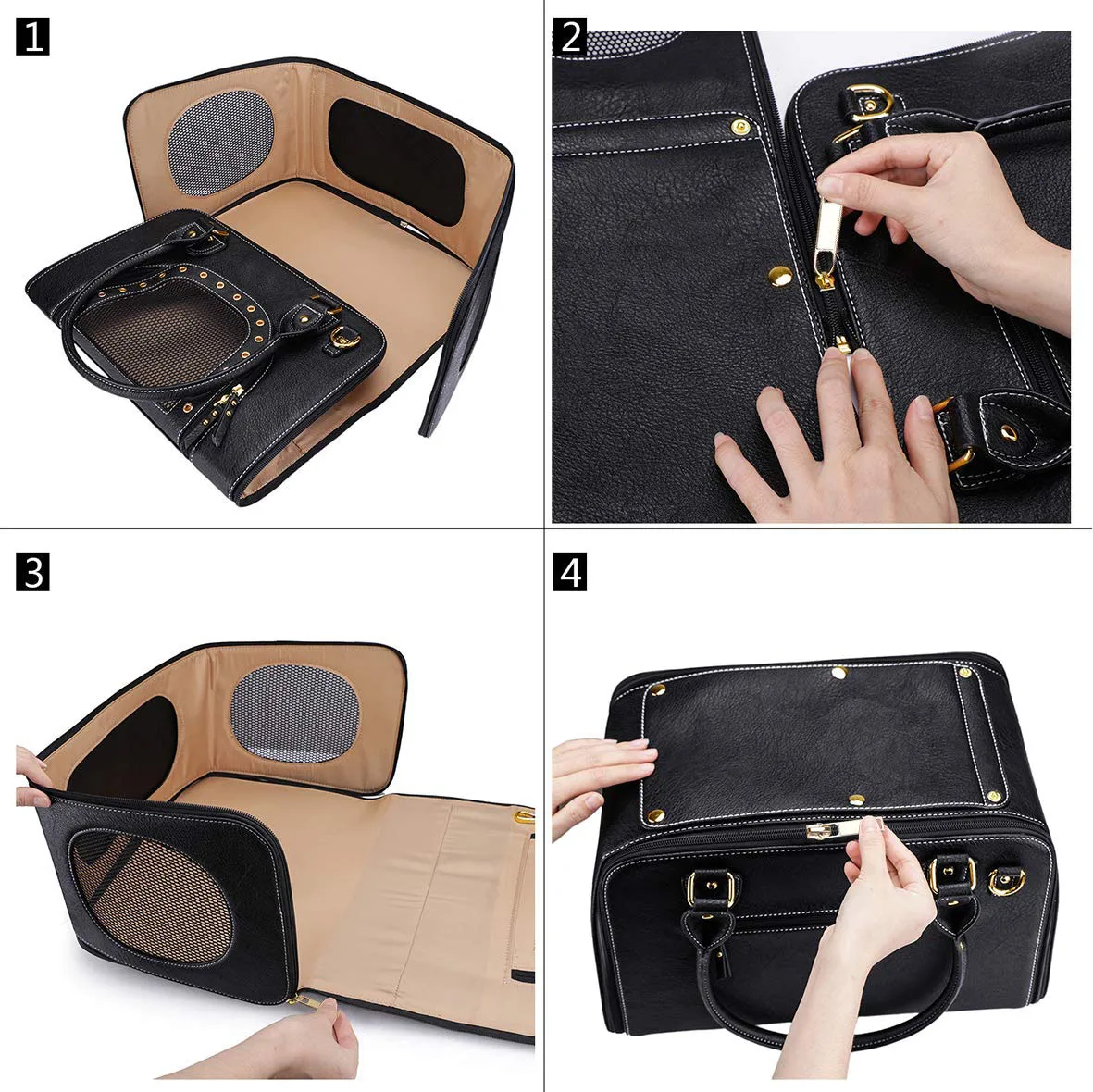
Material choice follows from the trigger list, and the good news for buyers is that most allergy-friendly options sit close to the volume materials already in use. Combed long-staple polyester and nylon shells with a low-residue dye route are the default. Smooth filament linings shed less than staple-fibre linings and retain less dust, which addresses the fourth trigger group directly. Closed-cell foam paddings off-gas less than open-cell equivalents and resist moisture retention, which matters because damp padding is a microbial and allergen reservoir.
Coated fabrics deserve a note. A polyurethane coating is generally inert once cured, but an incompletely cured coating is a common source of the new product smell that triggers complaints. Specifying a full cure and a post-cure ventilation period before packing is a process instruction that costs a day of floor time and removes the most frequent quality complaint in this category.
| Component | Standard choice | Allergy-friendly choice | Cost impact | What it controls |
|---|---|---|---|---|
| Shell fabric | Conventional disperse dye | Low-residue dye route, tested per colour | +4-8% fabric | Formaldehyde, dye migration |
| Lining | Staple polyester | Smooth filament, low shed | +2-5% | Fibre shedding, dust retention |
| Padding | Open-cell foam | Closed-cell, low emission | +6-12% | Off-gassing, moisture retention |
| Hardware | Standard plated zinc | Sealed low-release or stainless | +10-45% | Nickel release |
| Zipper slider | Standard metal | Low-release or acetal | +5-20% | Nickel release on contact points |
| Adhesive | Solvent lamination | Water-based lamination | Neutral | Solvent residue and odour |
| Finish | Fragrance optional | No fragrance, screened agent | Neutral to +3% | Scent sensitisers |
Lining construction deserves more attention than it usually gets. A smooth filament lining not only sheds less but also cleans more effectively, which matters because an allergen reservoir that cannot be wiped out will reaccumulate regardless of how clean the material was at purchase. Buyers should therefore specify wipe-clean performance for the interior as part of the claim, and should avoid brushed or raised interior surfaces that hold dust even when the fibre itself is low-residue.
Read the table as a stack rather than a menu. Buyers rarely need every upgrade; the usual pattern is low-residue dye plus sealed hardware plus water-based adhesive, which delivers most of the claim at a modest blended premium. Stainless hardware is reserved for premium tiers where the price step supports it.
Cost Structure of a Low-Residue Build
The premium for an allergy-friendly pet bag is modest in material terms and dominated by testing. Fabric and trim upgrades typically add 0.70 to 2.10 US dollars per unit at FOB Xiamen, while screening and nickel testing add a fixed program cost of roughly 500 to 1,800 US dollars depending on colourway count and hardware finishes. At 500 pieces per colourway that fixed cost is visible; across a 3,000-piece reorder it becomes rounding.
There is also a yield and process cost that buyers forget. Low-residue dye routes sometimes have narrower shade tolerance, which raises the risk of a shade rejection and a re-dye. Building one extra week into the sampling calendar absorbs this cheaply. Post-cure ventilation before packing similarly consumes floor time, and it should be stated in the specification so it is priced rather than negotiated away.
On the revenue side the claim supports a price step of one full tier in channels that merchandise it. A pet bag at 27.99 US dollars typically moves to 32.99 or 34.99 with tested allergy-friendly positioning and recognised certification. Because the claim also reduces returns from odour and irritation complaints, the margin benefit shows up in the returns line as well as in the price line, which is the part buyers under-model.
- Material and trim premium: 0.70-2.10 US dollars per unit FOB
- Screening and nickel testing: 500-1,800 US dollars per program
- Process cost: one extra sampling week, post-cure ventilation
- Retail price step: typically one full tier
- Return-rate benefit: measurable in the sensitive-skin segment
The economics therefore favour the buyer who concentrates the claim in a focused assortment and plans a reorder, rather than the buyer who spreads it thinly across a wide first drop.
Claim Wording and Regulatory Risk
Wording is the highest-risk part of this category. Hypoallergenic in isolation implies a medical property, and regulators in several markets treat medical-implying claims on non-medical goods as a serious issue. The safer formulation describes what was done rather than what will happen: tested for harmful substances, low-residue materials, nickel-free hardware. Those sentences are evidence-based and defensible.
Buyers should avoid claims that promise prevention. Statements such as prevents allergic reactions or safe for allergic pets convert a composition claim into a medical claim, and they invite the reviewer to ask for clinical evidence that no textile program can supply. Keeping the claim descriptive keeps it within the buyer's evidence.
Placement should follow the same rule as the wording. The claim belongs on the hangtag next to the certificate reference, and the listing copy should repeat it exactly. Where a certificate has a number and a validity period, printing the number is the single most effective way to survive a marketplace substantiation request, because it lets a reviewer verify the claim without contacting the buyer.
One further risk sits in translation and in marketplace category rules. A claim written for one market often gets translated literally into another, and a phrase that is descriptive in English can read as a medical promise in another language. Buyers selling cross-border should approve the claim text per market rather than reusing one string, and should check each marketplace's own prohibited-claims list before listing, since several platforms restrict allergen language regardless of what national rules allow.
Buyers should also prepare for the follow-up question about pets versus people. An allergy-friendly claim on a pet product is usually understood by shoppers as relating to the animal, but the test evidence relates to the article. The honest and defensible framing is that the product is tested for substances of concern, which benefits the household as a whole without promising a clinical outcome for the animal.
Inspection and Lot Control for Sensitive-Use Programs
Consistency is where allergy-friendly programs succeed or fail. A shade approved in one season can carry a different residue profile in the next if the mill changes auxiliaries, and a hardware finish can change supplier without the buyer noticing. The control is a lot-linked file: every production run is tied to the specific dye lot, the specific hardware batch, and the test reports covering both.
Inspection should be written to check that linkage. Under an AQL 2.5 plan the inspector counts defects, but the same visit can verify that the hardware on the units matches the approved low-release specification and that the hangtag carries the correct certificate reference. Naming those items in the inspection checklist converts an abstract claim into a checkable line item, and it is the cheapest control available at origin.
Odour deserves its own checkpoint because it is the complaint most likely to reach a review page. A simple sealed-bag odour check performed after ventilation, with an acceptable threshold agreed at sample approval, catches the problem before packing. Our production team runs this during sampling so the approval sample defines the standard for the bulk run.
Buyers should also plan the annual retest. Certificate validity is typically twelve months, and a program that sells through two seasons without retesting is running on expired evidence. Scheduling the retest alongside the reorder keeps the file current and costs nothing extra in calendar terms.
Buyers should also specify what happens to mixed stock. When a residue query arises on one dye lot, the ability to identify which cartons came from that lot determines whether the response is a targeted hold or a full recall. Requiring lot numbers on the carton label, and a packing list that maps cartons to lots, costs nothing at packing and turns a potential full-market withdrawal into a contained correction. That mapping is the least glamorous and most valuable line in the entire specification.
The claim is only as consistent as the dye lot and hardware batch behind it, so lot-linked documentation and an inspection checklist that names both are what keep an allergy-friendly program defensible over repeat seasons.
Channel Fit and Assortment Planning
Allergy-friendly positioning earns its cost in specific places. Specialty pet retail, pharmacy-adjacent pet aisles, veterinary-adjacent retail, and values-led direct-to-consumer brands all merchandise the claim and will pay the price step. Discount channels and pure marketplace price competition generally will not, because the shopper there compares on size and price and reads the claim as noise.
The decision test is the existing shelf. If the assortment already carries sensitive-skin pet products at a premium, an allergy-friendly pet bag fits and the testing file is an asset. If the shelf is a price ladder, the smarter move is to spend the same money on durability and appearance, where the return is visible to a price-driven shopper.
Assortment planning should concentrate the claim. A buyer with three tiers usually gains more by making the top tier tested and allergy-friendly than by spreading testing across all three, because the fixed cost per colourway multiplies quickly. Two core colourways at 500 pieces each, then expansion on reorder once sell-through data exists, is the pattern that protects margin.
Adjacent claims can share the same evidence. A tested low-residue build supports both an allergy-friendly story and a general product-safety story, and buyers building a broader responsible-sourcing position usually pair it with recycled content. Our guides to pet bag materials and OEKO-TEX textile safety explain how those files overlap and where they diverge.
Finally, plan the claim into the listing content at the same time as the product. The certificate reference, the claim sentence, and the care instructions should be written once and used everywhere, because inconsistency between packaging and listing is the most common trigger for a substantiation request in this category.
Production capability
- SGS-verified production space of 4,950 m², 149 machines, 7 assembly lines
- Pet bag output since 2014 from a 137-person team
- 200,000 units shipped monthly under BSCI and ISO 9001 systems
People Also Ask
What makes a pet bag hypoallergenic?
A low-residue build: formaldehyde-controlled dyeing, low-migration dyes, no fragrance finish, water-based lamination, and low-nickel or sealed hardware. The claim is evidenced by finished-article screening and nickel-release testing rather than by any single material name.
Is hypoallergenic the same as allergy-free?
No. Hypoallergenic means formulated to produce fewer allergic responses than comparable products, not zero. Responsible buyers word the claim descriptively, such as tested for harmful substances, because an absolute promise invites a substantiation request that cannot be met.
Which test supports an allergy-friendly pet bag claim?
Finished-article screening against a recognised restricted-substance list is the core evidence, with nickel-release testing for metal hardware as the second element. Screening should be run per colourway because residue profile is a property of the dye lot.
How much does a low-residue build add to FOB cost?
Typically 0.70 to 2.10 US dollars per unit for fabric, foam, and hardware upgrades, plus 500 to 1,800 US dollars of fixed testing per program. The fixed cost amortises quickly once a reorder is placed, which is why focused assortments perform better than wide first drops.
Do zippers and buckles need to be nickel-free?
Yes, if the claim is to hold. Plated rings, rivets, buckles, sliders, and pullers all sit against skin. Buyers frequently specify nickel-free rings and then accept a standard slider, which leaves the most touched component uncontrolled.
Does the claim help reduce returns?
Often yes. Odour and irritation are leading return reasons in the sensitive-skin segment, and controlling fragrance finishes, adhesive off-gassing, and coating cure removes most of those complaints before the product reaches a review page.
Can allergy-friendly and antimicrobial claims coexist?
They can, but the agent must be chosen deliberately because some antimicrobial finishes are themselves sensitisers. Buyers should screen the specific agent rather than accept whatever the mill proposes by default.
Frequently Asked Questions
Should every colourway be tested separately?
Yes for the chemical screen, because residue profile follows the dye lot. Nickel-release testing is the exception: it is run per hardware finish rather than per colourway, which keeps the cost proportionate across an assortment.
How often should certificates be renewed?
Annually is the working norm, and immediately after any reformulation of dye, finish, or adhesive. A certificate older than a production cycle is weak evidence if a reviewer challenges the listing.
Is stainless hardware required, or is sealed plating enough?
Sealed low-release plating is sufficient for most mid-tier programs, provided the topcoat specification includes abrasion resistance so the seal survives use. Stainless suits premium tiers where the price step supports the cost and weight.
What odour standard should be agreed at sampling?
A sealed-bag check after post-cure ventilation, with an acceptable threshold agreed when the approval sample is signed. Defining it at sampling gives the inspector a reference for the bulk run rather than a subjective judgement later.
Does the claim change HS classification or duty?
No. Classification follows the article and its material. The claim affects labelling, listing copy, and compliance documentation, not customs treatment.
Can the claim be printed without a certificate number?
It can, but it is weaker. Printing the certificate number lets a marketplace reviewer verify the claim without contacting the buyer, which is the most effective defence against a substantiation request.
What happens if the mill changes auxiliaries mid-program?
The residue profile can change without any visible difference in shade or hand feel. A specification clause requiring written buyer approval before any input change, plus lot-linked documentation, closes this gap.
Are closed-cell foams always better for sensitive-use builds?
For off-gassing and moisture retention, yes. Closed-cell foam emits less and resists damp, which reduces the microbial reservoir that contributes to complaints. The trade-off is slightly firmer hand feel and marginally higher cost.
What are the standard commercial terms for these programs?
MOQ 500 pieces per colourway, samples in 6-10 working days, bulk production in 35-50 days after approval, AQL 2.5 inspection, T/T 30/70, FOB Xiamen. Testing fees are usually billed as a separate program cost.
Should the claim mention pets specifically?
Keep the framing to the article. The evidence relates to the product being tested for substances of concern, which benefits the household, rather than to a clinical outcome for the animal, which cannot be evidenced.
How many colourways should a first allergy-friendly drop carry?
Two core shades at 500 pieces each plus one seasonal colour is the usual recommendation. Testing cost is partly fixed per colourway, so a wide first palette multiplies expense before sell-through data justifies it.
Is a no-fragrance instruction necessary?
Yes. Scented finishes are sometimes applied to mask adhesive or coating smell and are a leading cause of return in this segment. The instruction costs nothing to write and prevents the most common complaint.
Talk to QUANZHOU JUNYUAN BAGS about a wholesale pet bag order: MOQ 500 pieces per colourway, samples in 6-10 working days, bulk production in 35-50 days under AQL 2.5 inspection.
Get a free quote Request a sample