Pet Bag Types & Styles programmes run at MOQ 500 pieces per colourway with samples in 6-10 working days and bulk production in 35-50 days. Backpacks, totes, slings, travel bags and wheeled carriers - the full pet bag assortment in one programme.
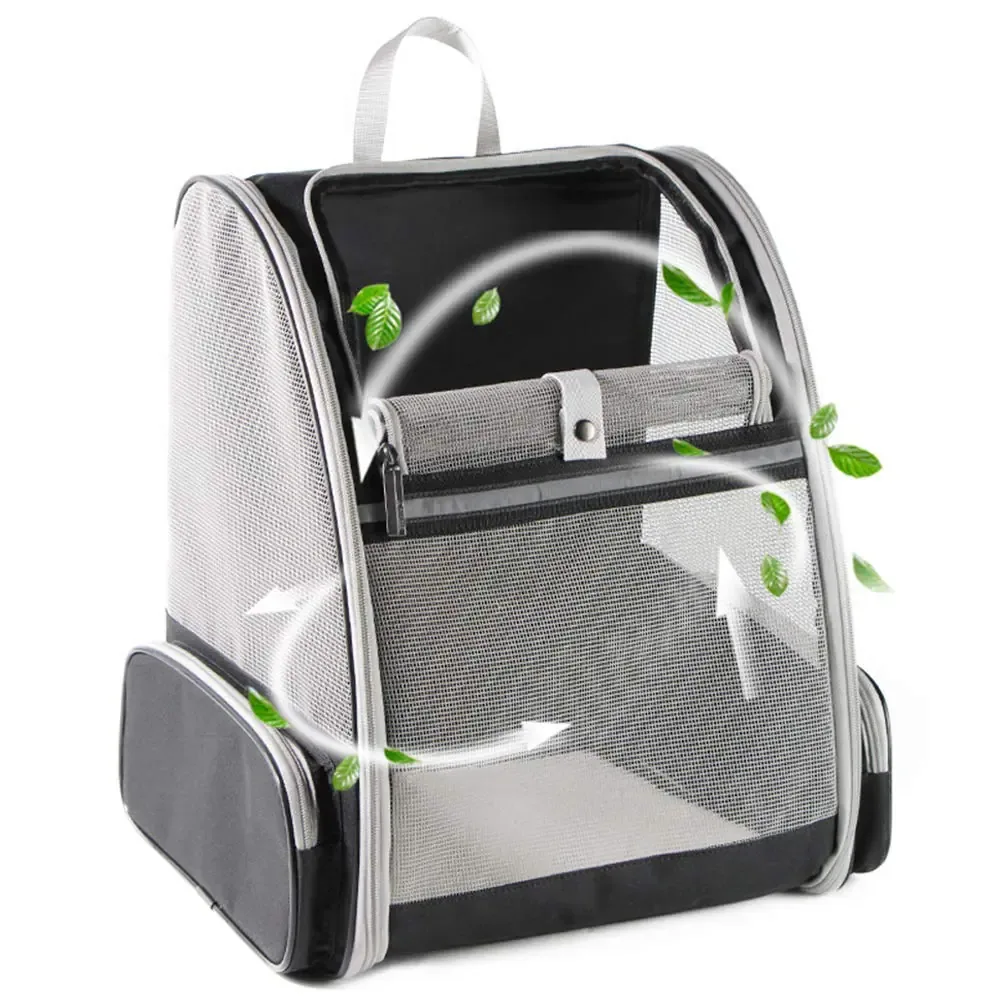
Specification baseline
| Item | Figure | Note |
|---|---|---|
| Backpack styles | Front pack, back pack, legs out, head out | Size by body length |
| Tote and shoulder | Open top, zip top, structured base | Fashion-led channels |
| Sling and crossbody | Single strap, 4-8 kg class | Close-carry use |
| Travel and duffle | Wheeled, folding, airline-dimension | Long-haul and vet use |
| Speciality | Cooling, insulated, picnic, laundry | Seasonal and niche ranges |
| MOQ | 500 pcs / style | Sizes may be mixed within a style |
Matching bag type to use case
Type selection starts from the way the animal is carried, not from the way the bag looks. Close-carry slings and crossbody styles suit animals up to roughly 6 kg and short urban trips, because weight sits against the handler's torso and the animal stays in sight. Backpack styles take over from 4 kg upward, where two straps and a load lifter move weight onto the hips. Totes and shoulder bags suit city and fashion channels where the bag has to read as an accessory first. Travel and duffle formats - wheeled or folding - serve flights, veterinary visits and long journeys, where volume and cleanability matter more than looks.
Each type pulls a different specification from the same library: strap width, base board thickness, mesh coverage and closure type. That is why sourcing several types from one supplier is cheaper than it looks - the tooling and testing are shared even when the patterns are not.
| Type | Weight class | Carry system | Tooling cost | Typical channel |
|---|---|---|---|---|
| Sling and crossbody | Up to 6 kg | Single strap, close carry | Low | Urban, short trips |
| Backpack styles | 4-14 kg | Two straps, load lifter | Medium | Walking, hiking, transit |
| Tote and shoulder | Up to 10 kg | Structured base, open or zip top | Medium | City and fashion channels |
| Travel and duffle | 6-20 kg | Wheeled or folding frame | Medium-high | Flights, vet, long trips |
| Speciality bags | Any class | Insulated, cooling, laundry | High | Seasonal and niche ranges |
Assortment planning across types
A wholesale assortment usually needs three to five types rather than twenty. One close-carry style, one backpack, one tote and one travel format covers most of the demand a retailer sees, and each can be produced in two or three colourways inside a 500-piece minimum per colourway. Adding a fifth type makes sense only when a channel specifically asks for it - airline-dimension travel bags and insulated summer styles are the two most common additions.
Weight-band load grading: structure, baseboard and carry system by pet body mass
A pet carrier is a load-bearing product, not a soft good with a handle. The fastest way to generate a return is to sell a shell rated for a 4 kg cat to a buyer with a 14 kg dog. Every structural decision descends from one number: the body mass the bag must carry, plus the dynamic load created when the animal shifts, jumps or braces. We grade every programme into four weight bands, because the band fixes shell denier, baseboard thickness, strap width, stitch density and hardware gauge in one pass.
| Weight band | Representative use | Baseboard and frame | Carry system | Shell and hardware |
|---|---|---|---|---|
| Under 4 kg | Cats, toy breeds, rabbits, short trips | 3 mm laminated board, removable, washable | Top handle plus 25 mm webbing shoulder strap | 300D polyester, zipper gauge 5 |
| 4-8 kg | Small dogs, large cats, daily urban carry | 4-5 mm PP honeycomb board with quilted pad | Padded backpack straps, 38 mm webbing, sternum strap | 600D polyester, zipper gauge 8 |
| 8-14 kg | Medium dogs, long-haul travel, cabin or hold | 6-8 mm board plus perimeter stay | Padded backpack with load lifters, 50 mm webbing, chest plate | 600D to 900D, zipper gauge 8 or 10 |
| 14 kg and above | Large dogs, multi-pet households | 8-10 mm board, full perimeter frame, load spreader | Wheeled base with trolley handle option, 50 mm webbing | 900D nylon, metal hardware, reinforced D-ring plate |
The baseboard is the component buyers under-specify most often. A board that feels stiff in a showroom creeps after eight hours under load, and the animal ends up suspended in a hammock with its spine unsupported. Our production team tests each board construction at 1.5 times the rated band load for 24 hours and rejects a sample with permanent deflection above 3 mm.
Carry system design follows the same arithmetic. Contact pressure on the handler shoulder is load divided by strap area, so a 12 kg dog on 25 mm webbing produces roughly double the pressure of the same load carried on 50 mm webbing. Above the 8 kg band we specify padded straps with a sternum strap and load lifters, because without them the handler compensates with posture and the bag swings.
Hardware gauge scales with the band. A number 5 coil zipper is adequate for a cat sling but will back-drive on a loaded 10 kg backpack, so we move to number 8 above 4 kg and number 10 or metal above 14 kg. Buckle break strength, D-ring gauge and the reinforcement plate behind every attachment point are graded the same way.
From a programme economics view each band is effectively its own tool set, since cutting markers, board tooling and strap patterns are band-specific. Minimum order quantity is 500 pcs per colourway. First sample takes 6-10 working days and bulk production runs 35-50 days, so a full range should be sequenced by band rather than launched in one drop. We inspect every shipment to AQL 2.5 pre-shipment under ISO 2859-1 sampling.
Channel-driven type selection: what FBA, chain retail, pet specialty and DTC each buy
The same bag can succeed in one channel and fail in another without a single change to its materials. Channel determines size tier, pack format, documentation depth and the labelling that must arrive on the carton. Before a buyer chooses a type, the channel should be fixed, because the channel decides how many units fit a pallet, whether the bag must fold flat, and how much of the unit cost can be spent on packaging rather than on the shell. The four channels below cover most of the programmes we run.
| Channel | Preferred types | Pack and presentation | Documentation pressure |
|---|---|---|---|
| Marketplace and FBA | Fold-flat soft carrier, backpack-tote hybrid, small size tiers | Polybag with suffocation warning, FNSKU label, master carton of 6-12 pcs, carton under 15 kg | Dimension and weight accuracy, CPC file, tracking label, carton label compliance |
| Chain retail and pet superstore | Uniform mid-price backpack and tote, consistent colourway | Retail-ready carton, shelf tray, hangtag with barcode, EAN or UPC | Social audit report such as BSCI, packaging waste rules, planogram compliance |
| Pet specialty, vet and grooming | Structured airline-style carrier with washable liner | Individual box, printed insert, spare pad in the box | Airline rule sheet, material declaration, cleaning instructions in local language |
| Direct-to-consumer own-brand | One hero backpack or weekender, seasonal colourway drops | Mailer, branded dust bag, insert card, photography-ready finish | Brand asset control, consistent hand feel, review-driven iteration |
On marketplace channels the governing constraint is the dimensional weight tier. A bag that ships 2 cm taller can move into the next cubic tier and change the per-unit fee more than any material saving ever will, which is why fold-flat soft carriers dominate. Treat the folded dimension as a declared specification and measure it on the pre-shipment sample.
Chain retail buyers optimise for the pallet and the shelf. Carton dimensions are negotiated against a planogram, the colourway must be identical across a full season, and a hangtag barcode error stops a receipt at the distribution centre. Pet specialty and veterinary accounts run the opposite logic: fewer units, higher unit value, more documentation in the box, and a liner that survives repeated washing.
Direct-to-consumer own-brand programmes concentrate volume into one hero SKU and tolerate a higher unit cost in exchange for a distinct look and a better unboxing. That concentration is useful on the supply side: MOQ is 500 pcs per colourway, and a single hero colourway absorbs that threshold quickly, leaving room for a second colourway later. Because the same shell and hardware pool is used, our SGS-verified production base can run a DTC hero alongside a retail programme on 7 assembly lines without re-tooling, and first sample still lands in 6-10 working days.
Whichever channel is chosen, the quality gate is the same and should be written into the purchase order, not discussed afterwards. We run AQL 2.5 pre-shipment inspection under ISO 2859-1 sampling, check packed carton weight and dimension against the declared figure, and verify that the label and barcode format match the channel requirement. Bulk production runs 35-50 days, so a channel-specific pack change requested after production starts is the single most expensive change a buyer can make.
Common-part strategy: sharing shell, hardware and boards across one type family
A type family is a set of bags that look different to the shopper but are built from the same parts underneath. Backpack, tote, sling and wheeled carrier can share shell fabric, zipper chain, webbing, mesh and liner construction while keeping distinct silhouettes, openings and branding. The commercial reason to do this is blunt: MOQ is 500 pcs per colourway, and a family that shares a colourway lets a buyer split that threshold across four types instead of committing 500 units to a single silhouette. The operational reason is spare parts and line changeovers.
| Part | Shared across | What stays visible | Effect |
|---|---|---|---|
| Shell fabric | All four types | Colourway and print | One dye lot covers the family; 500 pcs per colourway split four ways |
| Baseboard | Backpack and tote | Thickness by weight band | One tooling programme, two sizes |
| Zipper chain and puller | All four types | Length only | Single hardware order, one cycle and salt-spray test |
| Webbing | All four types | Width and matched colour | One tensile and colour-fastness test per lot |
| Mesh panel | All four types | Aperture and trim colour | Single cutting die, one snag test |
| Liner pad | All four types | Shape | One quilting programme |
The working rule is that 70 to 80 per cent of the bill of materials should be common across a family, with 20 to 30 per cent reserved for what the shopper actually sees: silhouette, opening geometry, panel layout and decoration. That split is a planning range rather than a standard, but it is the ratio that keeps a four-type range affordable. Below it, every type behaves like a separate product with separate tooling, separate lab tests and separate spare stock.
Spare-part inventory is where the saving compounds. A common zipper chain means one spare SKU rather than four, and a common liner construction means one quilting programme. We hold a spare-parts allowance on hardware and ship it with the order, so a retailer can replace a slider or a buckle in the field instead of writing off a returned unit. On a four-type family, that allowance typically costs less than the write-off from a single season of returns on one type.
On the floor, shared parts change how the run is sequenced. Shared cutting markers reduce fabric waste, and common hardware stations mean a line can switch from tote to backpack without a full reset. Our SGS-verified production base runs 149 machines across 7 assembly lines with capacity of 200,000 units per month, and a family built on shared parts uses that capacity far more efficiently than four independent products would. Change control is documented under ISO 9001, so a substitution on a shared part is recorded and communicated rather than made silently.
Plan the family in this order: fix the shared part list first, then assign colourways, then choose the visible differentiators. First sample takes 6-10 working days per new type and bulk production runs 35-50 days, so a four-type family is normally sequenced over two production windows rather than one. Every shipment is inspected to AQL 2.5 pre-shipment under ISO 2859-1 sampling.
Specification and engineering guides
- Pet Bag Manufacturer: Complete Sourcing Guide
- Wholesale Pet Bags: Bulk Buying Guide
- Pet Bag Factory: What to Look For
- Pet Bag Supplier: Choosing the Right Partner
- Pet Travel Bag: Manufacturing Guide
- Pet Tote Bag: Stylish and Functional
- Pet Shoulder Bag: Comfortable Carry
- Pet Crossbody Bag: Hands-Free Design
- Pet Sling Bag: Close to Pet
- Pet Backpack: Hands-Free Travel
- Pet Front Pack: Chest Carrier
- Pet Back Pack: Backpack Style
- Pet Leg Out: Legs Out Design
- Pet Head Out: Head Out Design
- Pet Enclosed: Fully Covered
- Pet Open Top: Open Design
- Pet Hard Shell: Rigid Carrier
- Pet Soft Sided: Flexible Design
- Pet Convertible: Multi-Way Carry
- Pet 2-in-1: Dual Function
- Pet 3-in-1 Bag: Triple Function Sourcing Guide
- Pet Duffle Bag: Travel Duffel Wholesale Guide
- Pet Weekender Bag: Overnight Program Guide
- Pet Trolley Bag: Rolling Sourcing Guide
- Pet Wheeled Bag: Wheels Included Buyer Guide
- Pet Luggage: Suitcase Style Wholesale Guide
- Pet Backpack with Wheels: Convertible Guide
- Pet Rolling Backpack: Backpack Plus Wheels Guide
- Pet School Bag: Kids Style Wholesale Guide
- Pet College Bag: Student Style Sourcing Guide
- Pet Work Bag: Office Style Wholesale Buyer Guide
- Pet Laptop Bag: Work + Pet Build Guide for Wholesale Buyers
- Pet Gym Bag: Fitness Style Specs for Wholesale Buyers
- Pet Yoga Bag: Wellness Style Sourcing Guide for Bulk Buyers
- Pet Beach Bag: Summer Style Sourcing for Seasonal Bulk Orders
- Pet Picnic Bag: Outdoor Style Buying Guide for Wholesale Orders
All Pet Bag Types & Styles articles
- Pet Hiking Bag: Adventure Style Specs for Wholesale Buyers
- Pet Camping Bag: Outdoor Gear Guide for Wholesale Buyers
- Pet Hunting Bag: Hunting Gear Specs for Wholesale Buyers
- Pet Fishing Bag: Fishing Gear Specs for Wholesale Buyers
- Pet Cycling Bag: Bike Bag Sourcing Specs, Cost & MOQ
- Pet Running Bag: Jogging Gear Wholesale Specs & Cost
- Pet Walking Bag: Daily Walk Styles, Cost and MOQ Guide
- Pet Shopping Bag for Errands: Wholesale Specs & Costs
- Pet Grocery Bag: Wholesale Sourcing Specs and Costs
- Pet Diaper Bag for Baby and Pet: Wholesale Buyer Guide
- Pet Mom Bag: Multi-Function Wholesale Specs and MOQ
- Pet Dad Bag: Practical Style Wholesale Sourcing Guide
- Pet Family Bag: All-in-One Wholesale Specs and Costs
- Pet Gift Bag: Wholesale Present Bag Specs, Cost & MOQ
- Pet Gift Set Bundle: Wholesale Assortment, Cost and MOQ
- Pet Starter Kit for New Pet Owners: Wholesale Buying Guide
- Pet Travel Kit: Wholesale Essentials, Cost and MOQ
- Pet Emergency Kit: Wholesale Preparedness Buying Guide
- Pet First Aid Kit: Wholesale Medical Pouch Buying Guide
- Pet Grooming Bag: Wholesale Kit Specs, Cost and MOQ
- Pet Bath Bag: Wholesale Bath-Time Kit Buying Guide
- Pet Dry Bag: Waterproof Wholesale Specs, Cost and MOQ
- Pet Wet Bag: Wholesale Separation Specs, Cost and MOQ
- Pet Mud Bag: Wholesale Dirty-Gear Specs and Buying Guide
- Pet Dirty Laundry Bag: Separate Compartment Specs
- Pet Clean Dirty Bag: Dual Compartment Spec Guide
- Pet Seasonal Bag: Winter/Summer Assortment Planning
- Pet Winter Bag: Cold Weather Sourcing Specs
- Pet Summer Bag: Hot Weather Sourcing Specs
- Pet Spring Bag: Lightweight Build Specs
- Pet Fall Bag: Autumn Style Assortment Specs
- Pet Holiday Bag: Christmas Theme Program Specs
- Pet Halloween Bag: Spooky Theme Program Specs
- Pet Easter Bag: Spring Theme Program Specs
- Pet Valentine Bag: Wholesale Love-Theme Sourcing Guide
- Pet Birthday Bag: Wholesale Celebration Sourcing Guide
- Pet New Year Bag: Fresh Start Wholesale Sourcing Guide
- Pet Back to School Bag: Seasonal Wholesale Sourcing Guide
- Pet Graduation Bag: Achievement-Themed Wholesale Sourcing
- Pet Wedding Bag: Special Occasion Wholesale Sourcing
- Pet Anniversary Bag: Milestone Wholesale Sourcing Guide
- Pet Memorial Bag: Tribute SKU Wholesale Sourcing Guide
- Pet Service Dog Bag: Working-Dog Gear Wholesale Sourcing
- Pet ESA Bag: Emotional Support Gear Wholesale Sourcing
- Pet Therapy Dog Bag: Wholesale Specs, MOQ and Pricing
- Pet Rescue Dog Bag: Bulk Sourcing for Rescue Fleets
- Pet Shelter Bag Donation: Wholesale Program Guide
- Pet Foster Bag: Wholesale Kit Sourcing for Networks
- Pet Adoption Bag: Bulk Welcome Kit Sourcing Guide
- Pet Puppy Bag: Wholesale Starter Kit Specs and MOQ
- Pet Kitten Bag: Bulk Starter Kit Sourcing Guide
- Pet Senior Bag for Older Pets: Wholesale Buyer Guide
- Pet Special Needs Bag: Wholesale Sourcing and Specs
- Pet Arthritic Bag: Joint Support Sourcing and Specs
- Pet Blind Dog Bag: Visual Impaired
- Pet Deaf Dog Bag: Hearing Impaired
- Pet Wheelchair Bag: Mobility Aid
- Pet Stroller Attachment: Stroller Compatible
- Pet Car Seat: Car Safety
- Pet Booster Seat: Elevated View
- Pet Hammock: Backseat Cover
- Pet Backseat Cover: Protection
- Wholesale Dog Carriers: Range Planning by Size Band
- Wholesale Cat Carriers: Shell Choices for Bulk Buyers
- Wholesale Pet Carrier Bags: Picking the Right Format
- Wholesale Airline Approved Pet Carrier: Dimensions to Build
Frequently asked questions
What is the minimum order for pet bags?
500 pieces per style or colourway. Sizes within one style may be mixed to reach the threshold.
Can one supplier cover several bag types?
Yes, and it is usually cheaper: patterns differ but the material, hardware and testing library is shared.
Which type sells best at wholesale?
Backpack and tote formats account for most wholesale volume; slings and travel formats follow, depending on channel.
How long does sampling take?
First prototypes ship in 6-10 working days after the tech pack is confirmed; revisions typically add 3-5 working days per round.
What about bulk lead time?
35-50 days after sample approval, depending on material availability and order size.
Planning a pet bag types & styles programme? MOQ 500 pieces per colourway, samples in 6-10 working days, bulk production in 35-50 days under AQL 2.5 inspection.
Request a quote Ask for samples