Pet Shelter Bag Donation: Wholesale Program Guide
A pet shelter bag donation programme buys a simplified, unbranded-or-sponsor-branded handout bag in the 8-16 litre range at MOQ 500 pieces per colour, landing at FOB Xiamen USD 3.40-7.20 per unit depending on fabric weight and print coverage. The controlling number is cost per recipient, not cost per bag, because donation budgets are set per family or per animal served. Samples take 6-10 working days; bulk production takes 35-50 days.
Executive summary for donation programme buyers. Donation bags are bought with other people's money under a reporting obligation. That changes the specification in a specific way: the bag has to be cheap enough to defend to a sponsor, durable enough that a recipient does not see it fail, and documented well enough that the programme can report what it distributed. Buyers who optimise only for unit price produce bags that recipients discard, which is the one outcome a sponsor can see.
Standard terms for this category are MOQ 500 units per colour, samples in 6-10 working days, bulk production 35-50 days after sample approval and deposit, inspection to AQL 2.5, payment T/T 30/70 against FOB Xiamen. Sponsor artwork carries its own minimum and its own approval step, so artwork lock should precede production booking rather than run alongside it. Our production team handles these runs through an SGS-verified production base operating to BSCI and ISO 9001, and retains the compliance file for each production run so a repeat programme does not restart testing. The single biggest cost lever available to a donation buyer is SKU consolidation: one size, one colour, one print position, ordered once a year, beats three variants ordered twice.
Wholesale waterproof pet bags and wholesale 600d pet carrier lines are quoted against coating weight rather than against fabric name, and Pet Bag Types & Styles specs have to say which test method applies. Wholesale durable pet carriers then hold their price because the failure cost - a returned unit - is far higher than the coating premium.
What a donation bag programme actually buys
A donation bag is not a retail product stripped of its packaging. It is a different article with a different set of constraints, and the mistakes in this category almost always come from treating it as the former. A retail bag is sold to a customer who chose it and who will judge it against alternatives; a donation bag is handed to a recipient who did not choose it and who will judge the organisation by it. The specification therefore has to survive scrutiny from someone with no purchase intent and no brand loyalty.
The practical translation is that donation bags should be simpler, not cheaper for its own sake. Fewer components means fewer failure points, and a recipient who receives a bag with one working zip and no decorative trim will use it for years, while a recipient who receives a more elaborate bag with a failed binding will not. Value engineering in this category should remove complexity rather than remove material, and the two are frequently confused in a tender response.
The second defining constraint is the reporting obligation. Corporate and foundation funders increasingly require a distribution report: how many units, to whom, at what unit cost, sourced under what compliance standard. A programme that can produce that report from its own procurement file renews funding more easily than one that has to reconstruct it. This argues for a documented specification and a retained production sample, both of which are cheap and both of which are usually skipped on a first order.
The third constraint is timing. Donation programmes cluster around fixed dates: a sponsor's annual giving campaign, a shelter's adoption event season, a disaster response window. The order has to land before a date that will not move, which makes schedule reliability worth more than a marginal price concession. Buyers should book production capacity against the event date and work backwards, allowing the full 35-50 days plus freight plus a buffer for artwork approval.
- Design for a recipient who did not choose the bag and cannot return it.
- Remove component complexity before removing material weight.
- Keep a procurement file that answers a sponsor's standard questions.
- Book capacity against a fixed distribution date, not a hoped-for one.
- Assume the bag will be photographed by the sponsor and will appear in reporting.
That last point deserves emphasis. A donation bag is one of the few physical objects a sponsor ever receives as evidence of their giving, and it is frequently photographed for internal communications. A bag that looks considered in a photograph supports renewal; one that looks like an afterthought does not. This is a legitimate specification criterion, and buyers should not be shy about stating it.
There is also a category distinction that buyers should hold clearly. A donation bag is not the same article as an adoption welcome kit, even though both leave the same building. The donation bag is given because a household needs help and the specification optimises for reach: low unit cost, simple construction, understated branding. The adoption kit is given as part of a transaction the family chose and the specification optimises for presentation. Mixing the two specifications produces a bag that is either too expensive for the donation budget or too plain for the adoption moment, and programmes running both should keep two tech packs rather than compromising on one.
Donation tier matrix: cost, spec and recipient outcome
The three tiers below cover essentially every donation programme we see. They differ far more in fabric weight and finishing than in features, which is the point: at this price level, features are cheaper than durability, and durability is what determines whether the bag is used or discarded.
| Parameter | Handout basic | Programme standard | Sponsor presentation |
|---|---|---|---|
| Volume | 8-10 L tote | 12-16 L shoulder | 12-16 L structured |
| Shell | 210D polyester | 420D polyester, PU | 600D Oxford, PU |
| Handles | Self-fabric webbing | 25 mm webbing, boxed | 38 mm webbing, padded |
| Closure | Open top | Hook-and-loop tab | Number 5 zip |
| Interior | Unlined | 210D lining, one pocket | Lined, two pockets |
| One colour, one side | Two colour, one side | Full colour transfer | |
| MOQ per colour | 500 | 500 | 500 |
| FOB Xiamen band | USD 3.40-4.60 | USD 4.90-6.10 | USD 6.30-7.20 |
| Expected service life | 6-12 months | 18-30 months | 3 years plus |
| Sample lead time | 6-8 working days | 6-10 working days | 6-10 working days |
| Bulk lead time | 35-42 days | 38-48 days | 40-50 days |
| Inspection | AQL 2.5 | AQL 2.5 | AQL 2.5 plus print check |
The expected service life row is the one buyers should read before the price row. A handout basic bag at USD 3.90 that is discarded at nine months costs the programme more per year of use than a programme standard bag at USD 5.40 lasting two years, and it does so while generating a worse impression for the sponsor. Donation budgets are annual, but the outcome is measured over the life of the bag.
Print coverage is the second most misunderstood cost driver. A full-colour transfer on a structured bag costs a multiple of a single-colour screen print and carries a higher minimum, because the process is set up per artwork rather than per order. Programmes that need sponsor recognition on a tight budget should place one clean two-colour print on the front panel and spend the saving on fabric weight, which is what the recipient will actually notice over time.
Volumes above roughly 3,000 units change the calculus again, because at that quantity a custom woven label becomes economical and adds a perception of quality disproportionate to its cost. Buyers planning a multi-year programme should ask for a price ladder at 500, 1,000, 3,000 and 5,000 units before committing to a single tier, since the step-downs are rarely linear.
Designing to a fixed unit-cost target without creating failures
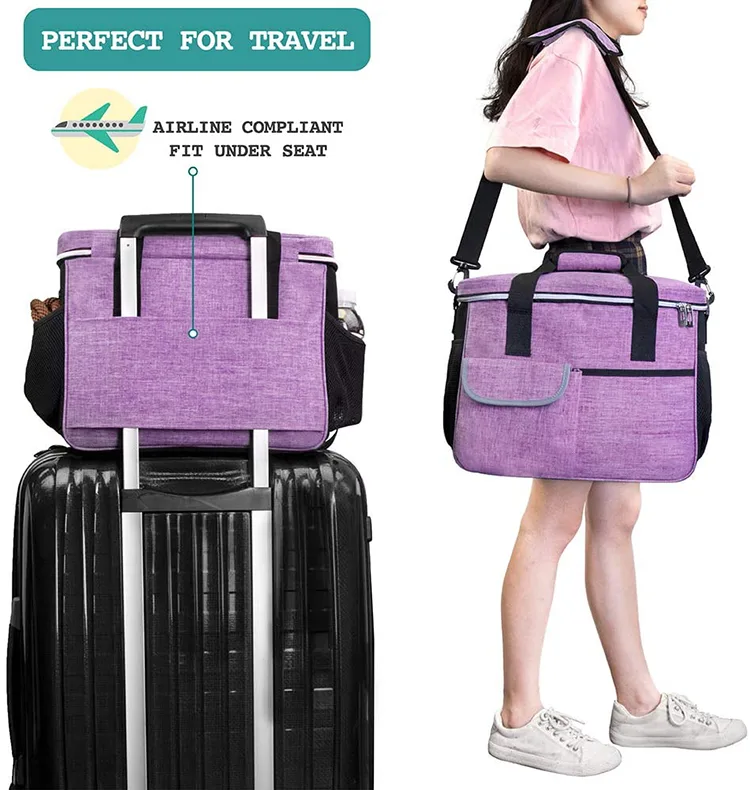
Donation programmes usually start from a number: the sponsor has committed a sum and the programme must reach a certain number of recipients. Value engineering then proceeds backwards from that number, and without discipline it produces bags that fail. The discipline is simple and worth stating: never reduce the load path. Handles, handle attachment, strap anchors and the closure are the load path; pockets, trim, print and lining are not.
Handle attachment is the classic casualty. A self-fabric handle that is tacked rather than boxed-stitched will separate under a loaded bag, and the failure is both visible and immediate. Boxing the handle attachment costs seconds of labour and removes the single most common structural complaint in this category. Buyers should specify the attachment method explicitly, because it is invisible in a product photo and is the first thing a competitive quote removes.
Fabric weight is the second casualty, and it is a legitimate place to save if it is done knowingly. A 210D shell is perfectly adequate for a bag carrying paperwork and a toy; it is not adequate for a bag carrying canned food or a bag that will be dragged. The question to ask is what the recipient will put in it, and the answer differs between a shelter handout and a food-bank distribution. Buyers who answer that question honestly can save money safely; buyers who guess cannot.
Lining is the third lever, and removing it is usually a mistake at this price level. An unlined bag exposes seam allowances that fray, and fraying is what makes a bag look worn within weeks. A light 210D lining costs well under half a dollar and is the cheapest available improvement to perceived durability.
- Protect the load path: handles, anchors, closure.
- Reduce trim, pocket count and print coverage first.
- Match fabric weight to the actual contents, not to a generic tier.
- Keep a light lining even on budget specifications.
- Validate the reduced specification on a sample before booking bulk.
Sponsor branding, artwork rules and donor recognition
Sponsor artwork is the highest-risk element of a donation programme because it is the only element controlled by a third party with no knowledge of the production process. Artwork arrives late, arrives in the wrong format, arrives with colour expectations set by a screen rather than by a print process, and occasionally arrives with a claim that the programme cannot legally repeat. Buyers should set artwork rules early and enforce them.
The rules are practical. Supply vector artwork, not a raster file. Approve a printed proof on the actual fabric rather than a digital mock-up, because fabric colour shifts every print. Lock the artwork before production is booked, because a change after booking either delays the run or produces mixed stock. And state the maximum print area in the specification, because an oversized print is more expensive and more likely to crack on a coated shell.
Content rules matter as much as format. Sponsors sometimes supply artwork making claims about their own products or about the programme's impact that the distributing organisation cannot substantiate. A short artwork content policy, agreed with the sponsor before the print proof stage, prevents the worst version of this problem. Programmes should also decide in advance whether recipient-facing bags carry religious, political or cause-related marks, because the answer varies by organisation and the decision is far easier to make before artwork is locked than after.
Donor recognition on the bag itself is usually modest: a small mark on the front panel or on a woven label at the side seam. Larger marks read as advertising on a recipient who did not choose the bag, and shelters consistently report better reception for understated branding. The exception is an event bag distributed at a sponsored adoption day, where a bolder mark is expected and appropriate.
Compliance, safety and documentation for handout items
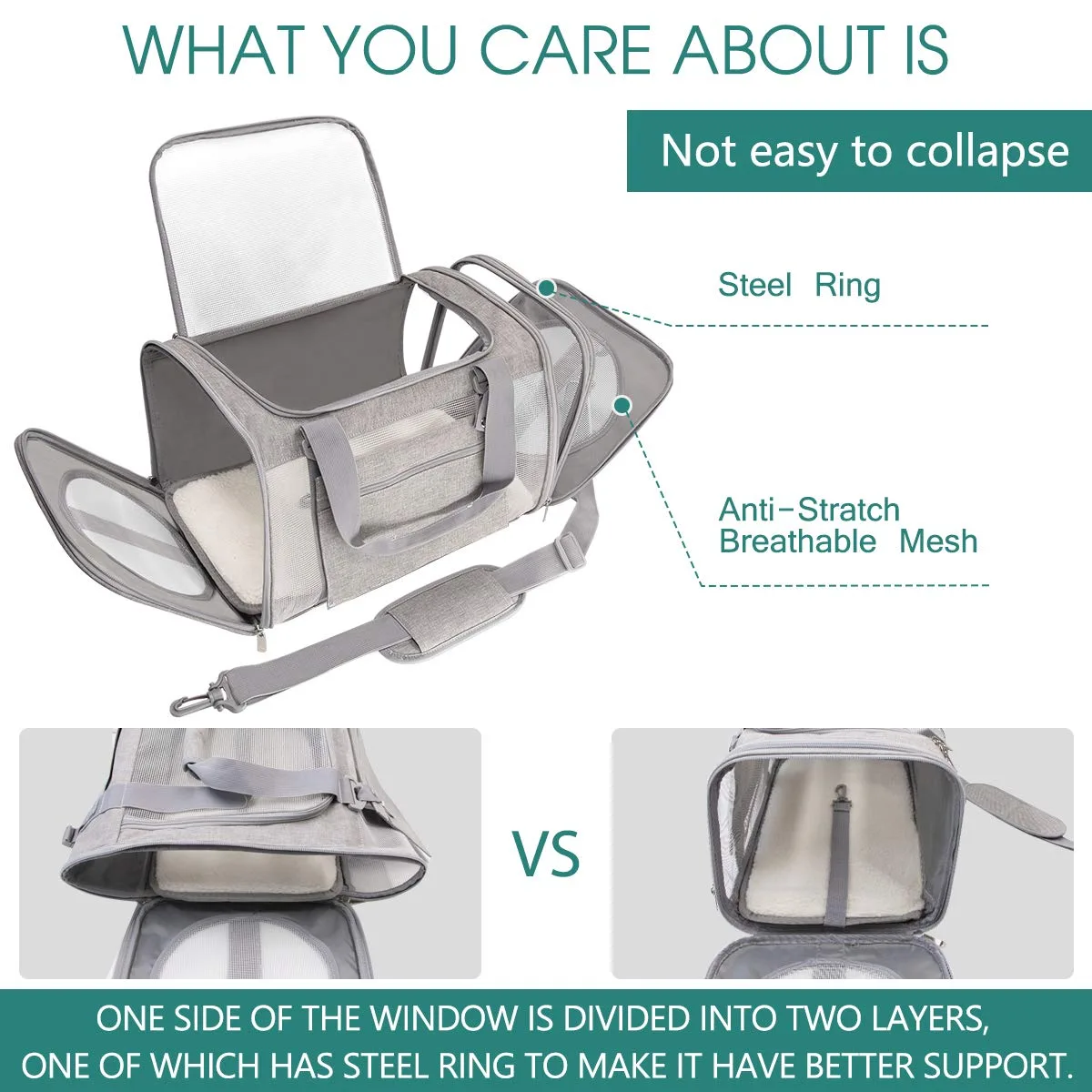
Donation bags are distributed to households, frequently to households with children, and they are handled by volunteers. That combination brings the same product-safety expectations as a consumer item even though no money changes hands. In United States programmes the baseline is CPSIA lead and phthalate limits on accessible substrates, with a Prop 65 assessment where the programme operates in California. Guidance and the applicable limits are published by the Consumer Product Safety Commission, and the California warning framework sits with OEHHA.
European programmes need REACH SVHC declarations on the shell, lining and any printed or coated area. Buyers should request these against the actual production lot rather than accepting a generic certificate, because a certificate naming a different fabric is worthless in a sponsor audit. Where a programme has a sustainability commitment, an OEKO-TEX certificate on the fabric resolves a large part of the chemical question in a single document and is increasingly expected by corporate funders.
Beyond chemical compliance, donation bags should be checked for mechanical hazards that matter in a household: small detachable parts, long cords or drawstrings, and sharp hardware edges. The risk is low in a simple tote and rises with every added component, which is another argument for specification simplicity. A documented hazard review takes an hour and protects both the recipient and the organisation.
The documentation set should travel with the order: compliance reports, a retained production sample, a packing list that reconciles to the distribution count, and a specification sheet describing what was bought. This is the file a sponsor auditor asks for, and assembling it at the time of order costs a fraction of reconstructing it a year later. Our production team issues the compliance file with each run and retains reference samples so repeat programmes can be matched rather than redeveloped.
Order quantity, storage and distribution logistics
Donation programmes typically under-order in year one and over-order in year three, and both mistakes have the same root cause: the distribution rate is estimated rather than measured. A first-year programme should order to the low end of its estimate plus a modest reserve, then use the actual distribution rate to set the second-year quantity. The unit-cost penalty for a smaller first order is small compared with the cost of carrying two years of inventory.
Storage is the constraint that turns over-ordering into a real cost. Bags are bulky, and a pallet of folded totes occupies warehouse space that most shelters do not have and cannot rent cheaply.Stored bags also age: coatings can block in heat, hook-and-loop collects dust and loses grip, and elastic components lose tension. A donation bag stored for three years in a non-climate-controlled unit is not the bag that was specified, and a programme distributing it is distributing a degraded product.
Distribution configuration should be decided before packing. Bulk-packed cartons are the cheapest option and suit a shelter distributing at a counter. Individually polybagged units suit a mobile distribution or a postal programme. Retail-style presentation packaging is almost never appropriate for a donation item, because the cost goes into packaging the recipient will immediately discard and because it can look tone-deaf in a hardship context.
Freight planning is the last piece. Donation bags cube out on volume, so a full container is usually reached long before the weight limit. Consolidating the annual order into one shipment, rather than splitting it across two events, is the largest single freight saving available and is easy to plan if the distribution calendar is known in advance. Where a programme genuinely needs two deliveries, ask for a split shipment from a single production run rather than two production runs, because the second run reopens fabric purchasing and colour matching at a lower volume.
Buyers should also decide who bears the inventory risk before the order is placed. Some sponsors fund the bag but not the storage, which leaves the shelter holding a pallet it has nowhere to put. Naming the storage location and the person responsible for it in the programme plan is a small administrative step that prevents the most common logistical failure in multi-year donation programmes.
Sampling, lead time and inspection for donation runs
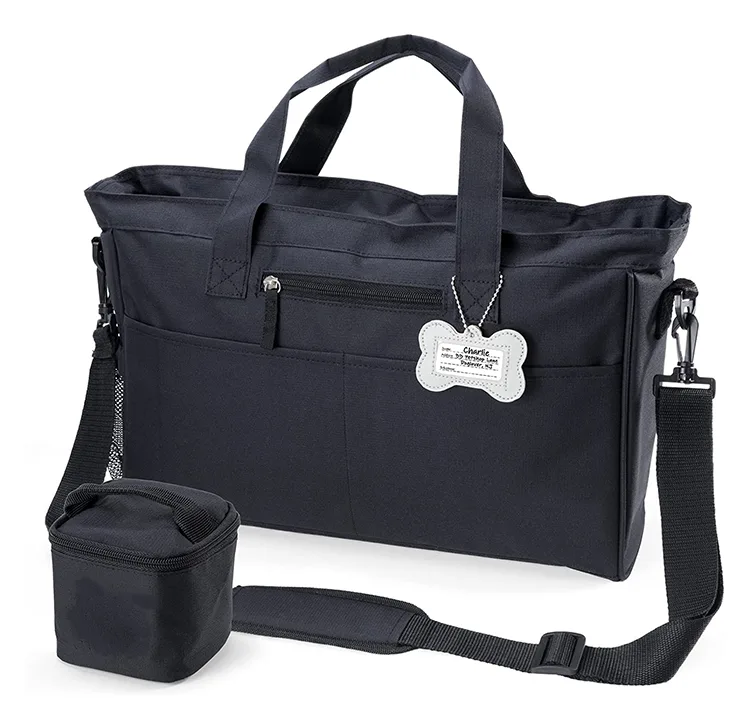
Samples take 6-10 working days and should be treated as a durability test rather than an appearance check. Load the sample with the contents a recipient will realistically carry, carry it by the handle for an hour, open and close the closure fifty times, and wash or wipe it once. A donation bag that survives that test will survive distribution; one that does not will generate complaints the programme has no mechanism to handle.
Bulk production runs 35-50 days after sample approval and deposit, and the approval step is where donation programmes most often lose weeks. Artwork approval, in particular, involves a third party who does not share the programme's urgency. Locking artwork before booking production, and naming a single approver on the sponsor side, removes the most common cause of a missed distribution date.
Inspection to AQL 2.5 covers appearance and workmanship. Donation orders benefit from two additional checks that are specific to this category. The first is a print adhesion check, because a sponsor mark that cracks or lifts is the most visible possible defect and the one most likely to reach the sponsor's own communications team. The second is a count reconciliation at carton level, because distribution reporting depends on accurate unit counts and a short shipment discovered at the event is a reporting failure as well as a logistics one.
Buyers should also request a retained reference sample from the production run. When year two is quoted, comparing the new sample against the retained unit resolves every question about whether the specification has drifted, and it prevents the slow erosion of quality that happens when a programme re-orders on price alone for several cycles.
Building a repeatable annual programme
The programmes that run well treat the bag as a standing specification rather than an annual re-tender. A locked tech pack, a retained sample, a compliance file and a fixed annual quantity let the supplier reserve capacity and hold price, and they let the programme spend its effort on distribution rather than on procurement. Re-tendering every year costs the programme more in staff time than it saves in unit price.
Continuity also helps the recipient experience. A shelter that distributes the same bag year after year builds recognition, and volunteers become familiar with the product and can answer recipient questions confidently. That familiarity has operational value that never appears in a tender comparison.
The exception is a genuine change in the programme: a new sponsor with different artwork, a shift from handout to retail-adjacent distribution, or a change in the recipient profile. Those are legitimate reasons to re-specify, and they are the moments to revisit the tier matrix rather than to make incremental changes to an existing product.
For distributors and wholesalers serving this channel, the commercial opportunity is the annual calendar. A shelter or foundation that buys once a year will buy again if the first programme ran cleanly, and the supplier who delivered on time with a complete documentation file is very difficult to displace. That is why schedule reliability and paperwork discipline matter more in donation programmes than in almost any other pet bag category.
Order and quality terms
- MOQ 500 pieces per colourway; samples in 6-10 working days
- Bulk production 35-50 days after approval; AQL 2.5 inspection standard
- T/T 30/70 terms, FOB Xiamen, full document set per shipment
People Also Ask
What size bag works for a shelter donation handout?
A 12-16 litre shoulder bag covers most handout uses, from paperwork and a toy to a few days of supplies, without the bulk and cost of a structured travel bag.
Why do donation bags fail more often than retail bags?
Value engineering on donation programmes often removes structural elements such as boxed handle attachment or lining. Those are the parts that fail first under real loads.
Should donation bags be lined?
Yes. A light 210D lining hides seam allowances that would otherwise fray and is the cheapest improvement to perceived durability available at this price level.
How do we report a donation bag programme to a sponsor?
Hold a compliance file, a retained production sample, a carton-level packing list reconciling to distribution counts, and a specification sheet describing what was purchased.
What artwork format is needed for sponsor printing?
Vector artwork with a printed proof approved on the actual fabric. Digital mock-ups are unreliable because fabric colour shifts every print process.
Can one order serve several shelter locations?
Yes. A single production run can be bulk-packed and shipped to multiple addresses, which is also how smaller programmes reach the 500-unit minimum.
Frequently Asked Questions
What is the MOQ for a donation bag order?
MOQ is 500 pieces per colour. Sponsor artwork carries a separate print minimum, so artwork should be locked before production is booked rather than approved in parallel.
How much does a shelter donation bag cost per unit?
Indicative FOB Xiamen bands are USD 3.40-4.60 for a handout basic tote, USD 4.90-6.10 for a programme standard shoulder bag and USD 6.30-7.20 for a sponsor presentation bag.
What production lead time should we plan around an event date?
Bulk production is 35-50 days after sample approval and deposit, plus freight. Work backwards from the distribution date and add a buffer for artwork approval, which is the most common cause of delay.
Which compliance documents should a donation programme hold?
CPSIA lead and phthalate reports for US distribution, a Prop 65 assessment for California programmes, REACH SVHC declarations for Europe, and ideally an OEKO-TEX certificate on the shell and lining.
Can we put the sponsor logo on the bag?
Yes. Supply vector artwork, approve a printed proof on the actual fabric, and lock it before booking production. Understated placement is usually better received by recipients than a full-panel mark.
Is retail packaging appropriate for donation bags?
Rarely. Bulk-packed cartons suit counter distribution and individual polybags suit mobile or postal distribution. Presentation packaging adds cost the recipient discards immediately.
How should we set the first-year order quantity?
Order to the low end of the estimate plus a modest reserve, then use the measured distribution rate to set year two. Carrying two years of bulky inventory costs more than a smaller first order.
What inspection standard applies?
AQL 2.5 on appearance and workmanship, plus a print adhesion check and a carton-level count reconciliation, since sponsor marks and distribution reporting both depend on them.
How long can bags be stored before distribution?
Coatings, hook-and-loop and elastic components all age in storage, particularly in heat. Plan for distribution within a year of receipt rather than holding stock across multiple cycles.
What is the cheapest safe way to reduce unit cost?
Reduce trim, pocket count and print coverage, and match fabric weight to actual contents. Never reduce the load path: handles, handle attachment, strap anchors and closure.
Do you retain samples from the production run?
Yes. A retained reference sample from each run lets a repeat programme compare against the approved specification and prevents quality drift over successive re-orders.
Can a bag be specified to a fixed sponsor budget?
Yes. Quote a price ladder at 500, 1,000, 3,000 and 5,000 units and value-engineer from the target backwards, validating the reduced specification on a sample before booking bulk.
Talk to QUANZHOU JUNYUAN BAGS about a wholesale pet bag order: MOQ 500 pieces per colourway, samples in 6-10 working days, bulk production in 35-50 days under AQL 2.5 inspection.
Get a free quote Request a sample