Pet Foster Bag: Wholesale Kit Sourcing for Networks
A pet foster bag is a reusable kit issued to a foster carer and returned between placements, typically specified at 12-20 litres with a fully washable quick-dry shell at MOQ 500 pieces per colour and FOB Xiamen USD 5.80-10.20 per unit. The number that matters is cost per placement, not cost per bag: a bag surviving forty placements at USD 7.60 costs nineteen cents per placement. Samples take 6-10 working days; bulk takes 35-50 days.
Executive summary for foster network buyers. Foster bags are the only pet bag category where the buyer's asset is expected to come back. That single operational fact drives the whole specification: the bag must survive repeated hot washing, dry fast enough to return to service within a day, carry a status identification system that works across carers, and be durable enough to justify the administrative cost of tracking it. Programmes that buy a cheap disposable-style bag end up replacing stock continuously and lose the tracking discipline that makes a foster kit useful.
Commercial baseline: MOQ 500 units per colour, samples in 6-10 working days, bulk production 35-50 days after sample approval and deposit, inspection to AQL 2.5 with a wash-cycle and drying-time gate, payment T/T 30/70 against FOB Xiamen. Our production team specifies these through an SGS-verified production base operating to BSCI and ISO 9001, retaining wash-test data against each run so network buyers can forecast replacement rather than guess at it. The most effective cost lever in this category is turnaround speed: a bag that dries in four hours supports more placements per unit of inventory than one that needs overnight drying, which reduces the total number of bags a network has to own.
Wholesale pet bags usa and wholesale pet bags europe run on different compliance files, so Pet Bag Types & Styles documentation should be prepared per destination rather than once. Export pet bags with the country-of-origin marking fixed at packing stage, because relabelling at the port costs more than the whole print run.
The foster reuse cycle and what it demands of a bag
A foster bag lives a cycle unlike any other pet product. It is issued to a carer, used for a placement lasting anywhere from three days to three months, returned to the organisation, washed, and reissued. Each turnaround is a full wet cycle plus a disinfection step, and a busy network may put a single bag through thirty or forty cycles a year. Specifications built for a single owner's occasional use fail in this environment within weeks.
The first demand is washability at temperature. Foster placements frequently involve young animals with imperfect house training and, in many networks, a standing protocol of isolation for new intakes. The bag will be washed hot and disinfected between placements, and both the shell and the interior have to tolerate that without delamination, colour loss or hardware corrosion. A bag with a laminated foam panel is a poor choice here because foam retains moisture and extends drying time, which is the constraint that actually limits turnaround.
The second demand is speed of drying. A network holding two hundred bags cannot afford a three-day drying window; it needs the bag back in circulation within a day. Material choice is decisive: a solution-dyed polyester shell with a mesh-backed interior dries far faster than a padded nylon one, and internal padding should be limited to what the animal actually needs. Buyers should treat drying time as a specified metric with a test method, not as an informal observation.
The third demand is identification. A foster bag moves between households and must tell the next carer what they are receiving: species, size band, vaccination status, isolation requirement, feeding notes. A writable sleeve or a card window that survives washing is the practical solution, and its absence is the most common operational complaint from network coordinators.
- Hot wash and disinfection tolerance with a documented cycle rating.
- Drying time short enough to return the bag to service within a day.
- Status identification that survives washing and is legible to a new carer.
- No moisture-retaining foam in the animal compartment.
- Construction that allows a visual check for cleanliness at return.
That final point is underrated. Coordinators receiving a returned bag need to see quickly whether it is clean, and a dark interior with multiple pockets makes that check slow and unreliable. A light-coloured, single-compartment interior is a genuine operational improvement, and it costs nothing.
Networks should also decide at specification stage whether bags are tracked individually. If they are, the bag needs a durable identifier that survives washing, such as a heat-transferred number or a sewn tag, and the programme needs a recording process. Individual tracking is what makes cost-per-placement reporting possible, and it is worth the small administrative overhead for any network above about fifty active carers.
Foster kit specification matrix
The matrix below sets out the three specifications that cover most foster networks. The differences are almost entirely about the reuse cycle: how hot it washes, how fast it dries and how many placements it survives.
| Parameter | Short-term placement | Standard network | Isolation protocol |
|---|---|---|---|
| Volume | 12-14 L | 16-20 L | 16-20 L, single compartment |
| Shell | 420D polyester, PU | 600D solution-dyed | TPU laminate |
| Interior | 210D, light colour | 210D wipeable, light | Wipeable, no crevices |
| Wash rating | 40 degrees, 30 cycles | 60 degrees, 50 cycles | 60 degrees plus disinfectant |
| Drying time | 6-8 hours | 4-6 hours | 2-4 hours |
| Padding | Thin base board | Removable board | Removable, wipeable board |
| ID system | Writable sleeve | Card window | Writable sleeve plus colour code |
| Expected placements | 15-20 | 35-45 | 50 plus |
| MOQ per colour | 500 | 500 | 500 |
| FOB Xiamen band | USD 5.80-7.10 | USD 7.20-8.90 | USD 8.60-10.20 |
| Sample lead time | 6-8 working days | 6-10 working days | 8-10 working days |
| Bulk lead time | 35-42 days | 38-48 days | 40-50 days |
| Inspection | AQL 2.5 | AQL 2.5 plus wash gate | AQL 2.5 plus wash and dry gate |
The expected placements row is the one that converts the table into a decision. Dividing the unit price by expected placements gives the cost per placement, and on that basis the standard network and isolation rows frequently beat the short-term row despite costing more. Buyers should run that division before comparing purchase prices, and should ask the supplier for the wash-cycle data that supports it.
Drying time deserves a note on method. A stated drying time is meaningless without the conditions: ambient temperature, humidity, whether the bag is stuffed or open, and whether it is line-dried or tumble-dried on low. Buyers should specify the conditions in the tech pack so the number is testable, and should validate it on a production sample rather than on a lab report.
The isolation protocol row is specified for networks running a formal quarantine period for new intakes, where the bag must tolerate a disinfectant as well as a hot wash. Not every network needs it, and a network without an isolation protocol is better served by the standard row, which is cheaper and dries almost as fast.
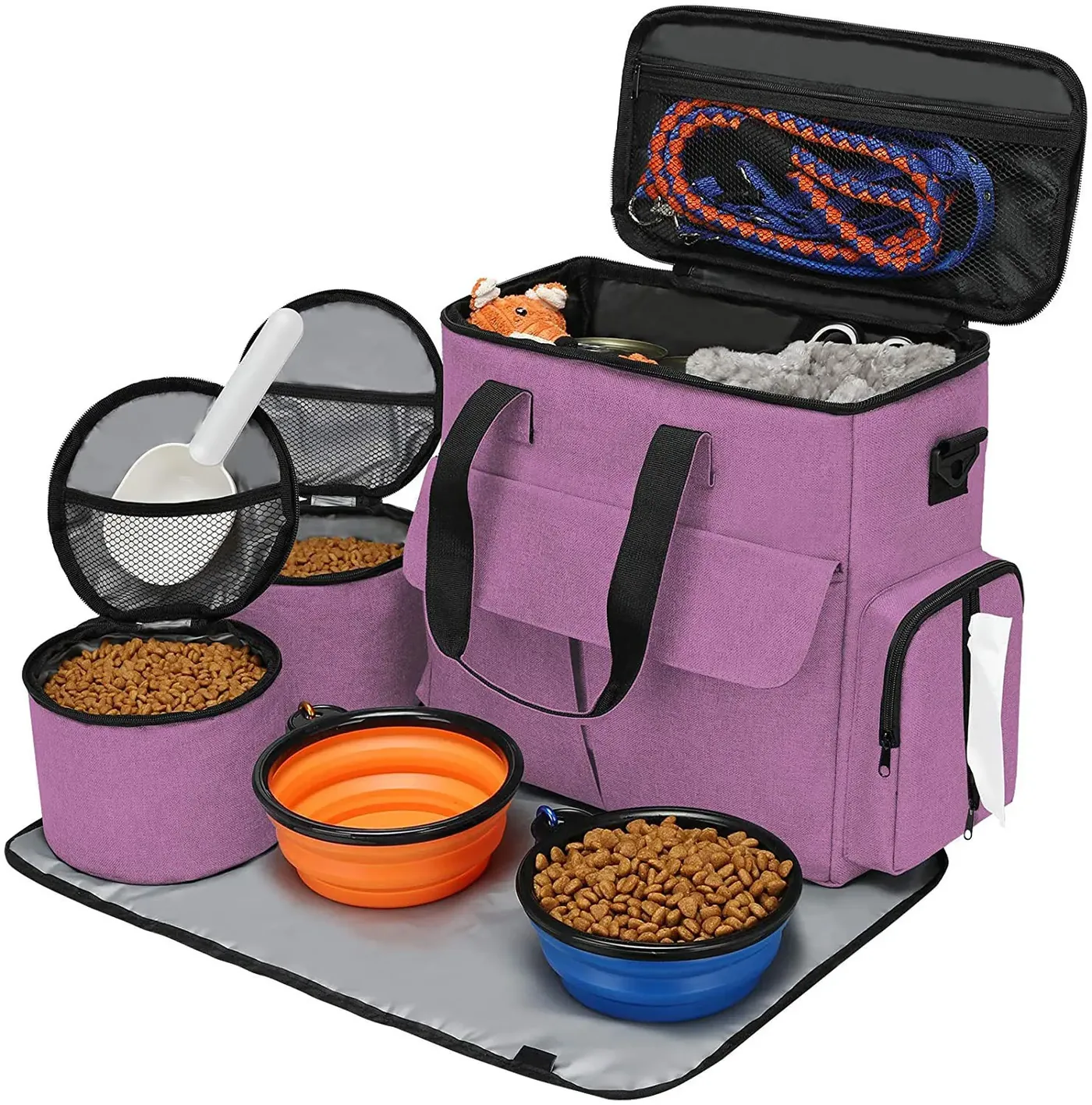
Washability, drying time and material choices that shorten turnaround
Material selection for foster bags is a trade-off between durability and drying speed, and the trade-off is usually resolved in favour of drying speed. A heavier shell lasts longer, but if it takes a day longer to dry then the network needs more bags in inventory to serve the same number of placements, and the inventory cost swamps the durability gain. The right question is how many cycles the bag needs to survive to reach the replacement budget, not how durable it can be made.
Solution-dyed polyester is the usual answer. It holds colour through hot washing far better than piece-dyed fabric, dries quickly, and is available in the light colours that make a cleanliness check easy. Its weakness is abrasion resistance at contact points, which is addressed by a slightly heavier denier on the base panel and on the handle attachment area rather than by moving the whole shell up a weight class.
Interior construction matters more than interior material. A single compartment with smooth, bound seams wipes clean and dries fast. Dividers, elastic loops and mesh pockets all extend drying time and create the crevices that make a cleanliness check unreliable. Where organisation is genuinely needed, an external pocket is better than an internal one because it keeps the animal compartment clean and dry.
Hardware should be chosen for washability as well as for strength. Coated sliders and corrosion-resistant rings survive chlorine-bearing detergents; bare zinc alloy does not. Plastic hardware dries fastest and does not corrode at all, but it is weaker at load points, so the sensible allocation is corrosion-resistant metal at load points and plastic elsewhere. This is a small specification decision with a large effect on how a bag looks after thirty washes.
- Solution-dyed shell for colour stability through repeated hot washing.
- Light interior colour so a returned bag can be checked at a glance.
- External organisation instead of internal pockets and loops.
- Corrosion-resistant metal at load points, plastic elsewhere.
- Removable board so the bag can be flattened for drying.
Colour coding and status identification systems
Status identification is the operational feature that separates a foster kit from a generic bag. A carer receiving an animal does not know its history, and the organisation needs a low-effort way to communicate vaccination state, isolation requirement and feeding notes without relying on a phone call that may not happen. A colour-coded system plus a writable card sleeve achieves that with no technology and no training.
The simplest version uses bag colour for status: one colour for animals in an isolation period, another for cleared animals, and optionally a third for animals with a specific medical need. The system fails if the colour set is too large to remember, so three states is the practical maximum. Networks that try to encode five states with colour end up with a chart nobody consults.
Colour coding has a procurement consequence that buyers should plan for. Each colour is a separate MOQ of 500 units, so a three-state system means 1,500 units minimum unless the organisation can buy one body colour and vary an accessory. A common compromise is one body colour with three colours of removable ID card, which preserves the operational benefit at a third of the inventory commitment.
The card sleeve itself should be specified carefully. It needs to be writable with a standard pen, legible after washing, and replaceable when the card is finished. A clear TPU window over a card slot is the reliable construction; an exposed writable surface smudges and washes off. Buyers should test the sleeve with the pen the network actually uses, because some marker inks are removed by hot wash and others are not.
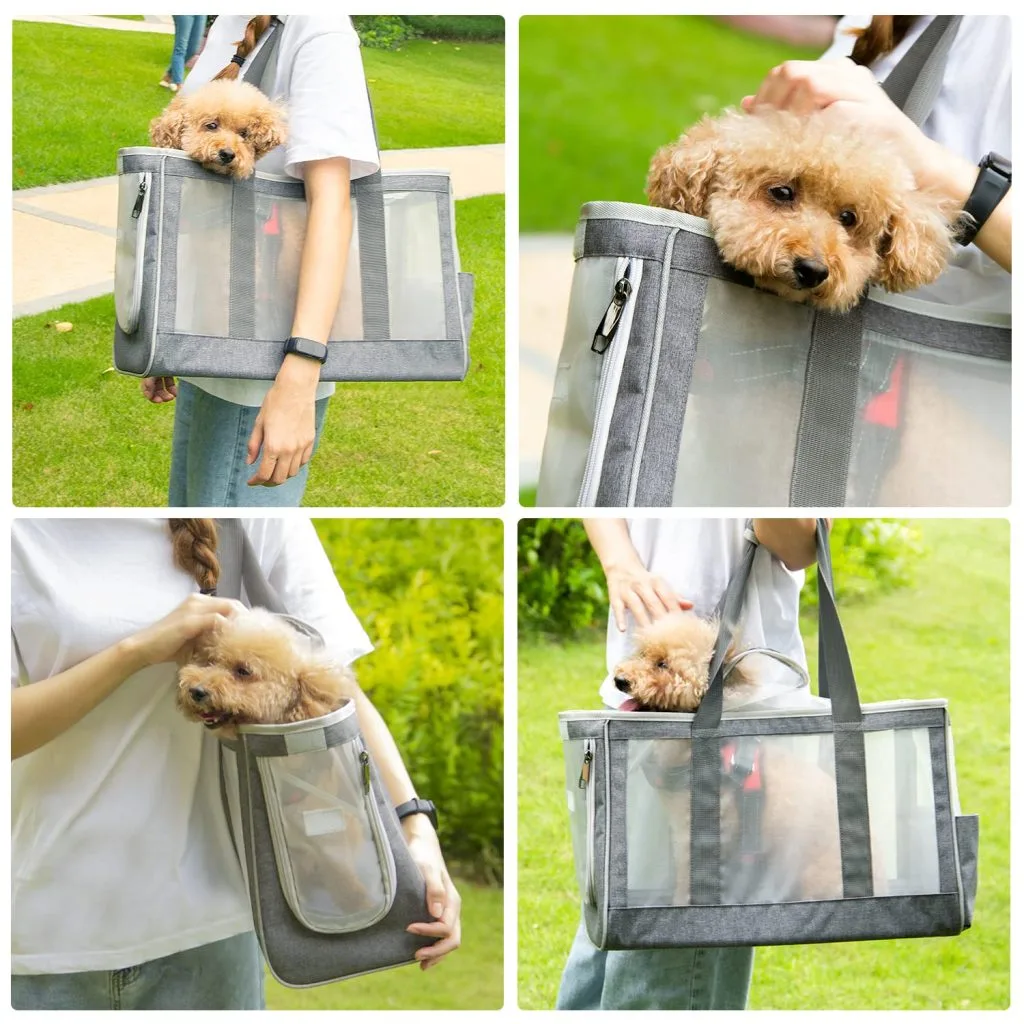
Sizing one bag for an unknown animal
Foster networks do not know what they will receive, which makes sizing the hardest specification decision in this category. The instinct is to buy the largest size that might be needed, and that instinct is usually wrong: a bag sized for a large dog is uncomfortable and inefficient for the small animals that make up the majority of placements, and it costs more per unit across the whole fleet.
The better approach is to size for the distribution of actual placements rather than for the maximum. Most networks find that one medium size covers roughly seventy to eighty percent of placements, with a smaller number of large cases handled by a separate small pool of larger bags. Buying eighty percent of the fleet in the medium size and twenty percent in a large size costs less and serves better than buying everything large.
Adjustability helps close the remaining gap. A removable divider, an adjustable internal tether and a roll-back opening let one bag serve a range of animal sizes without becoming a compromise for any of them. These features cost a little more and add a small amount of drying time, so they should be specified where the case mix genuinely varies rather than as a default.
Buyers should also consider species mix. A network fostering cats and dogs has two different requirements: cats need secure containment and a small dark space, dogs need ventilation and floor space. A separate small cat specification is often more efficient than trying to stretch one bag across both, and cat bags are cheaper per unit because they are smaller.
There is also a carer-side dimension to sizing that buyers rarely model. A foster carer is a volunteer who may be managing several animals, a household and a full-time job, and a bag that is awkward to carry or slow to load will be used less often than the programme intends. Load height, opening width and the ability to set the bag down without it collapsing all affect whether a carer actually uses the kit for short trips to a veterinary appointment. Specifying a bag that opens wide and stands upright on its own is a small cost that materially raises utilisation.
Finally, plan size pools against the time of year. Kitten and puppy season shifts the case mix sharply for several months, and a network running a fixed fleet will find its medium bags rationed while its large bags sit unused. Holding the annual order until after the seasonal peak, or ordering a modest top-up of small sizes ahead of it, is a scheduling decision that costs nothing and prevents the most predictable shortage in the fostering calendar.
Cost per placement: reuse economics and replacement planning
Cost per placement is the metric that should govern every foster bag decision, and it is straightforward to calculate: unit price divided by expected placements, plus a share of the washing and administrative cost per turnaround. Networks that adopt it almost always move up one specification tier, because the durability gain is worth more than the price difference once the replacement cycle is counted.
The metric also reframes the drying-time question. A bag that dries in four hours rather than eight effectively doubles the number of placements a unit of inventory can support, which halves the number of bags the network must own. That saving appears nowhere in a unit-price comparison and is frequently larger than the entire price difference between tiers.
Replacement planning should be built into the first order. Bags do not fail all at once; they fail gradually, and a network without a replacement plan discovers the problem when coordinators start rationing kits. Tagging bags with an issue date and tracking placements per unit gives an objective retirement trigger, and it produces the data a funder wants to see.
Budgeting should also account for the administrative cost of the return process itself. A bag that is easy to check, quick to wash and simple to log costs less per placement than a more durable bag that requires twenty minutes of coordinator attention per turnaround. This is a genuine specification criterion and worth stating explicitly in a tender.
Deposit and return schemes are worth modelling alongside the purchase decision. Some networks charge a small refundable deposit to encourage return, and the administrative cost of running that scheme can exceed the value of the bags it recovers if the bag is cheap enough to be treated as disposable. The right answer depends on the unit price: below roughly USD 6 per unit a deposit scheme rarely pays for itself, while above USD 9 it usually does. Buyers should run that arithmetic before choosing a specification tier, because it interacts directly with the replacement forecast.
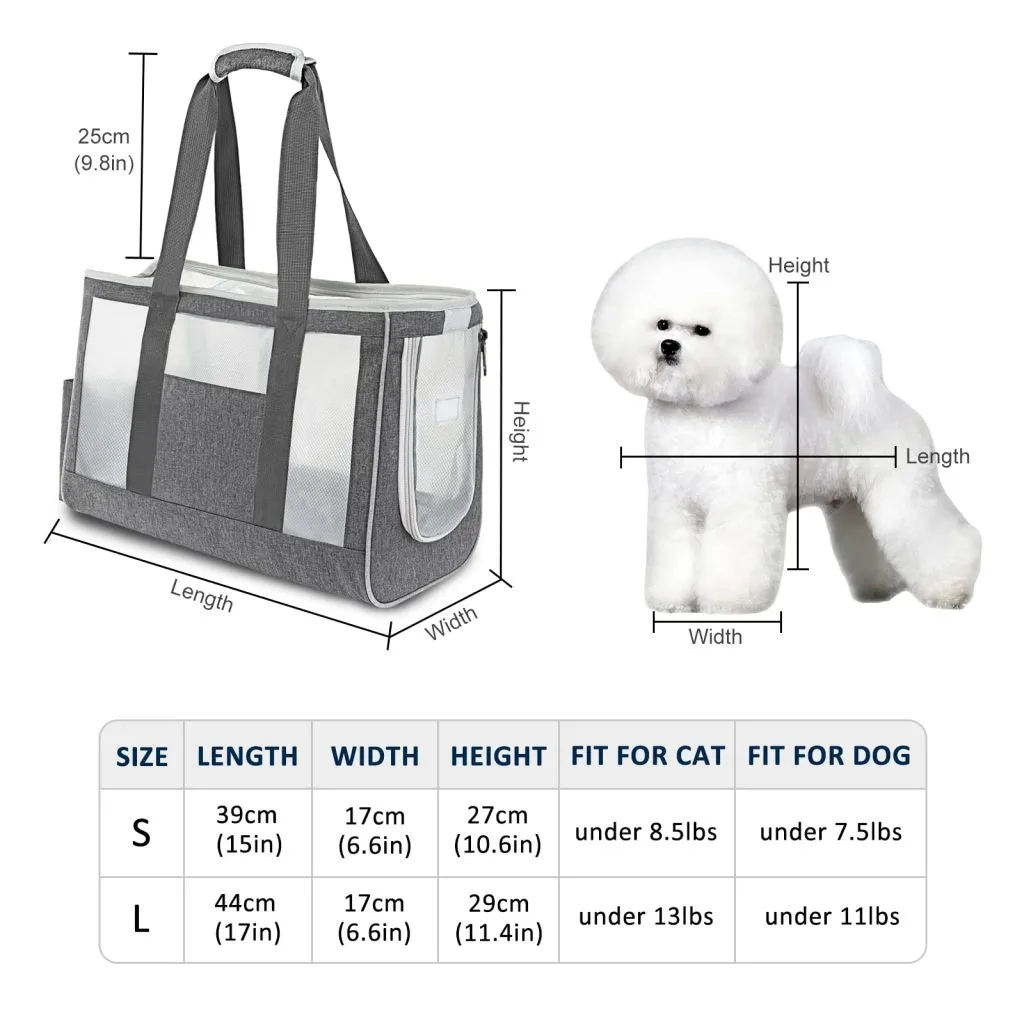
Compliance, chemical safety and household use
Foster bags go into private homes and are handled by volunteers and frequently by children in those homes, which brings the same product-safety expectations as a consumer item. United States networks should hold CPSIA lead and phthalate reports on accessible substrates and a Prop 65 assessment where they operate in California. European networks need REACH SVHC declarations against the actual production lot.
An OEKO-TEX certificate on the shell and lining is the efficient way to close the chemical question, and it is increasingly requested by municipal funders who apply the same procurement standards to pet equipment as to other purchased goods. Buyers should request the certificate against the named fabric rather than a generic document.
Animal-side safety guidance matters as well, and networks usually align their equipment policy with veterinary advice on housing and transport. Resources published by the American Veterinary Medical Association are commonly cited by municipal and shelter partners, and a bag specification supporting ventilation, neutral posture and easy cleaning aligns with that guidance without needing to overstate any claim.
Documentation should travel with the order: compliance reports, a wash and dry test record, a retained production sample and a specification sheet. Networks distributing under a municipal contract will be asked for this file, and assembling it at order time costs far less than reconstructing it during an audit.
Ordering, replenishment and network logistics
MOQ 500 per colour is the working minimum, and the practical constraint for most networks is not the number itself but the split: whether to buy one size or two, and whether colour coding forces multiple fabric minimums. The usual resolution is one body colour, one large size at roughly twenty percent of volume, and a colour-coded card system rather than colour-coded bags. That keeps a network inside a single fabric minimum for the bulk of its fleet.
Samples take 6-10 working days and should be put through the real turnaround cycle before approval: wash hot, disinfect, dry, and time the drying. Approving a foster bag on appearance alone is the most common procurement error in this category, because every failure mode is a wash-cycle failure rather than a visual one.
Bulk production is 35-50 days after sample approval and deposit, and inspection to AQL 2.5 should be supplemented with the wash-cycle and drying-time gates defined in the specification. A pre-production sample built on the bulk line is worth the extra week for first orders, because it is the last point at which a material substitution can be caught before a full fleet is produced.
Replenishment works best on a fixed annual cycle tied to the network's placement forecast, with a standing specification that does not change. Networks that re-tender annually lose the continuity that makes cost-per-placement tracking possible, and they pay for it in both price and administrative time. Our production team retains the tech pack and compliance file for repeat programmes so a re-order is a confirmation rather than a new development.
Distribution from a central point to carers' homes is the final logistical step, and it is usually underestimated. Bags are bulky, carers are geographically scattered, and a network distributing by post pays a parcel cost that can approach the price of a cheap bag. Consolidating distribution with an existing touchpoint, such as a monthly supply pickup or a vaccination clinic visit, removes that cost entirely and is the single most effective logistics decision available to a volunteer-run network.
Why brands source here
- Pet bag programmes run since 2014; founding team in sewn goods since 2004
- SGS-verified production floor of 4,950 m² with 137 workers across 7 lines
- Monthly capacity of 200,000 units, audited to BSCI and ISO 9001
People Also Ask
What size foster bag covers most placements?
A 16-20 litre bag covers the large majority of dog and mixed placements in a typical network, with a smaller pool of large-size bags held for the remaining cases.
Are foster bags different from adoption bags?
Yes. Foster bags are reusable assets returned between placements and specified for wash cycles and drying speed; adoption bags are single-issue presentation items specified for cost and appearance.
Can one bag serve both cats and dogs?
It can, but a separate smaller cat specification is usually more efficient because the containment and ventilation requirements differ and cat bags cost less per unit.
What lining colour is best for a foster bag?
A light interior colour. Coordinators need to check a returned bag for cleanliness quickly, and a dark multi-pocket interior makes that check slow and unreliable.
How fast should a foster bag dry?
Standard specifications target four to six hours and isolation-grade specifications two to four, measured under stated ambient conditions with the board removed and the bag open.
Frequently Asked Questions
What is the MOQ for foster bags and can we mix sizes?
MOQ is 500 pieces per colour. Networks usually buy one body colour at 500 or more and specify a separate large size only if case mix justifies it, avoiding a second fabric minimum for a small pool.
How many placements should a foster bag survive?
A standard network specification targets 35-45 placements and an isolation-grade specification 50 or more. That count is what converts unit price into a meaningful cost per placement.
What wash rating should we specify?
Standard networks specify 60 degrees for fifty cycles, validated on a production sample. Isolation-grade specifications add a disinfectant step and must be tested for coating haze and hardware corrosion.
Why does drying time matter more than durability?
Drying time sets how many placements a unit of inventory can support. Halving drying time halves the fleet a network must own, which usually saves more than the price difference between specification tiers.
Can we colour code bags by animal status?
Yes, but each colour is a separate 500-unit minimum. A cheaper approach is one body colour with three colours of replaceable ID card, which preserves the operational benefit at a third of the inventory commitment.
What ID system survives repeated washing?
A clear TPU window over a card slot with a writable card is the reliable construction. Exposed writable surfaces smudge and wash off, and some marker inks are removed by hot wash.
Should foster bags have internal pockets?
Generally no. Internal pockets and dividers extend drying time and create crevices that make the cleanliness check at return unreliable. External organisation keeps the animal compartment clean and dry.
How long does bulk production take?
35-50 days after sample approval and deposit, with the longer end applying to isolation-grade laminates and to orders scheduled in a seasonal peak.
What inspection gates apply beyond AQL 2.5?
Add a wash-cycle gate and a drying-time gate under stated conditions, plus a closure-cycle check. These are the failure modes that visual inspection at AQL 2.5 does not catch.
Which compliance documents should a network hold?
CPSIA lead and phthalate reports for US programmes, a Prop 65 assessment for California, REACH SVHC declarations for Europe, and ideally an OEKO-TEX certificate on shell and lining.
Is a pre-production sample worth the extra time?
Yes for first orders. It is the last point at which a material or hardware substitution can be caught before a full fleet is produced, and it costs about a week.
How should we plan replacement?
Tag bags with an issue date, track placements per unit and retire on a cycle count rather than on appearance, because coating degradation is rarely visible until advanced.
Talk to QUANZHOU JUNYUAN BAGS about a wholesale pet bag order: MOQ 500 pieces per colourway, samples in 6-10 working days, bulk production in 35-50 days under AQL 2.5 inspection.
Get a free quote Request a sample