Quick Dry Pet Bag: Fast Drying Fabric Specs for Wholesale
A quick-dry pet bag should shed surface water in under 15 minutes and reach below 8 percent residual moisture within 2-4 hours at 20 C and 65 percent relative humidity. That result comes from fibre choice more than from any finish: polyester and polypropylene absorb under 1 percent of their weight in water, while cotton holds around 8 percent. Specify drying time as hours under stated conditions and the claim becomes testable.
Fast drying is an after-sales cost lever disguised as a fabric feature. A bag that stays wet overnight generates odour complaints, mould returns and marketplace reviews that mention smell rather than design, and those costs land on the importer long after the unit price is forgotten. Buyers who specify drying performance up front spend very little extra and remove an entire category of complaint.
The commercial frame is standard for the category. MOQ 500 pieces per colourway, a prototype in 6-10 working days once fabric and construction are confirmed, and bulk production of 35-50 days after sample approval and deposit. Release is against AQL 2.5 for major defects, with the drying behaviour verified on the sample rather than assumed from the fabric name.
The decision rule is worth stating plainly: choose hydrophobic fibre, non-absorbent batting and a removable liner before you spend money on an anti-microbial finish, because a bag that dries quickly does not need one. Chemistry is the second line of defence, not the first.
Pet bag lead time is quoted from sample approval, not from enquiry, and Material & Technology choices are the main variable inside that window. Pet bag production time stretches when a colourway is added late, so pet carrier lead time and pet bag wholesale cost should be agreed in the same email.
What Fast Drying Means as a Purchasable Specification
Drying time is a number that almost never appears on a pet bag technical sheet, which is odd given how directly it drives returns. The specification should have three parts: the condition, the threshold and the end point. State the condition as an ambient temperature and relative humidity, typically 20 C and 65 percent. State the end point as residual moisture content, commonly below 8 percent of dry weight for a full bag including the padding. Then state the threshold, which for a well-designed quick-dry build is 2-4 hours.
A second useful number is surface shedding time, meaning how long the exterior takes to stop dripping and feel dry to the hand, measured in minutes rather than hours. Customers judge the product on this number, not on residual moisture, and a bag can pass a laboratory drying test while still feeling unpleasant for the first half hour. Both belong in the specification, and both are cheap to measure.
Note what the definition excludes. Drying time is not the same as water resistance, and a bag can be extremely water resistant and extremely slow to dry if it traps moisture inside a laminated shell. Nor is it the same as breathability, although the two correlate: a construction that lets vapour out usually lets liquid water escape as well.
For procurement purposes the citable conclusion is that drying performance is set at material selection, not at finishing. Once an absorbent fibre and an absorbent batting are specified, no finish, coating or additive will turn the product into a quick-dry one, and the buyer who discovers this after the first shipment pays for it twice.
Break the target down by component rather than setting one number for the whole product. A practical allocation is shell under 30 minutes to surface dry, removable liner under 60 minutes, and padding under 4 hours, with the assembled bag judged on the slowest component rather than the average. Component-level targets make supplier discussions concrete: when a sample dries slowly, the weighing record shows immediately which part is holding water, and the correction is a material change rather than a redesign of the whole bag.
Fibre Choice: Moisture Regain Decides Drying Time
Moisture regain is the percentage of water a dry fibre absorbs from a standard atmosphere, and it is the single most predictive number for drying behaviour. Fibres below 1 percent regain dry fast because water sits on the surface and in the gaps between yarns, where air can carry it away. Fibres above 4 percent hold water inside the polymer or the cell structure, and that water has to diffuse out, which is slow and is what makes a bag feel damp the next morning.
| Fibre | Moisture regain | Drying behaviour | Cost per metre index | Wholesale verdict |
|---|---|---|---|---|
| Polypropylene | 0 percent | Fastest, water sits on surface | 0.85-1.00 | Best drying, limited aesthetics |
| Polyester | 0.4 percent | Fast, dries in 2-4 hours | 1.00 | Default quick-dry choice |
| Nylon 6 and 6,6 | 4.0-4.5 percent | Moderate, 4-8 hours | 1.30-1.60 | Stronger but slower |
| Acrylic | 1.5-2.0 percent | Good | 1.10-1.30 | Niche, used in fleece linings |
| Cotton and canvas | 7.0-8.5 percent | Slow, 8-24 hours | 1.00-1.40 | Avoid where drying matters |
| Viscose and rayon | 11-13 percent | Slowest | 0.95-1.20 | Avoid in wet-use products |
The table explains most of the category. A polyester shell with polyester batting dries in hours; the same design in canvas with cotton wadding can still be damp a day later. Nylon occupies an awkward middle ground: it is stronger and more abrasion resistant than polyester, which is why it appears in premium shells, but its regain is roughly ten times higher and programmes built on nylon need help from construction rather than chemistry.
Linings deserve separate treatment because they are closest to the animal and get the wettest. A polyester mesh or a hydrophobic spacer fabric dries quickly and keeps air moving, while a cotton fleece lining will hold moisture against the coat. If a soft hand feel is required, specify a low-pile polyester fleece rather than a cotton blend; it feels acceptable and dries several times faster.
Construction Choices That Move Water Out
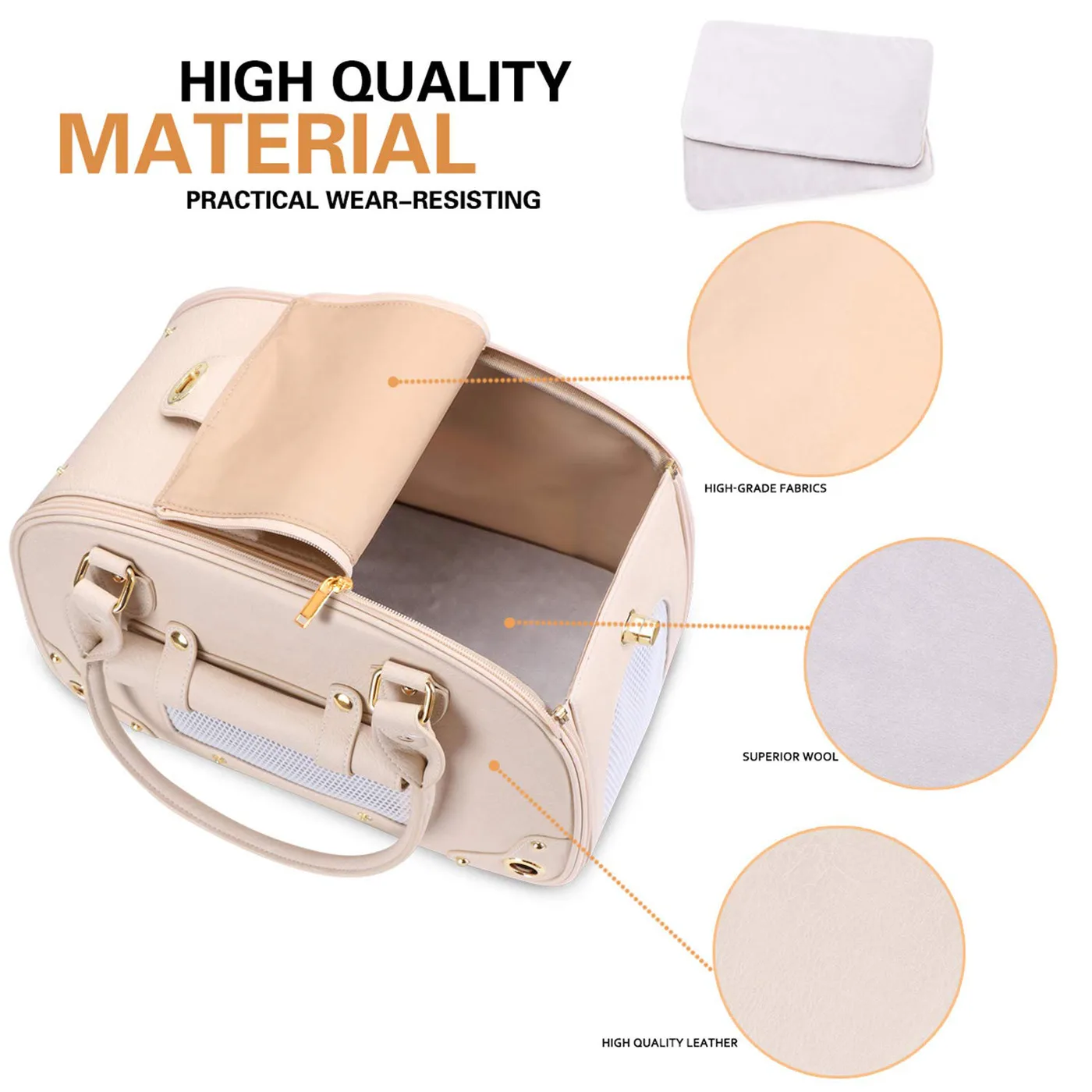
Construction determines whether absorbed or trapped water can leave. Four decisions dominate. The batting or padding should be closed-cell foam or a hydrophobic nonwoven rather than cotton wadding or a hydrophilic needle-punched felt; closed-cell foam absorbs essentially nothing, so the interior of the bag does not become a reservoir. The base panel should include drainage pathing, either through a mesh panel, a set of grommets at the lowest corners, or a raised internal floor that lets water collect away from the animal.
The liner should be removable. A liner that lifts out can be dried separately, and it also allows the shell to be wiped and aired without waiting for the padding. Removable liners add 0.80-2.20 USD per unit in material and labour and are the single most effective quick-dry feature available at wholesale scale.
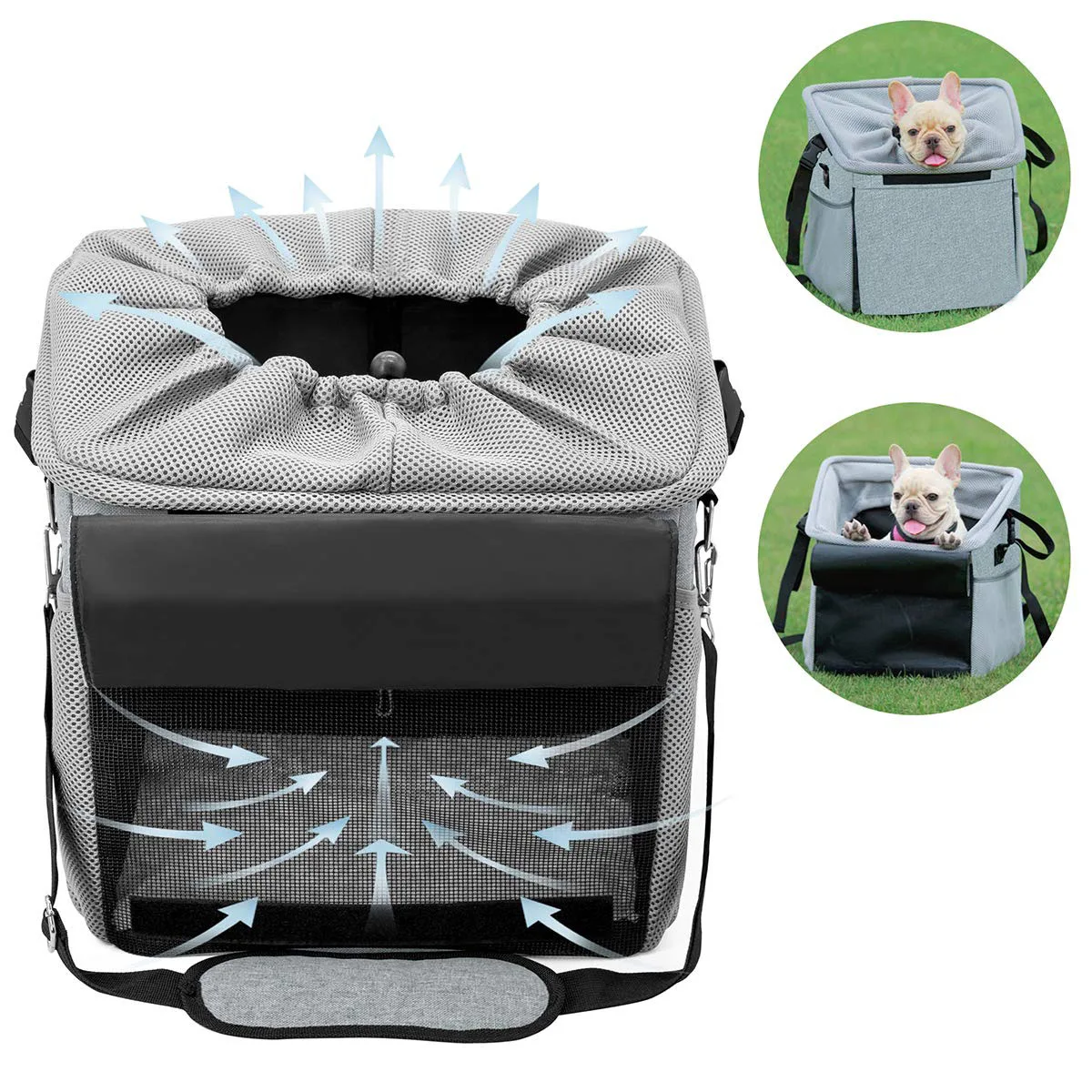
Ventilation is the third decision and interacts directly with drying. Mesh panels of 12-20 percent of the surface area keep air moving through the interior, and a spacer mesh at the base does double duty by letting air under the animal. Buyers often specify ventilation for comfort and discover the drying benefit afterwards; it should be specified for both.
The fourth decision is what to avoid. Heavy laminates and waterproof membranes trap moisture inside the shell, and fully sealed floors with no drainage turn a small amount of ingress into a long drying problem. Where water resistance and fast drying are both required, the practical compromise is a splash-resistant face finish on a hydrophobic fabric with drainage at the base, rather than a fully sealed build.
Hardware belongs in the same review. Metal grommets at drainage points rust in a wet product and stain the fabric, so specify brass, stainless or a coated alloy, or use a plastic eyelet where the load allows. Feet or a raised base rail keep the floor off wet ground, which reduces water uptake at the panel that touches puddles first. Both items cost 0.15-0.60 USD and both remove the kind of visible deterioration that customers photograph and post.
Wicking, Coatings and the Trade-off With Water Resistance
Wicking finishes move liquid water along the fibre surface so it spreads and evaporates faster, and they are the standard complement to a hydrophobic fibre. A wicking finish costs 0.10-0.30 USD per metre, survives a reasonable number of washes, and reduces the surface shedding time materially. It does not change the moisture regain of the fibre, so it helps the shell dry but does nothing for an absorbent batting underneath.
The trade-off with water resistance is real and should be decided deliberately rather than discovered. A durable water repellent finish makes water bead and roll off, which helps a bag shed a shower, while a wicking finish makes water spread, which helps it dry after it is wet. Applying both to the same face is possible but the effects work against each other, and the usual resolution is a repellent finish on the outer face and a wicking treatment on the inner lining.
Coatings reduce drying speed in proportion to how much air they block. A light back coating of 10-20 gsm has a modest effect; a heavy coating or a film laminate can double or triple drying time because the inner surface cannot release vapour. When a programme needs both rain protection and quick drying, the better engineering answer is a removable rain cover or a storm flap rather than a fully laminated shell.
Buyers should also consider the drying environment the product will actually meet. A bag sold into a humid tropical market dries slowly regardless of fibre, and there the removable liner and drainage features matter far more than any finish. A bag sold into a dry continental climate dries quickly with almost no help, and the money is better spent elsewhere.
There is also a logistics argument for specifying drying performance that importers overlook: moisture in a sealed carton. A container of bags packed at even modest residual moisture arrives with a measurable risk of mould and of a musty smell that customers attribute to poor quality. Requiring the padding to be dry before packing, and using breathable carton packing rather than a sealed liner for humid destinations, costs nothing and removes a complaint category that no amount of design work can fix after arrival.
Test Methods and Acceptance Criteria
Drying behaviour can be measured, and doing so costs little. Drying rate is assessed with a heated plate method such as the AATCC drying rate test, water absorbency and spreading are covered by AATCC absorbency methods, and standardised domestic washing before testing is governed by the ISO 6330 series. Naming the method rather than the outcome is what makes a supplier result verifiable.
Methods and current versions are published by AATCC, the washing standards by the ISO system, and any certificate attached to animal-contact fabric is best issued under OEKO-TEX Standard 100. Third-party verification through a laboratory such as SGS is worth commissioning once per construction and reusing for repeat orders.
| Property | Method family | Quick-dry acceptance | Test stage |
|---|---|---|---|
| Drying rate | AATCC drying rate method | Full dry in 2-4 hours | Fabric and finished bag |
| Surface absorbency | AATCC absorbency method | Under 5 seconds wetting | Fabric approval |
| Residual moisture | Gravimetric after ISO 6330 wash | Below 8 percent at 4 hours | Sample approval |
| Padding uptake | Immersion and weigh | Closed-cell foam under 2 percent | Material approval |
| Finish durability | Wash then retest drying rate | No more than 20 percent slower | Sample approval |
The practical factory test that matters most is a full-bag wash and hang test: wash the finished bag, hang it in a standard room, and weigh it every hour. It requires a scale and patience rather than a laboratory, and it tells the buyer what the customer will actually experience. Require it on the approval sample and on one production piece per week.
Cost Structure, MOQ 500 and Price Banding
Fast drying is one of the cheaper performance features to specify, because most of the cost sits in material selection rather than in added processing. Moving from cotton wadding to closed-cell foam costs 0.30-0.90 USD per bag. Specifying polyester instead of a cotton-rich blend costs nothing at the same fabric grade. A wicking finish adds 0.10-0.30 USD per metre. A removable liner is the expensive item at 0.80-2.20 USD, and drainage grommets with a raised internal floor add 0.25-0.70 USD.
Adding all of it to a mid-spec bag costs roughly 1.50-4.00 USD per unit, which is comparable to a single season of avoided returns in a wet-weather programme. Where budgets are tight, the priority order is: closed-cell or hydrophobic padding first, removable liner second, drainage third, wicking finish last. That order reflects how much each item moves the actual drying time.
MOQ behaviour follows the standard pattern. MOQ 500 pieces per colourway is the level at which fabric, foam and trim purchases stop carrying small-lot surcharges, and price steps at 500, 1,000 and 3,000 pieces with the sharpest movement between 500 and 1,000. Terms are FOB Xiamen with T/T 30/70. Foam is the component most likely to carry a cutting minimum, so confirm it at quotation stage rather than at order placement.
Finally, account for the cost of the care card. A quick-dry bag should tell the customer to air it open rather than to tumble dry it, and that instruction protects both the foam and any coating. Printing it costs cents and prevents a category of damage claims that otherwise arrives looking like a manufacturing defect.
Durability: Does Fast Drying Survive Washing and Use
Drying performance degrades in three ways, and all three can be managed at specification stage. Wicking finishes wash out gradually, so the specification should state drying time after five and after twenty washes rather than only on a new product. Foam and nonwoven paddings can compress with use, closing the air paths that carry moisture out, so a higher-density closed-cell foam holds its drying behaviour longer than a low-density one even though it costs slightly more.
Dirt and oils are the third degradation route. Pet hair, skin oils and cleaning residues reduce the surface energy of a fabric and slow both wicking and evaporation, which is why a quick-dry bag must also be easy to clean. Specifying a smooth face fabric that releases hair, plus a liner that can be removed and washed separately, keeps the drying performance close to its original value for far longer.
Independent testing houses such as SGS can run a wash-durability cycle on the drying claim, and that single report is usually enough to satisfy a retail buyer who asks whether the feature lasts. Commission it once per construction and reference it across the colour range, since finish durability does not vary by colour.
The durability question also has a commercial answer worth giving customers directly: publish the care instruction, recommend air drying with the liner removed, and state that the drying performance is measured on a clean bag. Programs that set that expectation see markedly fewer complaints than programs that let customers discover the effect of accumulated oils for themselves.
Sampling, Bulk Scheduling and AQL 2.5 Inspection
Sampling a quick-dry programme is quick because none of the features require tooling. After fabric, padding and liner construction are confirmed, allow 6-10 working days for a prototype, plus two days for the wash and hang test on the finished bag. Approve on the measured drying curve rather than on the fabric name, because two polyesters with the same denier can behave very differently once assembled.
Bulk production runs 35-50 days after approval and deposit. The critical path item is usually the foam or spacer material rather than the fabric, since specialist paddings are made to order in some specifications. Confirm the padding booking at deposit, and avoid changing the padding after approval because it changes both the drying behaviour and the hand feel.
Inspection follows AQL 2.5 for major defects and AQL 4.0 for minor defects, with quick-dry specific items written in. The relevant defects are a missing drainage feature, a liner that is not removable where specified, padding substituted with an absorbent alternative, and mesh panels that are blocked by lining placement. Substitution of the padding is the one to watch, because it is invisible from the outside and it is the single change that most damages drying performance.
Release documentation should include the inspection report, the wash and hang drying record for the sample, and confirmation of the padding material by specification rather than by trade name. A purchase order that names the material generically gives an inspector something to check against; one that names only a brand gives the factory room to substitute.
Where Quick Dry Sells: Climates, Channels and Use Cases
Fast drying is not a universal requirement, and treating it as one wastes margin in markets where nobody cares. It sells hardest in humid and rainy climates, where a bag that stays damp overnight develops odour and mould; in grooming and washing channels, where the product is wet by design and turnaround time matters to the operator; in travel and outdoor programmes, where a bag gets caught in weather away from home; and in any product sold with a washable claim, because the drying time is what determines whether the washable claim is usable.
It matters much less in dry continental climates, in indoor-only carriers, and in fashion-led products that will never see water. In those programmes the money is better spent on hand feel, print quality and hardware, and specifying quick-dry features would add cost with no perceptible benefit to the customer.
Channel language should follow the same logic. For a grooming channel, lead with turnaround: liner out, shell wiped, dry within the working day. For an outdoor channel, lead with recovery after weather. For a general retail channel, lead with easy care, since the customer's mental model is laundry rather than performance textile. The same product supports all three statements, and each matches a different buyer.
The closing procurement advice is to treat drying time as a line item on the technical pack and to review it once per season against actual return data. If return reasons mention odour, dampness or mould, the fix is almost never a stronger anti-microbial additive; it is a less absorbent padding, a removable liner and a defined drying time that was verified before the order shipped.
Write the requirement into the purchase order in one sentence so it can be inspected rather than debated: outer and lining in hydrophobic polyester, closed-cell padding with uptake below 2 percent, removable liner, drainage at the lowest corners, and the assembled bag reaching below 8 percent residual moisture within 4 hours at 20 C and 65 percent relative humidity, verified by hourly weighing on the approval sample and weekly in production. That single sentence costs nothing to add, and it is the difference between a quick-dry claim and a quick-dry product.
Why brands source here
- Pet bag programmes run since 2014; founding team in sewn goods since 2004
- SGS-verified production floor of 4,950 m² with 137 workers across 7 lines
- Monthly capacity of 200,000 units, audited to BSCI and ISO 9001
People Also Ask
What makes a pet bag dry quickly?
Hydrophobic fibre, non-absorbent padding, drainage at the base, ventilation and a removable liner. Finish chemistry is secondary to those material choices.
Is polyester or nylon better for fast drying?
Polyester, clearly. It absorbs about 0.4 percent moisture against nylon's 4-4.5 percent, which translates into hours of difference in real drying time.
How long does a pet bag take to dry?
A well-designed quick-dry build with polyester and closed-cell foam dries in 2-4 hours. A canvas build with cotton wadding can remain damp for 8-24 hours. Measure it yourself at 20 C and 65 percent relative humidity, and treat any supplier answer given without those conditions as an estimate rather than a result.
Do quick-dry bags prevent odour?
They reduce it substantially, because bacterial growth depends on standing moisture. Fast drying is the first line of defence before any anti-microbial finish.
Can you machine wash a quick-dry pet bag?
Usually yes, with the liner removed and without high heat. Air drying is recommended to protect foam and coatings. A care card that says hang open and air dry, rather than tumble dry low, prevents the foam compression and coating damage that otherwise returns as a manufacturing complaint.
Does a waterproof coating slow drying?
Yes. Heavy coatings and film laminates restrict vapour release and can double or triple drying time compared with an uncoated hydrophobic fabric.
Frequently Asked Questions
What drying time should we specify for a quick-dry pet bag?
Specify full drying to below 8 percent residual moisture within 2-4 hours at 20 C and 65 percent relative humidity, and surface shedding in under 15 minutes. Always state the conditions.
Which fibre dries fastest for pet bags?
Polypropylene absorbs nothing and polyester absorbs about 0.4 percent of its weight, making both fast. Nylon sits at 4-4.5 percent and cotton at 7-8.5 percent, which is why canvas builds dry slowly.
Does a wicking finish replace the need for hydrophobic fibre?
No. A wicking finish moves surface water but does not change fibre absorption. Padding and lining still decide how long the bag stays wet internally.
Is a removable liner worth the extra cost?
Yes, at 0.80-2.20 USD it is the most effective quick-dry feature available. A liner that can be dried separately removes most overnight dampness complaints.
What is the MOQ for a quick-dry programme?
MOQ 500 pieces per colourway, with price steps at 500, 1,000 and 3,000. Confirm foam or spacer cutting minimums at quotation stage.
Can a bag be both waterproof and quick drying?
Only partially. A sealed laminated shell traps moisture and slows drying. The better compromise is a hydrophobic fabric with a splash-resistant face finish, drainage at the base and a removable liner.
How is drying performance tested in the factory?
Wash the finished bag, hang it in a standard room and weigh it hourly until it reaches the residual moisture target. Laboratory drying rate methods support the fabric-level claim.
Do quick-dry finishes survive washing?
They decline gradually. Specify drying time after five and after twenty washes so acceptance is based on a used product rather than a new one.
Which padding should be avoided in a quick-dry build?
Cotton wadding and hydrophilic needle-punched felt. Use closed-cell foam or a hydrophobic nonwoven, which take up under 2 percent of their weight in water.
How does drying relate to odour complaints?
Directly. A bag that stays damp overnight supports bacterial growth, so most odour returns are drying problems rather than hygiene finish problems.
How long do sampling and bulk take?
Sampling takes 6-10 working days plus two days for the wash and hang test. Bulk production runs 35-50 days after approval and deposit.
Should quick-dry bags be tumble dried?
No. Air dry with the liner removed. High heat damages foam and coatings, and a care card stating this prevents avoidable damage claims.
Talk to QUANZHOU JUNYUAN BAGS about a wholesale pet bag order: MOQ 500 pieces per colourway, samples in 6-10 working days, bulk production in 35-50 days under AQL 2.5 inspection.
Get a free quote Request a sample