Pet Bag Manufacturer supplies pet bags at wholesale scale - backpacks, totes, slings, travel bags and wheeled formats - to retailers, marketplace sellers and distribution partners. Orders start at 500 pieces per colourway, samples take 6-10 working days and bulk production takes 35-50 days under AQL 2.5 inspection, shipped FOB Xiamen on T/T 30/70 terms.
Pet Bag Types & Styles
Backpacks, totes, slings, travel bags and wheeled carriers - the full pet bag assortment in one programme.
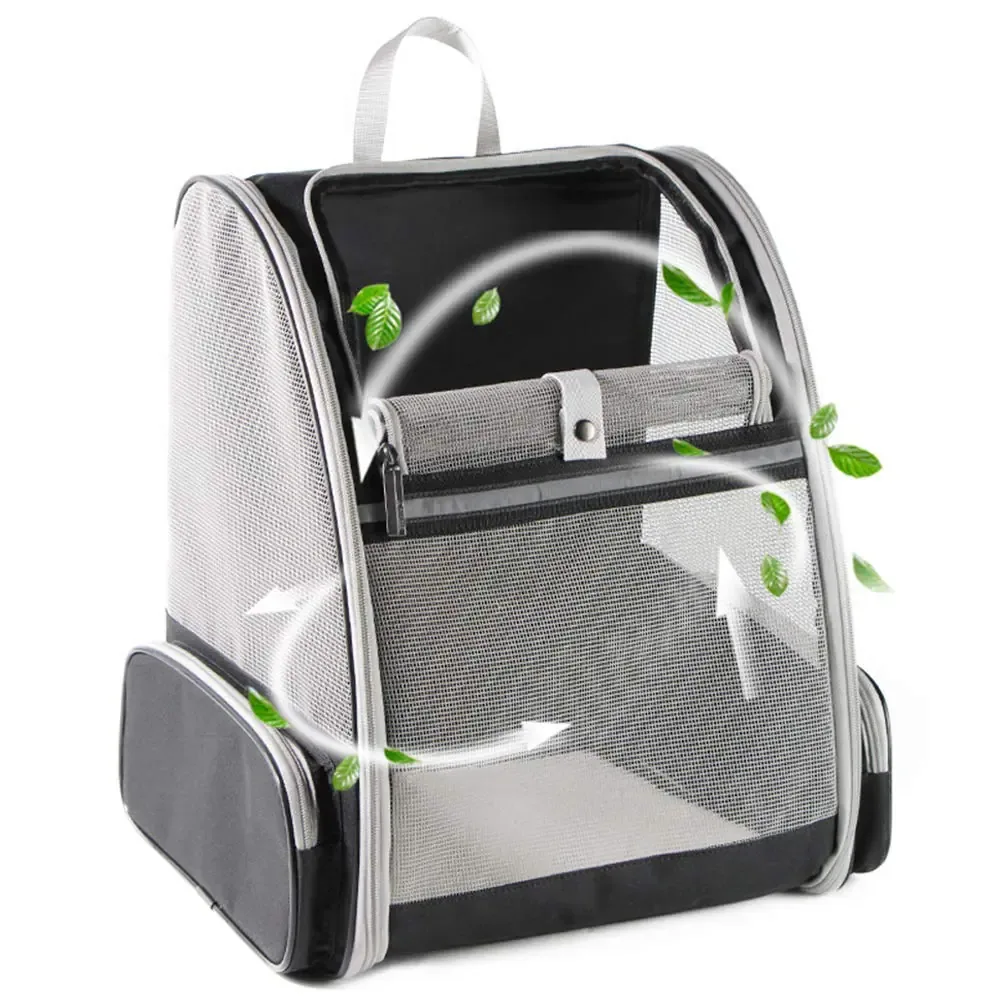
Material & Technology
Fabric, coating, hardware and testing technology, specified to a standard rather than a trade name.
Market & Business Strategy
Pricing, channels, compliance and order economics for buyers sourcing pet bags at wholesale scale.
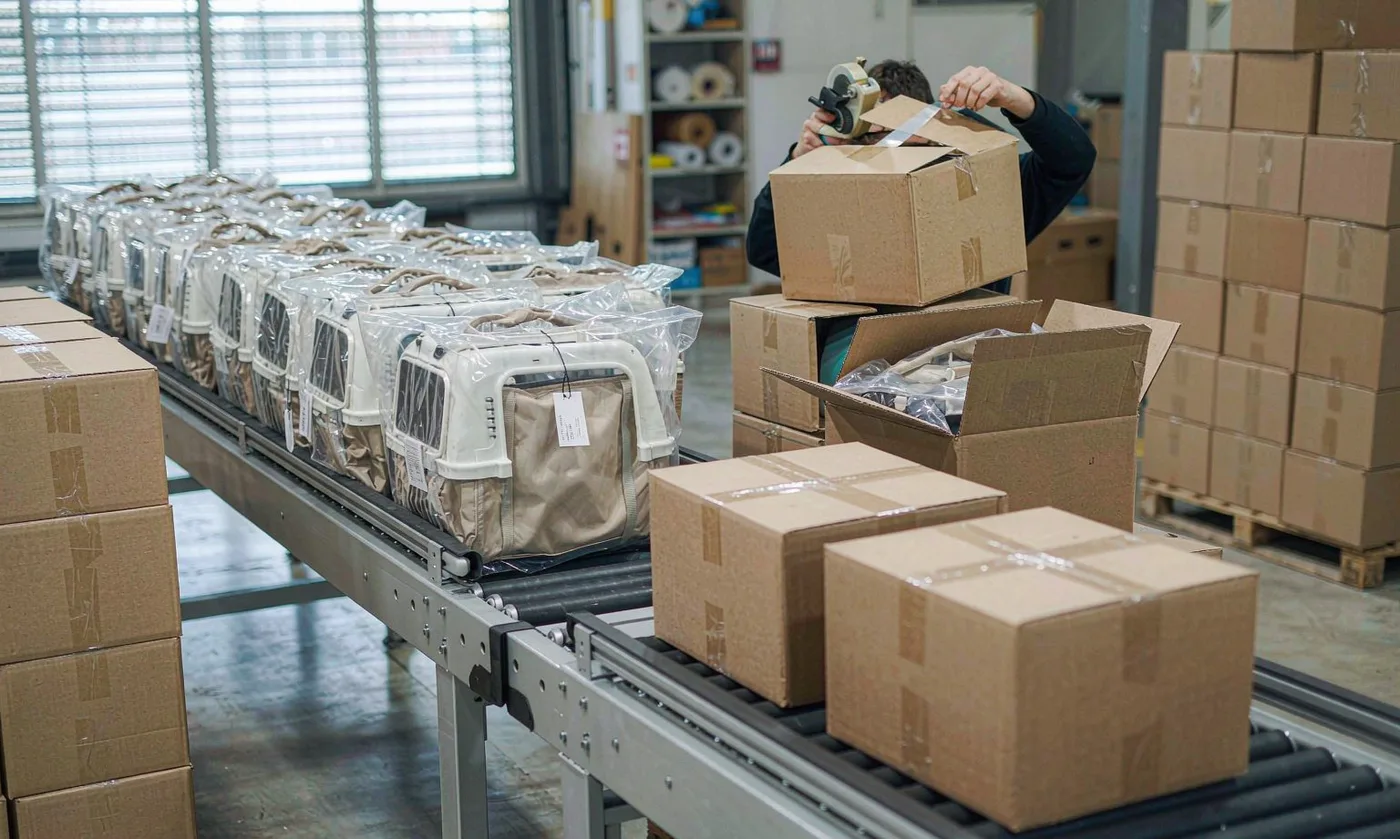
Sourcing programme
Pet Bag Sourcing Programme
The full sourcing path for wholesale buyers: supplier scoring, sampling gates, cost levers, carton planning and shipping documents.
Working terms
| Commitment | Detail | Standard |
|---|---|---|
| Colourway minimum | 500 units per verified colour; size splits inside one style count toward it | Yes |
| Colour matching | Lab dips on the actual substrate, not a paper swatch | Yes |
| Tooling | Owned by the buyer once paid for; never used for another client | Yes |
| Inspection access | Buyer or their nominated agency may attend the pre-shipment check | Yes |
| Documentation | Test reports tied to the exact dye lot and hardware batch shipped | Yes |
What we supply
A custom programme is built in four layers, and each one can be specified independently. The design and branding layer covers logo method, placement, label set, hang tag and retail packaging - the parts a shopper recognises as yours. The material layer covers shell fabric, coating, mesh, padding and hardware, specified to a tested standard rather than a trade name. The colour layer covers Pantone matching on the production substrate, with rub and light fastness validated before release. The size and function layer covers the three size platforms, the carry system, convertible structures and tech add-ons.
Because all four layers share one tech pack, a own-brand buyer can lock a single fabric and colour standard across an assortment and keep the branding consistent between a carrier and the accessories sold beside it.
Materials and testing
Fabric options run from 300D and 600D polyester with PU backing to 900D Oxford, ripstop nylon, TPU-laminated shells and EVA moulded bodies. Hardware is specified by model - YKK or SBS reverse-coil zippers, Duraflex or equivalent acetal buckles - and every hardware batch receives cycle testing before cutting. Colour fastness is checked to ISO 105 rub standards, restricted substances against REACH Annex XVII and California Proposition 65 requirements, and US-bound children's product classifications against CPSIA limits.
Order flow
- Enquiry and brief. Send quantities, target price and reference images.
- Tech pack and costing. We return a BOM-based quote within the agreed window.
- Sampling. 6-10 working days for a first prototype.
- Revisions. Fit, structure, branding placement and labelling adjusted.
- Bulk production. 35-50 days after sample approval.
- Inspection and shipment. AQL 2.5 pre-shipment check, then loading FOB Xiamen or DDP.
Latest guides
- Wholesale Airline Approved Pet Carrier: Dimensions to Build
- Pet Bags Wholesale China: FOB Terms and Loading
- Wholesale Pet Bags USA: Compliance File Preparation
- Wholesale Heavy Duty Pet Carrier: Reinforcement Points
- Wholesale 600D Pet Carrier: Fabric Grade Selection
- Wholesale Waterproof Pet Bags: Hydrostatic Head Specs
- Pet Bag Procurement: Building a Supplier Scorecard
- Pet Bag Buyer Guide: Questions to Ask First
- Pet Bag Wholesale Business: Cash Cycle Planning
- Start a Pet Bag Business: Sourcing First Steps
- Wholesale Pet Bag Demand: Seasonality Planning
- Sample Rounds: What Each Revision Costs to Change
What moves the unit price most
Five line items account for most of the movement in a pet carrier quote, and they are worth understanding before a negotiation starts. Fabric is usually first: moving from 300D to 900D Oxford, or adding TPU lamination, shifts cost more than any other single choice. Hardware is second - a YKK reverse-coil zipper costs several times an unnamed equivalent and is the single most common cause of field returns when cut. Third is the base construction: moulded PP rail assemblies cost real money, while die-cut EVA does not. Fourth is branding method, because embroidery and silicone badges carry per-unit set-up that only amortises over volume. Fifth is packaging - retail box instead of bulk polybag changes both unit cost and carton count, and therefore freight.
| Cost driver | Impact | Note |
|---|---|---|
| Fabric and coating | High | 300D PU to 900D TPU laminate is roughly a 40-70% swing on the fabric line |
| Zippers and buckles | High | Branded versus unbranded hardware is the largest quality variable |
| Base construction | Medium | Die-cut EVA versus moulded PP rail assembly |
| Branding method | Medium | Embroidery and moulded badges need set-up amortised over quantity |
| Packaging | Medium | Retail box raises unit cost and carton count simultaneously |
| Print coverage | Low | Screen print cost is driven by colour count and placement difficulty |
| Label set | Low | Compliance labelling is a fixed cost per unit at this scale |
Typical order patterns by channel
A own-brand brand launching three colourways usually starts at 1,500 pieces split across them, which is enough to clear the 500-per-colourway threshold without over-committing inventory. Pet specialty chains tend to order two sizes of one style at 2,000-5,000 pieces and repeat seasonally. Marketplace sellers often begin with the minimum and reorder faster, which is why we keep 500-piece programmes on standard materials available for faster restocking.
Programme shapes we support
Four buyer profiles account for most enquiries, and each one needs a different kind of help. Brand owners arrive with artwork and a price point but often without a tech pack, so most of the early work is specification. Retail chains arrive with a compliance manual and a delivery window, so the work is documentation and scheduling. Marketplace sellers need small quantities quickly, which favours existing patterns and stock materials. Clinical and grooming buyers prioritise cleanability above all else, which pushes toward coated shells, removable liners and wipe-down hardware.
| Buyer profile | Arrives with | What we solve first | Typical first order |
|---|---|---|---|
| Brand owner | Artwork and price point | Specification development and sampling | 1,500-5,000 pcs |
| Retail chain | Compliance manual and window | Documentation, testing, scheduling | 2,000-10,000 pcs |
| Marketplace seller | Speed and cash flow | Stock patterns, small runs, fast restock | 500-2,000 pcs |
| Clinical or grooming | Cleanability | Coated shells, removable liners, hardware choice | 500-3,000 pcs |
Wider range
Pet carriers are one part of a broader sewn-goods programme. Outdoor dry bags, travel packs and waterproof soft goods run through the same sourcing team, documented on our umbrella site junyuanbags.com.
MOQ 500 per colourway: how colours, sizes and mixed orders count
The unit that carries the minimum on a wholesale pet bag programme is the colourway, not the style, and the baseline is 500 pieces per colourway. One colourway is one shell fabric in one dyed shade with one trim package. Dyeing is a batch process: a mill will not run a bath for a fraction of a lot, and a short bath leaves shade drift along the roll. Thread, webbing, zipper tape and binding are bought to a colour, so the constraint propagates. Below roughly 500 units the setup stops amortising and the unit price climbs.
| Order shape | How the minimum counts | Price effect |
|---|---|---|
| 500 units, one colourway, one size | Minimum met in full | Base tier |
| 500 units, one colourway, sizes S/M/L | Sizes pool into one colourway | Base tier |
| 500 units split 250 plus 250 in two colours | Two short colourways | Uplift on both |
| 1,500 units as three colourways of 500 | Three full colourways | Base plus volume break |
| 800 units as two colourways of 400 | Both colourways short | Uplift quoted openly |
| 150 units as a market test | Evaluation quantity | Priced as sampling |
Size splits are where a buyer gains flexibility. Small, medium and large versions of the same carrier share one dyed fabric, one thread colour, one webbing and one zipper tape, so they consume a single bill of materials against a graded marker. Our production team pools sizes toward the 500-piece threshold. The caveat is marker efficiency: a balanced 200/200/100 nests cleanly, while an extreme 50/50/400 raises cutting waste and the unit price with it.
Mixing colours to reach a total of 500 does not meet the minimum, because the binding constraint is the dye lot rather than the carton count. Where a design uses one body fabric with a contrast panel or binding, hold the body colour constant and vary only the trim: three apparent colourways become one fabric commitment plus three trim commitments. Where the body colour must change, group the shades onto one greige base and dye them in one mill run. Shade continuity is then checked against the retained reference using ISO 105 colourfastness methods.
Quantities below 500 are not refused, they are priced. A first run of 200 or 250 units is a legitimate way to test a market, and our production team schedules it as a short run with the uplift stated line by line rather than buried in the unit price. The uplift is visible because a buyer who sees its source can design around it: consolidate a colour, move volume out of a slow size, or push a second colour into the next window. Each colourway and size still needs its own GS1 barcode.
Landed cost worked example: from FOB Xiamen to delivered warehouse cost
A wholesale unit price is one line of a larger number. The figure that decides whether a programme works is the landed unit cost: what one bag costs on the floor of your distribution centre after goods, freight, insurance, duty, clearance and inland haulage. Two suppliers quoting the same FOB Xiamen price can land several percent apart once carton volume and port charges differ. The table below is a worked example with illustrative rates. It is not a quotation and not a freight tariff: every lane, season and HS classification moves it.
| Cost line | Basis in this example | Amount USD | Per unit |
|---|---|---|---|
| Goods, FOB Xiamen | 3,000 units at 9.80 | 29,400 | 9.80 |
| Ocean freight, LCL | 14.4 revenue tons at 55 | 792 | 0.26 |
| Marine insurance | 110 percent of CIF at 0.30 percent | 101 | 0.03 |
| Import duty | Illustrative 6 percent of customs value | 1,818 | 0.61 |
| Origin CFS and documents | LCL consolidation at load port | 180 | 0.06 |
| Destination THC and CFS | Terminal handling, delivery order | 460 | 0.15 |
| Customs entry and brokerage | Single entry, one HS code | 240 | 0.08 |
| Inland drayage to DC | Port to distribution centre | 480 | 0.16 |
| Landed total | Illustrative, not a quote | 33,471 | 11.16 |
Read the trade term before comparing prices. Under Incoterms 2020, FOB Xiamen means the seller clears export and places the goods on board the vessel the buyer nominates; risk passes there, and freight, insurance, import clearance and duty sit with the buyer. EXW pushes even export clearance onto the buyer, which is rarely workable for a first shipment. DDP moves clearance, duty and taxes to the seller and needs a licensed importer of record at destination.
Two lines in the example deserve isolation. Packaging volume decides freight: this run is 150 cartons at 0.096 cubic metres each, 14.4 cubic metres total, which sits in LCL territory, and a 20-foot container only becomes cheaper per unit once volume approaches the high teens in cubic metres. That crossover is a planning band, not a rule. Duty is the other line: the rate follows your HS classification and destination tariff, not the product name, so confirm the code with your broker before building a margin on any example.
What a buyer controls is structure rather than rate. Raise units per carton where the bag compresses without creasing the baseboard, consolidate colourways to cut dye lots, and give your forwarder and the factory the same carton dimensions so both quotes describe the same shipment.
Repeat runs and reorder timing: skipping sampling and holding capacity
The fastest way to shorten a pet bag programme is to stop treating every order as a first order. A first run carries 6 to 10 working days for the initial sample and 3 to 5 working days for each revision round, followed by 35 to 50 days of bulk production. A repeat run on an unchanged specification, the same colourway and the same approved reference sample skips the sample loop entirely: the pattern, the graded marker, the material position and the inspection plan already exist, so the order enters the bulk window directly and usually lands near the shorter end of it.
| Reorder scenario | What is skipped | Indicative timing |
|---|---|---|
| Same spec, same colourway, materials on hand | Sample and all revision rounds | 35 to 40 days bulk only |
| Same spec, new colourway | Pattern and tooling, not shade approval | 35 to 50 days plus dye lot |
| Same spec, new hardware finish | Pattern, not hardware approval | 35 to 50 days plus booking |
| Changed fabric or construction | Nothing, treated as a new programme | Full 6 to 10 day sample, then bulk |
Capacity is allocated on the same principle. Repeat runs from a standing programme take the slot ahead of first runs, because a line that stops waiting for booked webbing costs the same whoever the order belongs to. Our SGS-verified production base holds 4,950 m2 with 7 assembly lines, 149 machines and 137 people against 200,000 units per month of standing capacity, and slots are booked per line-week. A buyer who shares a rolling forecast gets material called off against it; a buyer who orders into a peak window competes for what remains.
Buffer strategy is the last lever. Standing buyers usually hold a trim buffer at origin - black webbing, standard zipper tape and stocked buckles - so a repeat run does not wait on a small component worth a few cents. Where a buyer wants finished-goods buffer, we can hold packed cartons against a release schedule, which turns a 35 to 50 day reorder into a dispatch instruction. Pre-shipment inspection still applies to every release: AQL 2.5 under ISO 2859-1, with shade checked against the original reference using AATCC 61 and ISO 105 so the reorder matches the shelf it is replenishing.
Ready to start a pet carrier programme? MOQ 500 pieces per colourway, samples in 6-10 working days, bulk production in 35-50 days under AQL 2.5 inspection.
Request a quote Ask for samples