Pet Memorial Bag: Tribute SKU Wholesale Sourcing Guide
A wholesale pet memorial bag programme starts at MOQ 500 pieces per colourway, costs USD 5.20-10.60 FOB Xiamen per unit, and needs 35-50 days of bulk production after a 6-10 working day sample cycle. The category is supplied almost entirely through contracted professional channels rather than open retail. Shipments release only after an AQL 2.5 pre-shipment inspection.
Memorial and tribute pet bags are a professional supply category rather than a consumer gifting category. The overwhelming majority of volume is ordered by veterinary practices, cremation services, hospice providers and pet loss support organisations, either for their own use or for resale to clients. That structure is what makes the economics work, and it is why the category supports a price band well above the general occasion average. Programmes run at MOQ 500 pieces per colourway on a neutral dark shell shared across functions.
The specification priorities follow from the setting. Discretion is the first requirement: the outer shipping carton must carry no product imagery and no descriptive text, because the goods move through professional premises and through a client's home at a difficult moment. Materials are the second: a soft interior, a quiet closure and a secure keepsake compartment matter more than any decorative element. Presentation is the third, and it should be restrained rather than elaborate.
Standard timing applies: sampling takes 6-10 working days from confirmed artwork and colour standard, bulk runs 35-50 days, and sea freight adds 28-35 days to a US West Coast distribution centre. Quality gates are fixed at AQL 2.5 under general inspection level II with zero tolerance for critical defects, and claims on copy and packaging are reviewed before printing. Terms are T/T 30/70 against FOB Xiamen, and production runs through an SGS-verified production base with 7 lines, 149 machines and 200,000 pieces per month under BSCI and ISO 9001.
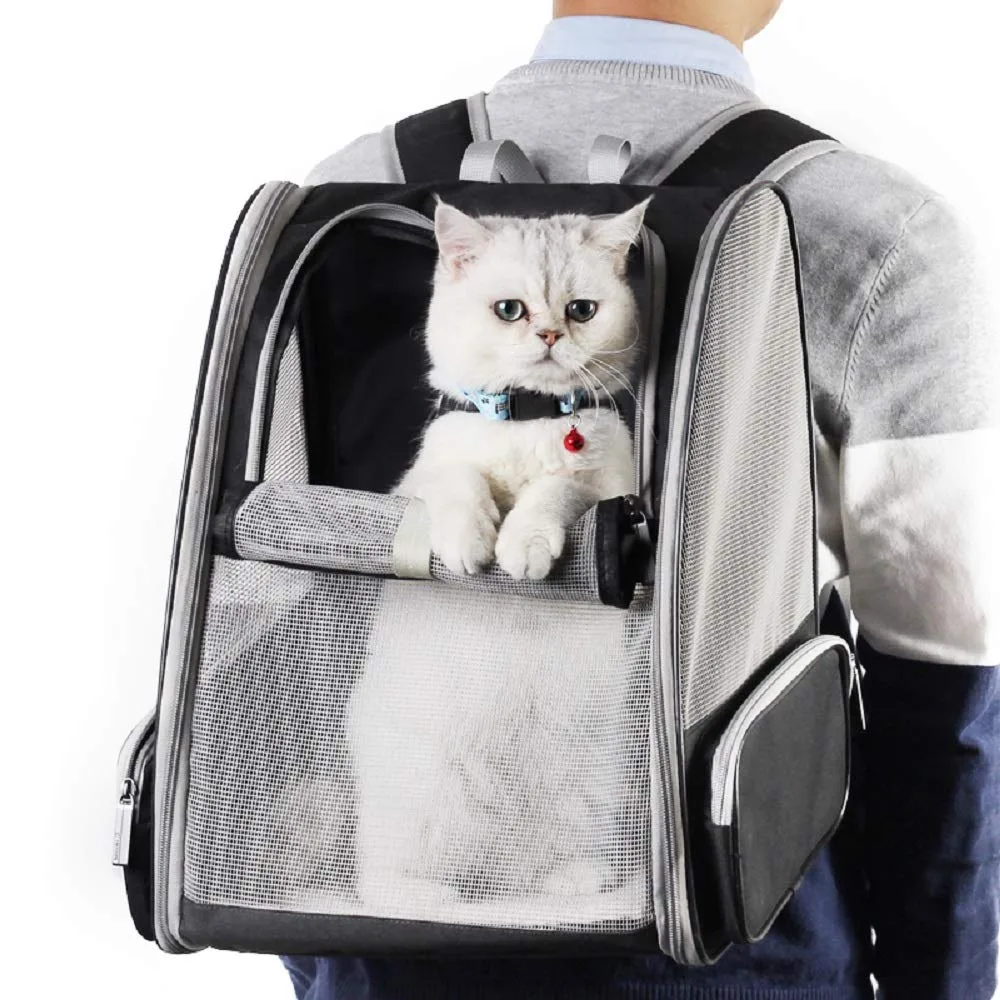
Orders for bulk pet carriers are quoted on the same three levers as Pet Bag Types & Styles work - fabric weight, hardware grade and carton count - because freight, not unit labour, decides the landed figure. Buyers who buy pet carriers in mixed sizes can consolidate several size runs into one booking, which keeps the per-unit spread tight without forcing a single colourway to carry the whole minimum.
What Buyers Are Actually Sourcing in the Tribute Category
The tribute category is frequently misunderstood by buyers approaching it from a gifting background. It is not a sentimentally themed pet bag. It is a functional keepsake product supplied through professional channels, and the specification priorities are closer to those of a medical supply item than to those of a novelty accessory.
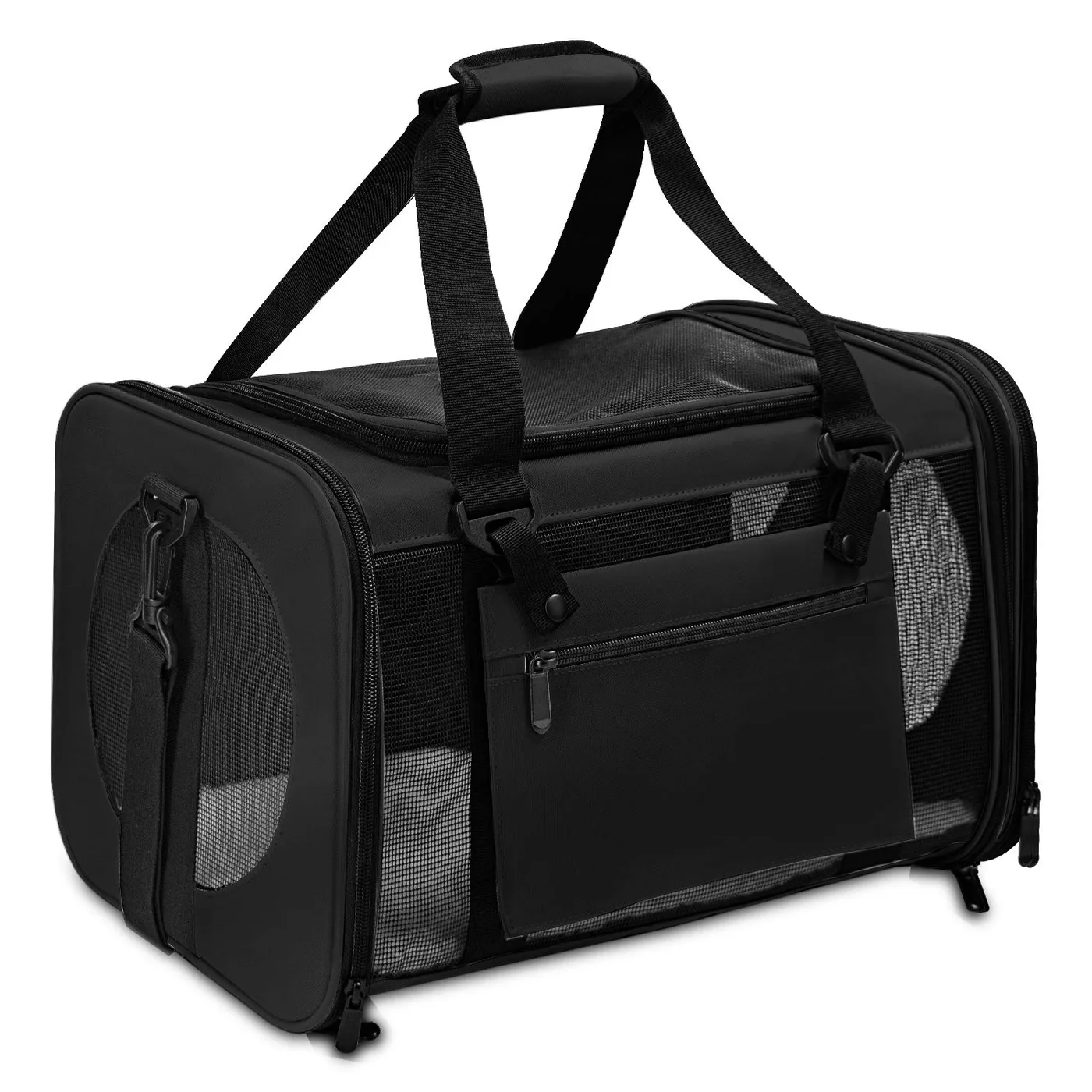
Three product functions make up the category. The first is the keepsake bag, a soft unit with a secure interior compartment sized to hold a small container, a collar, a set of tags or a folded item. The second is the transport bag, used by a practice or a service to carry a pet with dignity, which requires a rigid base, a quiet closure and an unobtrusive exterior. The third is the presentation bag, supplied to a client with the remains or with a memorial item, which requires the highest presentation standard in the category.
Each of the three has a different cost structure and a different buyer. The keepsake bag is the highest-volume and lowest-cost item and is the one most often resold through practice reception areas. The transport bag is a professional equipment purchase with the longest service life and the strictest functional specification. The presentation bag is the highest unit value and is usually ordered in contracted quantities against a service agreement.
The table below shows the four configurations that carry tribute category volume, priced FOB Xiamen at MOQ 500 pieces per colourway.
| Configuration | Function | Size (cm) | Interior feature | FOB band (USD) | Typical buyer |
|---|---|---|---|---|---|
| Keepsake pouch bag | Keepsake storage | 28 x 14 x 18 | Zipped inner pocket | 5.20 - 6.40 | Practice resale |
| Soft tribute tote | Keepsake and carry | 36 x 20 x 26 | Lined compartment | 6.10 - 7.40 | Practice resale |
| Professional transport bag | Practice transport | 44 x 26 x 28 | Rigid base, quiet zip | 7.80 - 9.20 | Veterinary use |
| Presentation case | Client presentation | Box 38 x 26 x 10 | Fitted insert | 9.10 - 10.60 | Service provider |
Two points deserve emphasis. The price bands sit above the general occasion average because the category carries higher material and finishing requirements and lower volumes, not because of any premium positioning. And the buyer column is the field that matters most: in this category, knowing who places the order determines the specification more than any other single input.
Channel Structure: Veterinary, Cremation Services and Direct
Channel structure is the defining commercial feature of the tribute category, and it is unusual enough to deserve careful attention. Open retail accounts for a small share of volume. The category is supplied through professional channels that order on contract, and each channel has distinct requirements.
Veterinary practices are the largest channel by order frequency. They buy transport bags as equipment and keepsake bags for reception resale, and they order in modest quantities at regular intervals. Their requirements are functional and economic: durability, cleanability, a discreet exterior, and a price that supports a practice margin. They rarely want elaborate presentation, and they will not pay for it.
Cremation and aftercare services are the largest channel by unit value. They buy presentation cases and keepsake bags against service agreements, often with their own branding, and they order in defined quantities against a contract. Their requirements are presentation and consistency, and they are the channel where a co-branding operation and a rigid presentation case are genuinely worth the cost. This is also the channel that carries the strictest discretion requirement, because their clients receive the goods directly.
Direct-to-consumer and marketplace accounts make up the remainder. This channel is price-competitive, review-driven and unforgiving on perceived value, and it is the one channel where elaborate presentation pays. It is also the channel where copy and claims create the most regulatory exposure, because listing copy is written quickly and reviewed poorly.
Procurement behaviour differs sharply between the two professional channels and buyers should plan for both. A veterinary group typically orders through a practice manager against an annual supplies budget, in quantities of a few hundred units, with a preference for a single supplier who can also serve other categories. A cremation or aftercare service typically orders through an operations lead against a service contract, in quantities tied to projected case volume, with a much stronger preference for customisation and presentation. Buyers who pitch both channels with the same offer will lose one of them.
For a wholesale buyer, the strategic conclusion is that the professional channels are the better business. Contracted quantities remove inventory risk, the unit value is higher, and reorder behaviour is stable. Our production team structures tribute programmes around professional accounts for exactly this reason, and buyers entering the category should start there rather than in open retail.
Specification for Discretion: Packaging, Presentation and Tone
Discretion is a specification requirement in this category, and it is the one most often missed by buyers transferring a gifting specification across. It has three components, all of which should be written into the tech pack rather than left to instruction.
The first is the outer carton. Shipping cartons must carry no product imagery, no product name and no descriptive text beyond a neutral style code. The reason is practical: these goods move through professional premises, through courier networks and into a client's home, and a carton that announces the contents is a failure regardless of what is inside. Our production team specifies plain cartons with a neutral code for every tribute programme, and buyers should confirm this at quotation rather than assuming it.
The second is the exterior of the product itself. A discreet exterior means no large printed motif, no prominent text and no imagery that identifies the purpose at a distance. Restraint in this category is not an aesthetic preference; it is a functional requirement imposed by the channel, and a practice will decline a bag that announces its purpose on the outside.
The third is the interior presentation, which should be the opposite: considered, calm and complete. A soft lining, a secure compartment, a quality card and careful folding are what the recipient experiences, and this is where the budget should go. The rule of thumb our production team applies is that the exterior should be quiet and the interior should be generous.
Copy deserves separate attention. Text on cards and tags in this category should be short, neutral and free of claims. Lengthy sentimental copy is not required, reads poorly across markets, and creates translation problems for buyers selling into more than one language. A single neutral line with space for handwriting is the specification that works.
Finally, buyers should specify how the goods are packed for retail handling. Tribute units are frequently handled at a reception desk rather than on a shelf, which means individual polybagging with a neutral label and a clean, unmarked outer is the correct presentation.
Materials and Construction for Keepsake Function
Keepsake function imposes construction requirements that do not appear elsewhere in the pet bag assortment, and they are worth specifying explicitly because a general-purpose construction will not meet them.
The interior is the priority. A keepsake compartment needs a soft, non-abrasive lining that will not scratch a metal container or a polished surface, a closure that will not open under handling, and enough depth to hold the intended items without distorting the exterior. The specification should state the lining material, the compartment dimensions and the closure type, because these are the three things a professional buyer will check.
Quiet operation is the second requirement and it is easy to specify badly. A metal zipper pull striking a metal slider is audible and, in a professional setting, unwelcome. The specification is a fabric-covered pull, a silent-coil zipper or a magnetic closure on the relevant compartments, and it costs very little to implement. Buyers should test the sample in a quiet room rather than on a production floor.
Structural integrity is the third requirement, and it applies mainly to the transport configuration. A rigid base that does not flex under load, handles anchored through the base rather than through the shell, and a closure that cannot open accidentally are the three specification lines that matter. Transport units are used repeatedly and are cleaned between uses, so the specification should also state a cleaning method and a wipeable interior.
Colour fastness deserves a specific note. Tribute units are predominantly dark, and dark shells are prone to crocking onto a light lining, exactly as red shells are in the Valentine category. A grade four crocking result should be specified on the lining, and the lining colour should be chosen to make any migration invisible rather than conspicuous.
Care labelling is the last construction item and it is routinely overlooked. A professional user will clean a transport bag between uses and will expect an instruction that survives repeated cleaning, which means a printed or woven care label rather than a card that is discarded with the packaging. The label should state the cleaning method, the maximum temperature and the drying instruction, because a practice that damages a unit through incorrect cleaning will attribute the failure to the product rather than to the instruction.
Finally, buyers should consider odour. A unit that is stored closed and then opened by a client should not release a finishing odour, which is a complaint that occurs with some coated fabrics and some adhesive-heavy constructions. A low-odour adhesive specification and a post-production airing period before packing address it at negligible cost.

Cost Structure and Price Bands in a Sensitive Category
The tribute category carries a cost structure that surprises buyers because the volumes are low and the finishing requirements are high. Understanding where the cost sits is what allows a buyer to quote a professional account competitively without underpricing the programme.
On a mid-band soft tribute tote, fabric and lining account for roughly a quarter of FOB, hardware and trims for a fifth, cutting and sewing labour for around thirty percent, and finishing, presentation and inspection for the balance. The finishing share is higher than in a general occasion unit because of the discretion requirements, the individual packing standard and the tighter presentation tolerance.
Volume elasticity is weak in this category. Moving from 500 to 3,000 units reduces unit cost by roughly seven to eleven percent, less than in a core category, because the labour content is high and the finishing requirements do not scale down. Buyers should not build a business case on volume discounts that will not materialise.
FOB Xiamen bands run USD 5.20-10.60 as shown earlier. Landed cost adds sea freight at roughly seventy cents to one dollar ten per unit, because presentation cases pack poorly, plus duty and handling. The resulting landed cost supports professional channel pricing from USD 24.99 for a keepsake pouch to well above USD 80 for a presentation case, and professional buyers in this category are notably less price-sensitive than retail buyers because the item is part of a service rather than a discretionary purchase.
One cost line should be modelled explicitly: the plain carton and neutral labelling requirement. Plain cartons with a neutral style code cost marginally more than a printed carton at low volume because they cannot be ordered in the supplier's standard printed run, and the neutral labelling operation is a manual step. The cost is small but it should be quoted rather than absorbed.
The pricing lever that works in this category is the service relationship rather than the unit. Professional accounts reorder on a cycle, value consistency and reliability, and will accept a stable price in exchange for a supplier who never lets them run out. Buyers should compete on continuity rather than on price.
MOQ, Order Strategy and Contracted Channel Supply
MOQ is 500 pieces per colourway, and in a category where the professional channels order in modest quantities, the minimum is best met through a shared shell across the three product functions. A neutral dark shell in charcoal, navy or deep green supports the keepsake pouch, the soft tote and the transport configuration, with function-specific components applied after cutting. That structure lets a buyer serve three functions against one fabric commitment.
Colourway strategy should be minimal. Two at most, both dark and neutral. The category has no seasonal colour rotation and no novelty colour demand, and a third colourway would add inventory without adding volume. Buyers should resist the temptation to differentiate on colour in this category, because professional buyers are not choosing on colour.
Contracted supply is the recommended order strategy. A veterinary group or a cremation service placing a standing order against a twelve-month agreement gives the buyer a known annual quantity, which supports a blanket release, which in turn amortises the setup and testing cost across the year. That is the mechanism that makes a low-volume category commercially viable, and buyers should pursue it deliberately rather than selling order by order.
Co-branding is the second instrument available in this category and it is worth more here than in most. A professional account that puts its own name on a keepsake bag is far less likely to move to a competitor, and the co-branding operation costs little. Written authorisation on file before production is required, and our production team will not cut a co-branded component without it.
Safety stock policy deserves a specific note for professional channels. A practice that runs out of keepsake bags at a difficult moment will remember it, and the account is at risk. Buyers supplying this channel should hold a higher service level than the category's turnover would otherwise justify, and should treat continuity of supply as the principal commercial offering.
Compliance, Claims Review and Documentation
Compliance in the tribute category is unremarkable on substance and strict on claims, and that combination is worth stating plainly because it is the reverse of what most buyers expect. The product is a bag. What creates exposure is the copy attached to it.
On substance, the standard component list applies. Linings, coated fabrics, plated hardware and printed cards each need a declaration, California destinations need a Prop 65 assessment against the safe harbour levels published by the California Office of Environmental Health Hazard Assessment, and a recognised textile certificate is the cheapest way to satisfy professional procurement reviewers. The OEKO-TEX standard covers fabric and lining in a single document and is accepted by most professional buyers without further question.
On claims, the exposure is real and it is specific. Statements about material content, biodegradability, organic status or any therapeutic or emotional benefit are regulated in most markets, and an unsupported claim in this category attracts more attention than the same claim elsewhere. Our production team reviews all card and packaging copy against the buyer's substantiation before printing, and buyers should build that review into their own workflow rather than treating it as a supplier obstacle.
Country-of-origin marking and the tracking label remain mandatory, and professional accounts frequently add their own documentation requirements on top. A veterinary group or a service network may require a material safety declaration, a cleaning instruction sheet and a lot code that allows traceability back to the production run. Lot coding is cheap to apply and worth offering proactively, because it is the kind of detail that wins contracted accounts.
Verification should be independent and should include copy. A recognised body such as SGS can run pre-shipment inspection against the approved specification, and the packaging and card check should be a line item on the worksheet rather than an afterthought.
Supplier Scorecard for Tribute and Keepsake Programmes
The scorecard for tribute programmes weights discretion, consistency and continuity above price. Discretion compliance carries twenty-five percent, which specifically means plain cartons, neutral labelling and an unmarked exterior delivered correctly on every shipment. Continuity of supply carries twenty percent. Finishing quality carries fifteen percent. Presentation accuracy carries fifteen percent. Documentation carries fifteen percent. Price carries ten percent.
Discretion compliance earns the top weighting because a single breach is an account-ending event. A carton printed with product imagery reaching a professional client's home is not a defect to be credited; it is a relationship-ending failure. Buyers should verify the carton specification on the first shipment of every programme and on every subsequent shipment, because carton sourcing is exactly the kind of detail that drifts when a supplier changes packaging vendors.
Quality gates are fixed at AQL 2.5 under general inspection level II with zero tolerance for critical defects. The critical list in this category should include any interior defect affecting the keepsake compartment, any closure that does not operate quietly or securely, and any breach of the discretion requirement on carton or product. Major defects cover lining shade deviation, stitch density below specification and print or embroidery placement error.
Independent verification is recommended on every shipment because the category carries a higher consequence of failure than its volume suggests. A recognised body such as SGS can combine inspection with component screening in one appointment. The production base behind this programme holds BSCI social compliance and ISO 9001 quality management across 4,950 square metres, 137 staff, 7 lines and 149 machines at 200,000 pieces per month, with certificates released at quotation stage. Terms are T/T 30/70 against FOB Xiamen with the balance released against the passed inspection report.
Why brands source here
- Pet bag programmes run since 2014; founding team in sewn goods since 2004
- SGS-verified production floor of 4,950 m² with 137 workers across 7 lines
- Monthly capacity of 200,000 units, audited to BSCI and ISO 9001
People Also Ask
Are memorial pet bags a retail or a professional category?
Predominantly professional. Veterinary practices, cremation services and aftercare providers order most of the volume, usually under contract rather than through open retail.
What makes a memorial bag specification different?
Discretion on the exterior and carton, a soft non-abrasive interior with a secure keepsake compartment, quiet closures, and restrained neutral copy.
Why is the outer carton specification so important?
Because the goods pass through professional premises and a client's home. Plain cartons with a neutral style code are a functional requirement of the channel, not a preference.
How should copy on tribute cards be written?
Short, neutral and free of claims, with space for handwriting. Lengthy sentimental copy reads poorly across markets and creates translation and compliance problems.
Do professional accounts reorder regularly?
Yes, and on a predictable cycle. That stability supports a blanket release and makes the category viable despite low per-order volumes.
What certification satisfies professional procurement?
A recognised textile certificate on fabric and lining, typically OEKO-TEX, plus a Prop 65 assessment for California and declarations on hardware and coated components.
Frequently Asked Questions
What is the MOQ for a memorial or tribute pet bag?
MOQ is 500 pieces per colourway. The recommended structure is a neutral dark shell shared across keepsake, soft tote and transport configurations, with function-specific components applied after cutting.
Who places orders in this category?
Professional channels dominate. Veterinary practices buy transport bags as equipment and keepsake bags for reception resale; cremation and aftercare services buy presentation cases under service agreements.
How long does sampling take?
Sampling takes 6-10 working days once artwork, colour standard and the interior compartment specification are confirmed. Closure samples should be assessed for quiet operation in a quiet environment.
What is the bulk production lead time?
Bulk runs 35-50 days. Presentation cases with fitted inserts and co-branded work sit at the longer end of the range.
Why must the shipping carton be plain?
Because the goods move through professional premises, courier networks and into a client's home. A carton that announces the contents is a specification failure regardless of what is inside.
What does a tribute pet bag cost FOB?
FOB Xiamen bands are USD 5.20-6.40 for a keepsake pouch, USD 6.10-7.40 for a soft tribute tote, USD 7.80-9.20 for a professional transport bag and USD 9.10-10.60 for a presentation case at MOQ 500 per colourway.
Which inspection standard applies?
AQL 2.5 at general inspection level II with zero tolerance for critical defects, including any breach of the discretion requirement on carton or product and any defect affecting the keepsake compartment.
Can professional accounts add their own branding?
Yes, with written authorisation on file before production. Co-branding costs little and materially increases account retention in this category.
Are there claims restrictions on cards and packaging?
Yes. Statements about material content, biodegradability, organic status or any benefit are regulated, and unsupported copy in this category attracts more attention than elsewhere. Copy should be reviewed before printing.
How much does volume reduce the unit price?
Less than in core categories. Moving from 500 to 3,000 units typically reduces unit cost by seven to eleven percent, because labour content is high and finishing requirements do not scale down.
Should I hold safety stock for professional accounts?
Yes. Professional buyers reorder on a cycle and a stockout at a difficult moment puts the account at risk. Continuity of supply is the principal commercial offering in this channel.
Is lot coding worth offering?
Yes. Professional accounts frequently require traceability, and a lot code that identifies the production run is cheap to apply and often decisive in winning contracted business.
Talk to QUANZHOU JUNYUAN BAGS about a wholesale pet bag order: MOQ 500 pieces per colourway, samples in 6-10 working days, bulk production in 35-50 days under AQL 2.5 inspection.
Get a free quote Request a sample