Pet Bag White Label: Retail Branding Guide
White label means taking an existing pet bag platform and applying your brand to it, which shortens time to shelf to roughly 8-12 weeks instead of 20-30 for a developed own brand. You get branding scope - artwork, packaging, labelling and colourway - but not the underlying specification. Expect 8-14 points of margin improvement rather than the 12-22 an own-brand programme delivers.
White label is the fastest route from a brand decision to stock on a shelf, and the trade is explicit: you buy speed and lower development cost with reduced specification control and thinner long-run margin. Whether that trade is right depends entirely on what the programme is for - testing a category, filling a range gap, or building a durable brand. This page separates those cases and sets out the costs and constraints of each.
The decision should be made deliberately rather than by default, because the two models diverge sharply after the first season. Our production team supports both on standard terms: MOQ 500 pieces per colourway, samples in 6-10 working days, bulk production in 35-50 days after approval, pre-shipment inspection to AQL 2.5, T/T 30/70 and shipment FOB Xiamen. The sections below show what white label adds and what it cannot provide.
Pet bag sample cost is normally credited against the first production order, which makes Market & Business Strategy review the expensive step rather than the sampling itself. Pet carrier sample cost rises with hardware changes, so lock the hardware before the second sample round.
What White Label Means in This Category
White label is frequently used loosely, which causes buyers to expect things the model does not deliver. In this category it has a specific meaning: an existing, proven pet bag platform is produced with your branding applied, and the underlying specification - shell fabric, hardware, construction, internal structure - remains the platform's rather than yours.
The consequence is speed. Because the specification already exists, has already been sampled and has already been tested, the development phase largely disappears. What remains is branding artwork, colourway selection, packaging and production, which is why a white label programme reaches shelf in roughly 8-12 weeks against 20-30 for a developed own brand.
The second consequence is constraint. You choose from what the platform offers rather than defining what it is. That is acceptable when the platform's specification already matches your requirement and frustrating when it does not, which is why the first task in any white label evaluation is comparing the platform's existing specification against your own requirement rather than against your aspiration.
- You control. Brand mark, artwork, packaging, labelling, colourway, size mix.
- You do not control. Shell fabric, hardware grade, internal structure, base construction.
- You inherit. Existing tooling, existing test data, existing production know-how.
- You accept. That competitors may access the same platform.
The final point is the one buyers most often overlook. Because the platform is not exclusive, a competitor may offer a visually different but structurally identical product. Where the category is dominated by price comparison, that convergence erodes differentiation quickly - which is the main argument for using white label as a step rather than as a destination.
None of this makes the model weak. It makes it specific: best for speed, for gap-filling and for category testing, and weaker as the foundation of a long-term differentiated brand.
That specificity is worth stating as a decision rule. Use white label where the objective is to learn or to fill; use a developed programme where the objective is to own. Applying the rule consistently prevents the most expensive outcome in the category: a white label range that has grown large enough to justify development but was never specified for it.
Buyers should also be clear about the internal capability the model assumes. White label removes development work but not range management - someone still has to select platforms, manage artwork, hold the claims register and track sell-through. Programmes that assume otherwise tend to accumulate SKUs without accumulating knowledge.
Speed to Shelf and Where the Time Actually Goes
Speed is the headline benefit and it is worth quantifying precisely, because the saving is not evenly distributed across the timeline.
A developed programme spends its first eight to twelve weeks on specification, sampling iterations, testing and artwork - all serial, all necessary, and all avoidable when the specification already exists. A white label programme compresses that phase to roughly two to three weeks, because the only development work is branding artwork and colourway confirmation.
Production time does not compress at all. Bulk still takes 35-50 days after approval, inspection still runs to AQL 2.5, and freight still takes what it takes. Buyers who expect the whole timeline to shrink by half are consistently disappointed; the realistic total saving is eight to twelve weeks on a 20-30 week cycle, which is substantial but not transformative.
| Phase | White label | Developed own brand | Saving |
|---|---|---|---|
| Specification and tech pack | Inherited | 2-4 weeks | 2-4 weeks |
| Sampling iterations | 1 round, 6-10 days | 2-3 rounds | 2-4 weeks |
| Testing and evidence | Inherited | 2-4 weeks | 2-4 weeks |
| Branding artwork | 1-2 weeks | 1-2 weeks | None |
| Bulk production | 35-50 days | 35-50 days | None |
| Inspection and freight | Unchanged | Unchanged | None |
| Typical total | 8-12 weeks | 20-30 weeks | 12-18 weeks |
The practical implication is that white label is most valuable where the deadline is fixed - a promotional window, a range gap that must be filled, a partner review with a date attached. Where the timeline is open, the specification control of a developed programme is usually worth the wait.
One caution on inherited test data: it is valid for the platform and the lot tested, not automatically for your branded unit. Confirm that the reports cover the materials and colourways you are ordering, and request re-issue in your name if your channel requires it.
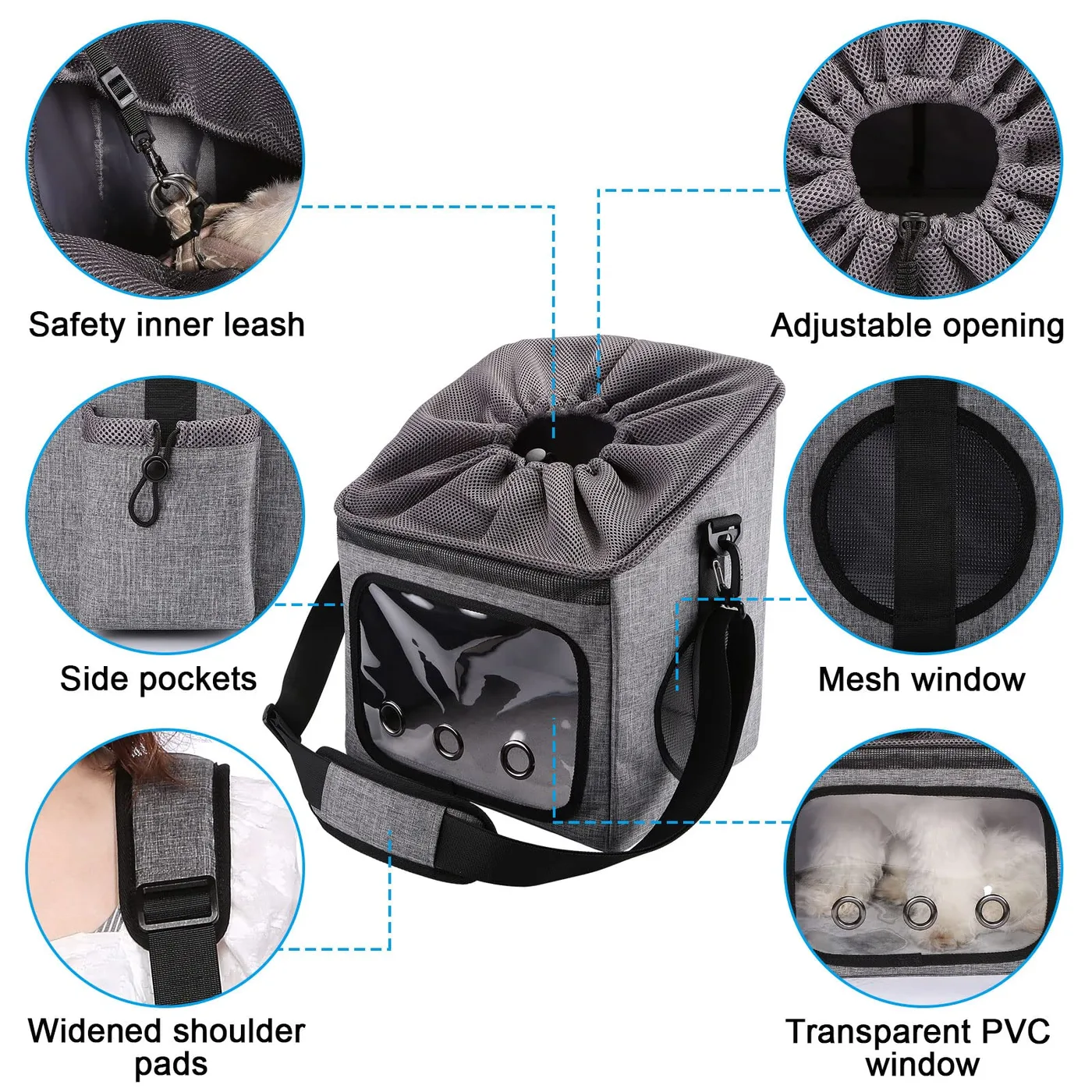
Cost Structure: What You Save and What You Do Not
The cost advantage of white label is narrower than most buyers expect, and understanding its shape prevents disappointment at the second order.
You save development cost. Sampling iterations, tooling, pattern development and initial testing are absorbed by the platform rather than billed to your programme, which typically removes USD 1,500-6,000 from a first order. On a small first order that saving is material; on a large one it is a rounding error.
You do not save much on unit cost. Fabric, hardware and labour cost the same whether the bag carries your label or not, and any expectation of a lower unit price from white label is misplaced. Where a difference exists it comes from platform maturity - a well-run platform produces with fewer defects and less waste - rather than from the model itself.
You also give up long-run margin. Because the platform is not exclusive, pricing power rests on branding and channel rather than on product differentiation, which typically caps margin improvement at 8-14 points against the 12-22 an own-brand programme delivers once its fixed costs have amortised.
| Cost element | White label | Developed own brand |
|---|---|---|
| Development and tooling | USD 0 - 600 | USD 1,500 - 6,000 |
| Testing allocation | USD 200 - 700 | USD 800 - 3,200 |
| Artwork and packaging | USD 200 - 1,500 | USD 200 - 1,500 |
| Unit production cost | Same | Same |
| Margin improvement | 8-14 points | 12-22 points |
| Time to shelf | 8-12 weeks | 20-30 weeks |
The arithmetic points to a clear conclusion: white label wins on first-order cost and speed, and loses on long-run margin and differentiation. That is a perfectly reasonable trade for the right objective and a poor one for the wrong one.
Fixed administrative cost behaves identically in both models, which means the order-size lessons still apply - consolidation and sensible colourway structure matter more here than any model-specific saving.
Branding Scope: What You Can Actually Change
Branding scope is wider than most buyers assume and narrower than most hope. Understanding precisely where the line sits prevents a wasted artwork round.
Fully within scope: the brand mark and its placement, artwork and colourway, packaging format and print, hang tag and label content, size mix within the platform's range, and retail carton configuration. These are genuine branding decisions and collectively they change how a product reads at shelf far more than their cost suggests.
Partially within scope: lining colour and pattern, hardware finish where the platform offers alternatives, webbing colour, and stitch or trim contrast. Each depends on what the platform already offers, and each may carry a small surcharge or a minimum.
Outside scope: shell fabric weight and finish, hardware grade, internal structure, base construction and ventilation architecture. Changing any of these converts the programme into a developed one, with the associated timeline and cost - which is a legitimate move but should be made deliberately rather than discovered.
The efficient approach is to maximise the first two groups before touching the third. A distinctive colourway, a considered lining, a coordinated webbing and trim set and well-designed packaging will differentiate a product at shelf far more cheaply than a fabric change, and they carry no development risk.
Where a platform gap genuinely matters - ventilation for a hot climate, a heavier shell for a premium position - the honest answer is that white label is the wrong model for that SKU. Use it where it fits and develop where it does not, rather than forcing one model across an entire range.
A useful way to hold that line is to set a differentiation threshold before artwork begins. Decide which elements must be distinctive for the range to work, confirm the platform can deliver them through branding alone, and treat any element it cannot deliver as a development candidate. Three decisions taken in order, and the range plan writes itself.
Where a mixed approach is adopted, keep the two types visually consistent. A developed hero SKU that looks unrelated to the white label products around it fragments the range, whereas a shared colour story and packaging system holds it together while the underlying specifications differ.
Pricing coherence matters just as much. A developed hero SKU priced well above a visually similar white label product needs a visible reason for the difference, or customers will assume the cheaper item is the same product at a better price. Where that reason cannot be shown at shelf, the two should not sit adjacent in the range.
The same logic applies to naming. A developed product that carries the same name as a white label one invites comparison on price alone, which the developed product will lose. A distinct name or a clear tier marker gives the comparison a dimension it can win on.
Channel Fit: Where White Label Performs Best
White label performs unevenly across channels, and matching the model to the channel is more important than matching it to the product.
Marketplaces reward it. Speed to listing, low development cost and the ability to test several variants quickly suit a platform where iteration matters more than differentiation. The convergence risk is real but manageable through imagery, bundling and review velocity.
Promotional and seasonal placements suit it well. Where the requirement is a credible product at a defined price by a fixed date, the eight to twelve week advantage is decisive and the differentiation weakness barely matters.
Specialist independent retail is a weaker fit. These channels sell specification stories, and a white label product's story is thinner than a developed one's - the buyer can ask what makes it different and receive only branding as an answer.
Partner retail sits in between and depends on the partner. Where a chain runs its own label programme it is effectively buying white label at scale and will ask precisely how the platform differs from what another chain sells; the answer has to be branding and service rather than product.
Related reading on developing an own brand covers the alternative in depth, and original design manufacturing describes the middle path where the platform is adapted rather than inherited.
Where a channel requires a specification story, white label can still work if the platform's data is strong enough to be told. The test becomes whether the channel accepts evidence about a platform it knows is shared, which is a conversation worth having before launch rather than after.
Quality and Compliance Responsibilities
Applying your brand to an existing platform does not transfer compliance responsibility away from you. Whoever places goods in front of a shopper carries the obligation, and branding is what makes the goods yours.
The practical consequence is that you need evidence in your own name even though the platform already has it. Confirm that existing reports cover the materials and colourways you are ordering, check their dates against your channel's validity expectations, and request re-issue in your name where a channel requires it.
Claims deserve particular care because they sit on your artwork. Water resistance, chew resistance, machine washability and weight capacity are the four that recur, and each must either be supported by data you hold or removed from your packaging. The asymmetry between substantiating and deleting - a few hundred dollars versus nothing - makes the decision genuinely binary.
Labelling requirements are also yours. Importer or responsible-party address, material composition, care instructions, country of origin and any standard reference must appear on your pack, and because they are artwork decisions they should be designed in rather than added.
Inspection remains the control that holds all of this honest. Pre-shipment inspection to AQL 2.5 with attendance permitted should be treated as a standard step rather than an optional one, because an own-brand failure is now your failure regardless of whose platform it was built on. Independent testing bodies such as SGS publish the method frameworks that make results portable across channels.
Reorder discipline matters more in white label than in a developed programme, because the platform is shared and availability is not guaranteed. Where a SKU is selling, the reorder slot should be reserved rather than requested - and the specification of what is being reordered should be recorded, so that a platform update does not arrive as a surprise in the second shipment.
Keep a defect log per platform. Because the specification is inherited, the only way to know whether a platform is performing is to record what comes back. Two seasons of that data is usually enough to decide whether to continue, develop, or replace it.
Platform updates are the related risk. Because the platform belongs to someone else, it can change - a new fabric lot, a revised hardware supplier, a modified internal layout - without the branded buyer being consulted. Requiring written notice of material changes with the option to re-test is a reasonable clause and worth requesting at the outset.
Where notice is given, treat it as a specification change under your own change-control rule: new version, dated, with a decision on whether existing evidence still applies. That single habit is what prevents a silent platform revision from becoming a returns problem two seasons later.

When to Move From White Label to a Developed Range
White label is a good beginning and a mediocre destination, and the transition point is worth planning rather than stumbling into.
Three signals indicate it is time to move. The first is volume: once a platform is reordering consistently above roughly 3,000 units a year, the fixed development cost of a bespoke specification amortises quickly and the margin case becomes compelling.
The second is differentiation pressure. When competitors appear selling structurally identical products at lower prices, branding alone stops defending the price, and only a specification change restores the gap.
The third is channel ambition. Moving from marketplace and promotional placements into specialist or partner retail requires a specification story, and that requires owning the specification.
The transition need not be abrupt. A common and sensible path is to develop one hero SKU while keeping the rest of the range on white label, then migrate platform by platform as each justifies it. This spreads development cost across seasons and keeps the range complete throughout.
Whichever path is chosen, the specification discipline should start early. Even on a white label programme, documenting what the platform is - its materials, hardware and test position - builds the reference base that a developed range will later need.
The move is easier when the platform has been documented properly from the start. A platform record with materials, hardware and test position becomes the first draft of a tech pack, which removes much of the development cost usually associated with the transition.
Where a transition is planned, run it on a single SKU first. Converting one product proves the process, reveals the true development cost and produces a reference for the rest of the range, at a fraction of the risk of converting everything at once.
Selecting a Platform: The Evaluation Checklist
Because white label means inheriting a specification, platform selection is the whole decision. A disciplined evaluation takes an hour and prevents the most common failure in the model: discovering after launch that the platform cannot support the position it was bought for.
Start with the specification sheet rather than the sample. Ask for shell fabric weight and finish, hardware grade with cycle data, reinforcement locations, base construction and ventilation aperture area. If those cannot be supplied in writing, the platform is not documented well enough to be evaluated and the programme will depend on a sample that may not represent production.
Then compare the sheet against your requirement rather than against your aspiration. Where the platform meets it, white label is appropriate; where a gap is material - a heavier shell for a premium position, larger aperture for a hot climate - the model is wrong for that SKU and developing it is the honest alternative.
Next, check the evidence position. Which reports exist, what do they cover, how old are they, and can they be reissued in your name? A platform with a complete, current, lot-referenced file saves weeks; one without it converts a fast programme into a slow one.
Then examine the production history. A platform that has run repeatedly produces with fewer defects and less waste than a new one, which shows up in both unit cost and return rate. Ask how many runs it has completed and whether the current configuration is the current one.
Finally, evaluate the visual scope honestly. List precisely what can be changed - colourway, lining, webbing, trim, packaging, hardware finish - and judge whether that set is enough to differentiate at your intended channel. If it is not, the platform is the wrong starting point regardless of how good it is.
Record the outcome as a one-page platform record. It becomes the specification baseline for the branded product, the reference for the next evaluation, and - if the programme later converts to a developed range - the starting point for the tech pack.
Cost comparison between platforms should be done on landed figures rather than on unit price, because two platforms that quote identically ex-works can differ materially once packing efficiency and testing coverage are included. Ask for carton dimensions and carton quantity at evaluation stage, not at booking, and the comparison becomes meaningful.
Finally, set a review date. Re-evaluating a platform every four seasons costs an afternoon and prevents the slow drift in which a range stays on a platform that has quietly stopped being the best available option. Most programmes that outgrow white label do so by accident rather than by decision.
Working Terms for White Label Orders
Production terms apply identically to white label orders. MOQ is 500 pieces per colourway, mixed colourways are permitted within one order, and size splits inside a single style count toward the threshold - which is what allows a credible size range at first-order volumes.
Branding samples take 6-10 working days from confirmed artwork, because the specification is already proven and only the branding needs confirming. Bulk production takes 35-50 days after approval, and pre-shipment inspection runs to AQL 2.5 with attendance permitted.
The document set ships with the goods: bill of materials with named inputs, lot-referenced chemical and colour fastness reports, hardware declarations with cycle data, origin information, a packing list generated from the final inspection count, and photographs of every marking position. Reports can be re-issued in the brand owner's name where a channel requires it, provided the request is made at commissioning.
Terms are T/T 30/70 with shipment FOB Xiamen. Our SGS-verified production base operates to ISO 9001 quality management principles with BSCI social compliance auditing in place, which is what allows an inherited platform to produce consistently across seasons and lots.
Platform availability should be confirmed before the order is placed rather than assumed. Because the platform is shared, a colourway or size may be committed elsewhere, and discovering that after artwork is approved adds avoidable weeks.
Confirm what happens if a platform is discontinued. A commitment to notice, and to a defined period of continued supply, protects a branded range from losing a SKU with no warning - the single most disruptive event in the model.
Production capability
- SGS-verified production space of 4,950 m², 149 machines, 7 assembly lines
- Pet bag output since 2014 from a 137-person team
- 200,000 units shipped monthly under BSCI and ISO 9001 systems
People Also Ask
How do we evaluate whether a platform fits our requirement?
Compare its existing specification against your requirement rather than your aspiration. Where a gap genuinely matters - ventilation, shell weight - white label is the wrong model for that SKU.
What is the cheapest way to differentiate a white label product?
Colourway, lining, webbing and trim coordination, and packaging design. These read strongly at shelf and cost far less than a specification change.
Should we keep white label and developed SKUs together?
Yes, and it is usually the best transition path. Develop one hero SKU while the rest stays on white label, then migrate platform by platform.
Why document a platform we do not own?
Because that documentation becomes the reference base a developed range later needs. Start the discipline early even on inherited products.
How does inherited test data apply to our order?
It covers the platform and the lot tested. Confirm it covers your materials and colourways, and check dates against your channel's validity expectations.
Is white label suitable for a promotional window with a fixed date?
Yes, and it is the strongest case for the model. An eight to twelve week saving is decisive when the deadline is fixed and differentiation matters less.
What is the main long-run weakness of the model?
Convergence. Because the platform is not exclusive, structurally identical competitors can appear and only branding defends the price.
Frequently Asked Questions
What is the difference between white label and own-brand?
White label applies your brand to an existing platform whose specification you inherit and do not control. Own-brand production involves specifying the product yourself, which takes longer but delivers more margin and differentiation.
How much faster is white label to shelf?
Typically 8-12 weeks against 20-30 for a developed own brand. The saving comes from specification, sampling and testing - production and freight time are unchanged.
Does white label reduce unit production cost?
Barely. Fabric, hardware and labour cost the same either way. The saving is in development and testing, typically USD 1,500-6,000 on a first order.
How much margin improvement can we expect?
8-14 points, against 12-22 for a developed own brand once its fixed costs have amortised. The cap reflects the absence of product differentiation.
Can competitors sell the same platform?
Yes, unless exclusivity is negotiated. That convergence is the main argument for treating white label as a step rather than a destination.
What can we change on a white label product?
Brand mark, artwork, colourway, packaging, hang tag, label content and size mix. Shell fabric, hardware grade and internal structure stay with the platform.
Do we need our own test reports?
You need evidence in your name even though the platform has it. Confirm coverage and dates, and request re-issue at commissioning where a channel requires it.
Which claims are risky on white label packaging?
Water resistance, chew resistance, machine washability and weight capacity. Each needs data you hold, or should be removed from your artwork.
Which channels suit white label best?
Marketplaces and promotional placements, where speed and price matter more than differentiation. Specialist independent retail is a weaker fit because it sells specification stories.
When should we move to a developed range?
When volumes exceed roughly 3,000 units a year, when structurally identical competitors undercut you, or when channel ambition requires a specification story.
How long do samples and bulk production take?
Branding samples take 6-10 working days from confirmed artwork; bulk takes 35-50 days after approval, with pre-shipment inspection to AQL 2.5.
Do size splits count toward the minimum?
Yes. Size splits inside a single style count toward the colourway threshold, which makes a credible size range affordable at first order.
Should we inspect a white label order?
Yes. Pre-shipment inspection to AQL 2.5 with attendance permitted should be standard, because a branded failure is your failure regardless of the platform.
What payment and shipping terms apply?
T/T 30/70 with shipment FOB Xiamen, identical to developed programmes. Report re-issue in the brand owner's name should be requested at commissioning.
Talk to QUANZHOU JUNYUAN BAGS about a wholesale pet bag order: MOQ 500 pieces per colourway, samples in 6-10 working days, bulk production in 35-50 days under AQL 2.5 inspection.
Get a free quote Request a sample