Pet Enclosed: Fully Covered
A pet enclosed bag surrounds the animal on every face and relies on engineered mesh panels rather than an opening for airflow, and the workable wholesale band is 4-12 kg. Expect FOB Xiamen at USD 10.40-19.80 per unit from MOQ 500 per colour, with cost concentrated in perimeter inserts, panel area and the washable liner system.
Covered bags are bought by people who need containment first and comfort second: professional handlers, veterinary reception, and owners of animals that settle when they cannot see out. The specification has to serve all three without pretending to be an airline product. The build recommended here uses a full perimeter insert set, a removable washable liner with a sealed floor seam, three mesh faces with a combined open area above 320 square centimetres, and a top-access door that lets a handler reach an animal without tipping the shell.
Commercial terms follow the house pattern: MOQ 500 per colour, first samples 6-10 working days after the tech pack is confirmed, bulk 35-50 days from approval of sample, fabric and artwork, and release at AQL 2.5 against a defect list written around rigidity, closures and airflow. Payment is T/T 30/70 and pricing is FOB Xiamen. Our production team schedules through an SGS-verified production base and partner facilities, with slots held by deposit and booked materials.
Launch with one medium and one large in a dark neutral, because covered shells are cleaned often and light colours show it. Ask for the quote, the panel area calculation, the wash-test result and the master carton dimensions in one package so landed cost, planogram and cleaning instructions can all be built from the same figures.
Wholesale pet carrier vet visits and wholesale pet carrier grooming lines are small-basket, high-repeat business, while Pet Bag Types & Styles decides whether one shell can serve both. Wholesale pet carrier travel and wholesale pet carrier camping units need opposite vent geometry, so a single pattern rarely covers both.
Perimeter Rigidity: What Holds a Covered Shell Upright
A closed shell has no opening to relieve stress, so every face has to carry load and the whole structure has to resist being squeezed by a strap, a seat belt or another bag in a vehicle. That is a different engineering problem from any open design, and it is where covered bags most often fall short.
The perimeter insert set does the work. A covered build needs an element in all four walls plus the floor: 4 mm removable PP in the floor, 2 mm HDPE or a fibreglass rod in each wall, and a rod or stiffener across the top panel so the roof does not sag onto the animal's back. Skipping the roof element is the most common cost saving and the most visible failure, because a sagging roof is what an owner photographs.
Corner treatment matters as much as the inserts themselves. A wall insert that stops short of the corner leaves a hinge point, and the shell folds there under any side load. Specify inserts that run to within 15 mm of each corner, or use a continuous rod threaded through a sleeve around the whole perimeter.
Compression resistance should be measured rather than asserted. Ask for a loaded side-compression figure: apply 15 kg laterally across the widest face for sixty seconds and record the reduction in internal width. A well-built shell loses under 20 percent; one without wall inserts loses half its internal width and stops being usable.
Floor flatness is the internal half of the same question. A hammock floor tips the animal onto its side, which raises anxiety and makes cleaning harder. A removable 4 mm board with rounded corners, held in a sleeve, is the standard answer and should be specified as removable so the liner can be washed.
Shipping configuration follows from rigidity. A fully insert-loaded covered bag will not fold, so it either ships assembled and consumes serious cube, or ships flat with the inserts slotted by the retailer. Decide which at quote stage, because the decision changes the master carton, the freight quote and the store labour requirement.
Engineering note: buy inserts in all four walls plus floor and roof, run them into the corners, and require a measured side-compression figure rather than a description.
Privacy and Shade: Why Some Animals Settle Under Cover
The commercial case for a covered bag rests on a behavioural observation: a proportion of animals are calmer when they cannot see out. Den-like enclosure reduces visual stimulus, and for a nervous animal in a busy environment the reduction can be the difference between a settled journey and twenty minutes of vocalising.
That benefit has limits and a buyer should understand them before writing retail copy. Enclosure works for animals that retreat to covered spaces at home; it does nothing for animals whose anxiety is driven by confinement rather than by stimulus, and it can actively worsen separation distress. The honest position is that covered designs suit some animals, and the listing should say so rather than implying universal calming.
Shade is the second and more reliable benefit. A covered shell blocks direct sun on the animal's whole body, which matters for short-coated and light-coloured animals and for any market with strong summer sun. This is a genuine, measurable advantage over an open design and it deserves to lead the copy.
Sound reduction is a third, softer benefit. Fabric walls dampen traffic noise by a modest but noticeable margin, and owners of noise-sensitive animals report a real difference. It is worth a mention but not a claim, because no wholesale programme wants to defend a decibel figure.
The tension is ventilation, and it is real. Every square centimetre of solid panel that delivers shade is a square centimetre removed from airflow. The resolution is placement rather than quantity: keep the top and upper flanks solid for shade, and put the mesh low on the flanks and at the door, where air can still cross the shell without sun falling directly on the animal.
Handlers should be told to check on the animal regularly and never to leave a covered bag in a parked vehicle. That instruction belongs on the hangtag and in the listing, and it is the single most important safety line in the whole category.
Engineering note: sell shade as the reliable benefit, present enclosure as conditional, and resolve the ventilation tension by panel placement rather than by panel quantity.
Airflow Engineering Inside a Closed Shell
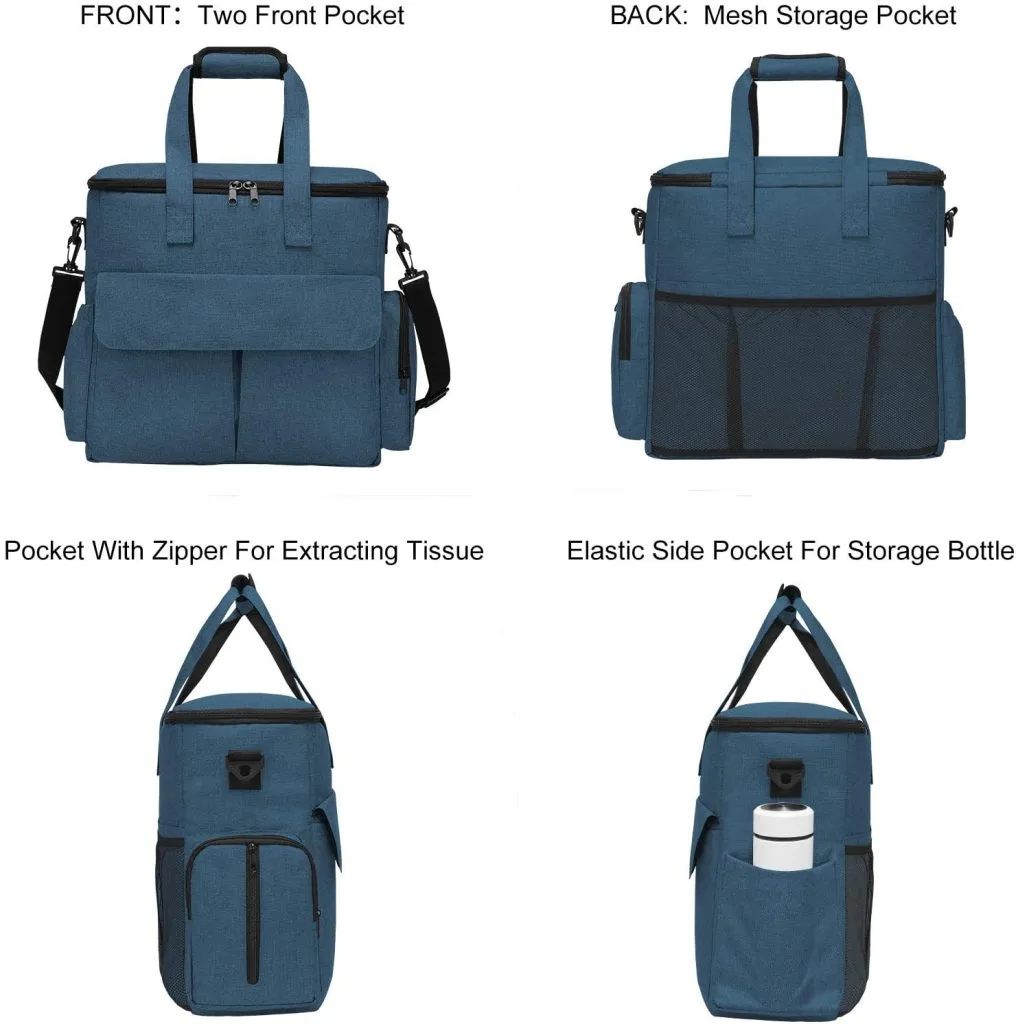
Airflow in a covered bag cannot rely on an opening, so it has to be calculated. The governing variables are total open area, the number of faces involved, and whether the panels are positioned so air can cross rather than merely enter.
Total open area is the starting point. For a 4-12 kg animal in a closed shell, 320-420 square centimetres of genuine void is a defensible target, higher than the figure needed for an open design because there is no aperture contributing. Below 250 square centimetres the internal temperature climbs measurably within fifteen minutes on a mild day, and that is the threshold where a covered bag starts generating complaints.
Cross ventilation is the second requirement and it is not optional. Two panels on the same face, or two panels facing each other with the animal's body between them, do not create flow. Panels on adjacent faces at different heights do. The practical arrangement is mesh low on one flank, mesh high on the opposite flank, and mesh in the door, which gives three separate paths and lets rising warm air leave through the upper panel.
Void percentage converts panel area into real area and is routinely overstated. A fine no-see-um mesh is roughly 45 percent void; a coarse hexagonal mesh reaches 70 percent. If a supplier quotes 400 square centimetres of fine mesh, the actual figure is nearer 180, and the shell will run hot. Always ask which.
Stack effect helps and should be exploited deliberately. Warm air rises, so an upper exhaust panel is more effective per square centimetre than a lower one of the same size. Putting the largest panel at the top of the door is a cheap way to improve performance without increasing total area.
A closable top vent is worth specifying for temperate markets. It lets a handler open extra exhaust on a warm day and close it when it is cold, and it costs one zip and a small panel.
Finally, do not let the liner block the panels. A washable liner with solid walls covering the mesh is a frequent factory convenience that silently cancels the ventilation specification. Require the liner to be cut back around every mesh panel and check it on the golden sample.
Engineering note: specify void area in square centimetres, spread it across three faces at different heights, and make sure the liner does not cover it.
Cleaning Intervals, Liners and Odour Control
Covered bags get dirty faster than open ones and are harder to clean, because there is no way to reach into a closed shell and wipe it down. Cleaning performance should therefore be treated as a primary specification rather than a care-label afterthought, and it is the most reliable differentiator a wholesale programme can build.
The liner does most of the work. A removable washable liner with a sealed floor seam turns an incident from a product loss into a thirty minute wash. Without one, fluids reach the floor board and the wall inserts, and the shell is effectively finished. Specify the liner as removable, machine washable at 30 degrees, and cut back around every mesh panel so it does not cancel the airflow spec.
Sealed seams on the liner floor are the detail that matters. A stitched floor seam wicks fluid into the batting underneath and the smell never comes out. A welded or taped seam costs slightly more and solves it completely.
The table below sets out how construction choices map onto cleaning effort and odour outcomes, and is the format a buyer should use to compare two quotes.
| Construction element | Weak option | Recommended option | Cleaning interval achieved | Odour outcome at 6 months | Cost impact |
|---|---|---|---|---|---|
| Liner | Fixed taffeta lining | Removable washable liner, taped floor seam | Wash weekly | Neutral | +7 to 10 percent |
| Floor board | Laminated foam pad | Removable 4 mm PP board in a sleeve | Wipe each use | Neutral | +3 to 5 percent |
| Wall inserts | Loose rods in pockets | Rods in sewn sleeves with closed ends | No internal cleaning needed | Neutral | +2 to 3 percent |
| Lining finish | Standard polyester | Durable antimicrobial finish, tested | Wash fortnightly | Slight after heavy use | +4 to 6 percent |
| Door opening | Top zip only | Top plus full side zip for access | Wipe reaches all faces | Neutral | +5 to 8 percent |
| Vent panel binding | Standard binding | Wipe-clean binding at all panels | Wipe each use | Neutral | +1 to 2 percent |
Read that table as a maintenance budget. The recommended column costs roughly 22-34 percent more than the weak column and converts a product with a six month usable life into one with a multi-season life, which is the entire argument for paying it.
Access is what makes cleaning possible at all. A top zip alone lets a handler reach the floor but not the walls; a full side zip lets them wipe every internal face and remove the board without inverting the shell. For a covered bag, side access is not a premium feature.
Drying time closes the loop. A shell with a removable board, a thin liner and no laminated floor dries overnight. Confirm drying time on the sample and print it, because a bag that stays damp for two days will smell regardless of the finish used.
Engineering note: removable liner, taped floor seam, removable board and side access together; skip any one of them and the cleaning story collapses.
Professional Handlers: How Transport Operators Use Covered Bags
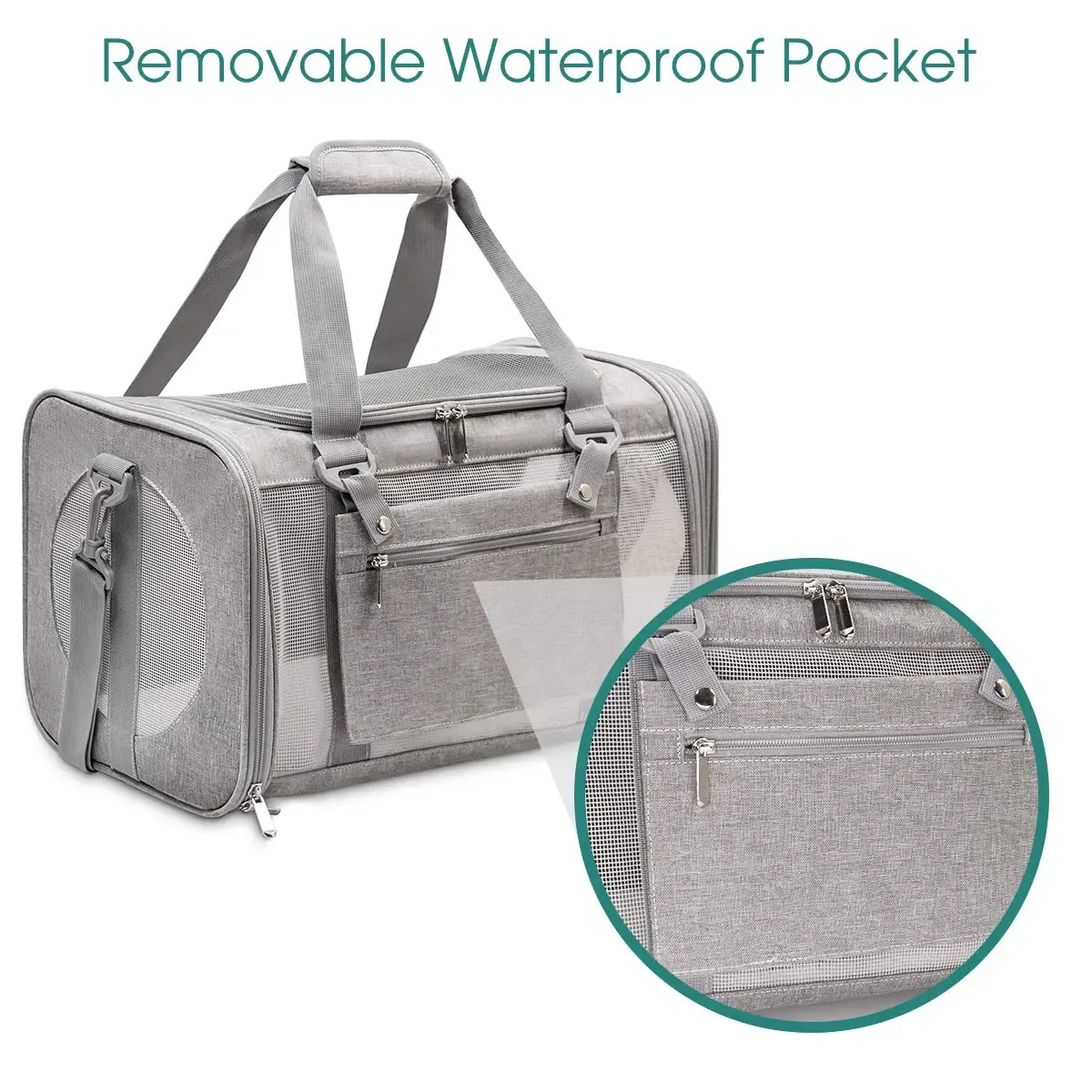
The most reliable volume in this category does not come from retail shoppers. It comes from people who move animals for a living: groomers, veterinary reception teams, animal rescue transporters, boarding kennels and pet taxi operators. Their requirements are different from a consumer's and they are worth designing for, because they reorder on a schedule.
Durability dominates. A professional handler may load and unload a bag twenty times a day, and the failure points are the door zip, the handle anchor and the wall inserts. Specify a heavy-gauge zip with a locking slider, bar-tacked handle anchors with a backing plate, and rods in closed sleeves so they cannot work out.
Cleaning between animals is the second requirement and it is non-negotiable. A transporter cannot wait overnight for a liner to dry, so they need either two liners per bag or a wipe-clean floor that does not absorb. Selling a spare liner as an accessory is an easy attach and it is what professional buyers ask for first.
Stacking and vehicle fit matter next. Transporters run multiple units side by side in a van, so a rectangular footprint that packs without wasted space beats a rounded one, and a flat top that accepts a second unit is genuinely useful. Ask for the stacked height and confirm it before tooling.
Identification is small and valued. A clear external label window or a sleeve for a card lets a transporter tag a bag to an animal without opening it. It costs almost nothing and it is the kind of detail that wins a repeat account.
Sizing for professional use skews larger and more uniform. Most operators want two sizes that cover the bulk of their caseload rather than a graded consumer range, and they will buy the same size repeatedly. That makes the large size the volume driver in this channel, the opposite of most retail programmes.
Note carefully that professional ground transport is not the same as air transport. Operators moving animals by air work under the live animal regulations published by the International Air Transport Association, and a soft covered bag is generally not the right product for that job. Say so plainly rather than letting a buyer assume.
Engineering note: design for wipe-down turnaround and bar-tacked anchors, sell spare liners, and keep air travel out of the claims entirely.
Cost Structure: Insert Count, Panel Area and Assembly Minutes
Indicative FOB Xiamen for a covered build runs USD 10.40-19.80, the widest band of the closed families, because the insert set and the liner system are both substantial sub-assemblies with real labour content.
Insert count is the first driver. Each wall rod, the roof stiffener and the floor board add material, a sleeve and an assembly step. A build with inserts in four walls, roof and floor carries roughly twice the insert cost of one with a floor board alone, and the difference shows up directly in the side-compression figure. This is not a place to economise; a shell that folds under seat-belt pressure generates returns at a far higher rate than the saving justifies.
Panel area is second and cuts both ways. More mesh reduces fabric consumption and raises cutting and binding labour, so the net effect is close to neutral on price but large on performance. Specifying void area rather than panel area keeps the supplier honest, as discussed earlier.
The liner system is third and typically the largest discretionary increment. A removable liner with a taped floor seam, cut back around every panel, adds 7-10 percent and transforms the product's usable life. A spare liner sold as an accessory is margin rather than cost.
Assembly minutes deserve attention because covered bags are slow to sew. Sleeving rods, closing corners with inserts in place, binding three mesh panels and fitting a removable liner with a taped seam all add minutes, and the total is often 1.6 to 2.2 times that of an open bag of similar size. Ask the supplier to state the operation count so a comparison across quotes is meaningful.
Cube is the final cost element and the one that surprises buyers. A rigid covered bag ships assembled and consumes two to three times the cube of a foldable open design, so landed cost per unit can move more from freight than from factory price. Always compare units per cubic metre alongside FOB.
Third-party verification of materials and process is available through SGS testing and audit services, and hygiene and welfare framing for transport products can be referenced from American Veterinary Medical Association guidance. Name the scope at quote stage so testing cost sits in the unit price.
Engineering note: inserts, liner and cube dominate this build; shell fabric is a minor line and should never be the focus of a negotiation.
Documentation, Sampling and the Compliance File
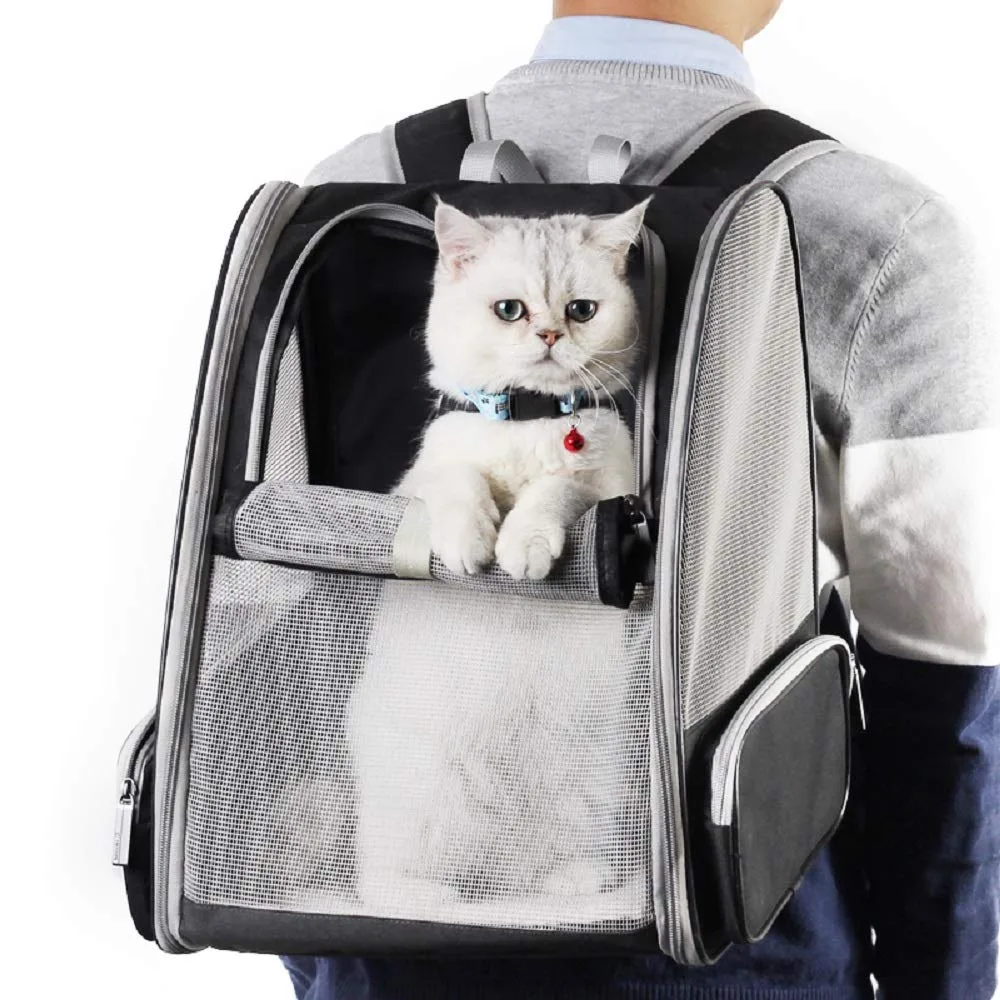
First samples are built 6-10 working days after the tech pack is confirmed, assuming stock mesh, board and hardware. A custom board die-cut, a branded zip pull or a dyed-to-match liner knit extends the first article onto a pre-production path, and that should be on the calendar before deposit is paid.
Sample approval runs in a fixed order. Check the insert set first: confirm every wall, the roof and the floor carry an element, and confirm the rods sit in closed sleeves. Then run the side-compression test at 15 kg and measure the internal width loss. Then check panel void area against the specification and confirm the liner is cut back around every panel. Only then review colour, logo and print.
Wash one sample five times and inspect the liner floor seam, the board sleeve and the panel binding. A covered bag that fails at the seam after five washes will fail in the field within a season, and the fix is a specification change rather than a production change.
Airflow deserves a simple field check rather than only a calculation. Place a temperature probe inside the shell, leave it in a shaded 24 degree environment for thirty minutes with the rated mass inside, and record the internal reading. A rise of more than 4 degrees over ambient indicates the panel specification is not doing its job.
Bulk runs 35-50 days from approval of sample, fabric and artwork, covering material booking, cutting, insert sleeving, assembly, inline checks, packing and final inspection. Capacity at the SGS-verified production base supports planning, but a dated slot is held by deposit and booked materials.
The document set should travel with the shipment: approved sample reference, bill of materials with board and mesh codes, insert layout drawing, dimension sheet, panel void calculation, inspection summary, packing list and any destination-specific material declarations agreed at quote stage.
Keep one golden sample under the purchase order number with its insert set intact. When a rigidity complaint arrives in month six, comparing the returned unit against the golden sample settles it quickly.
Engineering note: verify inserts, compression, panel void and liner cut-back before artwork, and file the panel calculation with the PO.
Channel Requirements and Reorder Timing for Covered Units
Covered bags sell through channels that can explain them. Veterinary practices and grooming salons are the strongest, because staff can recommend the product for a specific animal and the enclosure story is easy to tell in person. Pet specialty chains do well where staff are trained. Marketplaces do worst, because a photograph cannot communicate why a closed shell is better than an open one and the shopper defaults to the cheaper item.
Packaging therefore has to carry a demonstration. A clear window that shows the panel layout, a hangtag with the void area figure and a short line on shade, and a card on cleaning turnaround will outperform any amount of lifestyle imagery. Professional buyers in particular read the cleaning card before anything else.
Listing copy should lead with containment and shade, state the open area honestly, and carry the exclusions: never leave an animal unattended in a covered bag, never leave it in a parked vehicle, and check the animal regularly. Those three lines are the difference between a defensible product page and a liability.
Air transport deserves an explicit disclaimer. Soft covered bags are a ground product. Any buyer moving animals by air needs to consult the operator and the applicable live animal rules directly, and the listing should say so rather than staying silent and letting the assumption form.
Reorder logic differs from retail here because professional accounts reorder on a cycle. Track liner attach rate as the leading indicator: a handler who buys spare liners has put the bag into service, and that account will reorder on schedule. A low attach rate usually means the bag is sitting unused.
With bulk at 35-50 days plus transit, the reorder decision has to be taken while stock is still healthy. Set the trigger on weeks of cover plus known account cycles rather than on a stockout alert, and review the return reasons by size at the same time, because rigidity complaints cluster in the large size where spans are longest.
Engineering note: sell through channels that can explain the product, lead with containment and shade, and use liner attach rate as the professional reorder signal.
Why brands source here
- Pet bag programmes run since 2014; founding team in sewn goods since 2004
- SGS-verified production floor of 4,950 m² with 137 workers across 7 lines
- Monthly capacity of 200,000 units, audited to BSCI and ISO 9001
People Also Ask
What is a pet enclosed bag?
A soft shell that surrounds the animal on every face, using engineered mesh panels rather than an opening to manage airflow.
Are fully covered bags safe in warm weather?
They are when panel void area is above roughly 320 square centimetres across three faces. Below that the internal temperature climbs quickly and the product should not be sold for warm markets.
Do covered bags reduce pet anxiety?
They help animals that seek enclosed spaces and do not help animals distressed by confinement. Honest copy states the condition rather than promising calm.
How do you clean a fully covered pet bag?
Remove the liner and wash it at 30 degrees, wipe the board and internal faces through the side opening, and dry overnight with the board out.
Why does a covered bag lose its shape?
Usually a missing roof stiffener, inserts that stop short of the corners, or rods slipping out of open pockets. All three are specification issues.
What does a wholesale enclosed bag cost?
Indicative FOB Xiamen is USD 10.40-19.80, with insert count, liner system, panel binding and shipping cube driving the final figure.
Who buys covered pet bags in volume?
Groomers, veterinary reception teams, rescue transporters, boarding kennels and pet taxi operators, who reorder on a service cycle rather than seasonally.
Frequently Asked Questions
How much open area does a covered bag need?
320-420 square centimetres of genuine void for a 4-12 kg animal, spread across three faces at different heights so air can cross rather than simply enter.
Why is a covered bag more expensive than an open one?
Inserts in every wall plus roof and floor, a removable liner system, and roughly twice the assembly minutes. Cube adds more at the freight stage.
How often should a covered bag be cleaned?
Weekly for consumer use with a washable liner, and between every animal for professional use. A spare liner is what makes the second case practical.
Does the liner block the ventilation panels?
It should not. Require the liner to be cut back around every mesh panel and verify it on the golden sample, because this is a common factory convenience.
Is a covered bag calmer for nervous animals?
For animals that retreat to covered spaces at home, yes. For animals whose anxiety is driven by confinement, it can make things worse, so the listing should stay conditional.
Can a covered bag be used for air travel?
Not on the strength of this design. Air movement operates under the carrier's own live animal rules, and a soft covered shell is generally the wrong product for it.
What is the MOQ for a wholesale pet enclosed order?
MOQ 500 per colour. A first programme usually takes a medium and a large in a dark neutral, because covered shells are cleaned often and light colours show it.
How long does sampling take?
First samples are built 6-10 working days after the tech pack is confirmed, assuming stock mesh, board and hardware.
When does the bulk window start?
The 35-50 days begin at approval of the final sample, the material list and the carton print. Insert layout changes late, so approve it first.
Should the bag ship assembled or flat?
Decide at quote stage. Assembled costs more cube and arrives ready to sell; flat saves freight but needs retailer or customer assembly steps.
What inspection standard applies?
AQL 2.5 against a rigidity and closure defect list, with a missing insert, a failed side-compression result or a blocked panel classified as critical.
Which payment and delivery terms are used?
T/T 30/70 with FOB Xiamen pricing, held constant across competing quotes so freight does not distort the unit comparison.
Do professional buyers need anything different?
Spare liners, bar-tacked handle anchors, a rectangular footprint that stacks, and an external identification sleeve. Those four win repeat accounts.
Talk to QUANZHOU JUNYUAN BAGS about a wholesale pet bag order: MOQ 500 pieces per colourway, samples in 6-10 working days, bulk production in 35-50 days under AQL 2.5 inspection.
Get a free quote Request a sample