Pet Hammock: Backseat Cover
A suspended rear panel is worth ordering when its straps reach four headrest posts and the side flaps drop far enough to shield the door sill, which normally means 145-155 cm of finished width. Fitting time for a trained installer runs 2.5-4 minutes. Commercial entry is MOQ 500 pieces per colour.
Suspended panels fail at the corners, not across the middle, so the buying decision should start from strap geometry rather than from fabric weight. A hammock that hangs correctly spreads load over four posts; one that hangs short pulls the front loops inward and wrinkles within a week. Programme entry is MOQ 500 units per shade, pre-production units in 6-10 working days, volume output in 35-50 days, clearance at AQL 2.5. Payment default is T/T 30/70 against FOB Xiamen. Wide panels also inflate freight, so the RFQ should ask for both flat-packed and compressed carton counts before a landed cost is agreed. Quotations read more clearly when separated into face cloth, barrier film, backing, quilting, side flaps, zipper work, strap set and packing cube. Our production team schedules through an SGS-verified production base and partner facilities holding BSCI and ISO 9001 documentation. Description copy should describe containment and surface shielding only; restraint claims belong to a harness system and need their own evidence.
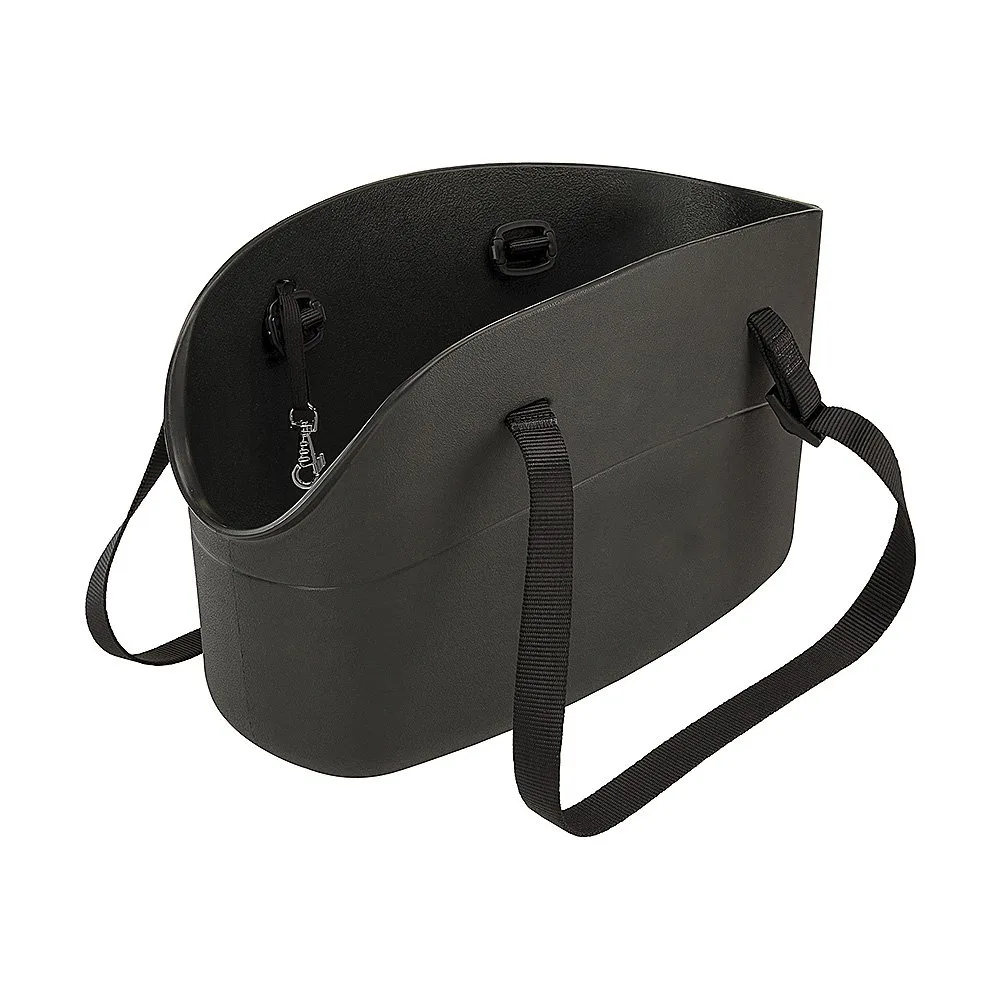
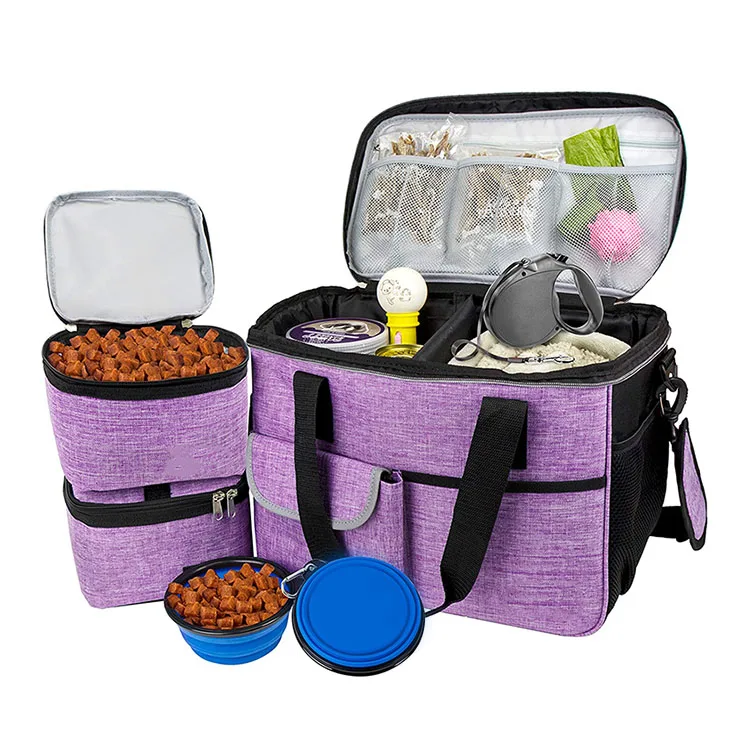
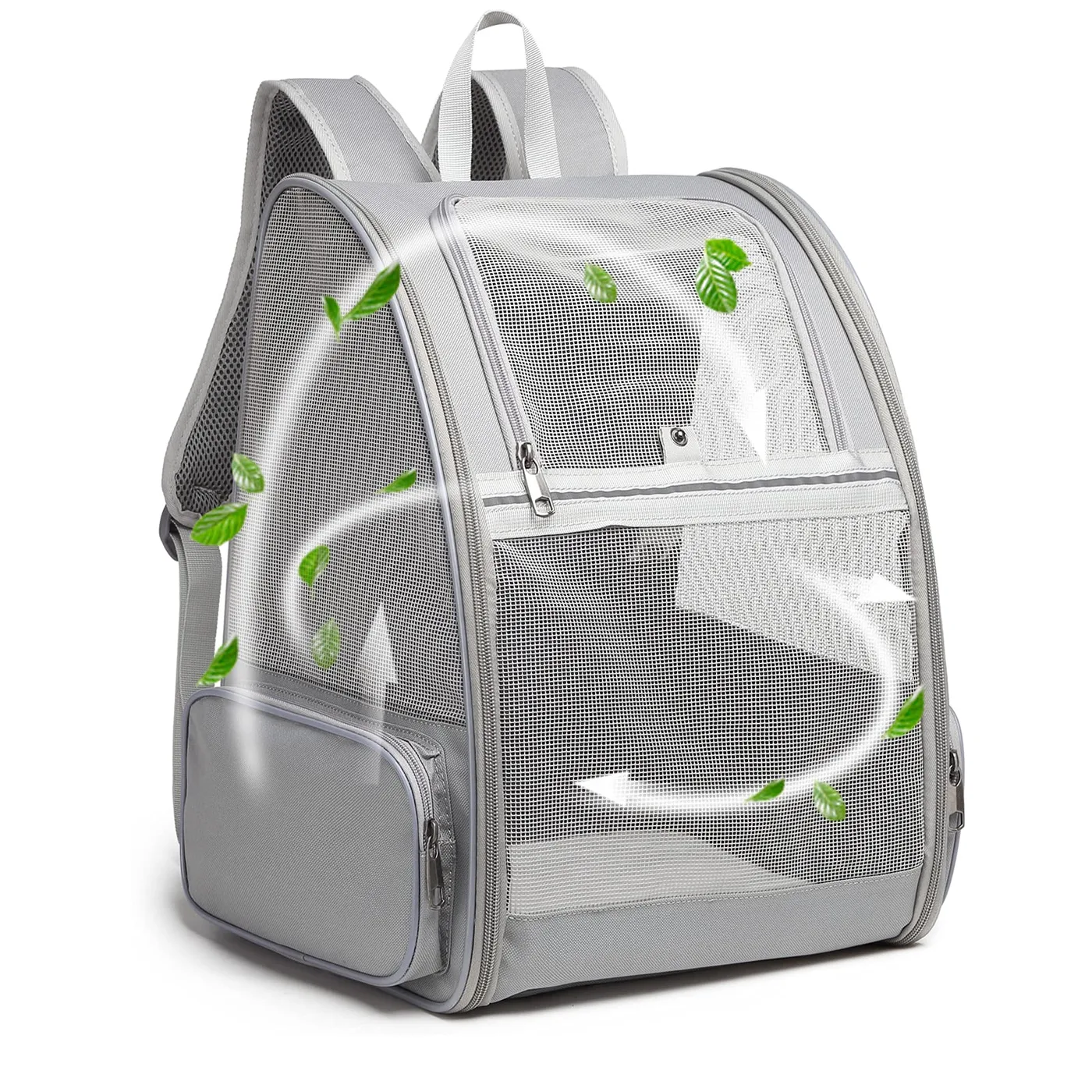
Buy dog carriers and buy cat carriers enquiries usually arrive from two different channels - one from pet specialty, one from general merchandise - and Pet Bag Types & Styles has to serve whichever basket is larger. Buy pet carriers in a single colourway first, then extend the shade range on the reorder.
Hammock Geometry: Where the Panel Actually Ends
The word hammock suggests a simple rectangle slung between two points, but the specification that decides customer satisfaction is where each edge terminates. A panel that stops at the seat back leaves the rear of the front seats exposed; one that runs past the front headrests bunches around the posts and looks cheap in the showroom. The useful starting dimension is the distance between the front and rear headrest posts measured along the seat back, plus 8-12 cm of slack for the animal to settle without pulling the loops tight.
Three measured lengths belong on the tech pack. Panel length along the vehicle axis, finished width across the bench, and flap drop measured from the bench surface down toward the footwell. Typical finished width for a mid-size sedan lands at 145-155 cm; crossovers often need 150-162 cm. Panel length usually sits at 130-145 cm. Flap drop is the cheapest dimension to get right and the most often omitted: a 30-35 cm drop covers the bench front edge and most of the vertical face, which is where mud lands.
Slack is a deliberate allowance, not sloppiness. Without it the panel becomes a taut drum, the animal slides toward the centre, and the loops take the whole load in shear. With too much slack the panel sags into the footwell and the animal walks onto the floor. Writing 6-8 percent of panel length as measured sag under a 10 kg static load gives both the pattern maker and the inspector something to check.
Retailers who sell one universal size usually lose the crossover segment, where the bench is wider and the headrest posts sit further apart. A two-size assortment, sedan and crossover, costs one extra pattern and one extra carton but removes the largest single cause of fit returns. The second size is far cheaper than the returns it prevents.
Corner treatment is the detail that separates a panel that looks fitted from one that looks draped. A square corner with a single turn leaves a point that catches on the door frame; a rounded corner with a bound edge follows the bench contour and costs about USD 0.22 more. On a product photographed from outside the vehicle, the corner is visible in almost every listing image.
Strap position along the top edge deserves measurement rather than estimation. Placing the front loops at the quarter points rather than at the extreme corners distributes load better and stops the outer edges from lifting, but it also narrows the effective opening for the animal. The usual compromise is quarter-point placement with a reinforced hem, which keeps the opening generous while holding the edge down.
Install Time and Labour on the Fitting Line
Install minutes matter more than most buyers expect, because a cover that takes six minutes to fit gets fitted badly or not at all. Showroom staff, fitters and end customers all abandon complicated strap layouts. Measuring the install with a stopwatch during sampling is a cheap test that predicts reviews better than any laboratory report.
The grid below compares the common configurations by fitting effort, sill shielding and laundering endurance. Install minutes are for a trained person on a mid-size sedan with the front seats at a normal driving position; an unfamiliar cabin adds 30-60 seconds to every row.
| Configuration | Install minutes | Door sill shielding | Wash cycles before seam stress | Indicative FOB |
|---|---|---|---|---|
| Front headrest loops only | 1.5 | None | 40 | USD 8.40-11.20 |
| Four loops, no seat anchors | 2.5 | Partial side flap | 35 | USD 10.60-14.40 |
| Four loops plus two seat anchors | 3.5 | Full side wall to sill | 50 | USD 12.80-17.60 |
| Convertible panel to bench | 4.0 | Full plus door panel tabs | 45 | USD 15.20-20.80 |
| Zip-split centre for belt access | 4.3 | Full plus door panel tabs | 40 | USD 17.40-23.60 |
Every extra attachment point adds roughly 45-70 seconds of fitting and about USD 0.60-1.10 of strap hardware. That is a fair trade up to four points, after which the returns curve flattens while the install burden keeps rising. The four-loop plus two-anchor configuration is the practical ceiling for mass retail, and the convertible row only pays off where the listing explicitly promises a second use mode.
Clearance also affects install time more than strap count does. A strap that has to be threaded behind a headrest post with 2 cm of hand room will take three times as long as the same strap on an exposed post. Sampling on a vehicle with a deeply recessed post is a worthwhile check that costs nothing and prevents a bad review pattern.
Adjustability is the feature that most reliably converts an awkward cabin into a workable one. A fixed-length strap either fits or does not; an adjustable strap with 25-35 cm of travel fits a wide range of post spacings and lets the customer correct the sag themselves. The added hardware runs about USD 0.55 per point and is one of the few upgrades that reduces returns rather than merely raising the perceived value.
Instruction material is part of the install system and should be treated as a specification line. A folded card with four photographs fits the polybag, costs around USD 0.12, and measurably reduces the "could not fit it" reviews that dominate this category. A link to a video is cheaper but is not read by the segment of buyers who need it most.
Door Edge and Side Wall Coverage
Sill damage is the complaint that photographs best and therefore drives the most returns. Animals step across the sill, and claws and mud land on a painted surface that no amount of washing restores. A panel that covers only the horizontal bench leaves that surface unprotected, which is why flap geometry belongs in the specification rather than in the marketing copy.
Four approaches appear in the market. A plain side flap is the cheapest and covers the vertical bench face but not the sill itself. An extended flap with a sewn pocket drops 8-12 cm further and reaches the sill on most sedans. A tabbed flap adds two small anchoring tabs that hook into the door frame, holding the flap in place during entry and exit. A full door panel version adds separate pieces for each door and is the premium answer, at roughly USD 4.60-6.80 more per set.
The pocket detail is where cheap versions fail. A pocket that is sewn closed at both ends collects grit and cannot be shaken out; one that is open at the bottom lets the flap swing. The workable compromise is a pocket with a single drain grommet and a turned hem, which adds about USD 0.18 and survives laundering.
Buyers should also check the flap against powered seat runners and side airbag panels. A flap that tucks behind a seat belt stalk is fine; one that covers a side airbag seam is a genuine objection in some markets and should be avoided in the pattern. Mark the exclusion zone on the tech pack rather than leaving it to the pattern maker's judgement.
Openings for Belt Buckles and Anchor Points
Access openings are the difference between a cover that stays fitted and one that gets removed after a week. Rear passengers need belt buckles; families need child seat anchors; some markets require visible ISOFIX access. If the panel hides these, customers cut it, and a cut panel is a warranty claim waiting to happen.
Two solutions dominate. Velcro-split openings are cheap, quiet and quick to make, but they collect hair and lose grip after repeated laundering. Zip-split openings cost roughly USD 1.20-1.80 more, last longer and read as a premium feature on the listing, but the zipper needs a garage and a backing tape or it will snag the seat cloth. For programmes above USD 14 FOB the zipper is usually the better value.
Position tolerance is the practical risk. Belt stalks move by several centimetres between trim levels of the same model, so a fixed opening will miss on some vehicles. The usual answer is a continuous split with hook-and-loop closure along its length, letting the customer open wherever the stalk happens to sit. This adds about USD 0.40 and removes the single most common fit objection.
Where a child seat is expected, specify an anchor access symbol on the hangtag and a reinforced opening. Retailers in family-vehicle segments report noticeably fewer returns when the listing shows that the panel accommodates a child seat, because the buyer's real question is whether the cover forces a choice between the animal and the child.
Reinforcement around an opening is where cost is most often cut invisibly. A split closed only with hook-and-loop tape concentrates stress at the ends of the split, and repeated entry widens it into a tear. Adding a bar-tack at each end and a bound edge along the split costs roughly USD 0.28 and is the difference between an opening that survives a season and one that does not.
Laundering Cycles and Colour Retention
A rear panel is washed far more often than any other item in the pet travel range, and laundering is where marginal constructions come apart. Two failure modes dominate: seam stress at the strap attachment and colour transfer onto light seat cloth. Both are testable at sample stage for very little money, and both should be written into the approval protocol.
Wash endurance is best expressed as a cycle count rather than a vague durability claim. Run the finished panel through a domestic cycle at 30 degrees with a mild detergent, dry flat, and repeat; inspect strap attachment, bound edges and the barrier film after every ten cycles. A well-built panel with bound strap roots and a laminated barrier survives 50 cycles. A version with the barrier film merely sprayed on often delaminates by cycle 20.
Colour fastness deserves its own line in the RFQ. Rub fastness and laundering fastness are measured by published textile methods, and the relevant AATCC test methods are the reference most mills already work to. Asking for a grade rather than a yes or no converts a subjective argument into a number the inspector can check. A dry crocking grade of 4 and a wet grade of 3-4 is a sensible wholesale floor for dark colours sold into light-interior markets.
Buyers should also confirm what happens to the grip backing after washing. Silicone dot patterns survive better than sprayed coatings, and a sprayed backing that goes tacky or flakes will stain the seat it was meant to protect. Request a post-wash photograph of the backing as a standard sample deliverable; it is the cheapest predictor of a review complaint.
Pricing the Convertible Feature Set
Convertible designs, where the panel unzips or unbuckles to become a flat bench cover, command a higher retail price and a longer listing. They also add material, hardware and labour, and the premium only holds if the second mode actually works. Understanding which feature costs what lets a buyer select a configuration deliberately instead of accepting the sample that arrives.
- Face cloth and barrier, 30-38 percent. Driven by finished area; a crossover size uses about 14 percent more cloth than a sedan size.
- Quilting and backing, 12-16 percent. Diamond quilting adds both thread and machine time. A printed panel is cheaper than a quilted one at equal visual weight.
- Strap set and hardware, 10-14 percent. Six attachment points with cam buckles sit at the top of this range.
- Openings and zippers, 8-12 percent. A zip-split centre with garage and backing tape is the single most expensive optional item.
- Cutting, sewing and packing, 20-26 percent. Wide panels need handling room; compressed packing can cut carton volume by 30 percent.
SKU count interacts with all of the above. Two sizes in one colour cost less per unit than one size in three colours, because the pattern and marker are shared and only the cut length changes. Where the assortment must be wide, widen by size before widening by shade.
The honest way to hold a price target is to reduce decoration, not structure. Dropping quilting for a print, or moving from cam buckles to ladderlocks, keeps the panel functional and its shielding intact. Removing an attachment point to save USD 0.80 converts a stable panel into one that sags, and the resulting review costs more than the hardware.
Pre-Shipment Checks for Wide Panels
Large panels hide defects well. A roll of 300 folded units can contain mis-registered prints, blocked grommets and inconsistently bound strap roots, none of which are visible from the top of the carton. Inspection planning therefore has to specify how many units are unfolded and fully spread, because a check performed on folded goods is largely theatre.
| Check | Method | Acceptance | Quantity |
|---|---|---|---|
| Finished dimensions | Spread flat, measure length and width | Within plus or minus 15 mm of approved sample | 5 per colour |
| Strap root strength | Static pull at 25 kgf for 60 s | No stitch run, no fabric tear | 4 per colour |
| Barrier continuity | 500 ml water, 10 min dwell on the flat panel | No strike-through on the reverse face | 3 per colour |
| Opening function | Open and close ten times | Zipper tracks freely, closure holds | 3 per colour |
| Fold and carton | Recount and corner drop | Count correct, no crease cracking the film | 1 carton per 40 |
Crease damage deserves special attention on laminated constructions. Folding a film-backed panel along the same line for a long voyage can leave a permanent mark that reads as a defect on the shelf. Where the barrier is a film rather than a coating, specify a rolled pack or a fold-offset carton; the extra carton cost is trivial against a rejected shelf.
Documentation should be assembled while the goods are being made. The pack normally carries the inspection report, a cloth construction declaration, the colour fastness result, the chemical compliance statement for the destination market, and BSCI plus ISO 9001 references from the SGS-verified production base where the retailer asks. Chemical obligations for the European market are summarised by ECHA, and the destination determines which statement is required.
Finally, reserve inspection capacity early. Pre-production units take 6-10 working days and volume output 35-50 days, so a booking made after the goods are finished risks a vessel miss that no amount of factory effort can recover.
Freight Cube and Carton Strategy for Wide Panels
A rear panel is mostly air once it is folded, and freight is where a careless carton specification quietly destroys the margin that the fabric negotiation earned. The buyer should ask for three numbers on every quotation: folded carton dimensions, units per carton, and cartons per container. Those three numbers turn a unit price into a landed one, and they are frequently omitted because nobody asks.
Compression is the main lever. A panel packed flat in a standard carton might yield 10 units; the same panel with a compression strap and a shorter carton can yield 14, which reduces per-unit freight by roughly 30 percent. Vacuum packing pushes further still, to perhaps 18 units, but it introduces the crease risk described earlier and requires the goods to be opened promptly on arrival.
Carton orientation matters for laminated constructions in particular. Folding along the panel's long axis puts the crease where the barrier is most likely to mark; folding along the short axis twice spreads the stress over four lines instead of concentrating it on one. The change costs nothing and is worth specifying explicitly on the packing instruction.
Weight limits deserve a check against the destination's parcel network. A carton of ten quilted crossover-size panels can exceed 18 kg, which pushes it into a different handling class for some carriers and adds a surcharge that never appears in the FOB quotation. Asking for the packed carton weight at sample stage prevents a landed-cost surprise discovered after the goods ship.
Where the programme serves both retail and online channels, consider two pack formats. Retail wants a printed carton with a defined shelf-facing fold; online wants the smallest possible cube and no retail graphics. The second format usually saves 8-12 percent of freight and, for a bulky item, that saving exceeds the cost of maintaining two packing instructions.
Channel Requirements That Change the Specification
The same panel sells into several channels, and each one imposes requirements that are far easier to build in at sampling than to retrofit. Identifying the channel in the RFQ is one of the cheapest decisions a buyer makes, because it determines packaging, labelling, documentation and sometimes the construction itself.
- Mass retail and supermarket. Barcode placement, a defined carton quantity, a polybag warning and usually a supplier social-compliance file. Packaging artwork lead time frequently exceeds the sample lead time.
- Online marketplace. Image set requirements, a compact cube, and claim substantiation held on file because platforms audit listings. Odour complaints matter more here than anywhere else.
- Specialty pet chain. Hangtag content, a stated wash instruction, and usually a colour fastness or chemical declaration attached to the purchase order.
- Automotive accessory distributor. Vehicle fit listing by model, which pushes the programme toward a two-size assortment and a fit chart on the packaging.
Two requirements recur across all four and are worth building in from the start. The first is a sewn-in or printed care label that survives laundering, because a care label that disappears generates returns and, in some markets, a compliance issue. The second is a lot identifier on the carton, which makes any later quality discussion traceable to a specific production week.
Retail packaging artwork is the item most often underestimated. It can take longer than the 6-10 working day pre-production window, and late artwork is a routine cause of a shipment that is ready but cannot be packed. Starting artwork in parallel with sampling, rather than after sample approval, removes that delay at no cost. Where one panel sells into several countries, label content should be confirmed per market before artwork is finalised, because care symbols, fibre content and importer details differ and a single shared artwork is often rejected after the cartons are printed.
Production capability
- SGS-verified production space of 4,950 m², 149 machines, 7 assembly lines
- Pet bag output since 2014 from a 137-person team
- 200,000 units shipped monthly under BSCI and ISO 9001 systems
People Also Ask
Can one hammock fit both a saloon and an SUV?
Rarely well. Sedan panels finish at 145-155 cm and crossover benches need 150-162 cm with more flap drop; a two-size assortment removes most fit returns.
Why does my rear panel sag into the footwell?
Too much slack or too few attachment points. Specify 6-8 percent measured sag under a 10 kg static load and use four loops with two seat anchors.
Do I need openings for child seat anchors?
Yes if you sell into family vehicles. A continuous split closure lets the customer open wherever the stalk or anchor sits, costing about USD 0.40.
What causes colour transfer onto light seats?
Low wet crocking fastness on dark cloth, or a sprayed grip backing that goes tacky after washing. Silicone dot backings survive laundering far better.
Is a quilted panel better than a printed one?
Quilting adds handfeel and about 12-16 percent of cost in thread and machine time. A print gives similar shelf presence for less money at equal visual weight.
How much does a convertible layout add?
Roughly USD 2.40-4.20 over a fixed four-loop panel, mostly in zipper work, extra strap hardware and additional sewing operations.
Why do strap roots fail after washing?
Unbound strap roots take the whole panel load in shear and the stitch line runs. Bound and bar-tacked roots survive the fifty-cycle target.
Frequently Asked Questions
How long does a hammock-style cover take to fit in a showroom?
A four-loop configuration takes about 2.5 minutes for a trained fitter on a familiar sedan. Adding seat anchors moves it to roughly 3.5 minutes, and a convertible layout to around 4 minutes.
What finished width suits a crossover rear bench?
150-162 cm finished width with a 30-35 cm flap drop. A sedan size of 145-155 cm usually comes up short on the wider crossover bench and on its higher door sill.
Do side flaps need anchoring tabs?
Not always, but tabs stop the flap swinging during entry and exit, which is when sill damage happens. They add about USD 0.35 and are worth it on dark interior vehicles.
Is a zip-split centre worth the extra cost?
Above roughly USD 14 FOB, yes. Hook-and-loop splits collect hair and lose grip after repeated washing, while a zipper with a garage and backing tape reads as a premium feature.
How many wash cycles should a panel survive?
Fifty domestic cycles at 30 degrees is a reasonable wholesale target with bound strap roots and a laminated barrier. Sprayed-on barriers often delaminate by cycle 20.
What colour fastness grade should be specified?
A dry crocking grade of 4 and a wet grade of 3-4 is a sensible floor for dark colours sold into markets with light seat cloth. Ask for a grade, not a yes.
What is the order minimum for a hammock programme?
MOQ 500 units per shade. Pre-production units take 6-10 working days, volume runs 35-50 days after approval, and release is at AQL 2.5.
Should the assortment widen by size or by colour?
By size first. Two sizes in one colour share the pattern and marker and cost less per unit than one size across three shades, because fabric minimums are charged per colour.
Can the panel cover a side airbag seam?
No. Mark an exclusion zone on the tech pack so the pattern maker keeps the flap clear of airbag seams and powered seat runners.
How is barrier continuity checked on a flat panel?
Pour 500 ml of water on the face, leave it ten minutes, and inspect the reverse for strike-through. Repeat on three units per colour, including one washed sample.
Does compressed packing damage a film-backed panel?
It can. Repeated folding along one line may crease the film permanently, so specify a rolled pack or a fold-offset carton where the barrier is a laminate.
What documents come with a hammock shipment?
Inspection report, cloth construction declaration, colour fastness result, destination chemical statement, plus BSCI and ISO 9001 references from the SGS-verified production base on request.
Can the panel be sold as a restraint device?
No. It shields surfaces and contains the animal within the bench area. Restraint performance belongs to a harness system and needs separate evidence.
Talk to QUANZHOU JUNYUAN BAGS about a wholesale pet bag order: MOQ 500 pieces per colourway, samples in 6-10 working days, bulk production in 35-50 days under AQL 2.5 inspection.
Get a free quote Request a sample