Pet 3-in-1 Bag: Triple Function Sourcing Guide
A pet 3-in-1 bag is one shell engineered to do three jobs - typically carry, rest and secure - and it replaces two separate SKUs in most wholesale assortments. Budget-wise it lands 18-32 percent above a single-function pet bag of the same size, starts at MOQ 500 pieces per colourway, and needs two to three sample rounds before bulk release.
A triple-function build is a consolidation decision, not a feature decision, and buyers should judge it on total program cost rather than unit cost. Commercial floor is MOQ 500 pieces per colourway, because the conversion hardware, reinforcement panels and second set of straps cannot be amortised below that volume. Sample development runs 6-10 working days per round; three-function products almost always take two to three rounds because the mechanism, the load path and the comfort test each need their own iteration. Bulk production is 35-50 days after sample approval and deposit clearance, and every shipment is released only after an AQL 2.5 inspection with a written report. Terms are T/T 30/70, FOB Xiamen, with fabric and webbing dyed to a signed Pantone reference and approved in a controlled light box. The three functions must be defined on the brief as one sentence each, and each function needs a measurable acceptance test, otherwise the factory and the buyer will approve two different products. Cost lands where the hardware lands: expect the conversion kit to carry 22-35 percent of the total BOM. Plan the retail claim carefully, because a function you advertise is a function you have to test, document and defend in a marketplace listing.
Pet bags oem china and pet bags odm china arrangements differ on who owns the tooling, and Pet Bag Types & Styles is usually where that argument starts. Pet bag bulk supplier terms should state mould ownership in writing before the first sample is cut.
What a Pet 3-in-1 Bag Actually Means in a Wholesale Program
In wholesale terms, a pet 3-in-1 bag is a single shell that delivers three distinct use states without the buyer purchasing additional components. The most common combination on the market today is carry bag, travel rest mat, and car or seat-anchored restraint; a second common combination is backpack, shoulder tote, and hand-held duffel. The distinction matters commercially, because the first combination adds a structural or textile conversion, while the second combination only adds strap geometry. The first costs real money and real lead time; the second mostly costs pattern work. Buyers who conflate the two end up overpaying for what is essentially a marketing claim.
A triple-function claim only survives contact with a retail buyer if each function is independently usable. That means the pet can be carried in mode one without the components of mode two dangling, and mode two can be deployed without tools or instructions longer than three steps. Our production team scores every proposed 3-in-1 concept on a simple three-question screen: can each function be set up in under 30 seconds, can each function be used without the other two being present, and does each function have a defined weight ceiling. Concepts that fail any of the three are reworked before sampling, because a mechanism that is slow to convert is a mechanism that never gets used, and unused functions generate returns rather than reviews.
There is also a naming discipline worth enforcing early. "3-in-1" is a retail shorthand, not a standard, and different suppliers apply it to different function sets, so two listings labelled 3-in-1 can be entirely different products. When you write the brief, list the three functions explicitly in the specification sheet and make the factory confirm them in writing on the sample approval form. That single line prevents the most common dispute in this category: the buyer approved one function set and the cartons contain another.
From a sourcing standpoint, treat the 3-in-1 as one product with three test plans, not three products sharing a shell. Each function needs its own load test, its own cycle test and its own documentation folder, and the inspection plan has to name all three. This is the point where many programs quietly overspend: they budget for one set of tests and then discover at pre-production that the channel requires three.
Cost Structure: Where a Triple-Function Build Adds Dollars
The cost delta between a single-function pet bag and a triple-function version is rarely spread evenly across the bill of materials. In programs we quote, roughly 55-65 percent of the increase sits in hardware and conversion components, 20-25 percent sits in added reinforcement and lining, and the remainder sits in labour and packing. Understanding that split tells you where to engineer cost out. Cutting fabric grade to fund a better mechanism is usually the wrong trade, because the mechanism is what the customer touches and what generates a return if it fails.
Hardware drives the number for a simple reason: a conversion kit is a purchased assembly with its own tooling. A telescopic frame, a folding base plate, a set of quick-release buckles and a removable liner tray each arrive as separate line items with separate minimums. When your order is 500 pieces per colourway, those components are bought at a low-volume tier, and the tier price dominates the unit cost. Moving a program from 500 to 1,500 units per colourway typically pulls 6-11 percent out of the hardware line alone, which is why consolidation across colourways is often a smarter lever than negotiating the finished-unit price.
Labour is the second lever, and it behaves differently. A 3-in-1 shell takes more operations and more handling, so the standard minute value rises even when the material list is unchanged. On the SGS-verified production base we work with, the labour delta between a single-function and a triple-function pet bag of the same size runs 12-20 percent depending on how the conversion is engineered. A conversion that is sewn in during assembly costs less labour than one that is riveted or screwed in a second station, but it is harder to repair or replace. That is a commercial decision, not an engineering one: decide whether you want a lower unit cost or a serviceable product.
The quote you receive should separate these elements. Ask for a BOM-level quote with fabric, webbing, hardware, foam, lining, labour, packing and overhead broken out, then ask which of those lines move if volume doubles. A supplier who cannot answer that question is quoting from a finished-goods price list rather than from a cost model, and you will not be able to engineer the price down later.
SKU Consolidation Math: One 3-in-1 Versus Three Single-Use Bags
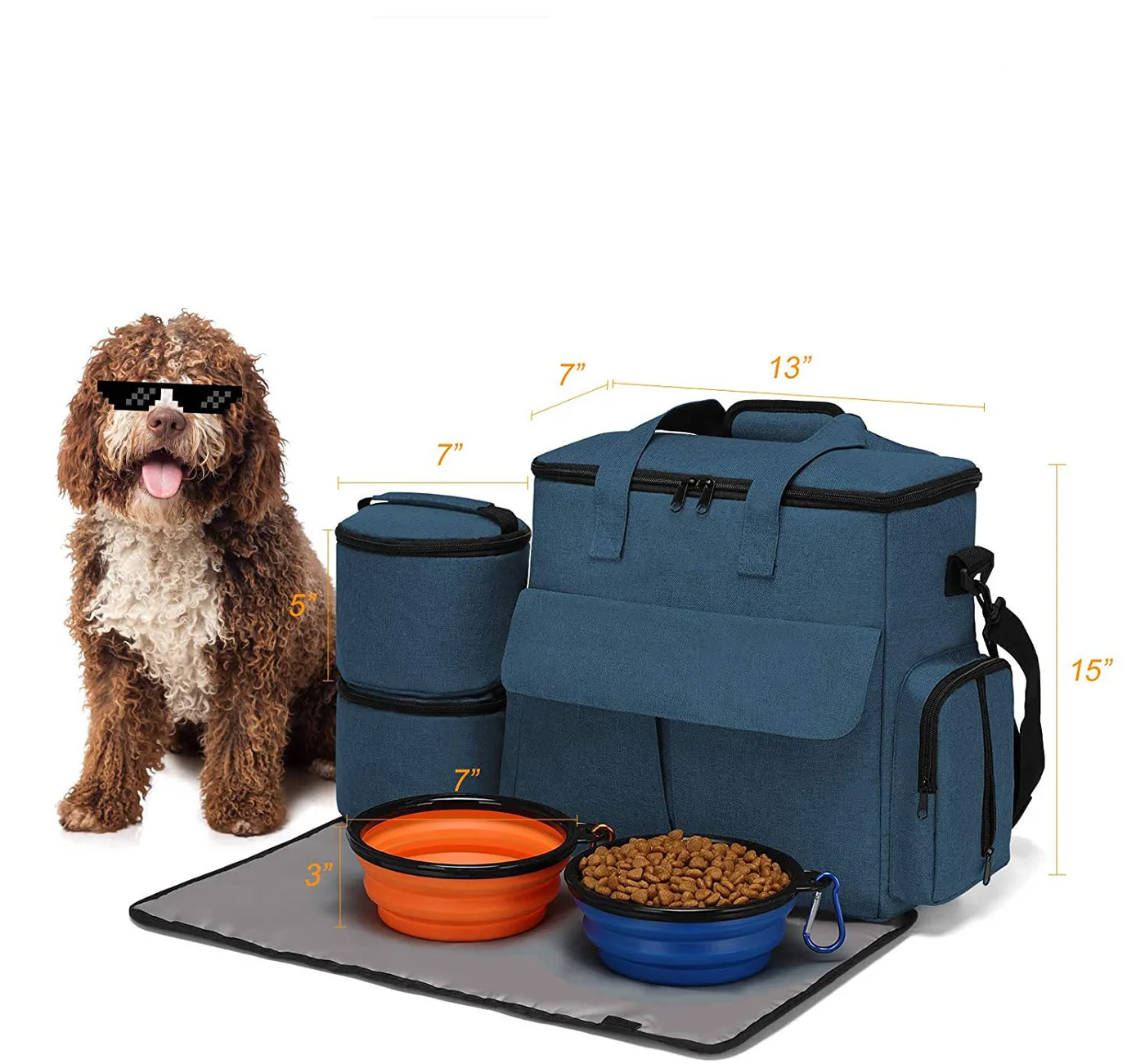
The argument for a 3-in-1 is usually framed as a consumer benefit, but for a wholesale buyer it is an inventory argument. One triple-function SKU at a landed cost of, say, 18.50 USD replaces two single-function SKUs at 11.00 USD and 9.50 USD, saving roughly 2.00 USD per unit of assortment value while cutting one purchase order line, one set of packaging artwork, one carton specification and one warehouse bin. On a 3,000-unit seasonal buy that is a meaningful reduction in working capital and in the number of things that can go wrong.
The counter-argument is concentration risk. If the triple-function item fails in the market, you have no fallback SKU covering either function, and your shelf or your listing page is empty until the next production slot, which is 35-50 days plus freight. Single-function SKUs fail independently, and you can drop one without losing the other. Buyers running an own-brand program with a committed shelf allocation should weigh this honestly: consolidation is strongest when you have already validated the demand for all three functions separately, and weakest when you are guessing.
A practical middle path is to consolidate at the top of the ladder and keep single-function items at the entry price point. The 3-in-1 becomes your premium anchor at a higher margin, while a simple single-function pet bag holds the opening price band and the volume. This structure also protects you on the ASTM test methods you will be asked to reference, because the simpler item carries a lighter documentation burden and can be listed faster on marketplaces that request per-function evidence.
Consolidation also changes your minimum commitment. Because MOQ is 500 pieces per colourway, a three-colourway 3-in-1 launch commits 1,500 units to a single product, whereas a three-SKU single-function assortment at one colourway each commits the same 1,500 units across three products. Same cash, different risk profile. Decide which you prefer before the season, not after the first sell-through report.
How to Compare Assortment Options on Paper
Run the comparison on three numbers only: landed cost per unit, working capital committed at first buy, and the number of purchase order lines your team has to manage. Any option that improves two of the three without worsening the third is worth sampling. Ignore projected sell-through at this stage, because it is the least reliable input and it will dominate the discussion if you let it.
Conversion Hardware: The Failure Points Buyers Under-Test
Every 3-in-1 pet bag fails at the conversion, not at the shell. The fabric, the seams and the base are usually specified conservatively because they are familiar; the hinge, the track, the quick-release buckle and the fold-out panel are where the returns originate. That is why the test plan for a triple-function program should allocate at least half its effort and half its budget to the mechanism, even though the mechanism is a minority of the BOM.
The four failure modes worth testing explicitly are: cycle fatigue, where the mechanism is opened and closed several hundred times under load; contamination, where sand, hair and moisture enter the track or the buckle; misalignment, where the panel is forced into position by a user who has not read the instructions; and cold or heat exposure, where plastic components change dimension during freight or in a car. Each of these has a cheap bench test you can specify in the pre-production protocol, and each of them is far cheaper to catch at sample stage than after the cartons land.
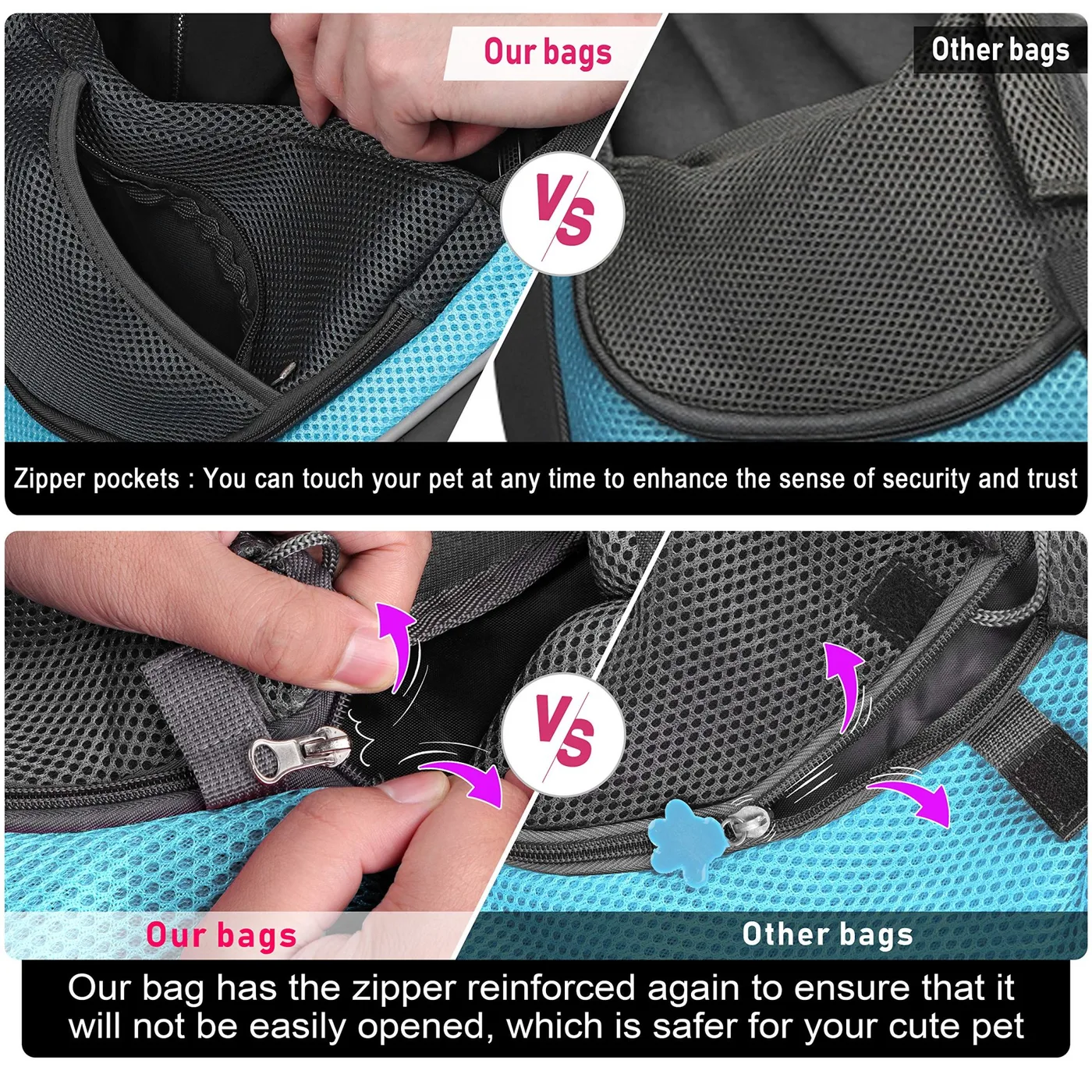
Specify the hardware by part number, not by description. "Heavy-duty buckle" is not a specification; a named supplier part with a stated tensile rating and a stated cycle rating is. Ask the factory to list the hardware supplier and part reference on the sample approval sheet, and require written notice if that part changes. Hardware substitution without notice is the single most common cause of a sample passing and bulk failing in this category, because the substitute meets the drawing and misses the duty cycle.
Finally, decide the repair strategy before launch. If the conversion kit can be replaced with a screwdriver, you can ship spare parts and defuse a percentage of warranty claims. If it is permanently sewn or riveted in, a mechanism failure means a whole-unit replacement. Spare-part availability is cheap insurance and it is worth 30 minutes of design attention.
Material Selection for a Shell That Does Three Jobs
A triple-function shell is asked to do contradictory things: hold a shape when carried, flatten or open comfortably when used as a rest surface, and stay quiet and non-marking when anchored in a car or on furniture. Material selection is therefore a compromise exercise, and the compromise should be made deliberately at the briefing stage rather than discovered at first sample.
Two textile directions cover most programs. A 600D polyester with a PU backing is the workhorse: dimensionally stable, cheap, easy to print, and available in long colour runs, which matters when you are dyeing 500 pieces per colourway. A 420D nylon ripstop is lighter and more abrasion-resistant but costs more and holds print less predictably. Structural inserts - EVA sheet, PE board or a moulded tray - are what actually deliver the shape, and their thickness is the variable to tune: 3 mm flexes, 5 mm holds, 8 mm is effectively rigid and adds weight the customer will feel.
The interior surface deserves separate attention because it is the one the animal contacts in the rest function. A removable, washable liner is now standard expectation in this category, and a liner that can be laundered without shrinking out of tolerance is a specification in its own right - ask for a stated shrinkage limit and a stated wash-cycle rating. Referencing OEKO-TEX textile testing for the liner fabric is a low-cost way to answer the chemical-safety question that retail compliance teams raise first.
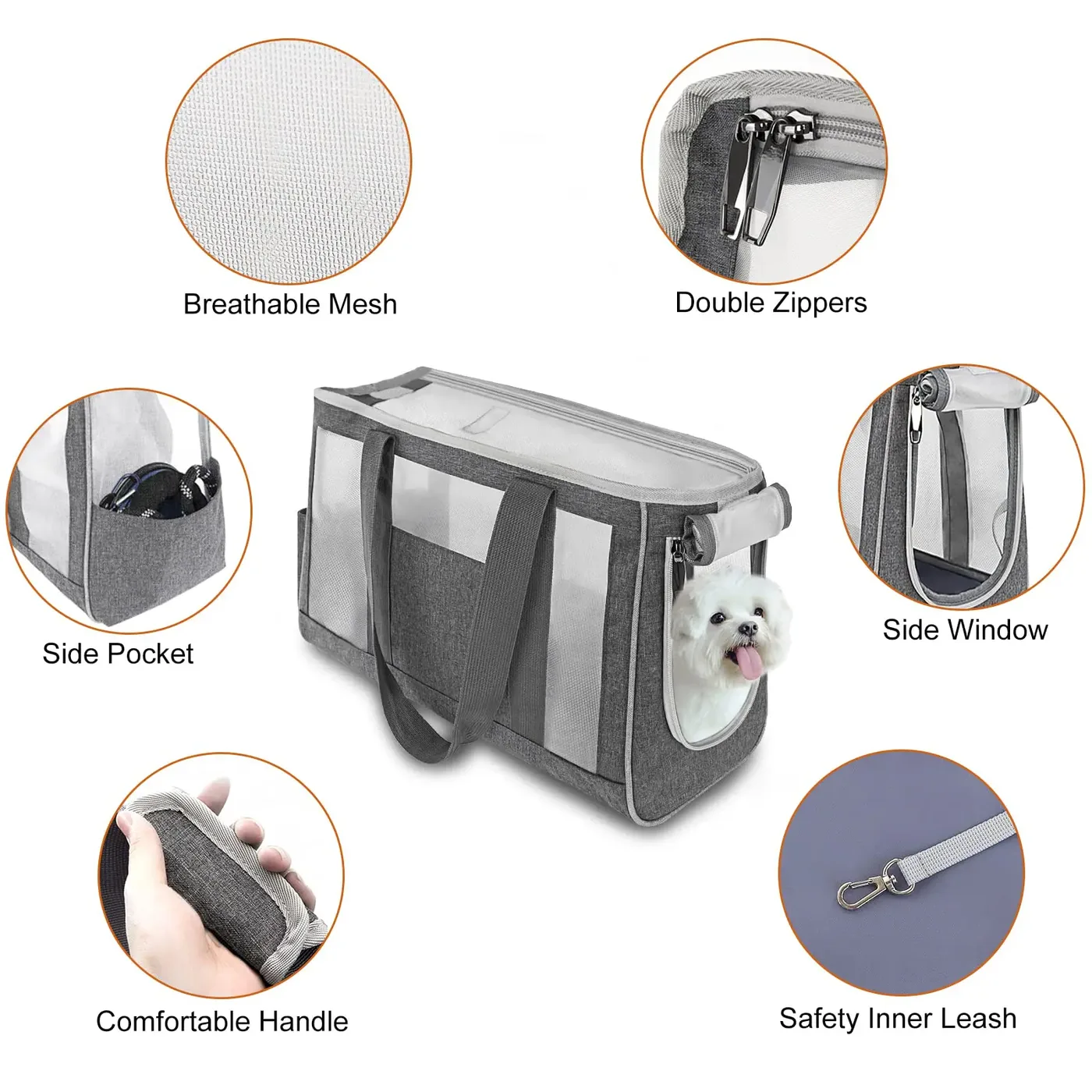
Ventilation is the third material decision. A bag that converts into a rest space needs airflow on at least two planes, and mesh area should be specified as a percentage of the shell surface rather than as a panel count. Thirty to forty percent open area across two opposite faces is a workable target for temperate climates; below twenty-five percent you will see condensation complaints in transit and in warm interiors.
Sampling a 3-in-1: Rounds, Gates and What to Test Each Time
Sampling a triple-function product takes longer than sampling a single-function one, and the schedule should be built around that reality rather than discovered in week eight. Each round runs 6-10 working days in the workshop, plus freight, plus your own evaluation time. Two to three rounds is normal; one round is unusual and usually means one function was not properly evaluated.
Structure the rounds around decisions, not around aesthetics. Round one answers silhouette and conversion geometry: does the mechanism move the way you intended, and does the shell still look right in each of the three states? Round two answers load and comfort: strap spread under a specified weight, base deflection, ventilation and liner fit. Round three, if needed, answers finishing and documentation: colour consistency across all components, print registration, labelling placement and carton pack-out. Each round should end with a dated written approval naming the golden sample, and that sample should be held under controlled conditions for the life of the program.
Testing each round is where cost discipline is won or lost. Sending the sample to a third-party laboratory after every round is expensive and mostly unnecessary; the mechanism cycle tests, the load test and the dimensional check can be run on the bench at the production base and reported with photographs. Reserve third-party laboratory testing for the pre-production sample and for any claim tied to a regulated market. Reference ISO 9001 quality management documentation when you request the factory's internal test records, so you receive a traceable report rather than an email assertion.
Build the schedule backwards from your required in-warehouse date. Bulk production is 35-50 days after approval, freight is additional, and any re-test triggered by a failed pre-production sample restarts the relevant portion of the clock. Programs that miss a season almost always missed it at the sampling gate, not in production.
| Item | Single-function | 3-in-1 build | Buyer note |
|---|---|---|---|
| MOQ per colourway | 500 pcs | 500 pcs | Conversion kit has its own component minimum |
| Sample rounds | 1-2 | 2-3 | Each function needs its own iteration |
| Sample time per round | 6-10 working days | 6-10 working days | Plus freight and buyer evaluation |
| Bulk lead time | 35-50 days | 35-50 days | Starts after approval and deposit |
| Inspection standard | AQL 2.5 | AQL 2.5 | Add mechanism cycle check to the plan |
| Unit cost index | 100 | 118-132 | Hardware carries most of the delta |
Compliance and Documentation Load for Multi-Function Claims
A triple-function pet bag carries the documentation burden of every function it claims. If the product is sold as a travel bag, a rest product and a vehicle restraint, then the file has to support travel, rest and restraint, and the marketplace or retailer will ask for evidence in whichever category its compliance team happens to work in. This is the hidden cost of consolidation and it should be budgeted at the briefing stage.
For the United States, the starting point is general consumer product safety. The U.S. Consumer Product Safety Commission sets the framework for consumer product obligations, and children's-product rules apply if the item is marketed toward children or mimics a children's product, which the kids-style variants in this category often do. For the European market, chemical compliance runs through REACH, and the reference point for restricted substances is the European Chemicals Agency. A supplier who can produce current test reports for both, dated within the last 12 months and matched to your fabric and hardware references, removes most of the friction from a retail onboarding process.
Claim substantiation is the second half of the file. Every stated weight limit, every stated dimension and every stated cycle rating needs a test record behind it, and the record should name the sample it was produced from. Marketplaces increasingly request this documentation when a listing is challenged, and the request arrives without warning. Build a one-page claim-to-evidence map at pre-production - claim, test method, result, report date - and you will answer those requests in an hour instead of a week.
Finally, remember that labelling travels with the carton. Country of origin, fibre content, care instructions and the applicable warnings must be printed or sewn in the format the destination requires, and for a multi-function product the warnings often need to appear for each use mode. Getting the label artwork approved late is a classic cause of a bulk delay, because it is the one item that cannot be substituted at the last minute.
Channel Requirements: How Retailers Merchandise a 3-in-1
Channel dictates the specification more than the consumer does. A pet specialty chain wants a hanging card or a shelf-ready tray with the three functions visible on the front panel and the pet weight range in large type, because the purchase decision happens in eight seconds at the fixture. An e-commerce listing needs the same information delivered as five images and a three-bullet block, and it needs the weight limit stated in the title or the first bullet or the return rate climbs.
Pack-out requirements differ sharply. Specialty retail typically asks for a master carton with a stated count and a stated cube, and it will reject a carton that does not stack to a standard pallet height. Marketplace fulfilment asks for individual polybag, a scannable barcode on the retail package and a carton that survives a parcel network rather than a pallet network. A 3-in-1 is bulkier than a single-function bag and its carton cube is 15-30 percent higher, which shows up directly in per-unit freight and in fulfilment fees. Compute the landed cost including that cube before you commit to a price.
Price banding is the last channel decision. A triple-function pet bag justifies a premium only if the premium is legible on the package: three icons, three numbers, three seconds of comprehension. Where the functions are hard to explain in a single graphic, the premium collapses and the item competes on price against simpler bags that cost less to make. Test the packaging copy at the same time you test the product, not after.
Our production team sees the same pattern across wholesale pet bag programs every season: the products that reorder are the ones where the category, the claim, the package and the price were decided together. Where those four were decided sequentially by different people, the program needs a second season to find its footing. Related reading on adjacent categories: pet 2-in-1 dual function programs and convertible multi-way carry formats.
Why brands source here
- Pet bag programmes run since 2014; founding team in sewn goods since 2004
- SGS-verified production floor of 4,950 m² with 137 workers across 7 lines
- Monthly capacity of 200,000 units, audited to BSCI and ISO 9001
People Also Ask
Is a 3-in-1 pet bag worth the higher unit cost?
It is worth it when all three functions have proven demand and when the premium is legible on the package. It is not worth it when the third function is a speculative feature the customer will not use.
How do I keep a 3-in-1 pet bag from becoming too heavy?
Engineer the structure rather than the fabric: tune the insert thickness, choose alloy or polymer hardware over steel, and cap the shell fabric at the lowest denier that passes abrasion testing.
What should be on the sample approval form for a 3-in-1?
The three functions stated explicitly, the hardware part references, the weight ceiling per function, and a dated golden sample reference held for the life of the program.
Can a 3-in-1 replace my entire entry price band?
Rarely. Consolidation works best at the premium anchor, while a simpler single-function bag holds the opening price point and the volume.
Why do 3-in-1 pet bags fail in the market?
Most returns trace to the conversion mechanism - fatigue, contamination or forced misalignment - rather than to the shell, seams or fabric.
How many sizes should a 3-in-1 program carry?
Three is sufficient for most wholesale programs: a small to 4 kg, a medium to 8 kg and a large to 12 kg, each with stated interior floor dimensions.
Frequently Asked Questions
What is the minimum order for a pet 3-in-1 bag program?
MOQ is 500 pieces per colourway. The conversion hardware carries its own component minimum, so ordering fewer than 500 units per colourway usually pushes the unit cost up rather than making the program cheaper to test.
How many sample rounds should I budget for a 3-in-1?
Two to three rounds. Each round takes 6-10 working days in the workshop plus freight and your own evaluation time, so plan four to eight weeks for development before bulk starts.
How much more does a triple-function build cost than a single-function bag?
Typically 18-32 percent more at the same size and fabric grade, with 55-65 percent of that increase sitting in the conversion hardware rather than in fabric or labour.
Can I launch three colourways at 500 units each?
Yes, and that is the common structure. It commits 1,500 units to one product, so weigh the concentration risk against the alternative of three single-function SKUs at the same total volume.
What inspection standard is used before shipment?
AQL 2.5 with a written report, plus a mechanism cycle check added to the plan for triple-function builds. Shipment is released only after the report is issued and accepted.
What are the payment and shipping terms?
T/T 30/70 - 30 percent deposit, 70 percent before shipment - on FOB Xiamen terms. Other Incoterms can be quoted on request but change the landed cost model.
How long does bulk production take after approval?
35-50 days after sample approval and deposit clearance, depending on order size, hardware availability and the season. Freight is additional and should be booked against the production slot.
Which tests are specific to the conversion mechanism?
Cycle fatigue under load, contamination ingress, forced misalignment and temperature exposure. Each can be run on the bench at pre-production and reported with photographs.
Do I need separate compliance documents for each function?
Yes. Each claimed function carries its own evidence requirement, and marketplaces request documentation by category. Build a claim-to-evidence map at pre-production.
Can the pet 3-in-1 bag be sold as a children's product?
Only if it is tested and labelled for that use. Kids-style variants trigger children's-product obligations, so confirm the intended market on the brief before sampling.
How much does carton cube increase for a 3-in-1?
Roughly 15-30 percent above a single-function bag of the same nominal size, which shows up in freight per unit and in marketplace fulfilment fees.
Is a removable liner standard in this category?
It is now an expectation. Specify the wash-cycle rating and the shrinkage limit for the liner fabric, because a liner that shrinks out of tolerance becomes a fit complaint.
Talk to QUANZHOU JUNYUAN BAGS about a wholesale pet bag order: MOQ 500 pieces per colourway, samples in 6-10 working days, bulk production in 35-50 days under AQL 2.5 inspection.
Get a free quote Request a sample