Pet Mom Bag: Multi-Function Wholesale Specs and MOQ
A wholesale pet mom bag program starts at MOQ 500 pieces per colorway, with samples in 6-10 working days and bulk in 35-50 days. Multi-function pet mom bags price from USD 8.40 to USD 21.60 FOB Xiamen, with modular insert count and trim quality driving the spread.
Multi-function pet mom bags are the most fashion-exposed category in the wholesale range. They sell on organisation, colour and finish rather than on technical performance, which means the buying discipline is closer to accessories sourcing than to outdoor gear sourcing: colourway management, trim consistency and reorder speed matter more than load ratings.
Commercial terms follow the standard framework: MOQ 500 pieces per colorway, samples in 6-10 working days, bulk production in 35-50 days after sample approval, pre-shipment inspection at AQL 2.5, T/T 30/70 payment and FOB Xiamen quotation. Production runs through an SGS-verified production base with BSCI and ISO 9001 coverage, 7 lines, 149 sets of equipment and around 200,000 pieces of monthly capacity.
The commercial risk in this category is not product failure but colour and timing. A fashion-led bag that arrives late, or in a palette the season has moved past, is difficult to clear at any price. Buyers who succeed here plan colourway commitments conservatively, protect the ability to reorder quickly on the shades that sell, and treat the organisation system as the product itself rather than as a set of pockets added to a bag.
Pet bags oem china and pet bags odm china arrangements differ on who owns the tooling, and Pet Bag Types & Styles is usually where that argument starts. Pet bag bulk supplier terms should state mould ownership in writing before the first sample is cut.
What Defines a Multi-Function Pet Mom Bag in Wholesale Terms
In wholesale terms, a multi-function pet mom bag is an organised carry-all with pet-specific provisions. It is not a structured carrier and it is not a tote. It has a defined internal organisation system, it carries both personal and pet items, and it is bought primarily because it makes a daily routine easier to manage. In practice that means the customer is buying a system, not a container, and the specification should be written accordingly.
That definition implies three specification priorities. The first is organisation: the internal system has to be deliberate rather than a set of arbitrary pockets. The second is finish: because the product is chosen on appearance, trim and hardware quality are visible and consequential. The third is cleanability: pet items share the bag with personal items, so surfaces need to be wipeable and, ideally, removable.
The category also carries a distinctive commercial characteristic: it is bought as a replacement more often than a technical product is. Owners replace it when it wears, when their routine changes, or when they want a different colour. That produces a steadier replacement cycle than most pet bag categories and supports a wider colour assortment.
Buyers should note what this category is not. It is not a product where a lower price automatically wins, because the purchase is discretionary and appearance-led. It is also not a product where a very high specification pays back, because customers are not evaluating load ratings. The margin is best at the middle of the range, where finish is visibly good, the organisation system is genuinely useful, and the price is still accessible to a buyer who is replacing a bag rather than investing in equipment.
Finally, the category rewards range coherence. Buyers who carry three sizes in the same palette and the same trim family outsell buyers who carry three unrelated designs, because the customer who likes the concept buys a second size or a coordinating piece.
Organisation Systems: Inserts, Dividers and Modular Design
The organisation system is the product. Everything else about a multi-function bag is packaging around that idea, and a buyer who specifies pockets without specifying the system ends up with a bag that looks busy and works poorly.
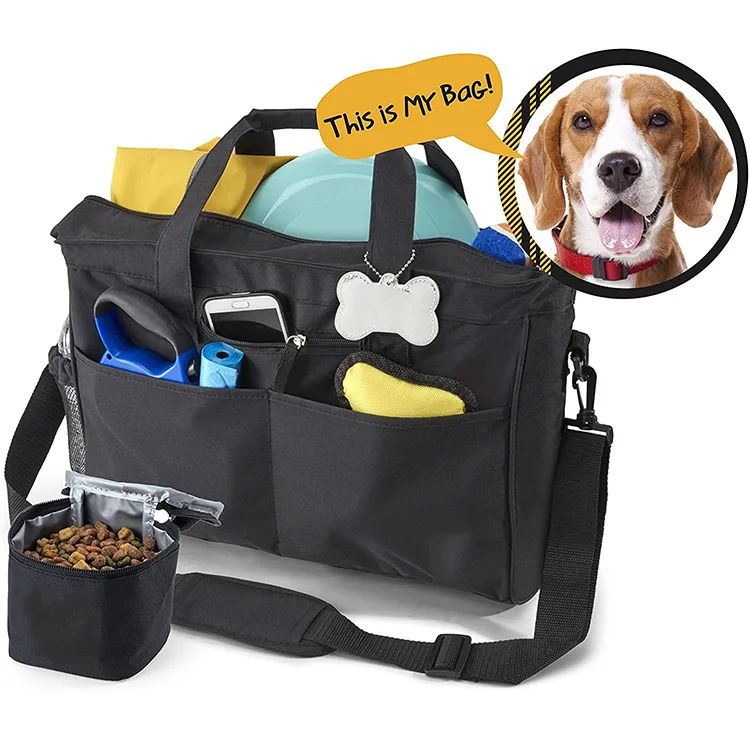
The most effective architecture uses a modular approach: a main compartment with a removable organiser insert, plus fixed external pockets for the items that are needed fastest. The insert carries the adjustable part of the system, and the fixed pockets carry the predictable part. That split keeps cost controlled, because adjustable dividers are the expensive element and there need to be fewer of them.
Pet-specific provisions should be separated rather than integrated. A removable wet or wet-item pouch, a waste-bag dispenser pocket positioned on the exterior, and a treat pocket with a wipe-clean lining are the three provisions buyers most often specify. Each should be physically separated from personal-item space, because that separation is the feature customers describe when they recommend the product.
Modularity has a cost implication worth stating plainly. A removable insert is a second manufactured item: it needs its own pattern, its own material and its own assembly time. Buyers frequently underestimate this and are surprised when an insert adds USD 1.40-3.20 rather than the USD 0.60 they assumed. Quoting inserts separately is the only reliable way to control that.
There is a commercial upside as well. An insert that fits across two bag sizes allows one insert specification to serve a range, which amortises the development cost and simplifies reordering. Buyers planning more than one size should specify the insert as a shared component from the start, and should confirm the fit tolerance in writing, because an insert that fits one body and rattles in another is a defect customers notice immediately even though both bodies were built to the same nominal size.
How much organisation is too much
Beyond about eight distinct storage positions, additional pockets stop adding perceived value and start adding cost and visual noise. The practical target for a mid-spec product is five to seven positions plus one removable insert, which reads as well organised in photography and remains simple enough to manufacture consistently.
Colour, Trim and Managing the Fashion Cycle
Colour is the single largest commercial variable in this category, and it is where most first-season programs lose money. The failure mode is consistent: a buyer commits to five colourways at 500 pieces each, two of them sell quickly and three of them do not move, and the working capital tied up in the slow shades exceeds the profit on the fast ones.
The safer structure is two core colourways plus one seasonal accent. Core shades are neutral, reorderable across seasons and safe to hold; the accent shade is where fashion risk is taken, and it is deliberately ordered in a smaller quantity. That structure keeps the commitment at 1,000-1,500 pieces while still giving the range seasonal relevance, and it has a second advantage: accent shades ordered in smaller quantities are the ones that sell out first, which creates natural scarcity without the buyer having to discount anything.
Trim consistency matters more than buyers expect. Two colourways in the same style with different hardware finishes read as different products to a customer, and they also create component complexity in production. Specifying one hardware finish and one webbing colour across the range, and varying only the shell, produces a coherent line at a lower cost.
Colour matching should be specified with a physical standard rather than a digital reference. A Pantone reference is useful for communication but it is not an enforceable production standard across different fabric bases, because dye uptake differs by material. A approved physical swatch held by both parties resolves disputes faster and prevents the most common colour rejection.
Buyers should also plan for shade drift across reorders. A dye lot match is not exact, and a reorder in a core shade six months later will not be identical to the first shipment. Specifying an acceptable tolerance, and keeping a retained standard from the first run, prevents a dispute that otherwise blocks a shipment.
Material and Finish Choices That Signal Quality
Because the purchase is appearance-led, the material brief should be written around perceived quality at a defined price rather than around technical performance. That is a different brief from most of the pet bag range and it changes which specifications are worth paying for.
The shell is usually a coated polyester in the 420D to 900D range or a synthetic leather for the premium end. Coated polyester is the practical default: it wipes clean, holds colour well and is priced sensibly. Synthetic leather looks premium in photography and supports a higher retail price, but it is heavier, it creases in transit, and it is more sensitive to packing method.
Linings should be light-coloured where possible. A dark lining makes a bag feel cheaper to open and makes contents hard to find, which is a genuine usability issue in an organisation-led product. A light lining shows soiling, which is why it should be specified with a wipe-clean finish rather than as an untreated fabric.
Hardware finish is the highest-return specification in the category. A consistent light gold, gunmetal or nickel finish across zips, rings and feet lifts perceived quality substantially for a modest cost, and it is the detail customers mention in reviews. Mixed finishes read as cheap regardless of what the components cost.
Stitch density, edge finishing and binding quality are the remaining signals. A higher stitch count, bound rather than raw internal seams, and clean topstitching are visible when a customer opens the bag, and they are the details that distinguish a product that earns repeat purchase from one that does not.
Chemical compliance still applies. OEKO-TEX certification on shell, lining and printed areas is the standard route through retailer requirements, and the EU substance framework is maintained by the European Chemicals Agency. Synthetic leather and coated materials should be explicitly included in the certificate scope.
Cost Bands and the Economics of Modular Products
A mid-spec multi-function pet mom bag at USD 13.80 FOB typically breaks down as follows: shell fabric USD 2.70, lining USD 1.60, hardware and zips USD 2.20, webbing and straps USD 0.95, removable insert USD 2.10, padding and structure USD 0.85, cutting and sewing labor USD 2.30, QA and packing USD 0.50, and factory overhead and margin USD 0.60.
The insert is the notable line. At roughly 15 percent of unit cost it is usually the largest single discretionary item in the build-up, which makes it both the most effective place to save money and the most effective place to add perceived value. Removing it saves more than any fabric substitution; upgrading it improves the product more than any trim change.
| Specification | Organisation | Shell | FOB band | Channel |
|---|---|---|---|---|
| Entry multi-function | 4 pockets, no insert | 420D polyester | USD 8.40-11.60 | Value, online |
| Mid multi-function | 6 pockets, removable insert | 600D polyester | USD 11.80-15.90 | Marketplace, specialty |
| Premium multi-function | 7 pockets, structured insert | Synthetic leather trim | USD 15.40-21.60 | Boutique, department |
| Compact version | 4 pockets, small insert | 420D polyester | USD 7.60-10.80 | Online, gift |
| Coordinating pouch | 2 pockets | Matching shell | USD 3.40-5.90 | Add-on, gift |
Because labour and the insert dominate the discretionary cost, volume negotiation has limited room. A move from 500 to 3,000 pieces typically improves unit price by 6-10 percent. The larger savings come from range architecture: one insert shared across two sizes, one hardware finish across the range, and one lining colour across all colourways.
Buyers should also model the cost of holding colour inventory. A slow shade is not simply unsold stock; it occupies cash and warehouse space for a full season. Pricing the range on the assumption that one of three shades will underperform produces a more accurate margin than pricing on an average.
MOQ, Colourway Minimums and the Sampling Sequence
Standard terms apply: MOQ 500 pieces per colorway, samples in 6-10 working days, bulk production in 35-50 days after sample approval, AQL 2.5 inspection, T/T 30/70 and FOB Xiamen. The colourway minimum is the constraint buyers most often need to plan around.
Because MOQ applies per colorway, a three-colourway launch is a 1,500-piece commitment rather than a 500-piece one. Buyers with limited first-season budget should launch two colourways and treat the third as a reorder decision, which keeps the opening commitment at 1,000 pieces and preserves flexibility.
Sampling should follow a deliberate sequence. The first sample confirms silhouette and organisation; the second confirms materials and hardware finish; the third, if needed, confirms colour. Running colour last is important, because it is the cheapest thing to change and the most likely to change once a buyer sees the physical product.
Colour approval should use physical swatches on the actual production fabric rather than on a shade card. Dye uptake differs between base materials, and a colour approved on one fabric will not match on another. Requesting swatches on production fabric keeps the 6-10 working day window tight and prevents a colour rejection later.
Reorder planning should be built around shade-level sell-through. Because this category is fashion-exposed, the shade mix on reorder will not match the first order, and a buyer who reorders proportionally will repeat the original mistake. Tracking shade-level data from week one is the only reliable input, and it is worth agreeing with the production side at quotation stage whether a partial-colourway reorder can be scheduled at 500 pieces in the fast shade alone, because that flexibility is what turns a fashion risk into a manageable one rather than a season-ending one.
Packaging and Presentation for a Fashion-Led Product
Presentation carries more weight in this category than in any other pet bag line. The product is chosen on appearance and it is frequently bought as a gift, which means packaging is part of the purchase decision rather than a shipping necessity.
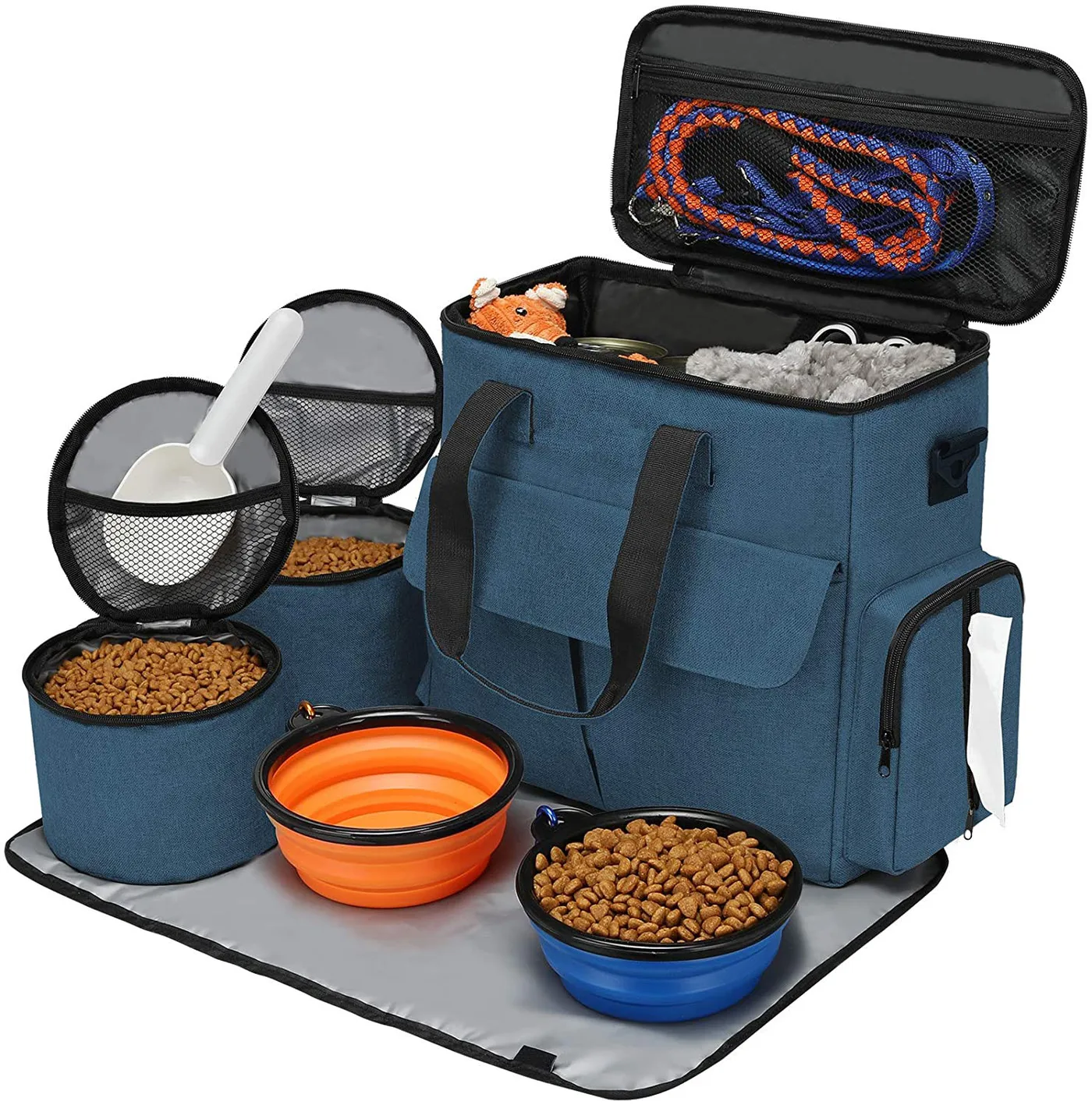
The standard requirements are a dust bag or protective wrap, a stuffing or form that holds the silhouette during display, and a hangtag or band that carries the branding and the feature list. Each is a costed component and should be quoted as one rather than assumed, because presentation items are frequently the difference between a product that reads as premium and one that reads as mid-market at an identical unit cost.
Photography requirements should be planned with the product. A multi-function bag needs interior photography showing the organisation system, because that is the reason for purchase and it is invisible in an exterior shot. Buyers who arrange interior photography at sampling stage launch faster and with better conversion than those who arrange it after goods arrive.
E-commerce packing needs differ from retail. A bag shipped flat in a polybag arrives creased, which is a visible quality problem on an appearance-led product. Specifying form stuffing and a protective outer for online channels costs more but prevents a category of return that has nothing to do with the product itself.
Gift channels add one further requirement: the packaging must read as a gift without additional wrapping. A neutral, well-finished box or a branded dust bag usually satisfies this at lower cost than a printed gift carton, and it avoids the dimensional weight penalty that boxed products attract in parcel networks, which on a mid-priced bag can add more to the delivered cost than the packaging itself.
Compliance, Testing and Documentation
Compliance requirements for this category are moderate: there are no product-specific mandatory standards in most markets, but retailer onboarding still asks a standard set of questions, and the file should be assembled early.
Chemical compliance is the core and should cover shell, lining, coatings, prints and hardware. OEKO-TEX certification covering the finished construction is the most efficient answer, and REACH coverage addresses the EU framework. California buyers should raise Prop 65 at quotation stage because it affects labelling and therefore artwork, and the list is maintained by the California OEHHA.
Physical testing usually covers colour fastness to rubbing and light, seam strength, handle strength and hardware retention. Colour fastness to light matters more in this category than in most, because the product is displayed and used in daylight. Test methods are published by AATCC, and independent verification is commonly arranged through SGS.
Factory compliance documentation is the remaining piece. BSCI and ISO 9001 coverage allows large retail buyers to approve the production base without commissioning their own audit, and the quality management framework is summarised by ISO.
Labelling should be confirmed with the channel before artwork approval. Barcode position, country-of-origin marking, fibre content and care symbols are all routine and all capable of blocking receipt at a distribution centre if they are wrong.
Inspection Priorities for Multi-Component Products
A product with a removable insert, several pockets and mixed trim has more defect surface than a simple bag, so the inspection checklist has to be correspondingly detailed. AQL 2.5 sets the sampling basis; the checklist determines whether it works.
The plan should cover: insert fit and dimensional match to the bag body, pocket count and placement against the approved sample, zip operation on every closure, hardware finish consistency across components, colour match against the retained physical standard within an agreed tolerance, lining cleanliness and absence of visible adhesive, topstitch consistency, dimensional checks across the shipment, and packaging accuracy including stuffing, hangtag and barcode.
Colour should be assessed under consistent lighting and against the retained standard rather than against memory. Disputes about shade are the most common cause of a delayed release in this category, and a physical retained swatch held by both parties resolves them quickly.
Functional defects should be classified above cosmetic ones. An insert that does not fit, a pocket that is missing or a zip that jams are critical; slight variation in topstitch spacing is not. That classification keeps inspection focused on what generates returns.
Buyers should confirm the remedy for a failed inspection at quotation stage. Because the product has multiple components, partial re-work is often possible where a full rejection would be disproportionate, and agreeing that in advance avoids a slow negotiation later.
Building a Coherent Range Around One Organisation System
The most profitable structure in this category is a family rather than a set of unrelated designs. One organisation system, one hardware finish and one palette, executed across two or three sizes, produces a range that looks deliberate, shares components and can be reordered efficiently.
The family approach solves the colourway problem as well. Because core shades run across all sizes, a slow shade in one size can often be sold through in another, and a reorder can be concentrated on the size-and-shade combinations that actually move rather than on a uniform spread.
Pricing inside the family should be set so that each size has a clear role. A compact version at roughly 60-65 percent of the standard price, and a coordinating pouch at roughly 25 percent, produces a ladder that encourages multiple purchases without cannibalising the main product.
The discipline to maintain is SKU count. Because the category invites variation, there is a constant pull toward more colourways and more sizes, and each addition carries a 500-piece minimum. Reviewing the SKU matrix every season and cutting the bottom line is what keeps a fashion-exposed range profitable.
Adjacent categories extend the family naturally: baby and pet dual-use bags share the organisation architecture, and all-in-one pet family bags use the same modular insert approach, so a consolidated reorder across all three improves both price and scheduling.
Order and quality terms
- MOQ 500 pieces per colourway; samples in 6-10 working days
- Bulk production 35-50 days after approval; AQL 2.5 inspection standard
- T/T 30/70 terms, FOB Xiamen, full document set per shipment
People Also Ask
How much does a wholesale pet mom bag cost?
Multi-function pet mom bags generally price from USD 8.40 to USD 21.60 FOB Xiamen. The removable insert is typically the largest discretionary cost item in the build-up.
What makes a pet bag multi-function?
A defined internal organisation system, pet-specific provisions separated from personal-item space, and wipe-clean or removable surfaces. Pocket count alone does not make a bag multi-functional.
How many colourways should a first order include?
Two core shades plus one seasonal accent is the safest structure. Core shades are reorderable across seasons; the accent carries the fashion risk in a smaller quantity.
Why do reorders not match the original colour mix?
Because the category is fashion-exposed and shade performance diverges quickly. Tracking shade-level sell-through from week one is the only reliable input for a reorder.
What size pet mom bag sells best?
A mid-size body around 34 x 28 cm suits most daily routines. A compact version at roughly 60-65 percent of the standard price captures buyers who want the system in a smaller format.
Are pet mom bags washable?
Surfaces should be wipe-clean and the insert should be removable for separate cleaning. Full machine washing is generally not recommended for structured versions.
Do these bags need certification?
No product-specific certification is mandatory in most markets, but OEKO-TEX covering the finished construction and REACH coverage for the EU are what retailers ask for during onboarding.
Frequently Asked Questions
What is the MOQ for wholesale pet mom bags?
MOQ is 500 pieces per colorway. A three-colourway launch is therefore a 1,500-piece commitment, so buyers with a limited first-season budget usually launch two colourways and treat the third as a reorder decision.
How long do samples take?
Samples are completed in 6-10 working days from specification sign-off. The recommended sequence is silhouette first, materials second and colour last, because colour is the cheapest and most likely change.
What is the bulk production lead time?
Bulk production runs 35-50 days after sample approval. Reorders on established colourways are usually scheduled at the short end of that window.
How should colour be approved?
Against a physical swatch on the actual production fabric rather than a shade card. Dye uptake differs by base material, so a colour approved on one fabric will not match on another.
How much does a removable insert add to cost?
Typically USD 1.40-3.20 depending on structure. It is usually the largest discretionary item in the build-up, so it should be quoted separately and treated as a distinct cost decision.
Can one insert serve two bag sizes?
Yes, and it is recommended. Specifying the insert as a shared component amortises development cost and simplifies reordering across the range.
How many pockets should a multi-function bag have?
Five to seven storage positions plus one removable insert is the practical target for a mid-spec product. Beyond about eight, additional pockets add cost without adding perceived value.
What inspection basis is used?
Pre-shipment inspection is at AQL 2.5, with insert fit, pocket count and zip function classified above cosmetic issues. Colour should be assessed against a retained physical standard.
Which shell material is recommended?
Coated polyester in the 420D to 900D range is the practical default. Synthetic leather supports a higher retail price but is heavier, creases in transit and is more sensitive to packing method.
Does hardware finish matter?
Yes, significantly. A single consistent finish across zips, rings and feet lifts perceived quality for a modest cost, while mixed finishes read as cheap regardless of component cost.
How should the product be packed for e-commerce?
With form stuffing and a protective outer. A bag shipped flat in a polybag arrives creased, which generates returns unrelated to product quality.
What certifications can be supplied?
OEKO-TEX certification covering shell, lining, coatings, prints and hardware can be arranged, with REACH coverage for EU buyers and BSCI plus ISO 9001 documentation for the production base.
What are the payment and trade terms?
Standard terms are T/T with a 30 percent deposit and 70 percent balance before shipment, quoted FOB Xiamen. Other Incoterms can be quoted on request.
How should a reorder shade mix be decided?
On shade-level sell-through data rather than on the original order proportions. In a fashion-exposed category the reorder mix never matches the first order.
Talk to QUANZHOU JUNYUAN BAGS about a wholesale pet bag order: MOQ 500 pieces per colourway, samples in 6-10 working days, bulk production in 35-50 days under AQL 2.5 inspection.
Get a free quote Request a sample