Pet Backpack with Wheels: Convertible Guide
A convertible pet backpack with wheels carries the animal on the back or rolls it behind the user, and the conversion hardware typically adds 22-38 percent to the cost of a comparable single-mode pet bag. Wholesale programs start at MOQ 500 pieces per colourway, sample in 6-10 working days per round, and run 35-50 days in bulk after approval.
A convertible build buys optionality and pays for it in weight, cost and failure modes, and the buyer's job is to decide whether the optionality is real for the target customer. Commercial floor is MOQ 500 pieces per colourway, because the hinge set, the base plate and the telescopic handle are purchased assemblies with independent minimums. Sample development runs 6-10 working days per round and convertible programs almost always need three rounds: geometry, strap and harness behaviour, then rolling and finishing. Bulk production is 35-50 days after sample approval and deposit clearance, released only after an AQL 2.5 inspection with a written report. Terms are T/T 30/70, FOB Xiamen, with fabric and trim matched to a signed Pantone reference and approved in a controlled light box. The weight penalty is the decision that shapes everything else: the conversion kit and reinforcement typically add 0.9-1.6 kg, and a backpack mode that is too heavy simply stops being used as a backpack. Test both modes separately and to the same standard, because a product that passes as a roller and fails as a backpack has one working function and two advertised ones. Decide the strap stow strategy early, since dangling straps in rolling mode are the most photographed defect in the category.
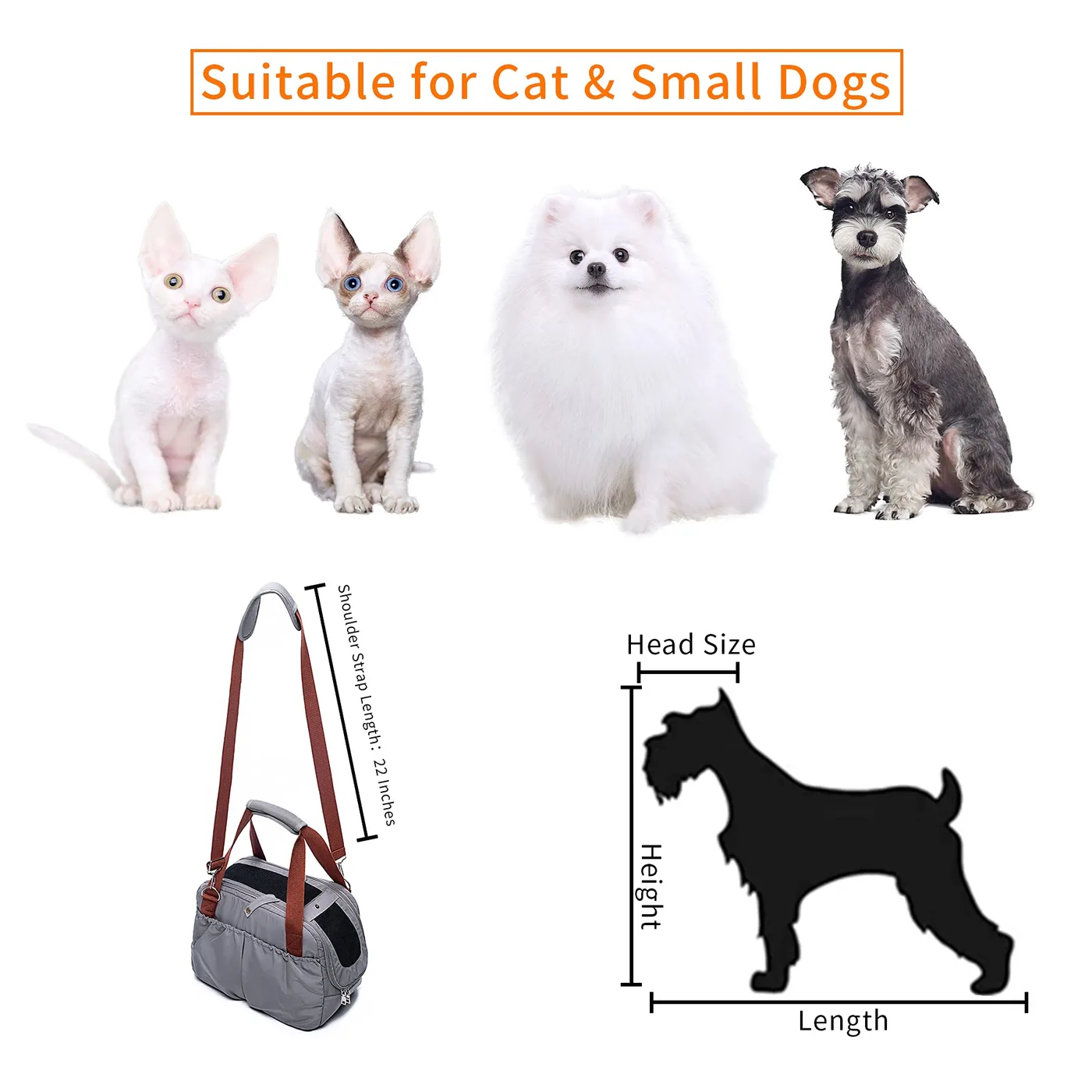
A wholesale dog carrier order and a wholesale cat carrier order rarely share one mould, so the Pet Bag Types & Styles decision has to be locked before tooling money moves. Wholesale pet carriers built on a single shared shell platform let a buyer cover both species from one fabric purchase, which is usually where the first real saving appears.
Why Convertible Backpack-Wheel Builds Attract Wholesale Buyers
The appeal of a convertible pet backpack with wheels is straightforward at the assortment level: one SKU covers two use cases, which reduces the number of products a buyer has to forecast, photograph, warehouse and markdown. For a program running a limited number of SKUs, that consolidation is genuinely valuable, and it is the reason this format keeps appearing in wholesale ranges despite its cost.
The demand-side appeal is equally real but narrower than the marketing implies. The customer who actually uses both modes is the one with a medium-sized pet, a journey with mixed terrain - a station, a pavement, a flight of stairs - and enough upper-body strength to carry for part of it. That is a smaller group than the group that finds the idea attractive. Buyers should size the opportunity on the customer who will use both modes, not on the customer who likes the concept.
A useful screening question is the terrain profile of the target market. In dense urban markets with stairs, lifts and short walks, the backpack mode earns its cost. In suburban markets with car-to-door journeys and long flat concourses, the wheel mode does all the work and the backpack system is dead weight - literally, since it is carried on the user's back as part of the product.
The wholesale case therefore rests on channel rather than on novelty. Travel-adjacent retail, outdoor and hiking channels, and e-commerce listings where the search term already implies both modes are the places where the conversion is used. General pet chains see higher return rates on convertibles than on single-mode products, largely because the mechanism is the second thing a customer touches and the first thing they judge.
Engineering the Conversion: Hinge, Strap Stow and Base Plate
Three components carry the entire conversion and each should be specified by part reference rather than by function. The hinge or pivot assembly sets how the wheel frame deploys and how it locks in both positions; it is the highest-load component in the product and the one most likely to be substituted silently. The strap stow system determines whether the shoulder straps disappear cleanly when rolling or hang into the wheel path; it is the most visible quality signal in the category. The base plate distributes the rolling load into the shell and prevents the frame from punching through the fabric.
Start with the hinge. Specify the material, the pin or pivot diameter, the locking mechanism and a rated cycle life, then require a cycle test at pre-production with the bag loaded to its maximum pet weight. A hinge that survives fifty cycles empty and deforms at two hundred loaded cycles will pass a showroom inspection and fail in month three. Photograph the test and attach it to the approval sheet.
Strap stow is where design discipline pays. Three approaches exist: a zip-closed back panel that swallows the harness entirely, elastic or webbing retainers that hold the straps flat, and detachable straps that come off the product. The zip-closed panel is the cleanest result and the most expensive; retainers are cheap and adequate; detachable straps solve the problem completely but create a lost-part risk. Choose by price band and record the decision, because it affects the packing and the pack-out.
The base plate is the component buyers forget and then remember at the first return. State the material, thickness and reinforcement footprint, and require a loaded deflection check. Without a plate, the wheel frame transmits point loads into the shell fabric, and the failure appears as torn stitching at the frame attachment rather than as a frame defect - which makes it look like a sewing problem when it is a specification problem.
| Decision | Option A | Option B | Cost effect | Return effect |
|---|---|---|---|---|
| Strap stow | Zip-closed panel | Retainers or detachable | Panel adds 6-10% | Panel reduces strap complaints |
| Frame lock | Positive latch | Friction or gravity | Latch adds 3-5% | Latch removes collapse risk |
| Base plate | Full moulded plate | Reinforced panel | Plate adds 4-7% | Plate prevents tear-through |
| Wheel set | Sealed bearing | Plain bore | Sealed adds 2-3% | Sealed removes bearing failure |
Weight Penalty and How to Keep It Under Control
Weight is the conversion's real cost, and it is paid twice. Once by the customer on their back, and once by the program in freight, because heavier products carry higher carton weight and, in many parcel networks, a higher shipping band. A convertible pet backpack with wheels typically carries a penalty of 0.9-1.6 kg over a single-mode backpack of the same capacity, and that penalty is the single most common reason the backpack mode goes unused.
The penalty decomposes into four parts: the wheel and axle assembly, the frame or hinge set, the base reinforcement, and the added shell fabric needed to house all three. Each can be attacked. Polymer or alloy components replace steel; a shorter two-stage handle replaces a three-stage one; a moulded base plate can be thinner if the reinforcement footprint is larger; and the shell fabric can drop a denier grade where abrasion testing still passes.
The discipline is to set a target empty weight on the brief and engineer to it, rather than engineering first and publishing whatever results. A stated target - for example, under 3.2 kg for a medium-size convertible - gives the factory a constraint to design against and gives the buyer a number to hold at approval. Products that miss their target by a few hundred grams are the ones that review as "heavy but well made", which is a neutral outcome at best.
Publish the empty weight and the maximum pet weight together. Customers compare the ratio, not the absolute figure, and a bag that carries 8 kg of pet while weighing 3 kg reads very differently from one that carries 8 kg while weighing 4.6 kg. That ratio is the most honest quality signal this category offers and it costs nothing to state.
Dual-Mode Testing: Backpack Load and Rolling Load
A convertible product needs two test plans, because the two modes load the structure in different directions and failure in either mode is a product failure. Testing only the mode the factory finds easier is the most common gap in convertible programs, and it is why some products pass internal checks and fail in the field.
Backpack-mode testing covers strap attachment, back-panel comfort and load stability. Specify a pull test on each strap anchor with a stated safety factor over the maximum pet weight, a loaded wear test with the bag carried for a stated duration, and a stability check confirming the load does not shift or sag in a way that changes the animal's position. Strap anchor pull-out is the serious failure here, and it is prevented by a specified anchor construction and a written test result.
Rolling-mode testing covers the wheel set, the frame lock and the base plate. Run a loaded rolling distance test with inspection intervals, a lock-engagement cycle test, and a deflection check on the base plate. Pay particular attention to whether the frame stays locked when the bag is lifted by the handle while loaded - that combined load case is where friction-lock designs fail.
Conversion testing is the third plan and it is the one that catches the product-specific defect. Cycle the conversion its full travel, loaded, several hundred times, and inspect the hinge, the latch, the strap retainers and the fabric at the frame attachment. Report with photographs at intervals rather than with a single pass/fail at the end, so that progressive wear is visible.
Where independent evidence is needed for a claim or a marketplace, anchor the methods in recognised standards - ASTM publishes relevant test methods and SGS provides third-party testing and inspection - and keep the report with the sample approval form.
What to Record on the Approval Sheet
Record both mode dimensions, empty weight, maximum pet weight, hinge part reference and cycle result, strap anchor pull result, wheel specification and rolling result, and the locked-frame deflection figure. A convertible approval sheet without those seven lines will not resolve a dispute later.
Cost Model: Where the Convertible Premium Goes
The convertible premium of 22-38 percent over a comparable single-mode pet bag is not evenly distributed, and knowing the distribution tells a buyer where to engineer. In programs we quote, the hinge and frame set carries roughly 35-45 percent of the premium, the base reinforcement carries 15-20 percent, the strap stow system carries 15-20 percent, and additional labour and packing carry the remainder. Fabric is rarely the problem.
Because the premium concentrates in purchased assemblies, volume is the most effective lever. Moving from 500 to 1,500 units per colourway typically improves the hinge and frame lines more than negotiating the finished price at fixed volume, because component suppliers price in steep tiers. Ask for the quote at both volumes, then decide whether colourway consolidation is worth more than colourway variety.
Specification trade-offs are the second lever and some are nearly free. Sealed bearings instead of plain bore adds a small amount per wheel and removes a large expected warranty cost. A positive latch instead of a friction lock adds a few percent and removes the frame-collapse failure mode. Detachable straps instead of a zip-closed panel saves cost and shifts the risk to lost parts, which is a customer-service cost rather than a product cost.
Landed cost deserves the same discipline as in other wheeled categories. The convertible carries a higher carton cube and a higher carton weight than a single-mode backpack, so freight per unit rises on both dimensions. Model per carton, not per unit, before fixing a retail price - and model the parcel-network shipping band as well, because weight thresholds there are step changes rather than gradual.
Sampling Rounds and Decision Gates for Convertible Programs
Convertible programs take three rounds in most cases and the rounds should be gated by decision, not by calendar. Round one answers geometry: does the frame deploy and stow cleanly, does the bag stand upright in both states, and is the silhouette acceptable in each? Round two answers the harness and the strap system: fit on a range of body types, padding behaviour under load, ventilation and the animal's interior position. Round three answers rolling and finishing: wheel behaviour, latch security, colour consistency and pack-out.
Each round runs 6-10 working days plus freight and evaluation, so six to nine weeks of development is the realistic plan. The critical discipline is making the hinge and frame decision in round one. Those components have the longest procurement lead time, and changing them in round three restarts the clock on the entire program.
Ballast both modes at every round. A convertible rolled empty and carried empty tells you almost nothing; the same product with 8 kg of ballast tells you whether the hinge, the anchors and the base plate are adequate. Require the factory's internal test to use ballast at the maximum stated pet weight and ask for video of both modes.
Bulk runs 35-50 days after sample approval and deposit clearance, and release is conditional on an AQL 2.5 inspection with a written report. For convertibles the inspection plan must add a conversion-cycle check, a strap-anchor check and a completeness check for any detachable components - static soft-goods inspection plans miss every failure mode this category actually produces.
Setting a Single Honest Weight Limit
Publish one figure: the lower of the two mode limits, tested in both modes with the same ballast and the same safety factor. A single honest number reduces returns, simplifies the warning label and removes the argument that arrives when a customer reads two different figures on the same product page.
Compliance and Claims Substantiation for Dual-Mode Products
A dual-mode product makes two sets of claims and carries two sets of evidence obligations. Maximum pet weight must be valid in both modes - and it frequently is not, because the rolling structure and the harness structure have different limits. Whichever is lower is the honest published figure, and publishing the higher one is the fastest route to an incident and a marketplace suspension.
Material compliance follows the destination. For the United States, general consumer product obligations run through the U.S. Consumer Product Safety Commission, with children's-product requirements attaching if the item is marketed toward children or styled as a children's article. For Europe, restricted substances fall under REACH and the reference is the European Chemicals Agency. Because a convertible uses metal frame components, polymer wheels and coated fabrics, expect three separate material lines in the report set rather than one.
Claim substantiation should be mapped at pre-production. Build a one-page table listing each published claim - pet weight, empty weight, capacity, wheel diameter, cycle life, washable liner - against the test method, the result and the report date. When a marketplace challenges a listing, that table answers it in an hour; without it, the same question takes a week and often ends in a delisting.
Labelling and warnings should be reviewed in the same cycle. Country of origin, fibre content and care instructions follow destination format, and any load or use warnings must be legible on the product or the package. For California destinations, review the Proposition 65 requirements before artwork is finalised, because warnings cannot be added after printing.
How to Brief the Conversion So Round Two Is Not Wasted
Convertible programs lose time in the same place: round two discovers that the mechanism decision made in round one does not work with the harness. The cause is that the two systems are briefed separately, and the fix is to brief them as one system with a shared load specification.
Start the brief with the load case. State the maximum pet weight, state which components carry it in each mode, and state the safety factor you expect on each anchor. That single paragraph lets the factory size the hinge, the base plate and the strap anchors consistently, instead of sizing each one to whatever seems reasonable at the time.
Specify the stowed and deployed envelopes next. Give the maximum exterior dimensions in both states, the handle extended height, and the clearance required between the straps and the wheel path when rolling. A convertible that meets its deployed dimensions and exceeds its stowed envelope fails the listing or the shelf gauge, and the failure is discovered only when the carton is measured.
Name the acceptance tests and their figures in the brief: hinge cycle count under load, strap anchor pull with safety factor, wheel rolling distance, and locked-frame deflection. When these are written before sampling, the round one sample arrives measured, and the round two conversation is about finishing rather than about structure.
Finally, decide the spare-parts list at briefing stage and put it in the order. Hinges, latches, straps and wheels held at two to five percent of unit volume turn the mechanism from a warranty liability into a serviceable assembly. That decision costs nothing at design time and cannot be made later.
Channel Positioning and Return-Rate Management
Positioning a convertible requires answering the customer's unspoken question first: why would I pay more for two modes? The answer that works is terrain - stairs, mixed surfaces, and journeys where carrying part of the way is genuinely easier. The answer that fails is novelty, because novelty buyers are also the highest-return buyers, and returns on convertibles run above the category average when the product is sold on the idea rather than the use case.
Listing content should therefore lead with terrain and with numbers. State the maximum pet weight, the empty weight, the wheel diameter and the collapsed and deployed dimensions. Add a short video showing the conversion, because a mechanism the customer cannot see is a mechanism they will assume is flimsy. Listings that show the conversion convert better and return less.
After-sales planning should assume the mechanism will need service. Stock hinges, latches, straps and wheels from the first order - two to five percent of unit volume in components is a common allowance - and decide at design stage which of them are field-replaceable with a common tool. A convertible that can be repaired is a much better wholesale proposition than one that cannot.
One further return-reduction step is worth taking at the brief stage: state the conversion time. If the mechanism moves from one mode to the other in under thirty seconds with no tools, publish that figure. Customers who know the conversion is quick use it more often, and customers who use both modes are the ones who do not return the product.
Where the range also carries a rolling backpack format and a standard hands-free pet backpack, differentiate on published weight and on the terrain story rather than on appearance, because at the fixture the three read as one family. Programs building a multi-format carry range should also review convertible multi-way carry formats before finalising the strap system, since the same decisions recur across the category.
Finally, review the convertible against the rest of the range once a season rather than once a year. Convertible programs improve faster than single-mode ones, because each season produces both a returns profile and a component-price improvement, and the two together usually decide whether the format should stay in the range, move up a price band, or be replaced by a simpler product.
Why brands source here
- Pet bag programmes run since 2014; founding team in sewn goods since 2004
- SGS-verified production floor of 4,950 m² with 137 workers across 7 lines
- Monthly capacity of 200,000 units, audited to BSCI and ISO 9001
People Also Ask
Do customers actually use both modes?
Some do - mainly medium-pet owners on mixed-terrain journeys. Size the opportunity on the customer who will use both modes, not on the customer who likes the concept.
What is the biggest design risk in a convertible pet bag?
The hinge and the strap stow. Hinge failure is structural and appears after loaded cycles; strap stow failure is visible immediately and dominates product photography.
How do I keep a convertible under a weight target?
Set the target on the brief and engineer to it: polymer or alloy components, a two-stage handle, a wider thinner base plate, and the lightest fabric that still passes abrasion testing.
Why do convertibles have higher return rates?
Because the mechanism is the second thing a customer touches and the first thing they judge, and because novelty-led buyers are less committed to the use case.
Should I test both modes separately?
Yes. The modes load the structure in different directions, and testing only the easier mode leaves the other mode's failure modes undiscovered until the field.
Can the conversion mechanism be repaired?
It can if designed for it. Decide at design stage which components are field-replaceable with a common tool and stock spares from the first order.
Frequently Asked Questions
What is the MOQ for a convertible pet backpack with wheels?
500 pieces per colourway. The hinge set, base plate and telescopic handle are purchased assemblies with independent supplier minimums.
How many sample rounds does a convertible need?
Usually three: geometry, harness and strap behaviour, then rolling and finishing. Each round runs 6-10 working days plus freight and evaluation.
How much weight does the conversion add?
Typically 0.9-1.6 kg over a single-mode backpack of the same capacity, from the wheel and axle assembly, the frame or hinge set, base reinforcement and additional shell fabric.
What is the bulk production lead time?
35-50 days after sample approval and deposit clearance, with freight additional. Hinge and frame procurement overlaps sampling, so late changes restart the clock.
How much more does a convertible cost than a single-mode bag?
Typically 22-38 percent, with roughly 35-45 percent of that premium sitting in the hinge and frame set rather than in fabric or labour.
Which inspection standard applies?
AQL 2.5 with a written report, extended with a conversion-cycle check, a strap-anchor check and a completeness check for detachable components.
Should the pet weight limit differ between modes?
The published limit must be the lower of the two mode limits. Publishing the higher figure is the fastest route to an incident and a listing suspension.
How do I stop straps dangling in rolling mode?
Choose a stow system deliberately: a zip-closed back panel is cleanest and most expensive, retainers are cheap and adequate, detachable straps solve it but add a lost-part risk.
What payment and shipping terms are standard?
T/T 30/70 - 30 percent deposit, 70 percent before shipment - on FOB Xiamen. Alternative Incoterms can be quoted but change the landed cost model.
Do metal frame components need separate test reports?
Usually yes. A convertible combines metal components, polymer wheels and coated fabrics, so expect three material lines in the report set rather than one.
How do I reduce returns on convertible pet bags?
Sell the terrain use case rather than the novelty, publish empty weight and maximum pet weight, show the conversion in a video, and stock spare hinges and latches from the first order.
Is a positive latch worth the extra cost?
Yes. It adds a few percent to the unit cost and removes the frame-collapse failure mode, which is one of the two failures most likely to produce an incident rather than a complaint.
Talk to QUANZHOU JUNYUAN BAGS about a wholesale pet bag order: MOQ 500 pieces per colourway, samples in 6-10 working days, bulk production in 35-50 days under AQL 2.5 inspection.
Get a free quote Request a sample