Pet Trolley Bag: Rolling Sourcing Guide
A pet trolley bag is a wheeled build with a chassis, a telescopic handle and a load-bearing base, and it costs 40-65 percent more than a soft pet bag of the same capacity. Wholesale programs start at MOQ 500 pieces per colourway, sample in 6-10 working days per round, and run 35-50 days in bulk after approval.
A trolley program is a hardware program with a textile component, and buyers who quote it as a bag rather than as a chassis misjudge both cost and risk. Commercial floor is MOQ 500 pieces per colourway, because the wheel sets, the handle tube set and the base frame are purchased assemblies with their own minimums. Sample development runs 6-10 working days per round and a trolley normally needs two rounds: one for the shell and geometry, one for the rolling behaviour and handle feel. Bulk production is 35-50 days after sample approval and deposit clearance, and release is conditional on an AQL 2.5 inspection with a written report. Terms are T/T 30/70, FOB Xiamen, with fabric and trim matched to a signed Pantone reference and approved in a controlled light box. Cost concentrates in three purchased assemblies - wheels, handle and base frame - which together typically carry 30-45 percent of the bill of materials. Every one of those assemblies needs a supplier part reference, a stated rating and a cycle test at pre-production, because chassis failures are whole-unit returns rather than repairs. Plan spare parts at the same time as the product; a wheel that can be replaced in two minutes converts a warranty claim into a five-dollar part.
Choosing a pet carrier supplier or a pet bag supplier comes down to the same three checks: a named production base, a test file that matches the destination market, and a price list that states what is excluded. An own-brand launch usually fails on the second check rather than the first, because the file gets assembled after the order instead of before it.
Trolley Architecture: Chassis, Frame and Load Transfer
A pet trolley bag transfers the animal's weight through a base frame into a wheel set, and everything about the product follows from that path. The frame is the structural member, the base board distributes load into it, and the wheel set returns that load to the ground. If any one of the three is under-specified, the symptom appears as wobble, axle deformation or a handle that feels loose after two months - all of which read as poor quality even though the textile portion is perfect.
Two frame approaches dominate the category. A tube frame with a moulded base tray gives the best stiffness-to-weight ratio and is the choice for pets above 8 kg, but it adds tooling cost and a longer procurement window. A flat board frame with bonded reinforcement is cheaper and faster to source and suits pets up to about 8 kg, but it deflects more under load and transmits more vibration into the shell. Decide by weight band, not by price, because deflection is what the customer feels.
Base board specification is where programs usually under-invest. State the board material, the thickness in millimetres, and the deflection limit under the maximum rated load. A board that meets the drawing and deflects 12 mm under load will produce a bag that drags, and dragging destroys wheels within a season. Put the deflection number on the pre-production test sheet and make it a release criterion.
The shell-to-frame junction is the third decision and the most common failure point in bulk. Rivets, screws or a captured sleeve each behave differently over time, and each has a different rework cost. Specify the fastener by size, material and count, and require a pull-out test at pre-production. Fastener substitution without notice is the classic cause of a sample passing and a production batch failing.
Wheel and Handle Specifications Buyers Must Write Down
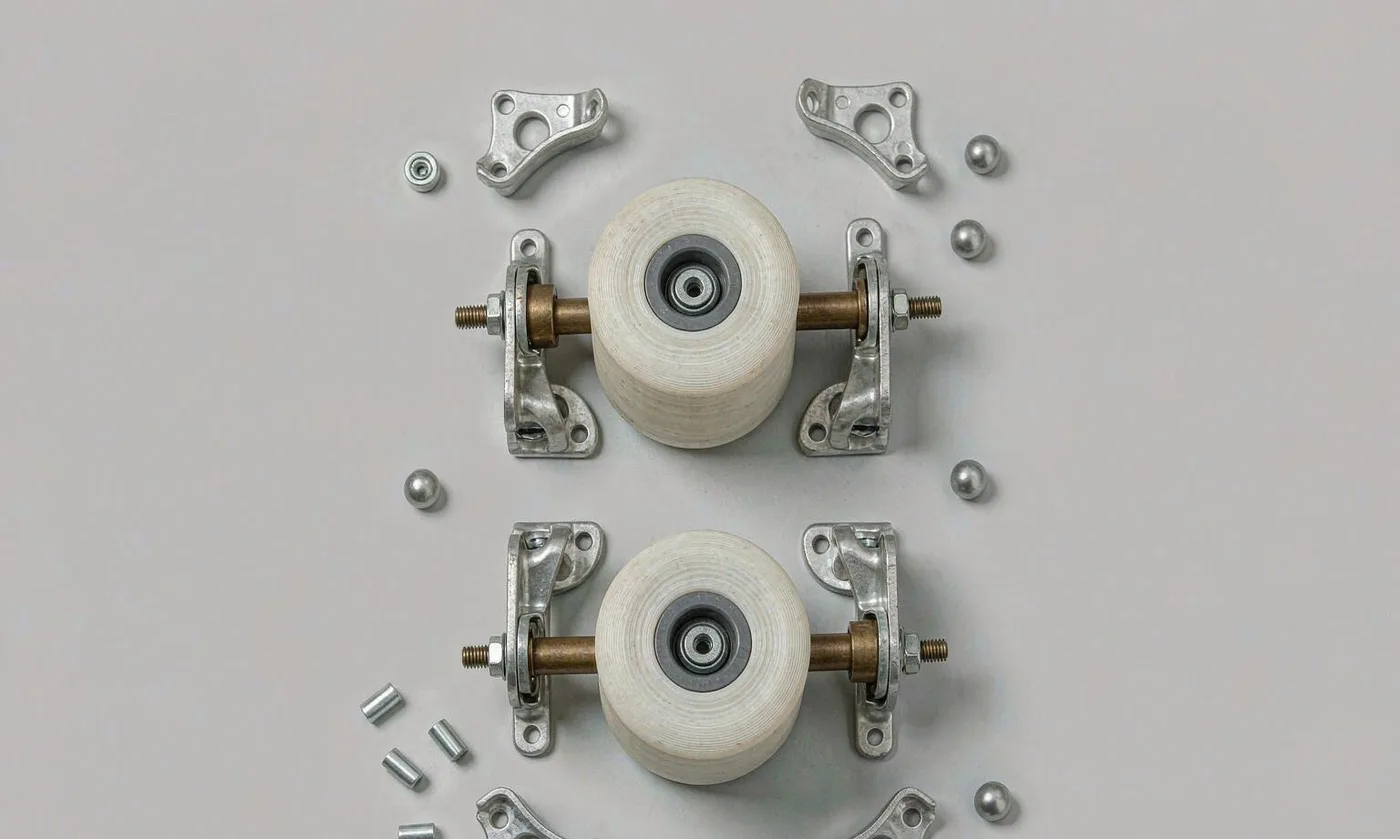
Wheels are the single most returned component in any rolling pet bag, and they are also the easiest to specify correctly. Four numbers matter: diameter, durometer, bearing type and housing material. Diameter determines obstacle clearance - 50 mm handles indoor floors, 65-75 mm handles pavement and kerbs. Durometer determines the ride: softer compounds roll quietly and grip but wear faster; harder compounds last but transmit vibration and mark some floors. Bearings determine how long the wheel survives contamination.
State the wheel as a part reference with a rated load per wheel, not as "smooth rolling wheels". A four-wheel build carrying 12 kg of pet plus 3 kg of bag is carrying under 4 kg per wheel in static terms, but dynamic loading over a kerb can triple that momentarily. Ask for a rated dynamic load and a tested rolling distance, and require the test at pre-production with a stated surface and a stated distance.
Handles look simple and generate a surprising share of complaints. Specify the tube material and wall thickness, the number of telescopic stages, the extended height in centimetres, the collapsed height, and the lock mechanism type. Stage count is a cost and quality trade: two stages are stiffer and cheaper, three stages pack shorter and flex more. Extended height should suit the customer's height range, and a handle that is 5 cm too short becomes a comfort complaint that no amount of padding fixes.
Handle wobble deserves its own acceptance test. A stated lateral play limit at full extension - measured at the grip - is a cheap specification that prevents the single most common subjective complaint in the category. Test it on the sample, photograph the measurement, and put the number on the approval sheet alongside the dimensional data.
| Component | Key specification | Typical target | Pre-production test |
|---|---|---|---|
| Wheel | Diameter / durometer / bearing | 65 mm / 80-85A / sealed | Loaded rolling distance |
| Handle tube | Material / stages / height | Aluminium / 2-3 / 95-105 cm | Extension cycles plus lateral play |
| Base board | Material / thickness / deflection | Laminated board / 8-10 mm | Deflection under rated load |
| Frame joint | Fastener size / material / count | Stainless rivet, stated per joint | Pull-out and cycle |
| Shell fabric | Denier / coating / abrasion | 600D PU-backed | Abrasion and colour fastness |
Airline and Transit Constraints That Shape the Specification
Even when a pet trolley bag is sold primarily for road and rail use, buyers routinely ask whether it works for air travel, and the answer depends on a rule set that is external to the product. Cabin acceptance is governed by the airline, not by the bag, and the controlling industry reference is the IATA Live Animals Regulations. Dimension and weight limits vary by carrier, so the honest specification is a stated maximum exterior dimension that fits the strictest common cabin allowance rather than a claim of universal acceptance.
For travel to or within the United States, the practical carrier guidance for passengers is published by the Federal Aviation Administration, and it points back to individual airline policies. A wholesale program that wants to make a travel claim should state it as "fits most major cabin allowances, confirm with your carrier" and publish the exterior dimensions, rather than asserting compliance it cannot enforce across hundreds of airlines.
Cross-border movement of the animal is a separate matter entirely and it is not governed by the bag. Import conditions are set by the destination country, and for the United States the reference is the CDC animal importation requirements together with USDA APHIS rules. A bag specification cannot satisfy those; documentation and veterinary preparation can. Buyers should keep the two clearly separated in their listings.
The design consequence is about dimension discipline and about access. A trolley that fits a cabin gauge needs its exterior dimensions stated including wheels and handle housing, not the shell alone - those protrusions are where cabin-fit claims fail. Additionally, security and welfare checks require the animal to be accessible without dismantling the bag, so specify at least one inspection-opening panel that can be opened while the bag is upright.
Cost Structure: Why Rolling Builds Cost Forty to Sixty Percent More
The cost gap between a rolling pet bag and a soft pet bag of the same capacity is real and it is concentrated. Three purchased assemblies - wheel sets, handle assembly and base frame - typically carry 30-45 percent of the bill of materials in a trolley program, compared with a few percent of hardware in a soft bag. Fabric, trim and labour costs are similar between the two; the delta is almost entirely bought-in components.
That structure has a consequence for negotiation: the price is driven by component purchasing tiers, not by factory labour. Moving from 500 to 1,500 units per colourway pulls more out of a trolley quote than any amount of negotiation at fixed volume, because wheel and handle suppliers price in clear bands. Buyers who need a lower price should first ask what the quote becomes at 1,000 and 1,500 units, and then decide whether to consolidate colourways.
Tooling is the second structural cost. A moulded base tray or a custom handle housing carries a tooling charge that has to be amortised, and at 500 units per colourway that amortisation is visible in the unit price. Using a standard component from the supplier's existing range removes the tooling charge entirely and is usually the single fastest way to reduce cost on a first-season program. Custom components make sense once the program is proven and volume supports them.
Labour and packing add the final increment. A trolley takes more assembly operations, more fastening and more handling, and it packs one unit per carton more often than a soft bag does, which raises packing cost and carton cost per unit. Ask for a BOM-level quote with these lines separated so you can see where the money actually goes and where you have room to move.
Durability Testing: What to Put in the Test Plan
The test plan for a trolley build should be organised around the three ways the product actually fails: rolling wear, structural fatigue and transit damage. Everything else is secondary, and a plan that spreads effort evenly across twenty checks will miss the three that generate returns.
Rolling wear is tested by running a loaded bag over a stated distance on a stated surface, then inspecting the wheels for flat spots, housing cracks and bearing contamination. A workable target is a loaded run equivalent to several kilometres with an inspection interval, because wear is progressive and a short test will pass a wheel that dies in month two. Add a kerb-strike and a debris-ingress element, since real use includes both.
Structural fatigue covers the handle and the frame-joint. Cycle the handle through its full extension and retraction several hundred times and re-measure lateral play; cycle the frame through loaded rolling plus lift-and-set-down and re-check fastener integrity. These are bench tests - cheap, fast, and capable of being run at the production base with photographs rather than at a laboratory.
Transit damage is a packaging test, not a product test, and it is the one most often skipped. A loaded carton drop test and a carton compression check catch the failure mode where the product is fine but the master carton is not. Because a trolley usually packs one unit per carton at a higher cube, packaging failure is proportionally more expensive in this category than in any other.
Where a claim references a recognised method, use one. ASTM standards cover a wide range of material and product test methods, and third-party testing and inspection is worth commissioning for the pre-production sample and for any regulated-market claim. Bench tests handle the iteration; the laboratory report handles the file.
Reading a Trolley Quote Line by Line
When the BOM arrives, check three things before comparing prices: whether the wheel and handle lines name a supplier part or only a description, whether the base board is specified by thickness and material, and whether packing is quoted per unit or per carton. A quote that fails any of the three cannot be compared against another quote, because the cheapest number usually hides an unspecified component.
Freight, Carton Cube and Damage-in-Transit Control
A trolley pet bag is the worst-cube product in the pet bag category. It cannot be compressed, it usually ships one unit per inner carton, and the wheel and handle assemblies protrude in ways that waste space. Expect a master carton cube materially higher than a soft bag of the same capacity, and model freight per unit accordingly before fixing a retail price - this is where trolley programs lose their margin without noticing.
The remedy is a landed-cost sheet maintained per program rather than a price comparison run at the point of purchase. Record FOB, carton dimensions, units per carton, freight rate and duty for each format you buy, and update it each season. Once that sheet exists, the comparison between a trolley and a soft bag becomes arithmetic instead of opinion, and it stops being re-litigated every time a new quote arrives.
Two decisions recover some of that. Knock-down packing, where the handle is collapsed and the bag is packed in its lowest-profile orientation, reduces cube at the cost of a slightly longer pack-out operation. Partial disassembly - shipping the handle assembly separate and fitting it at destination - saves more cube but adds a destination labour step and a quality risk, and it is only worth it above a few thousand units.
Carton specification should be treated as a product specification. State the board grade, the flute, the closure method and the internal protection for the wheel assemblies, and require a drop test. Wheels are the protruding, fragile, load-bearing parts and they are what gets damaged when a carton is dropped on a corner.
Freight mode matters more for this category than for lighter ones. Ocean freight absorbs the cube at a manageable cost per unit; air freight does not, and a trolley program that misses its production slot and air-freights will typically lose the season's margin in one shipment. Book the production slot early and treat the 35-50 day bulk window as immovable rather than negotiable.
Spare Parts and Serviceability
Decide at design stage which components are field-replaceable. A wheel or handle that can be swapped with a common tool turns a whole-unit warranty replacement into a low-cost part shipment, and it is one of the few decisions that reduces cost after launch rather than before.
MOQ, Tooling and Scheduling for Hardware-Heavy Builds
Scheduling a trolley program means scheduling component procurement, not just sewing. Wheel sets, handle tubes and base frames arrive from separate suppliers with separate lead times, and the longest of those sets the floor for the whole program. At MOQ 500 pieces per colourway you are buying at the low end of the component supplier's interest, so expect standard-lead rather than priority treatment.
Tooling decisions should be made in the first week, because they determine whether you are buying a standard component or funding a new one. Standard components: no tooling charge, shorter lead time, limited differentiation. Custom components: tooling charge, longer lead time, and a look the competition cannot copy immediately. For a first season, standard components with a custom colour or a custom badge are usually the right balance.
The schedule runs in a fixed order. Sampling at 6-10 working days per round, two rounds in most programs, then pre-production validation, then bulk at 35-50 days after approval and deposit. Component procurement overlaps the sampling window, so a decision delayed to round two pushes the entire program. The discipline that protects the season is making component decisions in round one, even if the shell changes afterwards.
Release is conditional on an AQL 2.5 inspection with a written report. For trolleys, add rolling inspection, handle extension check and fastener torque or integrity check to the standard plan, and ask for photographs of the packed carton. Sampling plans built for soft goods will not catch chassis defects, and chassis defects are what the customer notices first.
Assortment Planning: One Trolley or Three Sizes
At 500 pieces per colourway, the assortment decision for a trolley program is a working-capital decision before it is a merchandising one. Three sizes in one colourway commits 1,500 units to a product family with a long development cycle and a high unit cost. One size in three colourways commits the same volume to a single fit, which is faster to sell through if the size is right and slower if it is not.
For a first season, the safer structure is usually two sizes in one or two colourways. The two sizes should cover the middle of the market - a medium for pets of 4-8 kg and a large for 8-14 kg - because those bands carry the majority of demand and because the small end of the trolley category is where a soft bag is simply the better product. Adding a small trolley in year one is usually a way to hold inventory rather than to serve customers.
Colourway choice should be conservative in this format for a specific reason: trolleys are hardware-led, and a colourway change often means a change to trim and to moulded components, not just to fabric. That makes a second colourway more expensive here than in a soft category, and it argues for proving the product in one colour before extending.
The second season is where the assortment should widen, and it should widen on evidence. Use the first season's sell-through by size and by channel, plus the return reasons, to decide whether to add a size, a colourway or a chassis upgrade. Chassis upgrades are usually the best return, because they address the failure modes that generate returns while leaving the assortment unchanged.
Buyers should also plan the display programme alongside the assortment. A trolley is a handled product: the customer wants to push it, feel the handle and hear how quiet it is. Where the channel does not allow that, the listing or the fixture has to compensate with published wheel diameter, empty weight and exterior dimensions - the three numbers that substitute for physical handling.
Channel and After-Sales: Where Rolling Pet Bags Earn Their Margin
Rolling pet bags sell where the trip is long, the surface is hard and the pet is heavier than the owner wants to carry. Airport-adjacent retail, large-format pet chains, mobility and travel catalogues, and the upper band of e-commerce all fit. They sell poorly in convenience formats and in impulse price bands, where the cost structure cannot be recovered.
After-sales is the differentiator in this category and it is cheap to plan. A stocked spare wheel, a handle tube and a base board, sold or shipped free on request, converts a category-typical return into a service interaction. Buyers who plan spares at the first order - typically two to five percent of unit volume in components - spend a small amount and protect the margin on the whole program.
The listing or shelf copy should lead with the two numbers the customer actually compares: maximum pet weight and exterior dimensions including wheels. Reviews in this category are dominated by mismatch complaints, and both mismatches are preventable with honest published numbers. Support the numbers with the test records from the pre-production file.
Where the line also carries wheeled pet bag formats and suitcase-style pet luggage, keep the three formats visually distinct in the fixture, because customers read them as one category and will trade down to the cheapest if the differentiation is not obvious. A short specification table on the packaging does more for that than a paragraph of copy.
Why brands source here
- Pet bag programmes run since 2014; founding team in sewn goods since 2004
- SGS-verified production floor of 4,950 m² with 137 workers across 7 lines
- Monthly capacity of 200,000 units, audited to BSCI and ISO 9001
People Also Ask
Are rolling pet bags worth the extra cost for wholesalers?
They are worth it in channels where pets are heavier and surfaces are hard, and where after-sales spares can be planned. They perform poorly in impulse price bands where the cost structure cannot be recovered.
What causes a trolley pet bag to wobble?
Usually an under-specified base board or a loose frame joint. State deflection under rated load and lateral play at full extension, and test both at pre-production.
How many wheel configurations should a program carry?
One for most first-season programs. Wheel choice should follow the target surface - indoor, pavement or mixed - rather than the number of options the supplier offers.
Can a trolley bag be shipped knock-down to save freight?
Yes, with the handle collapsed and the bag packed in its lowest-profile orientation. Partial disassembly saves more cube but adds destination labour and quality risk.
What test catches wheel failures before bulk?
A loaded rolling run over a stated distance with inspection intervals, plus kerb-strike and debris-ingress elements. Short tests pass wheels that fail in month two.
Should exterior dimensions include the wheels?
Yes. Cabin-fit and shelf-fit claims fail because wheels and handle housing protrude beyond the shell, so publish dimensions including all protrusions.
Frequently Asked Questions
What is the MOQ for a pet trolley bag?
500 pieces per colourway. Wheel sets, handle assemblies and base frames are purchased components with their own minimums, which is why the MOQ does not flex downward.
How much more does a trolley build cost than a soft pet bag?
Typically 40-65 percent more at the same capacity, with 30-45 percent of the bill of materials sitting in three purchased assemblies rather than in fabric or labour.
How long does sampling take?
6-10 working days per round, and most trolley programs need two rounds - one for the shell and geometry, one for rolling behaviour and handle feel.
Which wheel specification should I use?
State diameter, durometer, bearing type and housing material as a part reference, plus a rated dynamic load and a tested rolling distance. 65 mm wheels suit pavement; 50 mm suit indoor floors only.
Does a trolley pet bag meet airline cabin requirements?
Cabin acceptance is set by the airline, not by the bag. Publish exterior dimensions including wheels and handle housing and advise customers to confirm with their carrier.
What is the bulk lead time?
35-50 days after sample approval and deposit clearance, with freight additional. Component procurement overlaps the sampling window and sets the real floor.
What inspection standard applies?
AQL 2.5 with a written report, extended with a rolling check, a handle extension check and a fastener integrity check, since soft-goods plans do not catch chassis defects.
Is custom tooling required?
Not necessarily. Standard components avoid tooling charges and shorten lead time; custom tooling makes sense once volume supports amortisation and the design is proven.
How do I control transit damage?
Specify the carton board grade, flute and internal wheel protection, and run a loaded drop test. Wheels are the protruding load-bearing parts and take the damage when a carton lands on a corner.
Should I stock spare parts?
Yes. Two to five percent of unit volume in wheels, handle tubes and base boards turns whole-unit warranty replacements into low-cost part shipments.
What payment and shipping terms are standard?
T/T 30/70 - 30 percent deposit, 70 percent before shipment - on FOB Xiamen. Alternative Incoterms can be quoted but change the landed cost model.
How do I reduce the unit price on a trolley program?
Ask what the quote becomes at 1,000 and 1,500 units per colourway, then consolidate colourways. Component purchasing tiers move the price more than negotiating at fixed volume.
Talk to QUANZHOU JUNYUAN BAGS about a wholesale pet bag order: MOQ 500 pieces per colourway, samples in 6-10 working days, bulk production in 35-50 days under AQL 2.5 inspection.
Get a free quote Request a sample