Pet Halloween Bag: Spooky Theme Program Specs
A Halloween pet bag program should be specified as a short-run themed build on a dark base fabric with reflective or glow detailing, ordered 90-100 days before the shelf date because the selling window is only two to three weeks. Plan one base fabric and two colorways at MOQ 500 pieces per style. Bulk production takes 35-50 days, so an early-October shelf set requires artwork approved by late May and the bulk slot booked by early July.
This note is for buyers running a Halloween themed pet bag program, the shortest and most compressed window in the category. Halloween pet product has grown quickly as costume and gifting behaviour extends to animals, but the window is brutally short and the themed inventory has essentially no residual value after the first week of November. Standard trading terms are MOQ 500 pieces per color per style, samples in 6-10 working days from tech pack sign-off, bulk production in 35-50 days from deposit, inspection to AQL 2.5 with a print-registration and closure gate, payment T/T 30/70 and quotation FOB Xiamen. Our production team schedules short themed runs through the partner facilities, with restricted-substance documentation prepared for the US and EU markets and the quality system audited to ISO 9001 alongside BSCI social compliance. The sections below cover buying patterns, theme execution, night visibility, compliance, cost, inspection, the compressed timeline and the post-season plan.
How to source pet bags is mostly a question of sequence - spec, sample, test, then price - and Pet Bag Types & Styles sits in the second step. Pet bag sourcing that begins with a photograph rather than a technical pack tends to add two rounds before anyone can quote.
Halloween Buying Patterns and What They Mean for Specs
Halloween pet product behaves differently from every other season in the category. The buying is event-driven rather than need-driven, the decision is made close to the date, and the product is frequently purchased as part of a costume or a social-media moment rather than as equipment. That behaviour has three direct consequences for the specification.
The first consequence is that appearance dominates function. A Halloween bag is bought because it looks right for one evening, and a buyer who over-engineers durability is spending money the shopper will not value. The spec should therefore concentrate the budget on graphics, colour and detail rather than on construction upgrades.
The second consequence is that the window is measured in weeks. Retailers set Halloween product in late September and clear it in the first days of November. A program arriving in mid-October has lost a third of its window, and a program arriving in late October has lost most of it. Timing discipline matters more here than in any other season.
The third consequence is that residual value is near zero. A pumpkin print or a skeleton motif is unsellable in November at any practical discount. That reality should drive a conservative run size, because the downside of unsold themed stock is total rather than partial.
- Appearance dominates function in the purchase decision.
- The selling window is two to three weeks and does not move.
- Themed inventory has near-zero residual value after the event.
- Run size should be conservative regardless of unit-cost advantages.
- One base fabric and two colorways keep the program executable.
The commercial opportunity is real despite all of this. Halloween pet product sells at a strong premium, retailers actively seek novelty for the fixture, and a well-executed program generates sell-through rates that most core SKUs do not achieve. The discipline is to take the margin without taking inventory risk.
Buyers should also note the channel split. Halloween pet bags perform best in mass retail, discount channels and e-commerce, and less well in specialty pet retail where the fixture is built around functional product. Pitching the program to the right channel matters as much as specifying it correctly.
Theme Execution: Prints, Applique and Reflective Details
Halloween graphics work on dark bases and rely on contrast. Orange on black, bone white on charcoal and acid green on deep purple are the combinations that read at a distance, and they are also the combinations that survive the low-light conditions in which the product is actually used. A buyer selecting artwork should test it under dim lighting, because a design that reads well on a screen may disappear on a shelf at dusk.
Print method should follow run size. Digital print suits the short runs that Halloween programs typically are, with a low fabric minimum and unlimited colour. Screen printing suits simple spot-colour graphics on dark bases, though it needs an opaque ink laydown to hold on black fabric. Applique and embroidery give the premium texture that reads well under retail lighting, at a higher unit cost.
Reflective detailing deserves specific attention because it is both a theme element and a safety feature. A reflective motif integrated into the artwork, such as reflective ink on a skeleton graphic, delivers visibility without looking like safety equipment. Buyers should specify the reflective component by its performance expectation and by its placement, and should require a wash-durability figure where the bag will be laundered.
| Decoration approach | Fabric minimum | Visibility benefit | Added cost per unit | Run fit |
|---|---|---|---|---|
| Digital print on dark base | 100-300 m | None | USD 0.45-0.95 | Short runs |
| Screen print, opaque ink | None | None | USD 0.25-0.65 | 500-3,000 |
| Reflective ink motif | None | Good, integrated | USD 0.60-1.30 | 500-2,000 |
| Reflective piping or trim | None | Best, perimeter | USD 0.35-0.85 | Any run |
| Glow-in-the-dark transfer | None | Moderate, short-lived | USD 0.50-1.10 | Novelty runs |
Glow-in-the-dark effects are worth a caution. They are popular, they photograph well, and they have a finite service life measured in months rather than years. Where a glow element is used, the packaging should not imply a permanent property, and the buyer should be comfortable with the effect fading before the following season.
Placement should be planned as part of the artwork. A motif that wraps a panel, crosses a seam or sits under a handle will be distorted, and the fix is a placement print with a stated tolerance rather than an all-over repeat.
Visibility and Safety Add-Ons for Night Use
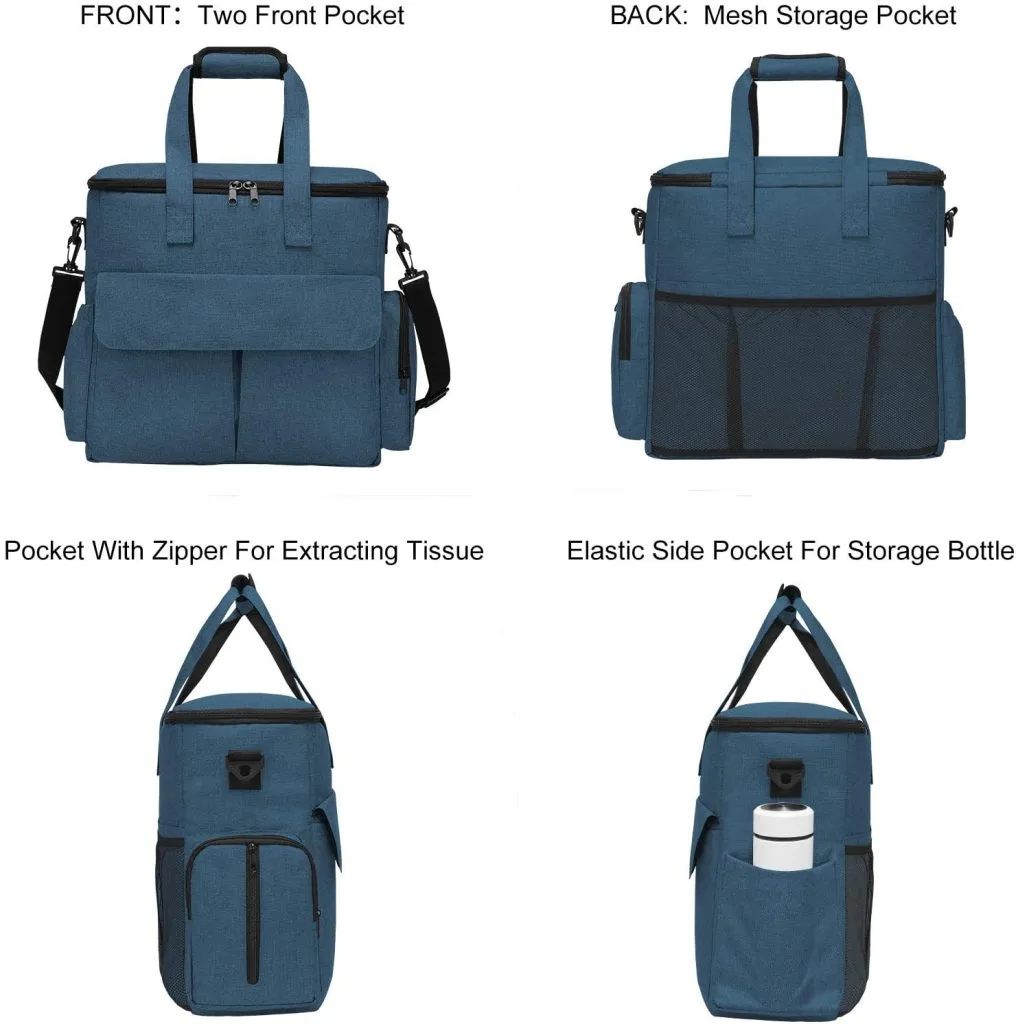
Halloween is the one season where a pet bag is genuinely used after dark, and visibility is therefore a functional requirement rather than a marketing one. Three approaches are available: reflective piping or trim on the bag perimeter, a reflective motif integrated into the print, and a light-mounted attachment point. Each has a different cost and a different effect.
Reflective piping is the most reliable. It outlines the bag, works from any angle, and is visible to a driver at a meaningful distance. It also survives washing better than printed reflective ink, because the reflective material is a tape rather than a surface deposit. For programs where the bag will see real outdoor night use, piping is the correct specification.
Reflective motifs integrated into the artwork look better and perform adequately, provided the ink laydown is sufficient. They should be placed on at least two faces so that the bag is visible from more than one direction, and they should be checked for wash durability, because reflective ink that flakes after two washes becomes a product complaint.
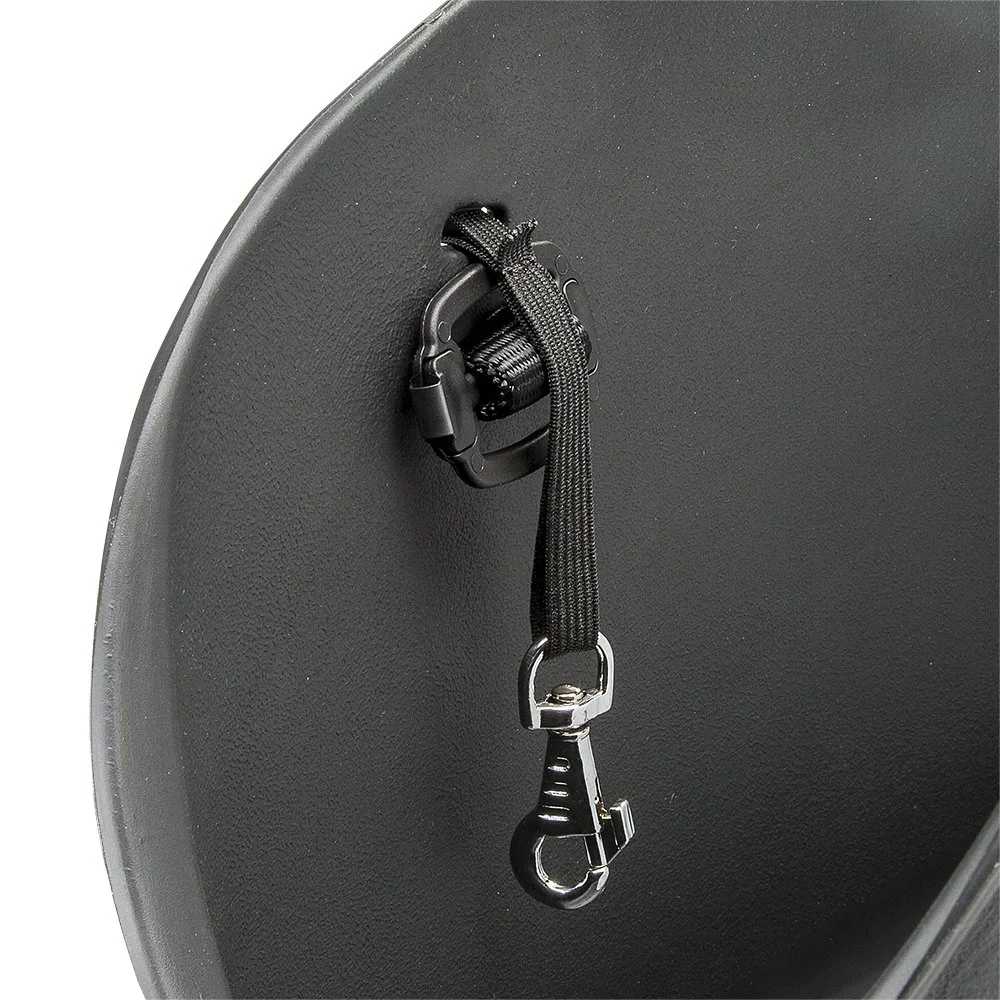
Attachment points for a clip-on light are a low-cost and genuinely useful addition. A webbing loop or a small D-ring positioned where a light can hang without swinging costs cents and gives the end customer a real safety option. Buyers should specify its position and its load rating rather than leaving it to the factory.
Packaging copy should be careful. Reflective material improves conspicuity but does not make a pedestrian or an animal safe in traffic, and claims should be written accordingly. Overclaiming on a safety-adjacent feature is both a compliance risk and a reputational one.
- Reflective piping gives the best all-angle visibility and wash durability.
- Place reflective motifs on at least two faces and check wash durability.
- Add a light attachment loop with a stated position and load rating.
- Write packaging copy about conspicuity, not about safety guarantees.
- Test the design under dim lighting before approving artwork.
Compliance: CPSIA, Prop 65 and Ink Restrictions
Halloween programs attract compliance attention for two reasons: the product is often displayed alongside children's items, and the decoration is heavy. Both push the file beyond what a plain bag requires, and both should be addressed before artwork approval rather than after production.
In the United States, a product marketed or packaged in a way that appeals to children may fall within children's product requirements covering lead and phthalates in coatings, inks and substrates, along with tracking label obligations. Buyers should review the framework published by the US Consumer Product Safety Commission and should confirm their specific position with a compliance adviser rather than assuming an exclusion applies.
California adds a separate layer. Decorative inks, coatings, glow pigments and novelty trims should be checked against the state's chemical listing requirements, and where a warning obligation arises, the packaging decision has to be made before the print run rather than after. Buyers can review the current framework through the California Office of Environmental Health Hazard Assessment.
EU-bound Halloween programs need a consolidated restricted-substance declaration covering fabric, coating, inks and any glow or reflective component. Because these programs frequently introduce a novelty material that the rest of the range does not use, the declaration has to be built for the themed assembly specifically rather than copied from a core product file.
Glow pigments deserve a specific question. Some phosphorescent materials carry metal content that attracts scrutiny, and a supplier should be able to provide a composition statement for the pigment before it goes into a print. If that statement is not available, the safe answer is to choose a different effect.
The practical discipline is to declare all destination markets at quotation. A test plan built once, for all markets, is cheaper and faster than three retrofits in September.
Cost and Minimums for Short-Season Themed Runs
Halloween runs are short by necessity, and short runs carry fixed setup costs over small quantities. The premium over an equivalent plain bag is typically USD 1.20-2.80 per unit on a 30-litre build quoted FOB Xiamen, with decoration contributing USD 0.25-1.30 and themed packaging USD 0.30-1.00. Reflective detailing adds USD 0.35-1.30 depending on whether it is piping or printed.
The setup asymmetry is the important number. Moving from 500 to 1,500 units typically reduces per-unit cost by 8-15% because print setup, screen charges and packaging setup are spread further. Buyers should model both scenarios, but should weigh the saving against the near-zero residual value of unsold themed stock, which argues for the conservative run in most cases.
Fabric minimums are less binding than for a Christmas program because digital print and screen print both work at low volume. Where a buyer wants a sublimation effect, the requirement shifts to a polyester base and a light ground colour, which conflicts with the dark palettes that Halloween demands, so sublimation is usually the wrong choice for this season.
Freight deserves early planning. A Halloween program that misses the sea cut-off must fly, and because the product is bulky relative to its value, air freight can exceed the product cost. The calendar should be built around the sea cut-off, with an explicit decision point for air freight and a real number attached to it.
Pricing should recover the short window. Halloween themed pet bags typically carry a 25-40% premium over a plain equivalent, which is achievable because the shopper is buying an event, not a utility item.
Inspection Plan for Decorated Halloween Units
Decoration introduces defects that a plain bag does not have, and the inspection plan must cover them alongside standard construction checks. Visual and workmanship defects run to AQL 2.5, while print registration, colour consistency and ink fixation belong in a defined functional check on a stated sample size.
Ink opacity on dark bases is the specific Halloween risk. A light-coloured ink printed on black fabric without sufficient laydown or without a white underbase will look dull and muddy, and the defect is obvious on the shelf but easy to miss under factory lighting. Inspection should include a check under retail-like lighting on an assembled bag.
Registration and placement come next. A motif that crosses a seam or sits under a handle is distorted, and a placement print needs a stated tolerance that inspection can measure. Buyers should approve a printed strike-off and retain it as the reference.
Ink fixation should be verified by a rub test, and reflective elements should be checked for adhesion and for wash durability where the claim implies it. A reflective trim that lifts at the edge is a visible defect on an otherwise sound unit.
Construction checks remain unchanged. Seam strength, closure operation and handle attachment should be verified exactly as on a core product, because a themed run is not exempt from the requirements that apply across the range. Buyers should state the functional gate separately in the purchase order so it is not folded into the percentage table.
Documentation should travel with the shipment: inspection report at the stated AQL level, functional test results, and photographs of the decoration on a retained reference unit. That file turns any later dispute into a short conversation.
Compressed Timeline: Sampling and Bulk Scheduling
The Halloween calendar is the tightest in the category and should be built backwards from the shelf date. For an early-October shelf set, artwork should be approved by late May, printed fabric or decoration materials ordered by mid-June, samples completed by early July, approval confirmed by late July and bulk booked by mid-August. That leaves September for production and transit.
Artwork is the critical path. Halloween graphics typically go through more revision rounds than other seasonal artwork because the theme has to be judged, and each round consumes a week or more. Buyers should set an internal artwork deadline and treat it as immovable.
Standard production terms are samples in 6-10 working days and bulk in 35-50 days, but the practical door-to-port figure for a themed run is 70-95 days because decoration materials are procured to order. Buyers planning on 50 days will miss the window.
Sea-freight cut-off is the second hard date. September is a congested shipping month, and space should be booked when the production slot is booked rather than when production completes. Buyers who treat freight as a separate later step routinely find the vessel full.
Capacity is not normally the binding constraint. The production network operates seven dedicated lines with monthly output near 200,000 units across the category, and a Halloween run is small by comparison. The constraints are artwork timing, decoration material lead time and vessel space, all of which are solved by planning rather than by negotiating.
Buyers should also build an explicit artwork freeze into the schedule. Halloween graphics invite late revisions because the theme is judged subjectively, and each revision after the fabric order pushes the program back by more than the revision itself takes. A stated freeze date, agreed internally before the design brief is written, is the single most effective control on this calendar.
Post-Season Plan: Markdowns, Carryover and Reorders
November arrives quickly and themed Halloween stock has almost no value in it. The plan for what does not sell should be agreed with the retailer before the program ships, because the alternative is a warehouse of unsaleable product and a damaged relationship.
A pre-agreed markdown ladder is the cleanest mechanism. Setting the first markdown at the end of the selling week and a deeper one in the final days moves stock while demand still exists and protects the retailer from holding dead inventory. Retailers are far more receptive to a supplier who plans this in advance.
Carryover to the following year is theoretically possible but rarely worthwhile. Storage cost, the risk of a dated design and the opportunity cost of the capital usually exceed the value of the stock. Buyers should model it honestly rather than assuming the inventory has residual value.
Design choices can reduce the problem. A motif built on general autumn imagery, such as a bat silhouette or a moon-and-stars pattern, has a slightly longer sellable life than an explicit pumpkin or skeleton graphic. It will still not sell in December, but it can carry into an autumn clearance period at a shallower discount.
Reorders are not realistic. A reorder placed in October arrives after the event, so the discipline is to size the original run correctly. Where demand exceeds supply, the correct response is to note it for next year's forecast rather than to attempt a rescue shipment.
The debrief is where the value compounds. Recording actual sell-through by colorway, the real artwork approval date and the real transit time gives next year's program a factual basis, and distributors who do this improve their Halloween result year over year.
Buyers should also record which channels cleared stock and which did not. Halloween sell-through varies sharply by channel, and a program that performs well in discount retail can fail entirely in specialty pet. Carrying that data into the following year's channel plan is usually worth more than any specification change, because the placement decision determines the outcome more than the product does.
Channel Fit and Assortment Decisions for Halloween Programs
Channel selection determines whether a Halloween program succeeds more than any specification decision. Mass retail and discount channels are the natural home, because they allocate temporary seasonal fixtures and shopper traffic is event-driven. E-commerce performs well too, particularly where the product is listed early enough to be discovered in a search.
Specialty pet retail is a weaker fit. The fixture is built around functional product, staff recommendations are based on use rather than novelty, and a themed bag competes poorly against core SKUs for limited shelf space. Buyers should target the channel that matches the behaviour rather than pitching broadly.
Within the right channel, fixture position matters more than assortment breadth. A single design placed at eye level on a seasonal end-cap outsells three designs distributed through a main aisle, because Halloween shopping is impulsive and driven by visibility. Buyers should negotiate for placement as part of the program pitch rather than treating it as a detail to be settled after the order is placed.
Assortment depth should be minimal. One style in two colorways is the maximum most programs can execute well, and a single strong design outperforms three mediocre ones at the same total volume. Where a second style is justified, it should be a smaller size at a lower price point rather than a second graphic.
Presentation matters disproportionately. Halloween product competes on shelf impact, so packaging, hangtag graphics and any point-of-sale element carry weight that they do not carry in a core range. Buyers should budget for presentation and should plan it at the same time as the bag artwork.
Finally, buyers should keep the Halloween program separate from the autumn core range in both planning and inventory. Mixing them produces a muddled fixture and makes sell-through analysis impossible at the end of the season, which is exactly the data needed to improve the following year.
Why brands source here
- Pet bag programmes run since 2014; founding team in sewn goods since 2004
- SGS-verified production floor of 4,950 m² with 137 workers across 7 lines
- Monthly capacity of 200,000 units, audited to BSCI and ISO 9001
People Also Ask
What is a Halloween themed pet bag?
A short-run seasonal pet bag on a dark base fabric with Halloween graphics, reflective detailing and themed packaging, sold into a two to three week event window.
When should Halloween pet bags be ordered?
Artwork approved by late May and the bulk slot booked by mid-August for an early-October shelf set, allowing 70-95 days door to port for decorated runs.
Why are Halloween pet bags expensive per unit?
Short runs spread fixed setup over small quantities, and decoration, themed packaging and reflective detailing add USD 1.20-2.80 per unit over a plain bag.
Do Halloween pet bags need reflective trim?
Yes, because the product is used after dark. Reflective piping performs best from all angles and survives washing better than printed reflective ink.
Can Halloween themed bags be sold after the event?
Barely. Themed inventory has near-zero residual value after the first week of November, so plan a pre-agreed markdown ladder and size the run conservatively.
What print method works on black fabric?
Digital print for complex artwork and opaque screen print with a white underbase for simple graphics. Check ink opacity under retail lighting, not factory lighting.
Frequently Asked Questions
When should a Halloween pet bag program start?
Artwork approved by late May, decoration materials ordered by mid-June, samples complete by early July and the bulk slot booked by mid-August for an early-October shelf set.
What is the MOQ for a Halloween themed run?
MOQ is 500 pieces per color per style. Digital print and screen print both work at that volume, so fabric minimums are less binding than for larger holiday programs.
Which decoration suits a dark Halloween base?
Digital print for complex artwork, opaque screen print for simple spot-colour graphics, and reflective piping or a reflective ink motif for visibility. Sublimation is a poor fit because it needs a light ground.
Do Halloween pet bags need reflective elements?
They should have them, because the product is genuinely used after dark. Reflective piping gives the best all-angle visibility and wash durability; integrated reflective ink looks better but needs a wash-durability check.
What compliance applies to Halloween pet bags?
US programs may attract children's product requirements on inks and coatings; California adds chemical listing obligations; EU programs need a consolidated restricted-substance declaration including any glow pigment.
Are glow-in-the-dark effects a problem?
They are popular but have a finite service life measured in months, and some pigments carry metal content that attracts scrutiny. Ask for a composition statement before printing.
How much does a Halloween run add per unit?
USD 1.20-2.80 on a 30-litre build quoted FOB Xiamen, with decoration at USD 0.25-1.30, themed packaging at USD 0.30-1.00 and reflective detailing at USD 0.35-1.30.
What inspection checks are specific to dark-base printing?
Ink opacity under retail-like lighting, registration against a retained strike-off, ink fixation by rub test, and reflective adhesion. Construction checks stay identical to core product.
Is a mid-season reorder possible?
No. An October reorder arrives after the event. Size the original run conservatively and record the shortfall for next year's forecast instead.
Which channels suit Halloween pet bags?
Mass retail, discount channels and e-commerce. Specialty pet retail is a weak fit because the fixture is built around functional product and shelf space is limited.
How should unsold Halloween stock be handled?
With a markdown ladder agreed with the retailer before shipping. Carryover to the following year rarely pays once storage, dated design and capital cost are counted.
How many colorways should a Halloween program carry?
Two at most, on one base fabric. A single strong design outperforms three mediocre ones, and a second style should be a smaller size rather than a second graphic.
Talk to QUANZHOU JUNYUAN BAGS about a wholesale pet bag order: MOQ 500 pieces per colourway, samples in 6-10 working days, bulk production in 35-50 days under AQL 2.5 inspection.
Get a free quote Request a sample