Pet Dirty Laundry Bag: Separate Compartment Specs
A wholesale pet dirty laundry bag should carry a sealed soiled compartment sized at 25-35% of total bag volume, lined with a 0.15-0.20 mm TPU or PEVA film, closed by a water-resistant coil zipper and welded rather than stitched at the base seam. Budget USD 0.85-1.90 per unit over a single-compartment build of the same size. The compartment must be specified by volume ratio, lining gauge, seam method and closure type on the purchase order, because a "wet pocket" note alone produces four different interpretations across suppliers.
This brief is written for buyers sourcing pet bags with a dedicated dirty-laundry or soiled-item compartment for boarding, daycare, grooming and multi-pet retail channels. The commercial case is straightforward: the feature moves a program out of the commodity price band while adding cost only in lining, one divider panel and one closure. Standard trading terms on this category are MOQ 500 pieces per color per style, sampling in 6-10 working days after tech pack sign-off, bulk production in 35-50 days, inspection to AQL 2.5 with a defined leak and seam check, payment T/T 30/70 and quotation FOB Xiamen. Our production team runs the soiled-compartment program on dedicated welding equipment at the SGS-verified production base, with a registered quality system audited to ISO 9001 and BSCI. The sections below set out the geometry rules, the lining comparison, the odor and leak clauses that belong in the spec, the added cost, the test protocol, the order calendar and the channel requirements that decide whether the SKU clears a retail planogram.
Where to buy pet bags wholesale is less a question of directory listing than of Pet Bag Types & Styles verification - ask for the test report before the price list. Pet bag wholesale vendors who can name the fabric mill will usually also name the failure mode, which is the fastest way to separate a real programme from a catalogue.
Why a Dedicated Dirty-Laundry Compartment Belongs in the Spec Sheet
A separate dirty-laundry compartment is one of the few construction features that changes how a wholesale pet bag is sold, not simply how it looks. Over the last three seasons, soiled-item storage has moved from a niche request to a standard line item on roughly one in three pet bag programs quoted for boarding, daycare and multi-pet retail accounts. The driver is practical rather than decorative: towels, blankets, training pads and used grooming cloths cannot travel next to clean bedding or a customer's personal items, and a single-compartment bag forces the buyer to add a second SKU to solve a problem the first one should have handled.
From a sourcing perspective, the question is not whether the feature sells but whether it can be specified tightly enough to survive a production run. A compartment described only as a wet pocket on a purchase order will come back with four different interpretations across three factories and two rounds of samples. What belongs on the spec sheet is volume ratio, lining type, seam construction, closure hardware and a measurable leak or odor criterion. Each of those five variables carries a cost, and each one can be quoted, sampled and inspected once it is written down in the tech pack rather than implied in an email thread.
The commercial argument is equally concrete. Adding a sealed soiled compartment typically shifts a program from a commodity price band into a mid-tier one, where the wholesale buyer can hold a higher retail price without changing the rest of the bag. Because the added cost sits in lining, one extra divider panel and one closure, the unit-cost impact is far smaller than the perceived value at shelf. That gap is exactly why the feature deserves a proper specification rather than being treated as an optional trim that a factory may interpret loosely.
- Boarding and daycare operators need soiled linen separated before it reaches their commercial laundry loop.
- Grooming salons carry damp towels and used cloths between appointments and cannot mix them with retail stock.
- Multi-pet households generate enough laundry volume to justify a purpose-built compartment instead of a bin bag.
- Retailers use the compartment as a visual differentiator that supports a higher price point on shelf.
- E-commerce sellers reduce returns when the product description states a measurable compartment volume.
For a buyer building a program rather than a single order, the compartment also creates a ladder: the same shell can be offered with a basic open pocket, a lined pocket or a fully welded sealed compartment at three price points. That structure lets a distributor cover an entry, mid and premium tier with one tooling set and one fabric program, which is where the real margin in this category is made.
Buyers should also consider how the compartment affects the returns profile. Soiled-item storage is one of the few features that reduces returns rather than increasing them, because the most common complaint in multi-pet households is contamination of clean contents during transport. A compartment that is large enough, genuinely sealed and easy to identify removes that complaint at the design stage. Distributors who track return reasons by SKU consistently see the sealed-compartment version outperform the single-cavity version of the same shell, and the difference shows up in the margin rather than in the unit cost.
Finally, the feature should be positioned carefully against the rest of the range. A soiled compartment does not replace a waterproof bag; it solves a different problem, namely separation rather than containment. Buyers who present it as a waterproofing solution generate expectations the product cannot meet, and the resulting complaints are a positioning failure rather than a construction one.
Compartment Geometry: Volume Ratio, Placement, and Access Logic
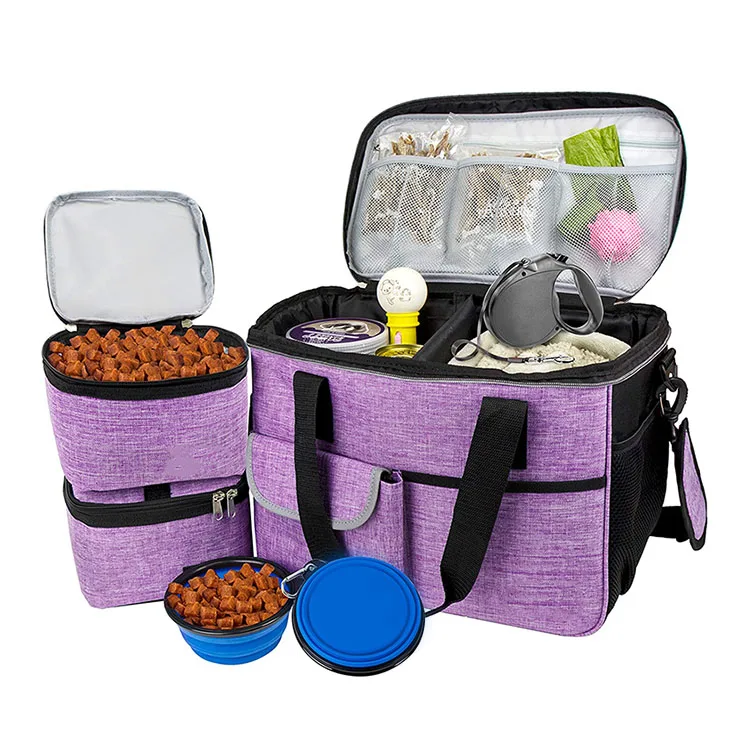
Geometry is the first decision because it drives every downstream cost. The working rule for pet bags in the 25-45 litre range is a soiled compartment of 25-35% of total volume; below 20% the pocket cannot hold a rolled bath towel, and above 40% the clean side loses the capacity that buyers actually shop for. In litres, that means 7-12 litres of soiled capacity on a 30-litre weekender-style pet bag, and 4-6 litres on an 18-litre day bag. State the ratio and the absolute litre figure in the tech pack so the sample room cannot satisfy one by sacrificing the other.
Placement matters as much as size. A bottom-loading compartment keeps soiled weight low and away from the clean cavity, and it lets the lining form a single welded tray with only one seam path to test. A side-access compartment is easier for the end user to reach in a car or a grooming trolley, but it introduces a vertical seam that carries hydrostatic pressure in a way a tray does not. Top-loading soiled pockets are the weakest option: they sit above the clean cavity, and any leak drains into it, which is precisely the failure the buyer is paying to avoid.
Access should be independent. The soiled compartment needs its own closure so the user never has to open the clean side to reach it, and the puller should be visually distinct, ideally in a high-contrast color, so the two openings are never confused in daily use. Gusset depth is the third variable: a 10-12 cm gusset allows a rolled towel to sit flat, while a shallow 5 cm pocket forces the contents to be compressed against the closure and shortens zipper life meaningfully over a twelve-month service cycle.
- Specify volume as both a percentage of total capacity and an absolute litre figure.
- Prefer bottom-loading trays where leak risk is the primary concern.
- Give the soiled compartment its own zipper, puller and color cue.
- Keep gusset depth at 10-12 cm so rolled textiles sit flat against the lining.
- Avoid placing any seam of the soiled cavity directly above the clean cavity floor.
Lining Materials for Soiled Compartments Compared
Lining choice determines whether the compartment survives a commercial wash cycle. Four films dominate the category, and the differences show up in weldability, odor retention, low-temperature behaviour and chemical compliance documentation. TPU laminate is the default for mid-tier and premium programs because it welds cleanly, stays flexible below freezing and carries the cleanest restricted-substance story. PEVA is the value option with acceptable weld strength and no plasticiser migration, but it creases permanently once folded hard. PVC-coated polyester is cheap and widely available, yet it stiffens in cold climates and raises plasticiser questions under EU chemical rules. Silicone-coated nylon welds well and releases odor best, at a material cost that only premium programs can carry.
Buyers should ask for the film gauge in millimetres, not a trade name. A 0.15 mm film is sufficient for day bags; a 0.18-0.20 mm film is the sensible floor for boarding and daycare programs that see weekly industrial laundering. Gauge below 0.12 mm will weld inconsistently on high-speed equipment and produces pinholes that a visual inspection at AQL 2.5 will not catch, so the spec should require a leak check rather than relying on appearance alone.
| Lining option | Typical gauge | Weld strength | Cold behaviour | Added cost per unit |
|---|---|---|---|---|
| TPU laminate on polyester | 0.15-0.20 mm | High, consistent | Flexible to -20 C | USD 0.55-0.85 |
| PEVA film | 0.15-0.18 mm | Medium, good | Stiffens below -5 C | USD 0.35-0.55 |
| PVC-coated polyester | 0.20-0.25 mm | Medium | Cracks below -10 C | USD 0.25-0.45 |
| Silicone-coated nylon | 0.12-0.15 mm | High | Flexible to -30 C | USD 1.10-1.60 |
| Coated poly with taped seams | 0.18-0.22 mm | Low unless taped | Stiffens below 0 C | USD 0.20-0.40 |
Chemical documentation is part of material selection, not an afterthought. Any coated film intended for the EU market should carry a restricted-substance statement against the REACH candidate list, and buyers importing into California should confirm the film and inks against Prop 65 requirements before artwork approval. Independent textile certification such as OEKO-TEX testing for harmful substances is the fastest way to satisfy a retail compliance desk without commissioning a separate laboratory round for every colorway.
Odor, Moisture, and Leak Control: Writing the Performance Clause
Odor control is where suppliers overclaim and buyers get burned. An antimicrobial finish is a surface treatment, not a permanent property, and it will not survive fifty industrial wash cycles unless it is bonded into the fibre or the film. Rather than accepting a marketing statement, buyers should specify the treatment by its active chemistry, its test method and its durability endpoint, then require a test report from a recognised laboratory at the sample stage and a retained reference sample at bulk. If a supplier cannot name the test method, the claim should be struck from the packaging copy.
Moisture behaviour is easier to control and more important in daily use. The compartment should dry in a defined period; a practical clause is that a lined cavity holding 200 ml of water, emptied and left open at 25 C and 60% relative humidity, shows no free moisture after 8 hours. That single sentence gives the factory a design target for vent placement and gives the inspector a check that takes less than a minute on the line. Venting should be placed high on the panel so that liquid does not escape through the vent while the bag is being carried.
Leak control rests on seam method. A welded seam on a compatible film is continuous and has no needle holes; a stitched seam on the same film leaks through every perforation unless it is taped afterwards. The spec should state welded base seams as the default, with stitched-and-taped permitted only where the geometry prevents welding, and it should name the tape width and the number of passes. Zipper choice follows the same logic: a water-resistant coil zipper with a reverse-mounted tape costs a little more than a standard coil and removes the single most common leak path in the entire assembly.
Finally, define what happens at failure. A soiled compartment that leaks into the clean cavity is a warranty event, and the purchase order should state the remedy, whether that is rework, replacement or a credit against the next shipment. Naming the remedy before production starts costs nothing and removes the argument later.
Cost Structure: What the Second Compartment Adds to FOB Xiamen
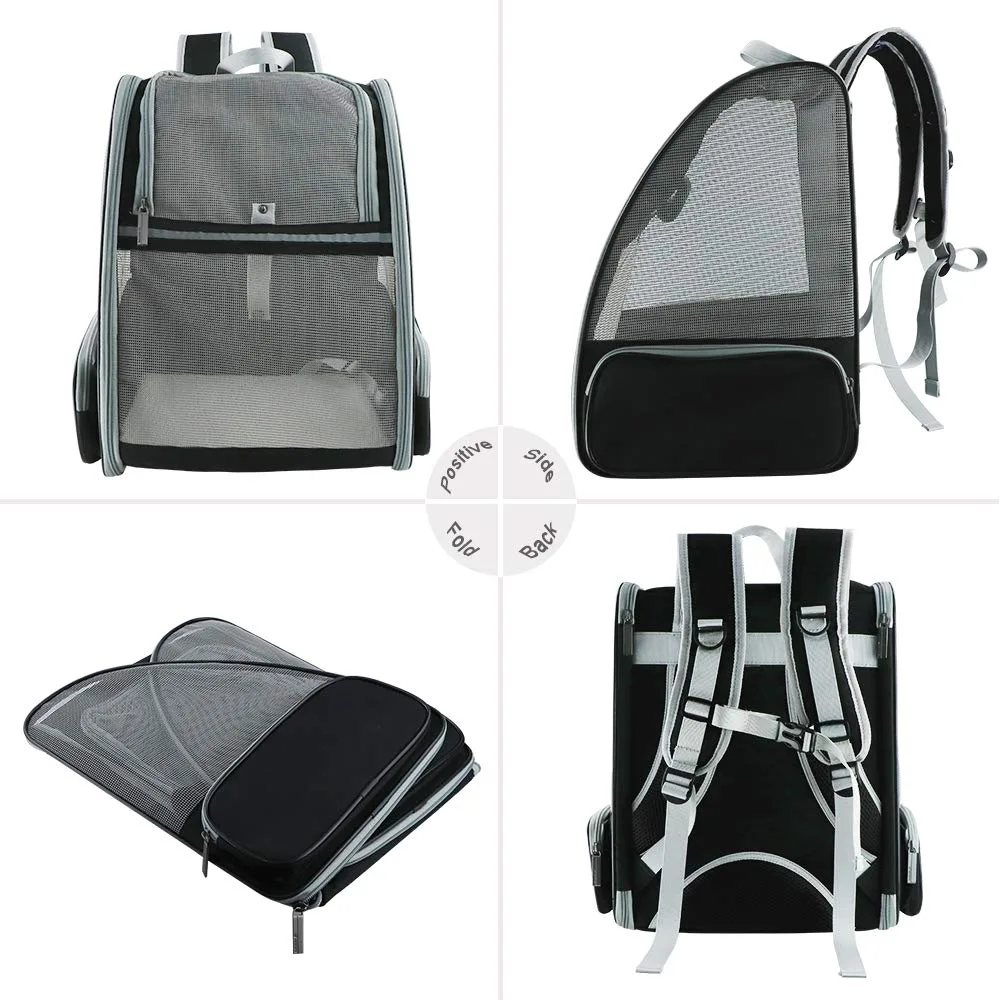
The added cost of a soiled compartment is concentrated in four line items: lining material, the divider panel, the second closure and the incremental labour for welding and seam taping. On a 30-litre build quoted FOB Xiamen, a welded TPU compartment with its own water-resistant zipper typically adds USD 0.85-1.90 per unit over the same shell built as a single cavity. Material is the smaller half of that figure, roughly USD 0.40-0.75 depending on gauge; labour and the closure account for the rest.
Labour is where order size does its work. Welding setup is a fixed cost per production run, so a 500-piece order absorbs it over a small quantity and a 5,000-piece order spreads it to near zero. Buyers planning a program should therefore treat the first order as the expensive one and price subsequent reorders from a lower base. Quoting both figures at the outset avoids the awkward conversation when the second order is expected to match the first price despite running three times the quantity.
Cost also interacts with color strategy. Because a compartment lining is usually specified in a single neutral shade across all colorways of a style, the lining can be bought in one bulk lot even when the shell runs four colors. That keeps each colorway at the MOQ threshold rather than forcing the buyer to over-order one shell color to reach an economic lining purchase. It is a small planning decision that regularly saves a distributor a full container of slow-moving stock.
- Welded TPU compartment on a 30-litre build: add USD 0.85-1.90 per unit.
- PEVA value alternative: add USD 0.55-1.10 per unit.
- Silicone-coated premium option: add USD 1.60-2.60 per unit.
- Specify lining in one neutral shade across all shell colorways to protect MOQ economics.
- Expect the first run to carry setup cost that later reorders will not.
Freight is unaffected in any meaningful way. The compartment adds 60-120 grams to a bag that already weighs 700-1,100 grams, which changes landed cost per container by less than one percent. Buyers should not let a weight argument drive them into a thinner film that will fail in service.
Test Protocol and Inspection Plan for Sealed Compartments
Inspection of a sealed compartment cannot rely on appearance. The standard incoming check should run at AQL 2.5 for visual and workmanship defects, with a separate zero-tolerance functional gate for leak, seam and closure performance. In practice that means the inspector pulls a defined sample, checks cosmetics against the AQL table, and then runs a fixed number of units through a leak and cycle test where any single failure triggers a full sort of the shipment rather than a percentage disposition.
The functional gate should be specified in the purchase order. A workable protocol is: fill the compartment with water to 40% of its volume, suspend it for 30 minutes, and inspect the clean cavity for moisture; run the compartment zipper through 200 open-close cycles and re-check seam integrity; and confirm the divider seam holds a 5 kg load applied for 60 seconds. Each of those checks takes minutes, needs no laboratory, and catches the failure modes that generate returns in the field.
Laboratory testing supports the claims that cannot be checked on a table. Colour fastness to washing, seam strength and coating adhesion should be run to recognised textile methods, and buyers can reference the AATCC test methods for textile performance when writing the clause so that the factory and the laboratory are working from the same procedure. Where a program carries an antimicrobial or odor claim, the laboratory report should state the organism, the reduction percentage and the number of wash cycles survived, because a claim without those three numbers will not clear a major retail compliance review.
Documentation closes the loop. Every shipment should travel with an inspection report referencing the AQL level, the functional test results, and photographs of the sealed seam on a retained reference unit. When a buyer has that file, a disputed claim becomes a five-minute conversation instead of a five-week one.
Order Planning: MOQ, Sampling Windows, and Production Slots
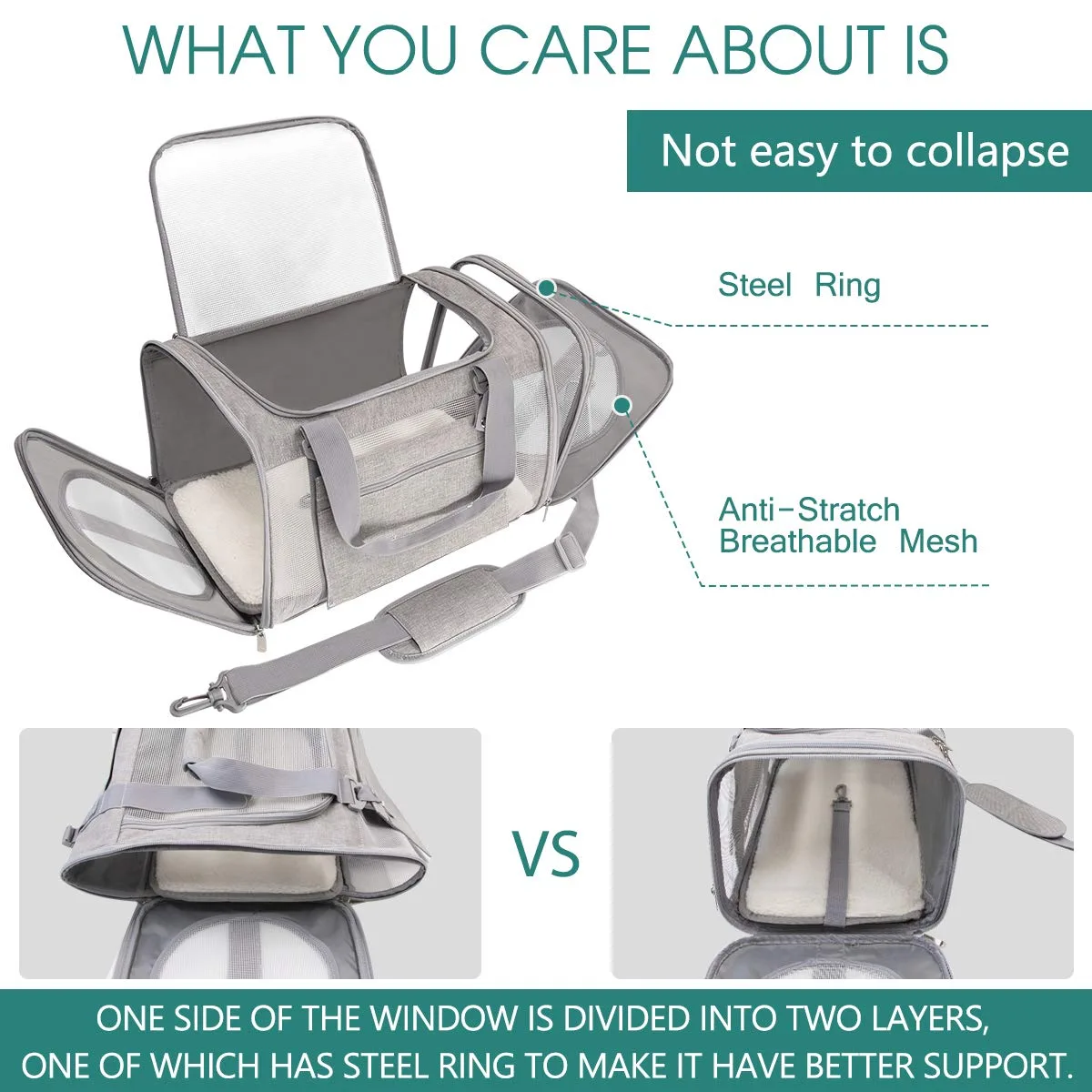
Planning a soiled-compartment program follows the same calendar as any structured pet bag, with one addition: the film and the closure are usually bought to order, so the component lead time must be added before sampling can begin. Standard terms on this category are MOQ 500 pieces per color per style, samples in 6-10 working days from tech pack sign-off, and bulk production in 35-50 days from sample approval and deposit. Payment is T/T 30/70 and quotations are FOB Xiamen unless a buyer requests a delivered basis.
Sampling deserves two rounds rather than one. The first sample confirms geometry and aesthetics; the second, built after the volume ratio and gusset depth have been corrected, is the unit that should be tested and retained as the golden reference. Buyers who compress this into a single round routinely approve a bag that looks right and leaks, because the leak only appears once the geometry is loaded the way an end user will load it.
Production slots are the practical constraint on seasonal programs. A winter-holiday program with a soiled compartment needs artwork approved, film ordered, samples signed and the bulk slot booked before the peak season fills the calendar at the partner facilities. Booking a slot on the strength of a verbal approval is the single most common cause of a missed retail window in this category, and it is entirely avoidable with a written approval milestone in the order schedule.
Capacity is not usually the limiting factor. The production network runs seven dedicated lines with a monthly output near 200,000 units across the category, so a 5,000-piece compartment program is comfortably inside normal scheduling. What limits a program is component availability and slot timing, not line capacity.
Channel Requirements: Daycare, Grooming, and Multi-Pet Retail
Channel dictates the details that do not appear in a generic tech pack. Commercial daycare and boarding buyers launder bags on a weekly industrial cycle, so they need a compartment that tolerates 60 C washing, a lining that does not delaminate, and a label area that survives the same cycle. They are less sensitive to color and more sensitive to service life, which means the spec should trade aesthetic trims for film gauge and seam method.
Grooming buyers have a different priority: speed of access. Their staff open and close the compartment dozens of times a day, so zipper cycle life and puller ergonomics matter more than absolute leak performance. For this channel, a slightly larger opening with a reinforced stop is a better specification than a narrowly sealed tray that is awkward to reach with wet hands.
Retail and e-commerce channels care about the story and the planogram. A soiled compartment has to be visible in product photography, named consistently on the packaging, and supported by a measurable claim such as compartment volume in litres. Retail buyers also expect a size ladder, so a program built around this feature should offer at least two sizes sharing the same construction language, allowing a planogram to present an entry and a step-up option without duplicating supplier qualification work.
Own-brand and custom programmes layer on top of the same specification. Because the compartment is a construction change rather than a branding change, a buyer can run the identical build under several labels and differentiate only through colorway, trim and packaging. That approach keeps engineering cost fixed while letting each channel position the product at its own price point.
Across all three channels, the consistent requirement is documentation: a spec sheet with measurable numbers, an inspection report at AQL 2.5 and a compliance file for the lining and inks. Buyers who request those three documents at the quotation stage, rather than after the first shipment, consistently end up with fewer disputes and faster reorders.
Production capability
- SGS-verified production space of 4,950 m², 149 machines, 7 assembly lines
- Pet bag output since 2014 from a 137-person team
- 200,000 units shipped monthly under BSCI and ISO 9001 systems
People Also Ask
What is a separate compartment on a pet laundry bag?
It is a sealed, lined cavity isolated from the main storage area, sized at 25-35% of total volume, used to carry soiled towels, blankets and pads without contaminating clean items.
Why do pet bags need a dirty laundry compartment?
Boarding, daycare and grooming operations must keep soiled textiles away from clean stock and away from a customer's personal items. Without it, the buyer has to purchase a second SKU to solve the problem.
What material is best for a wet compartment lining?
TPU laminate at 0.15-0.20 mm, welded rather than stitched. It holds weld strength, stays flexible in cold weather and produces the cleanest chemical compliance file.
How big should a dirty laundry compartment be?
Twenty-five to thirty-five percent of total bag volume, with a 10-12 cm gusset so rolled textiles sit flat. Express it in litres on the tech pack as well as a percentage.
Can the compartment be washed in a commercial laundry?
Yes, provided the lining is specified for 60 C cycles and the seam is welded or properly taped. Buyers in commercial channels should ask for wash-cycle test data before approving the sample.
How do you stop odor in a pet laundry compartment?
Combine a welded non-porous lining, high-placed venting so the cavity dries within 8 hours, and a verified antimicrobial treatment with a stated wash-cycle durability figure.
Frequently Asked Questions
What volume should the soiled compartment be on a wholesale pet bag?
Specify 25-35% of total bag volume, expressed as an absolute litre figure as well: roughly 7-12 litres on a 30-litre build. Below 20% it will not hold a rolled towel; above 40% the clean cavity loses the capacity buyers shop for.
Which lining performs best for a dirty-laundry compartment?
TPU laminate at 0.15-0.20 mm is the default choice because it welds consistently, stays flexible to -20 C and carries the cleanest restricted-substance documentation. PEVA is the value alternative; PVC-coated polyester is cheapest but stiffens and cracks in cold climates.
How much does a sealed compartment add to unit cost?
Expect USD 0.85-1.90 per unit on a 30-litre build with a welded TPU lining and its own water-resistant zipper. A PEVA value version adds USD 0.55-1.10, and a silicone-coated premium version adds USD 1.60-2.60.
Should the soiled compartment seam be welded or stitched?
Welded is the default because it has no needle perforations. Stitched seams must be taped afterwards, and the spec should name tape width and number of passes. Never allow an untaped stitched seam in a cavity intended to hold liquid.
What is the MOQ for a pet bag with a separate compartment?
MOQ is 500 pieces per color per style. Lining is usually bought in one neutral shade across all colorways, which keeps each shell color at the threshold without forcing an over-order of a single color.
How long do samples and bulk production take?
Samples take 6-10 working days from tech pack sign-off. Bulk production runs 35-50 days from sample approval and deposit. Component lead time for the film and closure is added before sampling can start.
What inspection level applies to sealed compartments?
Visual and workmanship defects are inspected to AQL 2.5. Leak, seam and closure performance should sit in a separate zero-tolerance functional gate where any failure triggers a full sort rather than a percentage disposition.
How is leak performance checked on the line?
Fill the compartment to 40% of volume with water, suspend for 30 minutes and inspect the clean cavity for moisture. Follow with 200 zipper cycles and a 5 kg divider load held for 60 seconds.
Can an antimicrobial claim be printed on the packaging?
Only with a laboratory report that names the organism, states the reduction percentage and states how many wash cycles the treatment survives. A claim without those three numbers will not clear a major retail compliance review.
Which closure should the soiled compartment use?
A water-resistant coil zipper with reverse-mounted tape. It costs slightly more than a standard coil and removes the most common leak path in the assembly. Give it a high-contrast puller so it is never confused with the clean-side opening.
Do different channels need different compartment specs?
Yes. Daycare buyers need 60 C wash tolerance and film gauge; grooming buyers need cycle life and easy access with wet hands; retail buyers need a visible feature, a litre claim and a two-size ladder for the planogram.
Does the compartment affect freight cost?
Not meaningfully. It adds 60-120 grams to a bag weighing 700-1,100 grams, which changes landed cost per container by under one percent. Do not trade film gauge for weight savings.
Talk to QUANZHOU JUNYUAN BAGS about a wholesale pet bag order: MOQ 500 pieces per colourway, samples in 6-10 working days, bulk production in 35-50 days under AQL 2.5 inspection.
Get a free quote Request a sample