Pet Arthritic Bag: Joint Support Sourcing and Specs
An arthritic pet bag is specified around pressure relief rather than capacity: a low-entry body with a medium-density foam base, quoted at MOQ 500 pieces per colour and FOB Xiamen USD 8.20-15.60 per unit depending on foam grade and cover system. The two numbers that determine whether the product works are foam compression set and entry height. Samples take 6-10 working days; bulk production takes 35-50 days.
Executive summary for joint support product buyers. Products sold for arthritic animals are judged on one thing by the customer: whether the animal is visibly more comfortable. That makes the base the product and everything else secondary. A well-presented bag with a base that flattens will be returned, reviewed badly and delisted, while a plain bag with a base that genuinely relieves pressure will be recommended by owners to other owners in the same position, which is how this category actually grows.
Commercial baseline: MOQ 500 units per colour on the bag body, foam and cover minimums quoted separately, samples in 6-10 working days, bulk production 35-50 days after sample approval and deposit, inspection to AQL 2.5 plus a compression and indentation gate on the base, payment T/T 30/70 against FOB Xiamen. Our production team specifies these through an SGS-verified production base operating to BSCI and ISO 9001 and records foam density, thickness and compression data per run. Buyers who state foam density, thickness, indentation load deflection and compression set in the tech pack receive quotes they can compare; buyers who ask for a padded base receive quotes that look identical and perform completely differently.
Pet bag market trends point to two things a buyer can act on: lighter shells and stricter chemical files, both of which land on Pet Bag Types & Styles. Pet carrier market size forecasts are useful for range planning but not for pricing, and pet bag market analysis should be read as a channel question rather than a volume promise.
What joint support means in a purchase specification
Joint support is a marketing phrase until it is converted into numbers, and the conversion is straightforward. An animal with painful joints needs a surface that reduces pressure at the contact points, an entry that does not require a painful movement, and warmth that does not cause overheating. Each of those has a specification: foam with stated density and compression behaviour, an entry height in centimetres, and an insulation approach that is adjustable.
Pressure relief is the core. A hard surface concentrates load on the hip and elbow; a foam layer spreads it. The engineering question is how much foam, of what density, retains its thickness under a given load for a given period. That is what indentation load deflection and compression set measure, and they are the two numbers a buyer should insist on.
Entry is the second. An arthritic animal will not step up if stepping hurts, and it will not jump. The entry therefore has to be low enough to walk into, or the product has to open flat so the animal can be placed rather than stepped in. This is a design decision that costs little and determines whether the product is used daily or stored after a week.
Warmth is the third and is frequently mishandled. Heat helps stiff joints, but an insulated bag on a warm day is dangerous for an animal that cannot move away from it. The correct specification is a removable insulated layer rather than fixed insulation, which gives the owner seasonal control.
- Foam: density, thickness, indentation load deflection and compression set.
- Entry: height in centimetres, or a flat-opening design.
- Thermal: removable insulation rather than fixed.
- Base: non-slip and stable under an unsteady animal.
- Cover: removable, washable and available as a spare.
The buyer should also understand who they are selling to. In the majority of cases it is an owner who has already spent substantially on veterinary care and who will read the specification carefully. Publishing the foam numbers, the entry height and the cleaning method is a genuine commercial advantage in this segment rather than a technical indulgence.
That reading behaviour also shapes how the category should be merchandised. Products in this segment convert best when the listing leads with the measurable facts an owner is comparing across brands, because there is no other way for them to judge a product they cannot try. A range that publishes compression set, foam density and entry height alongside the weight band consistently outperforms one that relies on comfort language and photography, and it does so at a lower marketing cost.
Finally, the claims boundary matters. A bag can support and cushion; it cannot treat. Products in this category are frequently over-marketed, and the veterinary channel in particular will not list a product making therapeutic claims. Keeping the language descriptive protects the listing and the distributor.
Foam and base specification matrix
The matrix below compares the three base constructions that cover most wholesale briefs in this category. Price movement between them is driven almost entirely by foam grade and by whether the cover system is removable and washable.
| Parameter | Support entry | Veterinary channel | Premium orthopaedic |
|---|---|---|---|
| Foam type | Standard polyurethane | High-resilience polyurethane | Memory foam over HR base |
| Density | 20-25 kg per cubic metre | 30-35 kg per cubic metre | 50 kg plus HR base |
| Thickness | 20 mm | 30 mm | 40 mm dual layer |
| Compression set | Under 15 percent | Under 10 percent | Under 8 percent |
| Entry height | Under 10 cm | Under 7 cm | Flat-opening side |
| Base board | 3 mm, fixed | 4 mm, removable | 5 mm, removable frame |
| Cover | Wipeable | Removable washable | Removable, two-layer |
| Non-slip base | Printed | Coated panel | Coated panel plus feet |
| MOQ per colour | 500 | 500 | 500 |
| FOB Xiamen band | USD 8.20-10.40 | USD 10.80-13.20 | USD 13.40-15.60 |
| Sample lead time | 6-8 working days | 6-10 working days | 8-10 working days |
| Bulk lead time | 35-45 days | 38-48 days | 40-50 days |
| Inspection gate | AQL 2.5 | AQL 2.5 plus compression | AQL 2.5 plus compression set |
Compression set is the row buyers most often omit and most often regret. It measures how much permanent deformation a foam retains after sustained compression, and it is the number that predicts whether a base is still supportive after a year of nightly use. A foam with a low compression set figure costs more and lasts substantially longer, and the difference is invisible at delivery and obvious at month six.
Density and thickness interact, and buyers should not treat either alone as a quality signal. A thick low-density foam feels luxurious in the showroom and flattens in the home; a thinner high-density foam feels firm and lasts. For an animal of meaningful weight, the higher density is the correct choice even though it demonstrates worse.
The premium row adds a memory foam layer over a high-resilience base, which is the construction that genuinely delivers pressure relief at the contact points while retaining support underneath. It is a real improvement rather than a marketing tier, and it is the specification worth buying when the target customer is managing advanced joint disease.
Entry geometry: step-in height, ramps and lift assistance
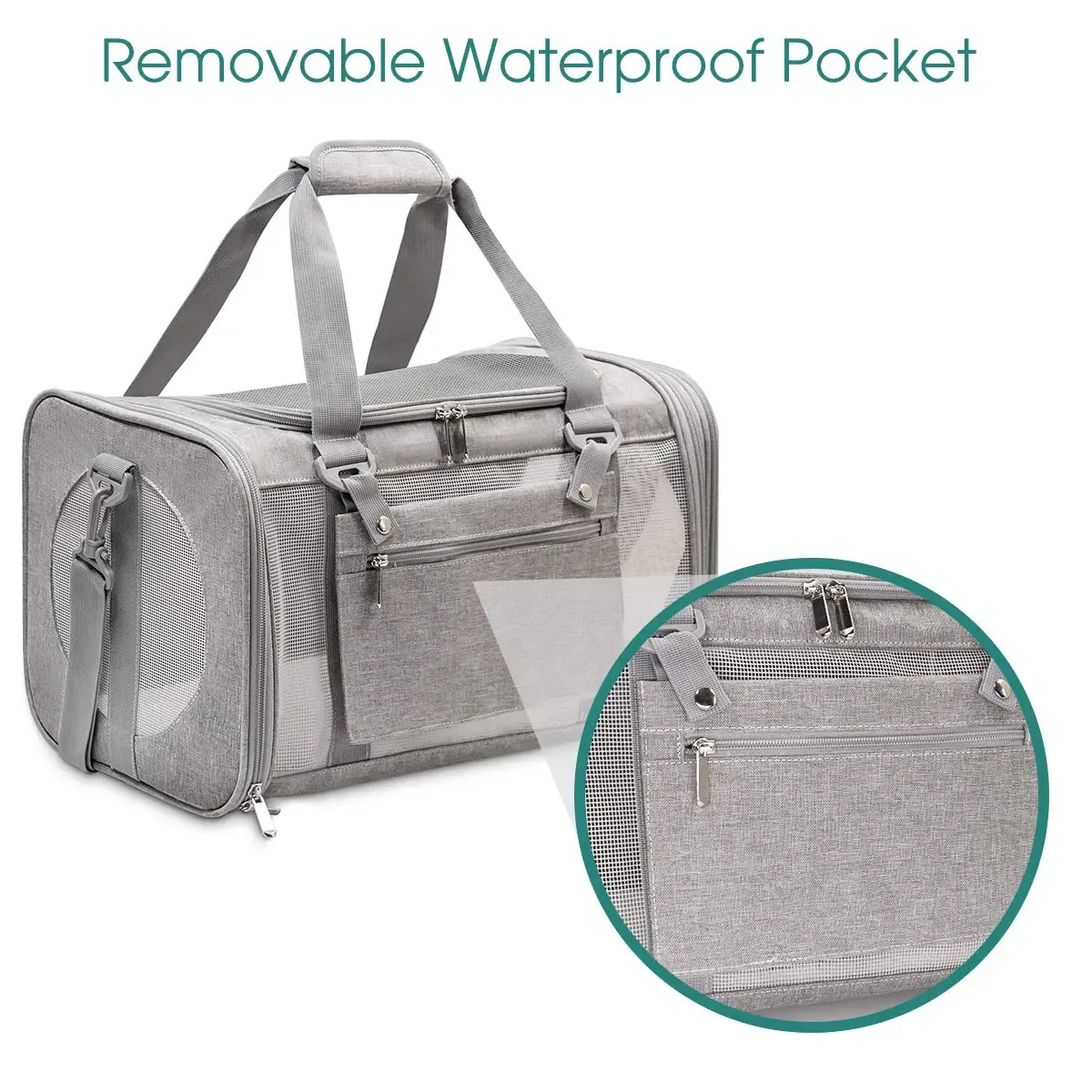
Entry geometry is the difference between a product used daily and one stored in a cupboard. An animal with painful hips or elbows will not step over a high sill, will not jump, and will resist being lifted because lifting hurts. The specification therefore has to remove the step entirely or reduce it below the threshold at which the animal will attempt it unaided.
A flat-opening side or a three-sided zip that opens almost to the base is the most reliable solution, because it converts a step into a walk-in. Buyers should specify the opening geometry in the tech pack with a dimension, not a description, and should verify it on a production sample by measuring the sill height at its highest point rather than at its lowest.
Where a sill is unavoidable, a gentle gradient helps more than a lower height. A fabric ramp or a chamfered base edge lets an animal walk up a shallow slope rather than step over a lip, and it costs very little to add. Buyers should test it with a weighted sample rather than assume the animal will manage.
Handles for lift assistance are the other half of the entry problem. Where the animal must be lifted, the owner needs short, rigid, well-anchored grab handles at both ends, bar-tacked and load-tested at the top of the weight band. Soft webbing loops are inadequate because they do not hold their shape under one-handed use.
- Opening geometry specified as a dimension, measured at the highest point.
- Flat-opening side as the default for animals that cannot step.
- Chamfered or ramped entry where a sill cannot be avoided.
- Rigid grab handles at both ends, bar-tacked and load-tested.
- Non-slip base so the bag does not move during entry.
Buyers should also consider the floor the product will be used on. A bag that is stable on carpet may slide on a hard veterinary floor, and an animal entering a bag that moves will refuse to use it again. Testing the base on both surfaces is cheap and prevents the most common field complaint in this category.
Weight of the empty product is the trade-off to manage alongside entry geometry. Lowering the entry and thickening the base both add weight the owner has to lift, and a product that is excellent for the animal may be discontinued by the owner because it is too heavy to move. Trimming structure away from non-load-bearing areas is a genuine design benefit here, not a cost saving, and buyers should set a target weight alongside the entry height.
Thermal comfort and the pain management context
Warmth genuinely helps stiff joints, and this is one of the few categories where a thermal feature is functionally justified rather than decorative. The specification problem is control: an animal that is warm and comfortable will not move away from a heat source that becomes excessive, and an insulated bag in a warm room can overheat an animal that cannot reposition itself.
The correct answer is a removable insulated layer rather than fixed insulation. An owner can use it in winter and remove it in summer, and the product works across the year rather than for one season. Buyers should specify the layer as removable, washable and storable, and should state its insulation value rather than describing it as thermal.
Reflective linings and heat-retaining fabrics are sometimes used and are generally less effective than a simple foam layer plus a removable cover. Buyers should be sceptical of thermal claims that do not come with a test or a stated material specification, because the effect in practice is usually small.
Ventilation must be preserved regardless. Two mesh panels as a minimum, positioned so they do not create a draught across the animal, and a cover panel the owner can close when warmth is wanted. This combination gives the owner genuine control and is the specification most veterinary reviewers accept.
Finally, owners should be told how to judge whether the animal is too warm. A short guidance note on the hangtag, covering the signs to watch for, is a low-cost addition that reduces both returns and welfare complaints.
Placement of the insulation matters as much as its specification. Insulating the base is what helps a stiff joint, because that is where the animal contacts a cold surface; insulating the walls and top mainly risks trapping heat. A base-only insulated insert delivers most of the benefit with a fraction of the thermal risk, and it is the configuration most veterinary reviewers prefer when they assess a sample.
Cover systems, washability and spares
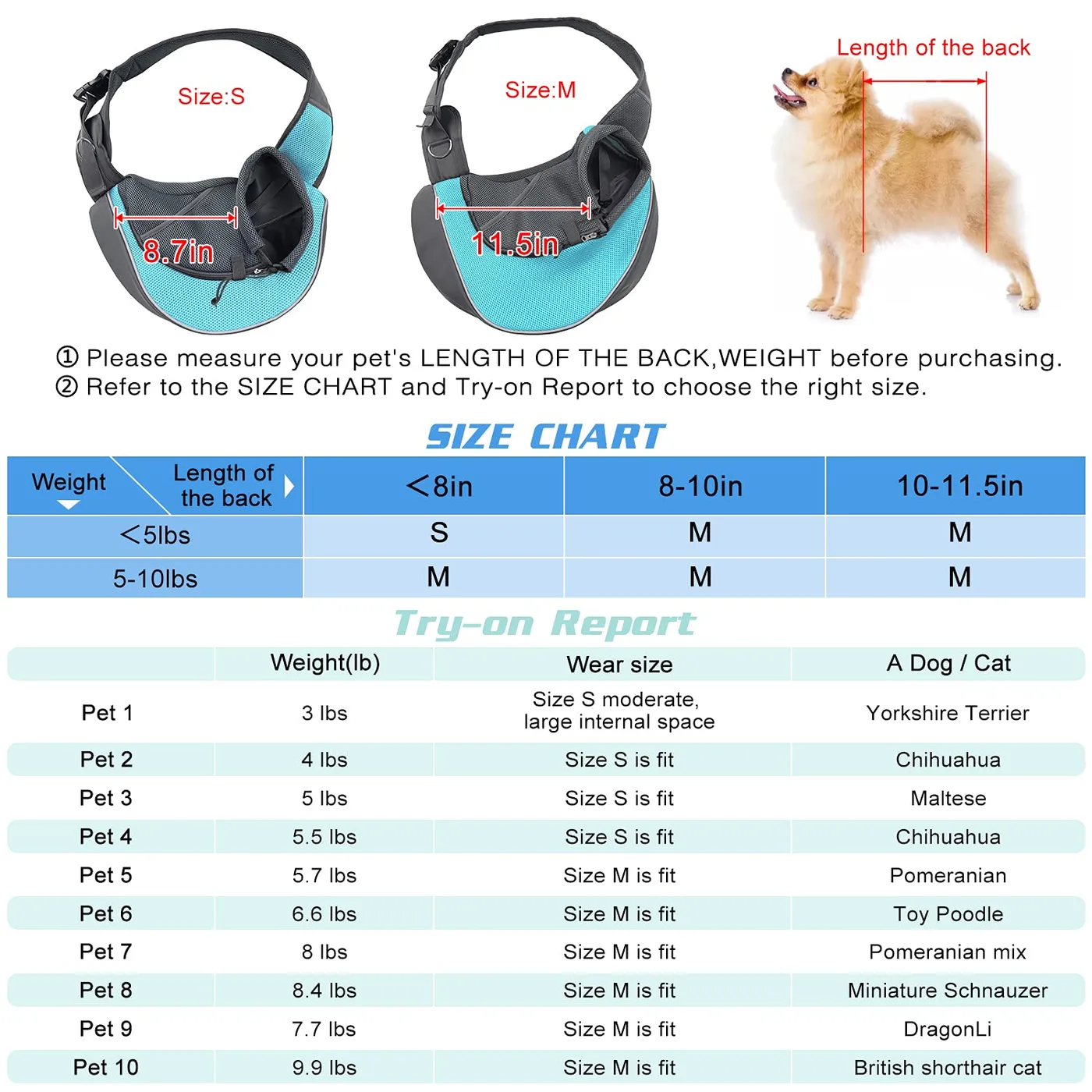
A base that cannot be cleaned will not be used for long. Animals with mobility problems have accidents, shed, and occasionally soil the surface, and a product that requires the whole bag to be washed is a product that stays in the cupboard after the first incident. The specification answer is a removable, washable cover over the foam, plus a wipeable interior.
The cover should be specified as a spare part from the first order. An owner washing a cover needs a second one, and covers carry a much better margin than bags while costing a fraction to produce. Buyers who stock covers from launch capture that revenue; buyers who discover the demand later lose it to whoever stocks first.
Seam sealing matters where the cover protects foam. An unsealed seam lets fluid reach the foam, and foam that has absorbed fluid is effectively ruined. Buyers should specify a sealed or bound seam on the cover and should test it with a standing-water check rather than by inspection.
Drying time is the companion specification. A thick, absorbent cover that takes a day to dry is a nuisance, and buyers should specify a cover construction that dries within a practical window under stated conditions. As with liners in other categories, owners effectively need two.
- Removable washable cover over the foam, specified from the first order.
- Sealed or bound seams on the cover, tested rather than inspected.
- Spare covers stocked as an accessory line with its own margin.
- Drying time stated under defined conditions.
- Wipeable interior so minor incidents do not require a full wash.
Testing: compression set, indentation and abrasion
Foam testing is what separates a specification from a claim. Three measurements matter: density, indentation load deflection and compression set. Density predicts durability, indentation describes how the surface feels under load, and compression set predicts whether it recovers. All three should be stated in the tech pack and recorded against the production lot.
Compression set testing is straightforward and should be specified with the conditions named: the load, the duration, the temperature and the recovery interval before measurement. Without those conditions the number is meaningless, and suppliers quoting a bare percentage are usually quoting something measured under favourable conditions.
Abrasion testing applies to the cover rather than the foam but matters just as much in daily use. A cover that pills or thins at the contact points exposes the foam, and once foam is exposed it degrades quickly. Textile abrasion and pilling test methods are published by organisations such as AATCC, and naming a recognised method removes the ambiguity that lets a marginal fabric pass.
Load testing applies to the grab handles and strap anchors and should be performed at the top of the stated weight band with a safety factor. This is the load path where failure causes injury to the owner or the animal, and it is the path most likely to be under-built in a competitive quote.
Independent approaches to pet product safety evaluation, including work published by the Center for Pet Safety, provide useful templates for setting internal acceptance criteria even where their programmes do not cover a specific product type. Buyers who adopt a named method, even an adapted one, hold a defensible position with distributors.
Compliance, claims discipline and the veterinary channel
Product compliance follows the standard expectations for the market: CPSIA lead and phthalate reports on accessible substrates for United States distribution, a Prop 65 assessment for California, and REACH SVHC declarations for Europe. Foam and any flame-retardant treatment should be covered by the declarations, because foam is frequently the component a certificate omits.
An OEKO-TEX certificate on the cover fabric and the interior is efficient and widely accepted, and it is particularly relevant here because the product has prolonged contact with an animal that may have thin or compromised skin at the contact points.
Claims discipline is the decisive factor in the veterinary channel. Distributors and practices will list a product described as supportive, cushioned and low-entry. They will not list one described as treating, healing or relieving arthritis, and a single therapeutic claim in the product copy can cost a listing that took months to secure. Buyers should write the copy with the distributor in mind rather than with the consumer.
The technical sheet is the practical tool for that channel. Stating the foam density, thickness, compression set, entry height, weight band, internal dimensions and cleaning protocol in one document answers most of the questions a veterinary buyer asks, and preparing it at specification stage costs a fraction of assembling it under listing pressure.
The retained sample and the test file complete the documentation set, and both are what allow a re-order to be verified against the approved specification rather than against a photograph.
Cost structure, MOQ and range economics
MOQ 500 per colour applies to the bag body, and foam and cover specifications carry their own minimums. Buyers should ask whether the proposed foam grade is a stock item, because specifying a stock grade rather than a custom one is frequently the largest single saving available, and the performance difference is often negligible if density and compression set are still met.
Cost is dominated by the base. Foam grade, thickness and cover construction account for most of the difference between the entry and premium tiers, which means a buyer on a budget should protect the base and cut elsewhere. Reducing decoration, pocket count and print coverage preserves the feature the customer is actually buying.
Cover spares are the margin opportunity. A cover costs a fraction of a bag, sells at a healthy multiple, and is bought repeatedly by the same customer. Ranges that stock covers from launch outperform ranges that treat them as an afterthought, and the accessory line also extends the life of the bag in the customer's home.
Sampling takes 6-10 working days and should include compression testing and a wash cycle rather than a visual check. Bulk production takes 35-50 days after sample approval and deposit, and inspection to AQL 2.5 should be supplemented with compression, indentation and load-path gates.
Freight deserves a final note because these products do not compress well. A thick foam base and a structured frame occupy carton space that a flat-packed bag does not, and landed cost per unit is correspondingly higher. Buyers should compare suppliers on landed cost including carton configuration rather than on FOB price alone, because the ranking frequently reverses once freight is counted.
Range structure should stay narrow at launch. Two sizes and one colour cover most of the market, and the second size should be added only once the sales mix shows it is needed. A range of four sizes opened at once commits four fabric minimums against demand that has not been measured, and this is the most common way a new entrant loses money in the category.
The re-order discipline is what makes the range profitable over time. Holding the foam specification constant, verifying compression performance per run and keeping the compliance file current allow a repeat order to be scheduled at the short end of the 35-50 day window, which is what lets a distributor hold stock rather than chase it.
Why brands source here
- Pet bag programmes run since 2014; founding team in sewn goods since 2004
- SGS-verified production floor of 4,950 m² with 137 workers across 7 lines
- Monthly capacity of 200,000 units, audited to BSCI and ISO 9001
People Also Ask
What makes a bag suitable for an arthritic pet?
A pressure-relieving foam base with a low compression set, a low or flat entry, a non-slip base and removable insulation so the owner can control warmth by season.
What foam density suits an arthritic pet bag?
Thirty to thirty-five kilograms per cubic metre for the veterinary channel and fifty or more for premium orthopaedic builds, always with compression set stated alongside density.
How low should the entry be?
Under seven centimetres where the animal will step in, or a flat-opening side where it cannot. An animal in pain will not step over a sill or jump.
Do arthritic pets need a warmed bag?
Warmth helps stiff joints, but fixed insulation risks overheating because a comfortable animal will not move away from it. Specify a removable layer.
How should a joint support bag be cleaned?
Through a removable washable cover with sealed seams and a wipeable interior, so a minor incident does not require washing the whole product.
Frequently Asked Questions
What is the MOQ for an arthritic pet bag?
MOQ is 500 pieces per colour on the bag body, with foam and cover specifications carrying separate minimums. Ask whether the proposed foam grade is a stock item, since that is often the largest available saving.
Which foam numbers should we specify?
Density, thickness, indentation load deflection and compression set, each with the test conditions named. Compression set is the number that predicts whether the base is still supportive after a year of use.
What entry height should we target?
Under seven centimetres for the veterinary channel, or a flat-opening side for animals that cannot step at all. Measure the sill at its highest point rather than its lowest.
Should insulation be fixed or removable?
Removable. Heat helps stiff joints but an animal that is comfortable will not move away from excessive warmth, so the owner needs seasonal control.
Why specify compression set rather than just density?
Density predicts durability; compression set predicts recovery after sustained load. A high-density foam with a poor compression set still flattens, and flattening is the most common complaint in this category.
Should the cover be a stocked spare?
Yes. Owners washing a cover need a second one, covers carry a better margin than bags, and stocking them from launch captures revenue competitors lose.
How long do sampling and bulk production take?
Samples take 6-10 working days and should include compression and wash testing. Bulk production is 35-50 days after sample approval and deposit.
What inspection gates apply beyond AQL 2.5?
Compression and indentation checks on the foam, plus a load test on grab handles and strap anchors at the top of the stated weight band with a safety factor.
Can the product be described as treating arthritis?
No. Supportive, cushioned and low-entry are acceptable. Therapeutic claims cost veterinary listings and create regulatory exposure for no commercial gain.
Which compliance documents are needed?
CPSIA lead and phthalate reports for the US, a Prop 65 assessment for California, REACH SVHC declarations covering the foam, and ideally an OEKO-TEX certificate on the cover and interior fabrics.
Where should we cut cost if the budget is tight?
Protect the base and reduce decoration, pocket count and print coverage. The base is the feature the customer is buying and the only one they will notice failing.
How should we compare supplier quotes?
On landed cost including carton configuration. These products do not compress well in a carton, and the ranking between suppliers frequently reverses once freight is counted.
Talk to QUANZHOU JUNYUAN BAGS about a wholesale pet bag order: MOQ 500 pieces per colourway, samples in 6-10 working days, bulk production in 35-50 days under AQL 2.5 inspection.
Get a free quote Request a sample