Insulated Pet Bag: Temperature Control
An insulated pet bag slows heat transfer through a liner stack rather than creating warmth: typically a reflective film over closed-cell foam or wadding, sealed so air cannot circulate. Done properly it holds internal temperature within a few degrees of the starting point for 30-60 minutes in moderate ambient conditions. It never reverses temperature, so claims must be written as retention, not as cooling or heating.
Executive summary. Insulated constructions are the most technical builds in the pet bag category and the ones where overstated claims create the most commercial damage. Our production team specifies the liner stack, reflective layer, seam sealing and closure geometry together, because each one independently leaks performance, and we test finished assemblies rather than material swatches. Quotations assume MOQ 500 pieces per colourway.
Development is sequenced rather than parallel: sampling takes 6-10 working days after the tech pack is frozen, and bulk production takes 35-50 days after sample approval, largely because reflective laminate and closed-cell foam are mill-booked items that must be ordered before cutting begins. Pre-shipment inspection follows AQL 2.5 with critical defects at zero tolerance, and thermal test results from the first bulk lot are issued with the inspection report so reorders have a defensible comparison baseline.
Three decisions determine most of the outcome: which liner stack, how well the envelope is sealed, and what claim you will put on the product page. Getting the third wrong is the expensive one.
Wholesale waterproof pet bags and wholesale 600d pet carrier lines are quoted against coating weight rather than against fabric name, and Material & Technology specs have to say which test method applies. Wholesale durable pet carriers then hold their price because the failure cost - a returned unit - is far higher than the coating premium.
What insulation actually does inside a pet bag
Insulation never generates temperature. It slows the exchange of heat between the bag interior and the environment, which means a bag starting warm stays warm longer and one starting cool stays cool longer, and neither becomes something it was not. Every credible product claim follows from that single physical fact, and almost every problematic claim ignores it.
Three mechanisms do the work. Conduction is slowed by low-conductivity materials trapped in still pockets of air, supplied by foam or wadding. Radiation is slowed by low-emissivity reflective films facing an air gap. Convection is stopped by sealing, since any path that lets air move between interior and exterior bypasses both other mechanisms instantly.
The animals add complexity that packaging engineers do not face: they generate heat and moisture continuously, and the interior must not become a sealed wet box. Effective designs therefore pair insulation with ventilation that can be closed, which means owners get temperature retention when they want it and air exchange when they need it.
The practical result buyers can honestly describe is retention time: how long a starting temperature is maintained within a stated band under stated ambient conditions. Everything else - warming pets, cooling pets, maintaining comfortable conditions indefinitely - either implies active components or overstates passive performance.
Finally, remember what insulation costs you: bulk. Achieving meaningful retention requires thickness, thickness consumes internal volume, and internal volume is what customers compare on a product page. Publishing interior dimensions is both honest and commercially necessary.
The commercial consequence of that mechanism is that insulation is a rate control rather than a heat source, and programmes that describe it otherwise attract complaints they cannot answer. An insulated build slows the approach of the interior toward ambient temperature; it does not hold a set temperature indefinitely and it does not generate warmth. Buyers who write both the specification and the listing around the first description build products that match expectations, while those who write around the second spend the season explaining the difference to customers.
The liner stack: four builds compared
Insulated builds differ mainly in what sits between the outer shell and the interior lining, and the differences show up immediately in both cost and thickness. Four configurations cover the commercially sensible range.
Wadding or non-woven batt is the simplest and cheapest, providing loft that traps air. It performs adequately, compresses over time, and is best suited to mild-climate products where the claim is light. Closed-cell foam sheet performs better per millimetre, resists compression, adds structure and costs more, making it the mainstream choice for genuine retention claims.
Reflective laminate is the multiplier. Bonding a metallised film to one face substantially cuts radiant transfer, and it occupies almost no thickness, so efficiency improves without reducing internal volume. Reflective layers must face an air gap to work, which means they cannot simply be bonded flat against the foam on both sides.
Double reflective configurations, with film facing an air cavity on both sides of the foam core, deliver the best passive performance available at reasonable cost and are the specification most professional programmes converge on. Consistency of the air gap matters; compressed or glued-flat cavities lose most of their benefit.
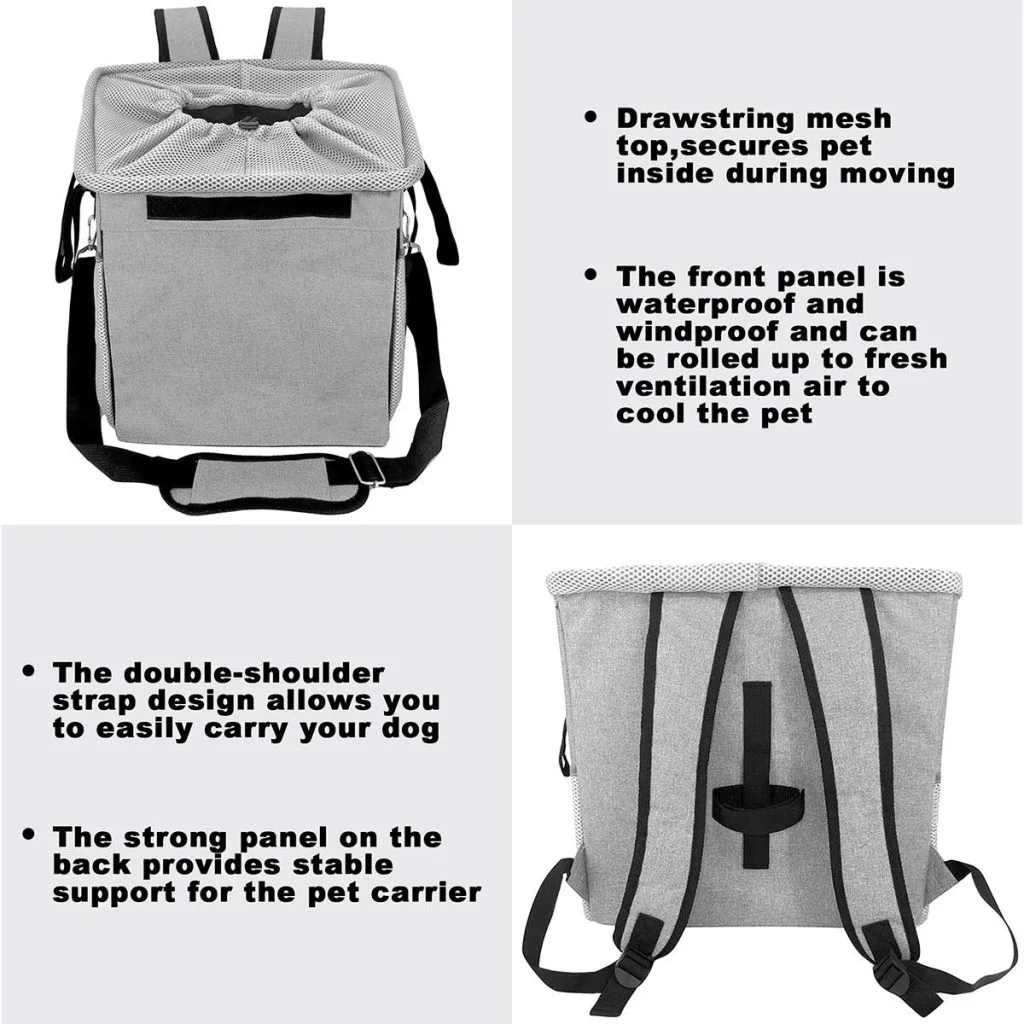
Build options compared for cost and retention
The table below summarises representative builds with indicative performance figures expressed as the temperature change observed in a standardised 60-minute bench protocol at 20 C ambient, starting from a conditioned interior. Treat the figures as comparative rather than guaranteed, since construction detail dominates outcomes.
| Build | Liner stack | Thickness | Temp. change / 60 min | Cost index | Best use |
|---|---|---|---|---|---|
| Loft wadding | 120 gsm batt | 6-8 mm | 4-6 C | 1.00 | Mild-climate everyday bags |
| Single-face foam | 3 mm EPE, one reflective face | 6-8 mm | 3-4 C | 1.35 | Mainstream insulated totes |
| Double reflective core | 4 mm EPE plus air gaps both faces | 9-12 mm | 2-3 C | 1.70 | Genuine retention claims |
| High-loft synthetic | 200 gsm wadding plus film | 12-16 mm | 2-3 C | 1.55 | Soft-sided travel formats |
| Vacuum panel insert | Evacuated core panel | 10-14 mm | 1-2 C | 3.20 | Specialist or professional use |
Reading this table well requires attention to the thickness column, because internal volume lost to insulation directly affects suitability for a given animal. A 12 mm build may deliver excellent retention while making the bag too small for the size class you intended, which is why insulation must be decided before the pattern.
Note also the diminishing returns. Moving from the first to the third row roughly halves temperature drift at moderate cost; moving to vacuum panels buys a smaller gain for roughly double the outlay, and introduces handling fragility into a product that will be dragged around by customers.
Sealing the envelope: where performance actually leaks
Most insulated bags fail at joints rather than through panels, and buyers who focus on liner thickness while ignoring sealing routinely end up with products that test badly despite good material. Four leak paths account for nearly all losses.
- Closures. A zip without a baffle is an open chimney. Specify a covered zip with an insulated flap behind it, and test with the closure in the customer's likely position, not perfectly seated.
- Seams. Stitched seams through a liner create conduction and convection paths. Taped or welded seams perform substantially better and are worth the added process.
- Panel junctions. Where the base meets the side, compression tends to crush insulation and eliminate air gaps. Reinforced corners preserve the specified thickness.
- Ventilation openings. Necessary, but each open panel breaks the envelope. Roll-down flaps let owners seal them when retention matters.
The cheapest improvement is usually drafting elimination: adding a simple insulated baffle behind the main closure typically improves measured retention more than doubling liner thickness, at a fraction of the cost and no loss of internal volume.
Objective verification matters here because these effects are invisible in a photograph. Structured test methods catalogued by ASTM International and third-party laboratory services through SGS let buyers compare two constructions rather than trust two descriptions.
Leakage is better ranked than listed, because remediation budget is always finite. In practice the largest loss is an unsealed closure, followed by conductive loss through a compressed base panel where the animal's weight flattens the loft, followed by the seams themselves. Buyers with a limited budget should therefore spend it on closure design and a structured base before adding insulation thickness, since the first two remove leaks while the third only adds material behind them.
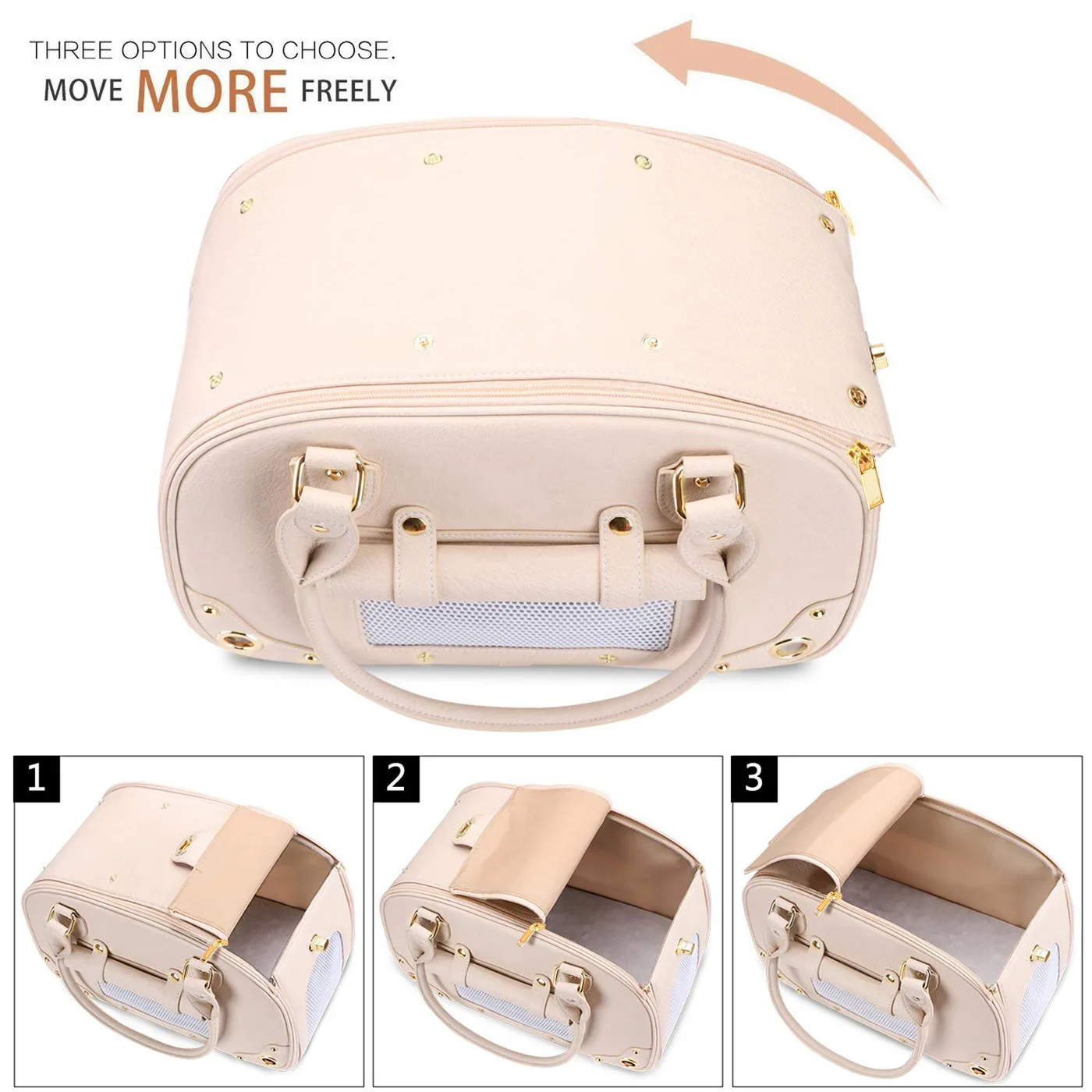
Testing retention: a protocol buyers can reproduce
A credible thermal test is less complicated than buyers expect and far more valuable than none. The essential elements are conditioning, control, measurement and repetition, and each can be performed without specialist equipment.
- Condition. Bring the empty test unit and the ambient space to a stable stated temperature, typically 20 C, and hold for several hours.
- Charge. Introduce a stabilised heat source of defined output, or pre-conditioned water mass, representing the animal, and close the unit.
- Measure. Record interior temperature at fixed intervals using a calibrated logger, with ambient recorded in parallel.
- Compare. Run an uninsulated control unit simultaneously, so the result is a relative improvement rather than an artefact of ambient conditions.
- Repeat. Three cycles minimum, discarding the first, because assembly tolerances settle.
Report ambient, starting temperature, method and sample count with every result. A figure without those parameters is not verifiable and will not survive a marketplace substantiation request.
Our own protocol attaches this data to the first bulk inspection, allowing reorder decisions to be judged against a recorded baseline rather than a fresh debate each season.
The protocol should also be written into the purchase order so that reorders remain comparable with the first shipment. Name the start temperature, the ambient condition, the thermal load, the duration, the sensor positions and the pass level, and require the report in the same format every time. Without that, a second-season result differing from the first cannot be attributed either to a material change or to a measurement difference, and the buyer has no basis for any claim.
Writing claims that survive scrutiny
The most important commercial work in an insulated programme happens on the product page, not in the sample room. Claims must be specific, conditional and substantiated, and each one should be traceable to a test result held on file.
Acceptable claims describe retention under stated conditions, cite duration and temperature band, and clarify that the product slows change rather than creating it. Unacceptable claims promise cooling, state performance without conditions, imply indefinite maintenance of interior temperature, or extrapolate from material properties rather than finished-product tests.
The legal exposure is real across most major markets, but the commercial exposure usually bites first: marketplace review sections fill with disappointed customers who expected an active effect, and no amount of returns processing restores the listing's performance. Independent testing and clear language prevent the whole sequence.
Finally, decide what the buyer-facing accessories do. Insulated liners combined with cooling gel packs can extend perceived cooling meaningfully, but once again this is retention of an externally generated condition, not generation, and should be described accordingly.
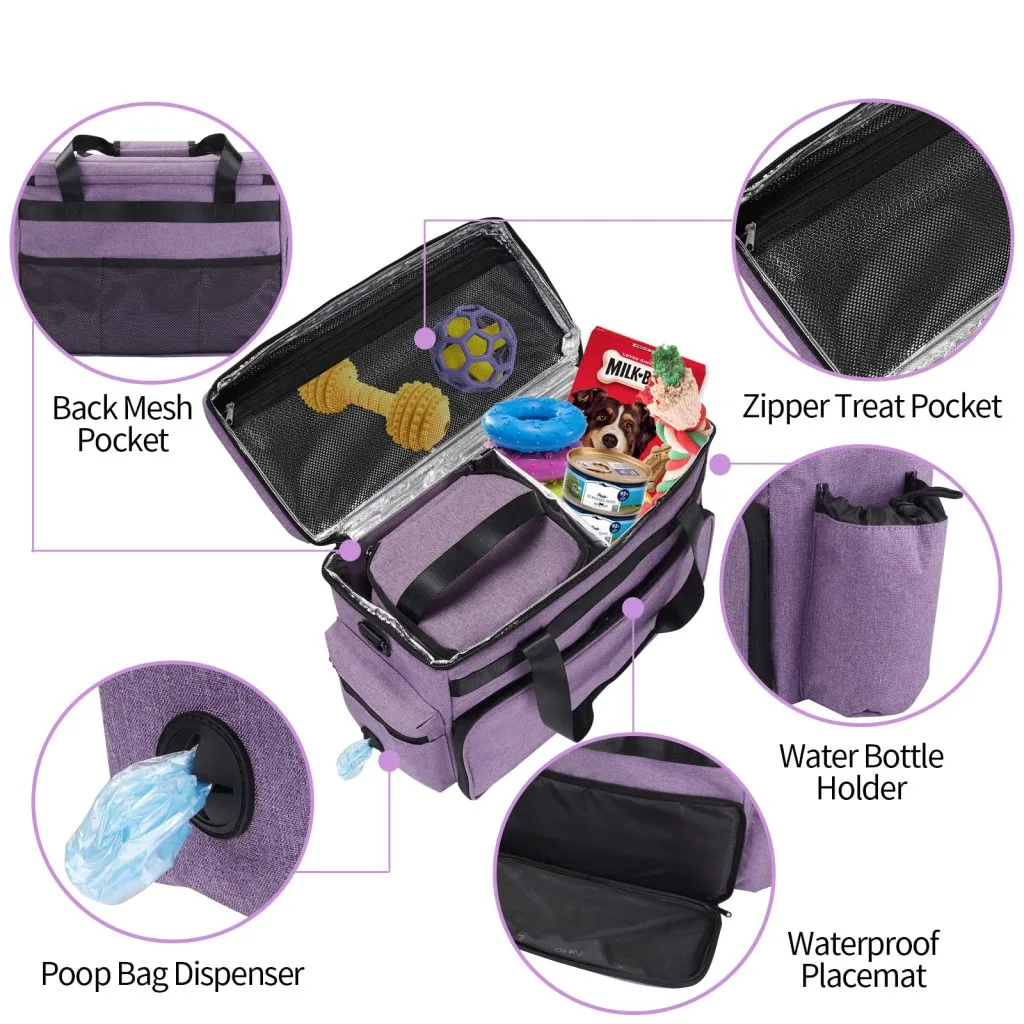
Parameter comparison: writing the insulated specification sheet
An insulated pet bag is the one construction in this category where the specification sheet does more commercial work than the sample, because the property being sold cannot be seen. Buyers who specify insulation by thickness alone tend to be disappointed twice: once at sampling, when the thermal result does not match the number, and once at listing, when they cannot answer a retailer's question.
Six parameters belong on the sheet. Insulation thickness and its compressed thickness, because loft that collapses under quilting does not insulate. Layer count and order, because a reflective film only works where it faces an air gap. Reflective layer specification, including whether it is a metallised film or a foil laminate and on which face it sits. Weight per unit area of the whole stack. Internal volume retained after insulation, measured on a finished unit. And the closure detail at every opening, since an unsealed zip is the largest single leak in most builds.
| Parameter | Entry build | Mid build | Performance build | Why it matters |
|---|---|---|---|---|
| Insulation thickness | 4 mm | 8 mm | 12-15 mm | Loft drives retention, not thickness alone |
| Compressed thickness after quilting | 2.5 mm | 5 mm | 8-10 mm | Quilting removes loft silently |
| Stack layers | 2 | 3 | 4 | Air gaps do part of the work |
| Reflective layer | None | Metallised film, inner face | Foil laminate, both faces | Needs an air gap to function |
| Weight of stack | 180-240 gsm | 320-420 gsm | 520-680 gsm | Drives freight and listing weight |
| Internal volume retained | 92% | 84% | 76% | The number customers actually feel |
| Cost index | 1.00 | 1.45 | 1.95 | Rises faster than thickness |
The last two rows are the ones buyers ignore and later regret. Volume retained is what the customer experiences, and a performance build consuming a quarter of the interior has silently changed the size band the product sells into. Cost rising faster than thickness is equally predictable: doubling insulation thickness does not double material cost, but it does add seam length, bulk handling and packing volume, and all three are labour lines.
Written this way the sheet becomes a negotiation tool. A buyer can ask for the reflective layer to be moved to the correct face, or for quilting density to be reduced to preserve loft, and both requests cost less than adding 4 mm of insulation that the quilting then compresses away.
Testing should reference the sheet rather than the marketing copy, and recognised material and thermal methods published by ASTM give both sides a common language for what the numbers mean.
Two further entries are worth adding wherever the programme will run for more than one season: a tolerance on compressed thickness and a stated quilting density. Compressed thickness is the parameter that drifts between lots, because it depends on how tightly the quilting is set on the day, and a tolerance of plus or minus half a millimetre is both achievable and worth specifying. Quilting density should be given either as stitches per centimetre or as a pattern reference, since it is the variable that decides whether the loft survives production at all.
Channel onboarding: documents, listing data and inspection evidence
Insulated builds meet more onboarding friction than any other construction in the range, because the claims attached to them are the claims retailers scrutinise hardest. Three packages have to be ready before the listing conversation starts.
The first is the compliance file: composition declarations for every layer in the stack, restricted-substance reports for the outer fabric, the insulation and any reflective film, plus the adhesive where layers are bonded. Reflective films and metallised layers are the components most often missing, because buyers assume they are inert, and they are the ones auditors ask about first. Component-level certificates issued under scheme criteria published by OEKO-TEX are the form most retailers accept without further questions.
The second is the performance evidence. Any retention claim on the listing needs the protocol behind it: start temperature, ambient condition, thermal load, duration and measurement points. A report stating only a duration is not evidence, and marketplaces increasingly ask for the method rather than the conclusion.
The third is listing data, and it is where most avoidable returns originate. Insulated products are heavier and smaller inside than they look. Publish internal dimensions measured on a finished production unit, publish the packed weight, and state the size band by animal weight rather than by external measurement. Programmes making these three changes routinely reduce fit-driven returns without touching the construction.
Inspection closes the loop. Pre-shipment inspection at AQL 2.5 should add two checks specific to insulated builds: quilting integrity, because a broken quilt line lets insulation migrate and leaves cold spots, and closure performance at every opening, because a gap at a zip defeats the entire stack. Critical defects - broken quilting at a load point, a failed closure, a missing layer - carry zero tolerance, and inspection at AQL 2.5 with critical defects at zero is the standard applied across these programmes.
Terms are unchanged: MOQ 500 pieces per colourway, sampling in 6-10 working days, bulk in 35-50 days after sample approval, T/T 30/70 and FOB Xiamen. One planning note applies specifically here: insulated builds pack bulkier than their weight suggests, so carton and freight planning should be done from volume rather than gross weight, particularly where air freight volumetric charging applies.
Buyers should also decide who owns the file. In most programmes the compliance documentation is assembled once by whoever placed the first order and then decays, because nobody is responsible for refreshing it when a reordered component changes supplier. Assigning ownership to whoever raises the reorder, with expiry dates visible on the same page as the style number, is a small administrative change that removes the most common cause of a failed retailer audit.
Cost, volume and the internal dimension trade-off
Insulated builds cost more in three places: materials, labour and freight. Materials are straightforward, with reflective laminates and closed-cell foam priced by the metre and by thickness. Labour rises because taping seams, setting baffles and handling thicker assemblies all take longer on the line. Freight rises because insulation increases packed volume even where it adds little mass.
The internal dimension trade-off deserves particular attention in specification. Every millimetre of liner reduces usable interior, so the outward size of the bag must increase to maintain the same animal capacity, which further increases both material and freight. Programmes frequently discover that their insulated version of a successful standard bag holds a smaller size class than intended.
The best economics usually come from modular design: a removable insulated insert sold alongside a non-insulated bag. Buyers capture performance where it matters, keep the base unit lean and gain an accessory line with stronger margin and higher reorder frequency.
MOQ behaviour follows standard practice at 500 pieces per colourway, though reflective laminates occasionally carry mill minimums above the equivalent unit count; we flag those during quotation rather than after order confirmation.
Volume planning follows the same logic as the cost model. Because insulation consumes interior space, one external shell size can serve two size bands depending on stack thickness, which means a buyer can cover more of the market with fewer tooling sets by varying the stack rather than the pattern. Programmes that exploit this save both development cost and the sampling rounds a second pattern would require.
Specifying your first insulated programme
A workable insulated tech pack contains seven fields, and missing any one of them produces either a performance surprise or an avoidable cost escalation later.
- Liner stack composition with layer sequence and individual thicknesses.
- Reflective layer specification, including which face it sits on and what air gap it faces.
- Seam construction: welded, taped or stitched, stated explicitly per seam location.
- Closure specification with baffle or flap geometry.
- Ventilation design and how openings seal.
- Interior dimensions after insulation, in addition to external dimensions.
- Thermal performance target with the test protocol, ambient condition and duration stated.
With these seven fields agreed, our production team samples in 6-10 working days and produces in 35-50 days under AQL 2.5 inspection, with test results attached to the first lot. Buyers deciding between retention strategies often compare this guide with our notes on material selection and on active warming options, since passive and active approaches answer different customer problems.
The closing discipline is to freeze the stack early and vary only what customers can see. Choose the insulation build once, validate it with a single retention test, then differentiate the range through shell colour, trim and closure detail. That approach produces a family of products sharing one thermal result, one compliance file and one inspection protocol, and it keeps the second season a reorder rather than a second development cycle.
Production capability
- SGS-verified production space of 4,950 m², 149 machines, 7 assembly lines
- Pet bag output since 2014 from a 137-person team
- 200,000 units shipped monthly under BSCI and ISO 9001 systems
People Also Ask
What is an insulated pet bag?
A pet bag built with a low-conductivity liner stack and reflective layer that slows heat exchange with the environment, allowing interior temperature to be retained longer than in an uninsulated bag.
Do insulated bags need refrigeration packs?
Not required for warmth retention, but useful for extending a pre-cooled condition in summer. The bag retains whatever condition you create.
How thick should pet bag insulation be?
Six to twelve millimetres covers most programmes, with diminishing returns beyond that. Prioritise air gaps and closure sealing before adding thickness.
Can insulation be washed out or compressed?
Closed-cell foam resists compression; wadding flattens over time. Specifying foam where longevity matters prevents gradual performance loss.
Is mylar lining the same as insulation?
Mylar or metallised film is the reflective component rather than the insulation itself. It works alongside foam or wadding, not instead of it.
Are insulated bags suitable for air travel?
Yes, where ventilation requirements are met and the closure meets airline rules. Check carrier conditions before finalising a design intended for cabin use.
Frequently Asked Questions
Does an insulated pet bag keep pets warm?
It slows heat loss, so a bag that starts warm stays warm longer. It does not generate heat. Any claim should be written as retention under stated conditions rather than as warming.
How long does insulation hold temperature?
A well-built double-reflective construction typically holds interior temperature within 2-3 C of start over 60 minutes at moderate ambient. Poorly sealed closures can erase most of that advantage.
Is thicker insulation always better?
No. Sealing and air gaps matter more per millimetre, and thickness consumes internal volume. Adding a closure baffle frequently outperforms adding material.
What is the reflective layer for?
It reduces radiant heat transfer. It must face an air gap to function, so simply bonding film flat against foam delivers little benefit.
Can insulated bags be used in summer?
Yes, for keeping a pre-cooled interior cool for a limited period, especially with a cooling pack. They do not actively cool, and should always be paired with adequate ventilation.
Are insulated bags heavier?
Moderately heavier and noticeably bulkier. The volume increase affects freight more than the weight does, particularly on sea and parcel shipments.
Do insulated bags breathe?
Less than uninsulated ones, which is why ventilation with closable flaps should be designed in rather than omitted.
How should I test an insulated sample?
Condition at stated ambient, introduce a stabilised heat source, log interior and ambient temperatures at fixed intervals, run an uninsulated control in parallel and repeat at least three cycles.
What claims are defensible on a listing?
Retention claims stating duration, temperature band and ambient condition, backed by a test you hold on file. Avoid promises of cooling or indefinite temperature maintenance.
Should insulation be removable?
Often yes. A removable insert keeps the base unit lean, preserves internal volume for everyday use and creates an accessory revenue line.
Does insulation affect MOQ?
Standard threshold is 500 pieces per colourway. Reflective laminates occasionally carry higher mill minimums, which we confirm at quotation stage.
How much does insulating add to cost?
Commonly 20-45% on unit material and labour depending on build, with the upper end applying to welded-seam designs with baffled closures.
Which parameters belong on an insulated pet bag specification sheet?
Insulation thickness and compressed thickness after quilting, layer count and order, reflective layer type and face, stack weight, internal volume retained measured on a finished unit, and the closure detail at every opening.
Does insulation change the size band a product sells into?
Yes. A performance stack can consume a quarter of the interior, so the internal volume retained should be measured on a finished unit and the size band stated by animal weight rather than by external dimensions.
Talk to QUANZHOU JUNYUAN BAGS about a wholesale pet bag order: MOQ 500 pieces per colourway, samples in 6-10 working days, bulk production in 35-50 days under AQL 2.5 inspection.
Get a free quote Request a sample