Cooling Pet Bag: Heat Relief
No passive pet bag cools an animal; the honest options either remove borrowed heat faster or slow heat gain. Practical results: evaporative panels drop contact surface temperature 2-4 C for 40-90 minutes, phase-change packs hold their transition point for 60-180 minutes, and reflective shells cut radiant gain by 20-30%. Claims must describe heat relief, never active cooling.
Executive summary. Cooling is the most claim-sensitive category in pet bag sourcing, because a small performance gap becomes an animal welfare complaint rather than a product return. Our production team therefore specifies cooling builds as systems - panel, pack pocket, barrier and airflow path - and tests the assembled unit rather than certifying a component in isolation. Quotations assume MOQ 500 pieces per colourway.
Development follows the standard calendar with one addition: samples take 6-10 working days after the tech pack is frozen, bulk production takes 35-50 days after approval, and the cooling components themselves are sourced and tested in parallel because their supply chains differ from textile ones. Shipments clear pre-shipment inspection at AQL 2.5 with zero tolerance for critical defects, and any article-level chemical declaration for gels or treated fabrics is collected before booking rather than before shipping.
The single most important decision is written into the listing before production: what the product can honestly claim, under which conditions, for how long. Everything downstream follows from it.
Wholesale pet bags usa and wholesale pet bags europe run on different compliance files, so Material & Technology documentation should be prepared per destination rather than once. Export pet bags with the country-of-origin marking fixed at packing stage, because relabelling at the port costs more than the whole print run.
Four ways a bag can reduce heat load
Heat relief in a passive product is achieved through one of four physical routes, and understanding which route applies prevents most of the specification confusion buyers encounter when comparing quotations.
Evaporative cooling uses phase change of water. A hydrophilic panel holds moisture, evaporation draws energy from the immediate surface, and the contact area measurably drops in temperature. It works best in dry air, degrades in humidity and requires the owner to wet the panel, which is a behaviour dependency that must be explained in packaging.
Phase-change packs absorb heat at a fixed transition temperature. Frozen or chilled before use, they hold that temperature until their latent capacity is exhausted, giving predictable and repeatable performance over a defined window. They add weight, require freezer access and need careful containment to avoid direct skin contact.
Reflective shells reduce radiant gain. Light-coloured, low-absorbency exterior fabrics with metallised intermediate layers cut the energy entering the bag substantially, which is especially relevant for bags used in direct sun - car interiors, patios, summer events.
Finally there is convective relief, which is essentially ventilation done properly. See our dedicated guide to mesh ventilation design, since airflow interacts with every other cooling approach and frequently delivers the largest gain per pound spent.
Those four mechanisms also differ in what they cost to validate, and that difference should shape which one a programme commits to. Reflective shells and ventilation are verified with material and dimensional measurements that most suppliers can run in-house. Evaporative panels need a timed test under controlled humidity, and phase-change packs need instrumented thermal measurement. Buyers without access to a chamber should prefer the first two mechanisms for a first season, because the evidence is both cheaper to produce and easier to reproduce.
Comparing cooling strategies on performance and risk
The table below compares the four strategies across onset time, duration, cost and the operational risks that determine whether customers actually experience the benefit. Duration figures assume moderate ambient conditions and correct use; performance falls sharply in high humidity for evaporative systems.
| Strategy | Onset | Effective duration | User dependency | Cost index | Primary risk |
|---|---|---|---|---|---|
| Evaporative panel | 5-15 min after wetting | 40-90 min | High - must wet before use | 1.00 | Ineffective in humid climates |
| PCM gel pack insert | Immediate after chilling | 60-180 min | High - needs freezer | 1.45 | Punctured pack contents exposure |
| Reflective shell | Immediate | Continuous | None | 1.25 | Overstated solo performance |
| Airflow optimisation | Immediate | Continuous | None | 1.10 | Requires careful panel placement |
The most effective commercial products combine rows rather than choosing one. A reflective shell with generous ventilation plus a pocket for a removable PCM pack performs well across more conditions than any single approach, and it lets customers self-select how much heat relief they need on a given day.
Note the user dependency column carefully. Products with high dependency perform brilliantly when used correctly and generate complaints when forgotten, so instructions must be prominent on the product page and, ideally, printed into the pack. This is a packaging cost that prevents a returns wave.
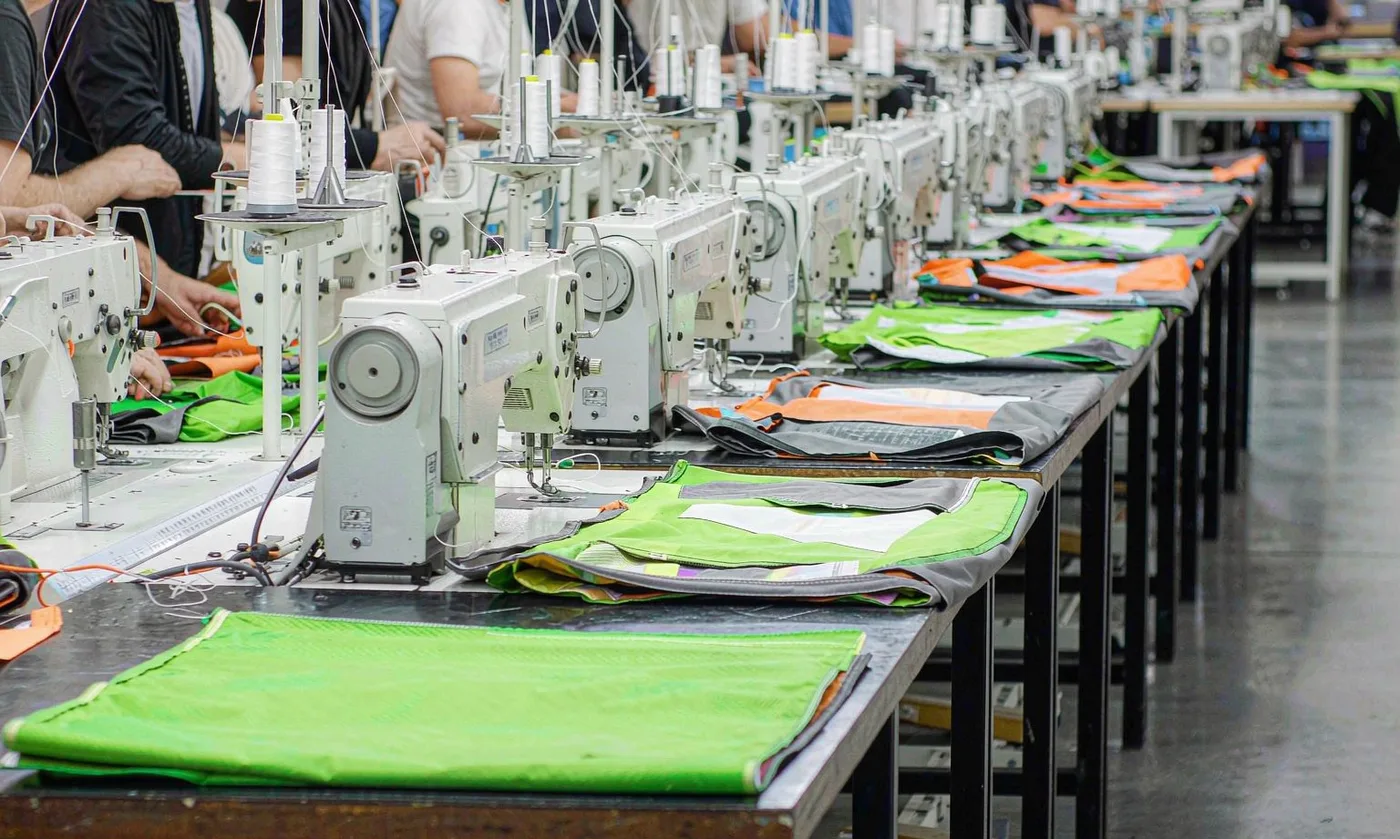
Evaporative panels: specification and honest limits
Evaporative cooling fabric is typically a multi-layer construction: a hydrophilic outer face that holds water, an absorbent core that stores it and an inner barrier that keeps moisture from reaching the interior lining. Each layer must be specified, because cheap constructions frequently omit the barrier and arrive damp against the animal.
The critical specification is water holding capacity relative to surface area, expressed simply enough that a customer can follow the instruction. Overly complex guidance results in under-wetted panels that deliver nothing, and the product gets blamed for a usage problem.
Climate suitability is the honest constraint. Evaporation rate depends on the vapour pressure gradient, so in dry inland summer conditions these panels perform impressively, while in tropical humidity gains become marginal. Buyers selling into both should either choose a different strategy for humid markets or state the limitation clearly in listing copy.
Finally, consider hygiene. Panels that hold water also host microbial growth when stored damp; specifying quick-drying constructions and clear storage guidance prevents the mildew complaints that follow any water-holding component.
The specification should also state the re-wetting interval and the care instruction together, because an evaporative panel that is never re-wetted delivers nothing after its first dry-out, and a customer who was not told will conclude the product is defective. Publishing the interval turns a limitation into an instruction, and products presented that way attract markedly fewer complaints than those described as continuously cooling.
Phase-change packs: safety, containment and transport
PCM packs deliver the most predictable cooling performance available in a passive product, and they carry the highest regulatory burden. Three requirements dominate.
- Containment. Packs must sit in a dedicated closed pocket, separated from the animal by padding, so a puncture cannot lead to contact with contents. Sealed stitch construction and reinforced pocket seams are part of the specification.
- Composition. Pack contents must be documented and non-toxic, with declarations held at article level. Any gel component in a pet product attracts justified scrutiny, and evidence rather than assurances is what retailers request.
- Transition temperature. Packs should not freeze solid at typical domestic freezer temperatures in a way that makes them rock-hard; select a formulation whose phase change sits above freezing for comfort contact.
United States considerations may include consumer product safety expectations, and the framework administered by the Consumer Product Safety Commission is the reference point most marketplaces and retailers apply. European placements add chemical documentation responsibilities referenced through ECHA.
Independent testing providers such as SGS can verify both composition and physical safety before shipping, converting supplier declarations into evidence a marketplace accepts.
Transport classification should be settled before the first shipment rather than at the booking stage. Most phase-change fills used for ambient relief are unremarkable, but the determination depends on composition and on quantity per package, and discovering a classification requirement after goods are packed is expensive. Buyers should request the composition declaration and the safety data sheet at quotation and pass both to their freight forwarder together with the carton specification.
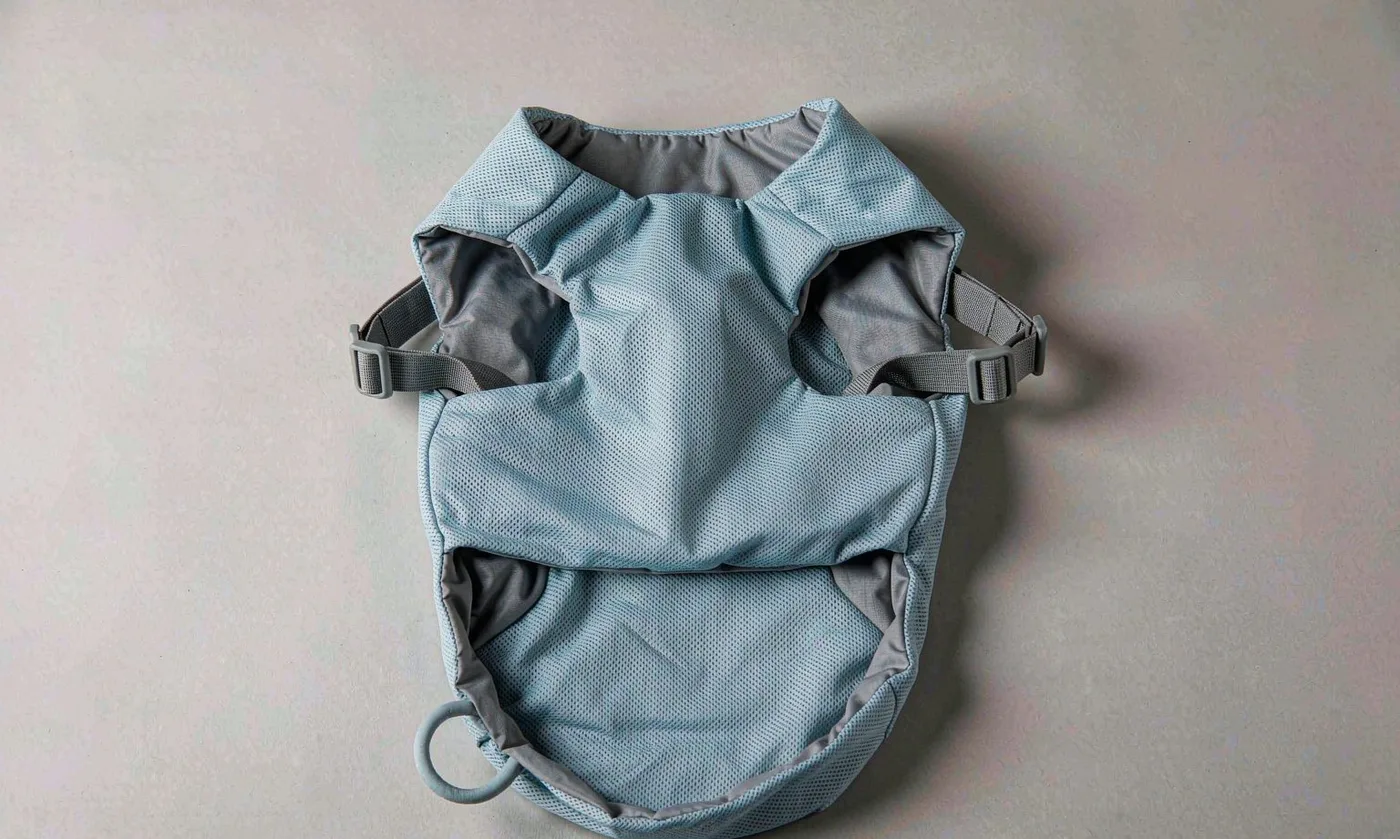
Reflective shells and radiant control
Radiant heat is the dominant load whenever a bag sits in sunlight, which makes exterior specification the cheapest cooling measure available and the one most often overlooked. A light-coloured, low-absorbency outer fabric metallised or laminated internally can cut surface temperature substantially compared with a dark textile shell.
Colour choice matters more than most buyers assume. A mid-grey or light shell may run tens of degrees cooler in direct sun than a black equivalent at identical construction. For summer ranges, this argues for restricting the palette to lighter tones even where your brand identity favours darker ones.
Placement of the reflective layer follows the physical rule: the barrier should sit close to the outer face with the insulation inside it, so radiant energy is rejected before entering the wall rather than after.
Retain the aesthetic trade-off honestly. Light shells show soiling more readily, which is a stain-resistance finish question rather than a reason to abandon the approach, and it belongs in the costing discussion before sampling rather than after.
Reflectance should be measured on the finished fabric rather than taken from the film supplier's data sheet, because coating, embossing and lamination all reduce it, and a fabric quoted at high reflectance can lose a meaningful share of that value in finishing. Buyers should also note that reflectance degrades with soiling and abrasion, so a reflective shell performs best when new - which is an argument for presenting it as an assist rather than as a guarantee.
Testing heat-relief performance reproducibly
A defensible cooling test is comparative, instrumented and repeatable, and it costs little more than doing informal validation badly. Five elements are sufficient.
- Ambient control. State temperature, relative humidity and radiant conditions; without them, results are not comparable between seasons.
- Conditioning. Bring all test units to the same starting condition and hold long enough to stabilise.
- Instrumentation. Use calibrated loggers at the contact surface and in the air space rather than infrared spot checks, which read materials rather than air.
- Reference unit. Test a non-cooling control simultaneously to express gain as an improvement over baseline.
- Repetition. At least three cycles, with median rather than best reported.
Document everything and keep the file. When a marketplace or retail buyer asks for substantiation, having a test protocol prepared at development stage costs nothing, whereas reconstructing it later usually means paying for another test.
Reproducibility also depends on what is used as the load. A water-filled thermal mass of stated volume gives stable, comparable results; a live animal does not, because posture, coat and behaviour vary more than the effect being measured. Buyers who want defensible data should test against a thermal mass and reserve animal trials for comfort observation only, which keeps the measured number and the published claim separate.
Claims, labelling and the welfare perception problem
Cooling SKUs attract an unusual degree of emotional response. Customers are not buying a feature; they believe they are buying protection for an animal they care about, and any performance shortfall is read as an ethical failure rather than a specification gap. That perception shapes both review behaviour and returns.
Practical protection comes from precision. State mechanism, duration under stated conditions and user requirements. Avoid absolute promises, avoid implying active cooling and avoid combining cooling claims with travel assertions that suggest indefinite safety in warm conditions. Guidance published by organisations such as the Center for Pet Safety reinforces measurement over marketing, which is the standard channels increasingly expect.
Add protective language too: reminder that pets should not be left in warm enclosed spaces, guidance on using the product with ventilation, and clear care instructions. This language reads as responsibility and has the secondary benefit of framing expectations correctly before purchase.
Finally, ensure enforcement consistency. The claims on your website, the retail listing and printed packaging should be identical, since divergence is easy for a competitor or regulator to find and hard to explain away.
Seasonal programme economics for cooling ranges
Cooling SKUs behave differently from core range items in three ways, and planning for them avoids both stock-outs and dead inventory. Seasonality compresses selling windows, so production must complete well before peak; replenishment data arrives late, so first orders should stay deliberately modest; and returns cluster after the season rather than during it, which distorts apparent performance.
Modularity softens every one of these problems. A core bag that accepts a removable cooling insert sells across seasons, converts into accessory revenue during summer and avoids committing whole colourways to a short window. Buyers adopting this structure typically report better inventory turns than those running dedicated summer-only SKUs.
MOQ stays at 500 pieces per colourway per style, but cooling components occasionally carry their own minimums, particularly custom-shaped packs. We flag these at quotation rather than at confirmation, since the two remedies available later both cost money.
Timing discipline matters most. With sampling at 6-10 working days and bulk at 35-50 days, plus ocean transit, a programme aiming at a summer window needs decisions several months ahead; the usual failure mode is approving samples too slowly to catch the season at all.
Parameter comparison: specifying cooling components on paper
Cooling is the hardest pet bag category to specify because performance depends on conditions the manufacturer does not control - ambient temperature, humidity, airflow and the animal itself. The specification sheet therefore has to do two jobs at once: define components tightly enough to be manufactured consistently, and stay silent on the outcomes that cannot be guaranteed.
Four component groups need parameters. Evaporative panels: fabric weight, water-holding capacity, activation time and dry-out duration under stated conditions. Phase-change packs: fill mass, phase-change temperature, containment construction and cycle life. Reflective shells: solar reflectance of the outer face and where the layer sits. Ventilation: open-area percentage and panel placement.
| Component | Key parameter | Typical target | How it is verified |
|---|---|---|---|
| Evaporative panel | Water-holding capacity | 200-400 g per square metre | Weigh before and after saturation |
| Evaporative panel | Dry-out duration | 3-6 hours at 30 C and 50% RH | Timed mass loss under stated conditions |
| Phase-change pack | Phase-change temperature | 18-22 C for ambient relief | Probe curve or calorimetry |
| Phase-change pack | Containment | Double-sealed, burst tested | Pressure and drop test |
| Reflective shell | Solar reflectance | Above 70% on the outer face | Reflectance measured on finished fabric |
| Ventilation | Open area | 30-45% on upper panels | Grid count or image analysis |
| Whole product | Internal temperature delta | 2-5 C below control in test | Chamber test with a stated protocol |
Two of those rows deserve emphasis. Phase-change temperature is the parameter most often omitted and most consequential: a pack that changes phase near 0 C is a freezer pack, produces condensation and risks localised cold injury, while one at 18-22 C gives gentle relief without that risk. And dry-out duration is what decides whether an evaporative panel is still working when the customer needs it, which is a duration a buyer can publish honestly.
Where comparative data is wanted, the useful figure is the internal temperature delta against a control unit under a stated protocol rather than an absolute temperature. Deltas are reproducible, transferable between laboratories and defensible on a listing; absolute values depend on the day they were measured.
Test methods published by ASTM cover several of the material properties above, and referencing them in the tech pack removes the argument about whose thermometer is correct.
Buyers should also decide how the parameters are grouped across the range. Running two evaporative constructions or two pack sizes doubles both the test burden and the documentation file for no commercial gain, whereas one panel specification and one pack size used across several shell colours produces a single evidence set covering the entire assortment. Where a second tier is genuinely needed, the cheaper route is to vary shell colour and trim while keeping the cooling components identical, so that the published performance statement applies to every SKU without retesting.
Inspection, compliance documents and channel listing requirements
Cooling programmes carry a documentation burden out of proportion to their size, because they combine a textile article with a chemical or phase-change component and, in many markets, an implied welfare claim. Three sets of documents should be prepared before sampling rather than before shipment.
The first covers the cooling components. Phase-change fills need a composition declaration and, in most markets, a safety data sheet; several retailers also want confirmation that the fill is not classed as hazardous in transport, which affects how the product may be shipped. Evaporative panels need a restricted-substance report on the fabric and on any treatment, and buyers should note that a panel designed to hold water is a microbial growth risk that the care instructions have to address.
The second covers inspection. Pre-shipment inspection at AQL 2.5 should add checks specific to cooling builds: containment integrity on every phase-change pack, seam integrity on any pocket that holds a pack, and bonding quality on evaporative panels. Critical defects - leaking containment, a failed seam on a load-bearing pocket, a missing or incorrect component - carry zero tolerance, and inspection at AQL 2.5 with critical defects at zero is the standard applied across these programmes. Packs should also be checked for fill mass, since underfilled units are the most common silent defect in the category.
The third covers listing data. Cooling products are frequently returned because customers expected active cooling and received passive relief, so the listing should state what the product does, the conditions under which it works and the duration measured under the stated protocol. Where evaporative cooling is the mechanism, the listing should also say that effectiveness falls in high humidity, because that one sentence removes a predictable category of complaint.
Programme terms are standard: MOQ 500 pieces per colourway, sampling in 6-10 working days, bulk in 35-50 days after sample approval, T/T 30/70 and FOB Xiamen. Buyers should note that phase-change packs are bought-in components with their own minimum, so the effective MOQ for a cooling programme is often set by the pack rather than by the bag, and consolidating the range on one pack specification is the cheapest way to keep it at 500. Independent verification through SGS is available where a channel requires an accredited report rather than an internal one.
One practical control closes the loop between inspection and returns: require the inspection report to photograph the cooling components as installed rather than as loose items. A pack that is correct in isolation can be fitted into the wrong pocket, inverted, or packed without its barrier layer, and all three are defects that a component-level check passes and that a customer notices immediately. Photographing the installed state costs the inspector seconds and removes the most common dispute in this category.
Putting the cooling specification together
A complete cooling tech pack states the mechanism, the components that deliver it, the evidence supporting claims and the customer-facing behaviour required. Buyers should expect to name the cooling method, specify layer construction and pack pocket design, set performance targets with the test protocol, and provide chemical declarations for any gel or treated component.
Add two commercial clauses that save time later: components sourced with the order rather than after approval, and no performance claim released to packaging without a matching test file. Both are free to include at specification stage and expensive to enforce retrospectively.
Our production team builds these programmes routinely, sampling in 6-10 working days and producing in 35-50 days under AQL 2.5 inspection. Pair this guide with our analysis of insulated temperature control and material selection when deciding how a cooling variant fits alongside the rest of your assortment.
The final check before sampling is whether every published claim traces back to a document. Each statement on the listing should map to a component specification, a test report or an instruction, and any statement mapping to none of the three should be removed. That exercise takes an hour and prevents the category of problem that is hardest to reverse: a listing that performs well until somebody asks for evidence.
Order and quality terms
- MOQ 500 pieces per colourway; samples in 6-10 working days
- Bulk production 35-50 days after approval; AQL 2.5 inspection standard
- T/T 30/70 terms, FOB Xiamen, full document set per shipment
People Also Ask
What is a cooling pet bag?
A pet bag built with features that reduce heat load - evaporative panels, inserts that absorb heat, reflective shells or enhanced airflow - rather than one that produces cold.
Do cooling mats work in a bag?
Inserts work well when placed under a lining and sized to the floor area. They are most effective combined with reflective shells and good ventilation.
Is it safe to leave a pet in a cooling bag?
No product makes leaving an animal in a warm enclosed space safe. Ventilation, shade and time limits remain the owner's responsibility.
Can I freeze a pet cooling pack?
Most are designed for freezer or refrigerator chilling. Check the specified transition point; packs freezing solid may be uncomfortably hard without padding.
Which colour keeps a pet bag coolest?
Light colours. They reflect far more solar energy than dark shells, which can make a measurable difference to interior temperature.
Are cooling features worth the cost?
Yes where customers purchase for summer use specifically, and particularly when sold as modular inserts that extend an existing range rather than a separate seasonal SKU.
Frequently Asked Questions
Do cooling pet bags really cool animals?
No passive product cools an animal. They reduce heat load by absorbing it, reflecting it or improving air exchange, which lowers temperature rise and improves comfort rather than producing cold.
How long does a cooling panel last?
Evaporative panels typically provide noticeable relief for 40-90 minutes in dry air, depending on wetting and airflow. Humidity shortens duration considerably.
Are gel packs safe inside pet bags?
Yes when contained in a sealed padded pocket with documented non-toxic composition. Direct contact with pack contents should never be possible by design.
Does a lighter colour bag stay cooler?
Yes. Light-coloured shells absorb less radiant energy and can run substantially cooler in direct sun than dark equivalents at the same construction.
Can I use cooling packs on aircraft?
Usually yes with airline-approved formulations, but check carrier rules for both cabin and checked transport before guaranteeing it in your listing.
What certification should cooling components carry?
Composition declarations at article level, restricted-substance evidence for any gel or treated fabric, and third-party test reports where the destination or retailer requires them.
Is evaporative cooling effective in humid areas?
Marginal, because high ambient humidity limits evaporation. For tropical markets, describe the limitation clearly or specify reflective and airflow strategies instead.
Do cooling inserts need refrigeration?
PCM packs need chilling or freezing; evaporative panels need water only. Reflective shells and airflow require no user action at all.
How should cooling bags be cleaned?
Wipe panels and pockets, launder removable inserts as specified, and dry thoroughly before storage to prevent microbial growth in water-holding layers.
Can cooling features be added to existing designs?
Frequently yes, through a pocket for a removable pack, a lighter colourway or additional ventilation panels - usually far cheaper than developing a separate SKU.
What claims are safe to publish?
Mechanism, duration and conditions of heat relief, backed by a test you hold on file. Avoid implying the product cools actively or protects indefinitely.
What is the MOQ for cooling programmes?
500 pieces per colourway per style, though custom-shaped packs and treated fabrics sometimes carry their own component minimums, flagged during quotation.
Which cooling parameters should appear on a specification sheet?
Evaporative water-holding capacity and dry-out duration, phase-change temperature and fill mass, solar reflectance of the outer face, ventilation open area, and the internal temperature delta against a control under a stated protocol.
Why is the effective MOQ sometimes higher for cooling programmes?
Because phase-change packs are bought-in components with their own minimum. Consolidating the range on one pack specification is usually enough to keep the programme at MOQ 500 pieces per colourway.
Talk to QUANZHOU JUNYUAN BAGS about a wholesale pet bag order: MOQ 500 pieces per colourway, samples in 6-10 working days, bulk production in 35-50 days under AQL 2.5 inspection.
Get a free quote Request a sample