Heated Pet Bag Warmth: Wholesale Specs, MOQ and Lead Times
A wholesale heated pet bag should hold a resting panel of 38-42 C, reach 35 C within 180 seconds, cut off at 45 C, and run 3-6 hours on a 10,000 mAh pack. Specify all four numbers in the RFQ. Warmth that is not written as a number with a test condition is not a specification, it is a brochure sentence, and it will not survive your inspection report.
Heated pet bags are bought like small appliances and sewn like textiles, which is exactly why buyers get hurt in this category. The shell is the cheap part; the heating module, the controller and the documentation file are what decide your landed cost and your liability. Plan around a working MOQ 500 pieces per color, because the electrical safety file has to be amortized across the run.
On timing, budget 6-10 working days for a heated prototype once the panel layout and controller are confirmed, and allow an extra two days for the electrical pre-check before you approve it. After sample sign-off, bulk production runs 35-50 days, with battery cell procurement adding 5-8 days when the market is tight. Every shipment is released against AQL 2.5 for major defects with a zero tolerance gate on electrical safety items, plus a 100 percent functional test of the heating circuit.
Buying rule: certification amortization, not fabric cost, is what separates a 500-unit heated program from a 3,000-unit one, so consolidate colors before you chase a lower unit price.
Wholesale hiking pet carrier programmes and wholesale airline approved pet carrier programmes pull in opposite directions - one needs ventilation area, the other needs a rigid footprint - and Material & Technology has to pick which constraint wins. Wholesale pet carrier for small dogs and wholesale pet carrier for large dogs can share a brand but rarely share a pattern.
How to Write a Heated Pet Bag RFQ That Gets Comparable Quotes
The most common sourcing error in this category is sending five suppliers a request that says heated pet bag, medium size, and then comparing the five prices that come back. Those numbers are not comparable, because each factory filled in a different panel power, a different battery and a different fabric weight. A disciplined RFQ removes the guesswork and usually narrows the spread between quotes from 40 percent to under 12 percent.
Start the document with the electrical block: input voltage, target wattage, panel dimensions, power density, warm-up target, cut-off temperature and the number of heat settings. Then specify the controller by function rather than by part number, since part numbers change with component availability; ask for overcharge, over-discharge, short-circuit and over-temperature protection by name. Close the electrical block with the documents you require at sample stage, which are the cell UN38.3 summary, the IEC 62133-2 report and the electrical safety test record.
The textile block comes next and should name the outer fabric in denier, the coating, the mid-layer thickness, the lining weight and the certification expected on animal-contact surfaces. Specify the vent area as a percentage, the reflective interlayer as present or absent, and the wash instruction you intend to print, because a washable claim changes whether the panel must be removable. Then give the commercial block: quantity per colorway, target FOB port, payment terms, required inspection level, and the ship date you are actually planning against.
Finally, state the tests you will run on approval. Name the thermal method, the electrical method, the number of flex cycles and the burn-in hours. Suppliers price risk, so a buyer who defines the acceptance criteria up front consistently receives lower quotes than a buyer who discovers the criteria after the first shipment. Add a line asking each factory to confirm which parts of the RFQ they cannot meet; silence on a difficult clause is itself a useful signal about how the program will be managed. Keep the RFQ to two pages; a document that long gets skimmed, and skimming is how a 5 V specification turns into a 12 V shipment.
What Warmth Means in a Heated Pet Bag Specification
Warmth is the most abused word in the pet bag category. A supplier can photograph a thermal camera image of a glowing panel and call the bag warm without ever telling you the room temperature, the sensor position or the runtime. For a wholesale program you need four measurable numbers, each tied to a test condition, on every technical sheet you accept.
The first number is steady-state surface temperature at the pet contact zone, which for small animals should sit between 38 C and 42 C. The second is warm-up time, meaning the seconds needed to lift the panel from ambient to 35 C, and a realistic target is 150-180 seconds at 5 V input. The third is the high-limit cut-off, the point at which the thermostat or PTC layer stops feeding power; this should be no higher than 45 C because prolonged contact above that range is where low-temperature burn complaints begin. The fourth is runtime on a defined battery, and the honest way to state it is hours at high setting and hours at low setting, not one blended figure.
The metric that actually travels across factories is delta T, the temperature rise above ambient. A panel measured in a 25 C room reads far higher than the same panel measured in a 5 C garage, so a supplier quoting absolute degrees is quoting the weather. Request delta T at a stated ambient of 5 C and 20 C; a well-built 10 W panel should deliver a delta T of 12-18 K at the contact surface. This is the sentence to paste into your specification: delta T above ambient, measured at a stated room temperature, is the only warmth metric that survives a change of test location.
Coverage ratio is the fifth number most buyers forget. Heating film normally covers 25-40 percent of the bag floor. Push past 45 percent and you create hot spots at the fold lines while pulling more current than a single USB port can deliver, which forces a second battery and adds cost to every unit.
Heating Element Architectures and Their Cost Impact
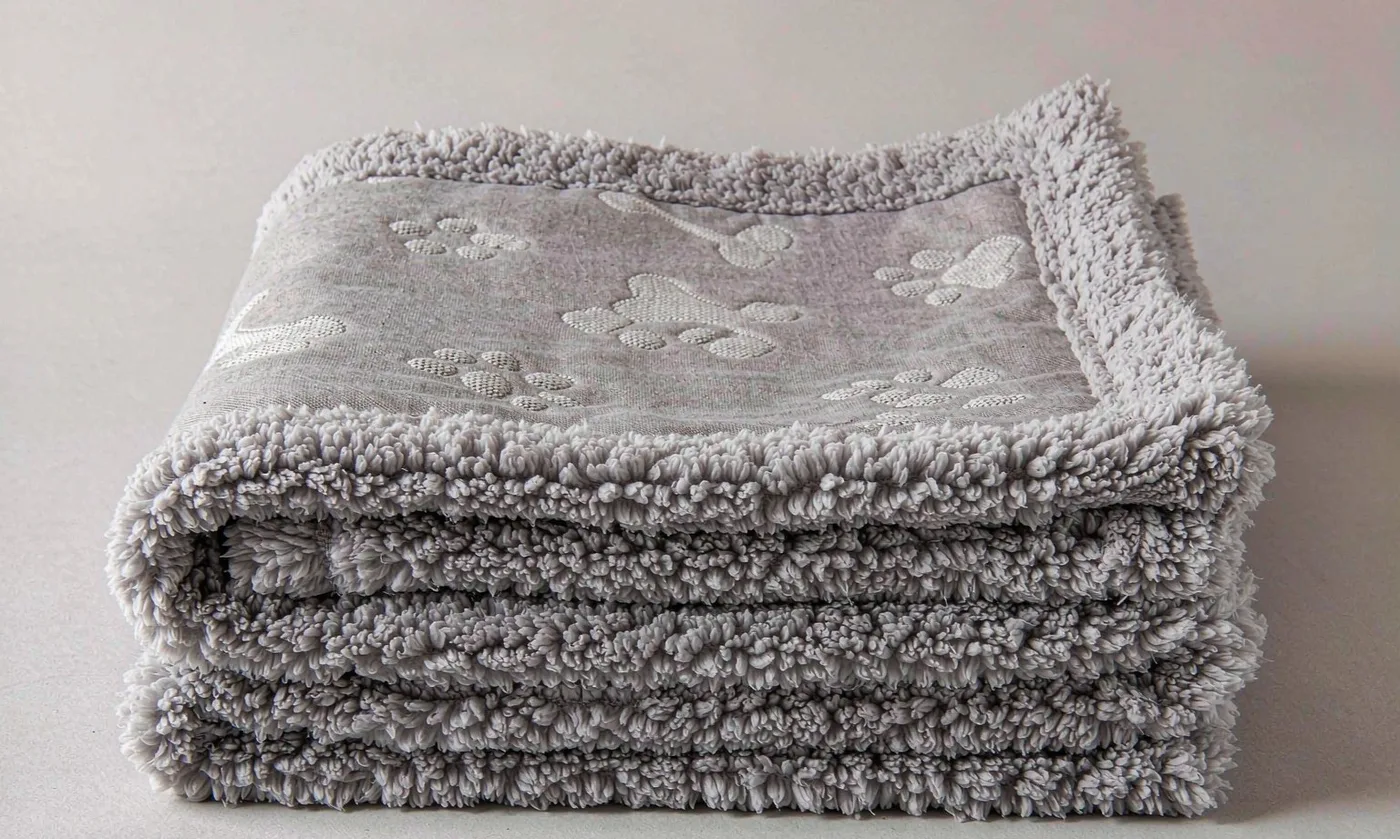
Four heating technologies dominate the pet bag supply base, and the choice you make here drives both unit cost and field failure rate. Carbon fiber film is the mainstream option because it distributes heat evenly and can be laminated between two fabric layers without a hard edge. Metal alloy wire is the cheapest and warms fastest, but it concentrates heat along the wire path and fatigues where the bag folds. Printed PTC ink self-limits its own temperature, which removes part of the controller cost, but it carries screen and curing tooling. Graphene coatings are thin and flexible with excellent uniformity, though supply is narrower and pricing moves with the substrate market.
Power density matters more than the marketing name on the film. In pet bag sizes, panels run at roughly 0.012-0.022 W per square centimeter, which translates to a total draw of 7.5-15 W for a small or medium bag. Anything above 18 W will drain a 10,000 mAh pack in under two hours, and that is the fastest route to a one-star review from your end customer.
| Architecture | Power density | Warm-up to 35 C | Added unit cost | Best order size | Dominant failure mode |
|---|---|---|---|---|---|
| Carbon fiber film | 0.012-0.018 W/cm2 | 90-150 s | +2.60-4.20 USD | 1,000+ pcs | Crease cracking at fold lines |
| Metal alloy wire | 0.016-0.024 W/cm2 | 60-120 s | +1.80-3.00 USD | 500-1,000 pcs | Hot spots and fatigue break |
| Printed PTC ink | 0.008-0.014 W/cm2 | 120-240 s | +3.40-5.60 USD | 3,000+ pcs | Ink delamination after washing |
| Graphene coating | 0.010-0.016 W/cm2 | 100-180 s | +4.50-7.00 USD | 2,000+ pcs | Substrate supply volatility |
Read the table as a sourcing decision, not a spec sheet. If you are placing a first order at 500 pieces per color, wire or carbon fiber film gives you the best balance of tooling exposure and lead time. If you are consolidating a seasonal program at 3,000 pieces, the PTC tooling pays for itself and removes a layer of controller cost.
Whichever you select, insist that the film is bonded rather than loosely inserted, and require the supplier to flex-test the assembled panel 3,000 cycles at the fold line before sample approval. Flex testing costs almost nothing at sample stage and prevents the single most common warranty claim in this category.
Battery, Power and Cable Safety Requirements
Most heated pet bags run on 5 V USB, which keeps the product inside the consumer power bank ecosystem and out of the high-voltage compliance bracket. A 5 V 2 A input gives you 10 W, and a 10,000 mAh pack at 3.7 V holds about 37 Wh, so a 10 W draw yields roughly three hours after boost-conversion losses. State runtime in your own listing copy as hours measured at high and low settings rather than a single number, because the regulator itself consumes 8-12 percent.
Cell quality is where unregulated sourcing fails. Require cells with IEC 62133-2 test reports and UN38.3 transport documentation for every pack, and keep those documents in your import file; airlines and freight forwarders will ask for them the moment a lithium shipment is booked. If the pack ships installed inside the bag, the packing declaration changes, and if it ships separately the retail carton must be re-designed to hold both items.
Controllers should include overcharge, over-discharge, short-circuit and over-temperature protection, and the thermostat should be a discrete component rather than a software routine. Ask for the cut-off test record at 45 C and for a 4-8 hour burn-in on five units per 500 pieces. Cable strain relief deserves its own line in the specification: the junction between the USB lead and the panel is the highest-stress point in the whole assembly, and a moulded strain relief plus a fabric anchor tab costs a few cents and removes most connection failures.
Finally, decide whether the battery is included. Shipping without a pack lowers unit cost by 3.40-7.80 USD and removes lithium documentation from the shipment, but it shifts the burden to your customer to source a compliant power bank. Retail channels generally want the pack included; online own-brand sellers often prefer the bag-only SKU with a lower entry price.
Fabric and Insulation Stack That Holds the Heat
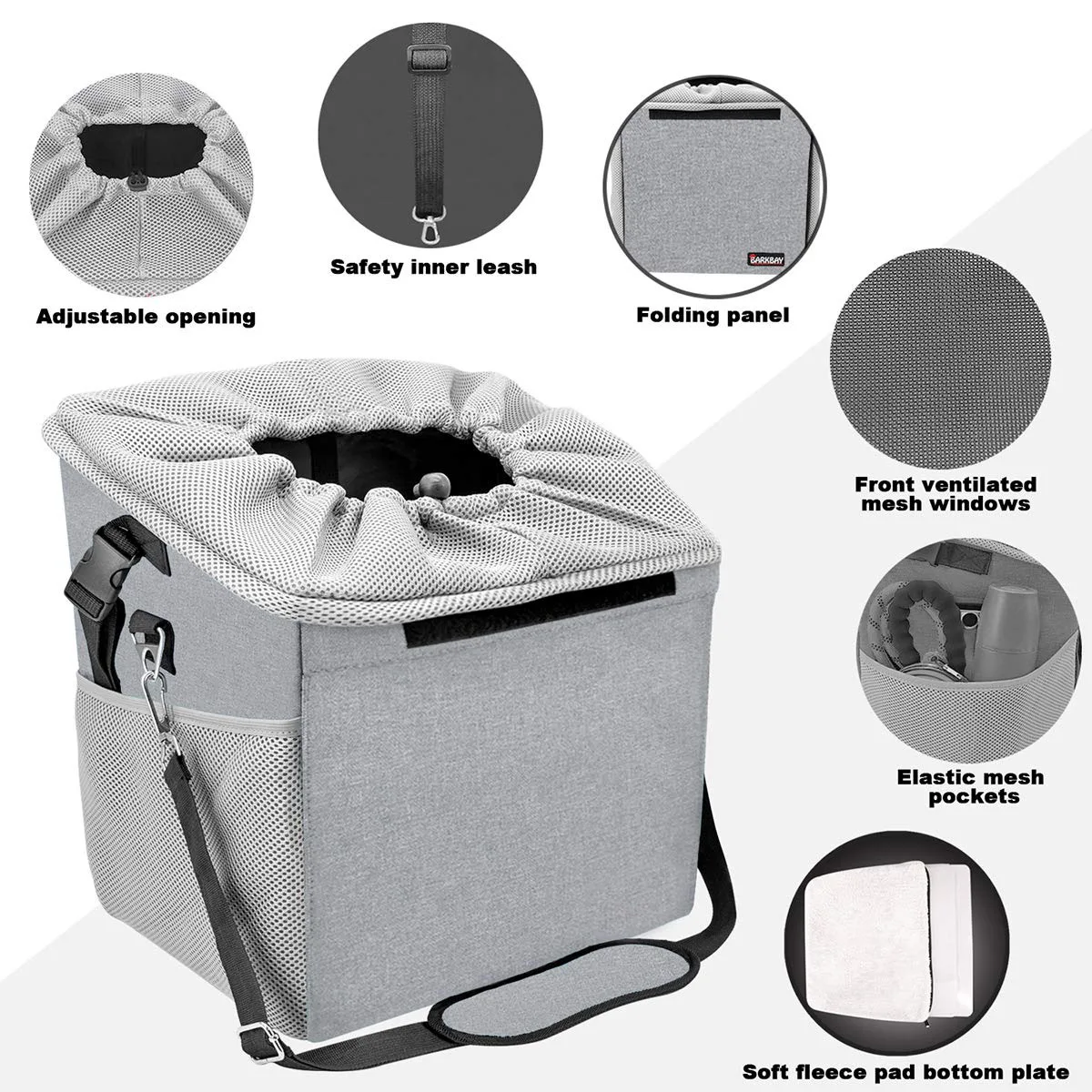
A heating panel in a poorly insulated shell behaves like a heater in an open window: it draws full power and delivers nothing. The stack that works in wholesale production is a three-layer build. The outer face is 600D polyester or 300D oxford with a PU back coating to stop wind stripping the surface. The middle is 3-6 mm needle-punched wadding or 2-4 mm closed-cell foam, which is doing the actual thermal work. The lining is a 200 gsm fleece or berber that spreads contact heat and feels warm the moment the pet steps in.
A reflective film between the heating layer and the outer shell is worth 8-12 percent in retained heat for a fraction of a cent per unit, and it is the cheapest performance upgrade in the entire construction. Pair it with a breathable vent panel of at least 12 percent of the surface area, because a sealed heated bag accumulates humidity from the animal's respiration and damp insulation loses roughly a third of its thermal value.
Material compliance should be settled before the first sample, not after. Any fabric the animal contacts should be certified to OEKO-TEX Standard 100 and any dye lot should pass colorfastness to rubbing, since fleece linings crock badly at low grades. Your technical pack should also name the flame behaviour of the lining; even at 5 V, a panel that is folded under a cushion needs a substrate that does not support combustion.
The practical spec line to write is this: outer 600D polyester PU coated, mid layer 4 mm needle-punched wadding, reflective interlayer, lining 200 gsm anti-pilling fleece with OEKO-TEX certificate, vented mesh panel at minimum 12 percent of surface. Suppliers quote faster and more accurately when the stack is already defined, and you avoid the classic trap of comparing two quotations built on two different constructions.
Testing Standards and How to Verify Warmth Claims
Warmth claims should be verified against published test methods rather than internal factory habits. Thermal resistance of the textile stack is measured with a guarded hotplate method such as ISO 11092, and heating appliance safety is assessed under the IEC 60335 series for electric pads and blankets. Your supplier does not need every certificate in the world, but it does need a coherent test file that maps each claim to a method.
Quality management is the other half of the story. A production base operating under ISO 9001 keeps calibration records for the thermocouples and multimeters used in these tests, which is what makes a temperature report defensible when a retailer audits you. Textile-specific methods for the lining, including crocking and laundering durability, sit in the AATCC test method library and should be named explicitly in the specification rather than left to factory custom.
| Claim | Test reference | Typical acceptance | Report cost |
|---|---|---|---|
| Thermal resistance of stack | ISO 11092 hotplate | 0.4-0.8 clo equivalent | 180-320 USD |
| Electrical safety of pad | IEC 60335 series | No breakdown, cut-off at limit | 900-1,800 USD |
| Battery cell transport | UN38.3 | Pass all eight tests | 600-1,200 USD |
| Lining colorfastness | AATCC crocking | Grade 4 dry / 3-4 wet | 60-120 USD |
| Quality system | ISO 9001 | Current certificate | Audit fee |
For ongoing verification, use a third-party laboratory such as SGS on the first production run of each heating architecture, then move to in-house verification with calibrated equipment for repeat orders. This staged approach keeps your per-model file credible without re-paying full certification every season.
Warmth claims fail for predictable reasons. The most common is a temperature measured on a bench with no simulated occupant, which reads 6-9 C above the figure a real pet experiences. The second is measuring at full battery charge and quoting that number, when the final third of the discharge cycle runs measurably cooler. Require both the fixture description and the state of charge to appear in the report before accepting any figure.
Cost Structure, MOQ 500 and Price Banding
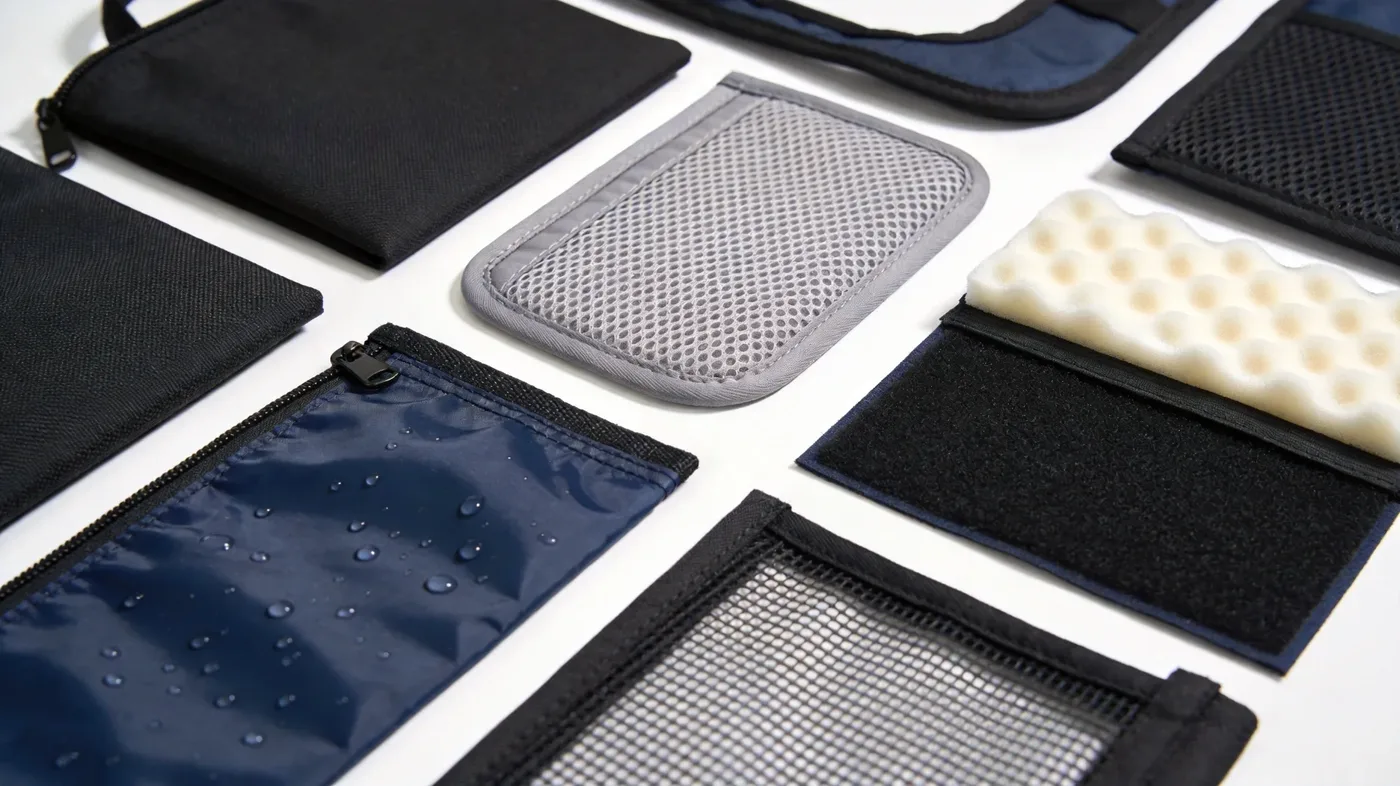
Understanding where the money sits turns a price negotiation into an engineering conversation. On a mid-spec heated pet bag, the shell and lining land at 4.20-8.60 USD depending on fabric grade, the heating module at 2.60-5.40 USD, the controller and thermostat at 1.80-3.40 USD, wiring and connectors at 0.60-1.20 USD, and labor plus overhead at 3.20-5.60 USD. Packaging for a heated SKU runs heavier than a standard bag because the manual and the warnings insert are thicker, at 0.90-2.20 USD.
The line item that surprises buyers is certification. A per-model electrical safety file costs roughly 2,200-4,800 USD. Spread across 5,000 units that is 0.44-0.96 USD per piece; spread across a 500-unit first order it is 4.40-9.60 USD per piece. That single arithmetic fact explains most of the resistance you will meet when asking for a small heated run, and it is the reason the rational move is to consolidate colorways rather than to push the factory on fabric price.
Price banding normally steps at 500, 1,000 and 3,000 pieces per colorway, with the sharpest drop between 500 and 1,000 because tooling and setup costs stop dominating. Standard terms in this category are FOB Xiamen with T/T 30/70, 30 percent deposit against order confirmation and 70 percent against bill of lading. If you are comparing quotations, make every supplier quote the same battery configuration; a quote without a pack will always look 4-8 USD cheaper and is not comparable.
One more budgeting item: heated goods carry a field return rate two to four times that of a non-heated equivalent. Reserve 1.5-2.5 percent of order value for warranty handling and spare controllers in your first two seasons, and treat that reserve as a cost of the category rather than a supplier defect.
Battery sourcing drives the banding more than the textile does. Cells, protection boards and their certifications each carry their own minimum order quantities, and those minimums frequently exceed 500 pieces, which is why heated programmes quote on a higher effective MOQ than a comparable unheated bag. Confirming cell availability at enquiry stage prevents a quotation that cannot actually be honoured at the volume requested.
Sampling Timeline, Bulk Scheduling and AQL 2.5 Inspection
Plan the calendar backwards from your shelf date. Once the panel layout, controller and fabric stack are confirmed, a heated prototype takes 6-10 working days to build, and you should add two days for the electrical pre-check and one day for a thermal soak test before sign-off. Buyers who approve a heated sample on the same day it arrives are approving a wiring job they have not seen under load.
Bulk production runs 35-50 days after sample approval and deposit. The variables that push you to the long end are battery cell procurement, which can add 5-8 days when cell stock is tight, printed warning inserts, which add 3-5 days if artwork is late, and any change to the heating layout after the first sample. Freeze the specification at sample approval; a mid-production change to the panel is effectively a restart.
Inspection should be written into the purchase order, not requested afterwards. Work to AQL 2.5 for major defects and AQL 4.0 for minor defects, with a zero-acceptance gate on critical electrical items such as exposed conductor, missing cut-off function, or a battery that fails the short-circuit test. On top of the AQL sample, require 100 percent functional testing of the heating circuit on the line, and a destructive teardown on two units per 500 to confirm film bonding and strain relief construction.
Documentation for release should include the inspection report, the functional test record, the battery UN38.3 summary and the declaration of conformity for the target market. Missing paperwork delays customs far more often than missing cartons, and it is the cheapest possible insurance on a container of electrical goods.
Electrical safety checks add a step that textile programmes do not have. Every unit in a heated run should pass continuity, insulation resistance and function checks before packing, and our production team records serial-level results so a later field complaint can be traced to a specific production date. That record is also what a marketplace asks for when a safety question is raised after listing.
Market and Channel Requirements for Heated Pet Bags
Channel rules decide which markets you can enter with the same physical product. In the European Union, a heated bag with a controller falls under low-voltage and EMC expectations, needs a CE declaration, and must satisfy REACH substance restrictions on cables and coatings. In the United States, expect Prop 65 assessment on the cable jacket and connector, FCC consideration if the controller has any digital logic, and retailer-specific electrical documentation before a listing goes live.
Marketplaces are stricter than law. Amazon and comparable platforms routinely request the electrical safety report, the battery transport summary and product images showing the warning label before approving a heated SKU, and listing suppression mid-season is far more expensive than preparing the file in advance. Build the file at sample stage and reuse it across channels.
Packaging and manuals carry more weight here than in any other pet bag category. Multilingual warnings, a clear statement of the cut-off temperature, washing instructions that address whether the panel is removable, and a contactable responsible entity in the destination market are all expected. Budget the manual as a compliance artifact, not as an afterthought printed on the back of a hangtag.
Finally, position the SKU honestly. Heated bags sell into cold-climate markets, veterinary recovery use and small-breed winter travel, and they are seasonal: the buying window closes earlier than for standard pet bags because the goods must be on the shelf before the first cold snap. Programs placed with 35-50 day production plus transit in mind are the ones that actually land in season.
Channel requirements diverge sharply. Specialty pet retail generally accepts a printed safety instruction set, while mass market accounts and online marketplaces increasingly require a test report reference and a responsible-party address on the packaging before they will list. Confirming the listing requirement before artwork is committed avoids reprinting retail packaging after the goods have already shipped.
Why brands source here
- Pet bag programmes run since 2014; founding team in sewn goods since 2004
- SGS-verified production floor of 4,950 m² with 137 workers across 7 lines
- Monthly capacity of 200,000 units, audited to BSCI and ISO 9001
People Also Ask
Are heated pet bags safe for dogs?
They are safe when the panel is capped at 45 C, the controller has a discrete thermostat, and the cable has a moulded strain relief. Safety failures in this category come from uncertified cells and unprotected wiring, not from the heat level itself.
How warm does a heated pet bag get?
A well-specified panel rests at 38-42 C at the contact surface and cuts off at 45 C. Judge suppliers on delta T above ambient measured at a stated room temperature rather than absolute degrees.
How long does the battery last in a heated pet bag?
A 10,000 mAh pack at 3.7 V holds about 37 Wh, which is roughly three hours at a 10 W high setting and six to seven hours at a 5 W low setting after conversion losses.
Do heated pet bags work without being plugged in?
Only through passive insulation. Without power the bag performs like a standard insulated bag, which is why the mid-layer wadding and reflective interlayer still matter in the specification.
What fabric is best for a heated pet bag?
A 600D polyester or 300D oxford outer with PU coating, 3-6 mm needle-punched wadding, and a 200 gsm anti-pilling fleece lining that carries an OEKO-TEX certificate for animal contact.
How much does a heated pet bag cost wholesale?
Expect a mid-spec FOB Xiamen range in the high teens to low thirties in USD depending on whether the power bank is included, with certification amortized across the order quantity.
Frequently Asked Questions
What is the MOQ for a heated pet bag program?
The working MOQ is 500 pieces per colorway. Below that level the electrical safety file and the heating tooling dominate unit cost, and the price you receive will not be representative of repeat orders.
Can the heating panel be removed so the bag can be washed?
Yes, and it should be. Specify a removable panel in a closed sleeve with a fabric-covered connector so the shell can be hand washed; if the panel is fixed, the product must carry a sponge-clean-only instruction and your return rate rises.
How long does a heated sample take and what does it cost?
Allow 6-10 working days after the layout and controller are confirmed, plus two days for electrical pre-check. Sample charges are usually credited back against the bulk order once the program reaches the agreed MOQ.
Which battery capacity ships with the bag as standard?
Most programs specify a 10,000 mAh pack, which gives roughly three hours at the high setting and six to seven hours at the low setting. A 20,000 mAh pack doubles runtime but adds 3.40-7.80 USD and heavier lithium documentation.
Do heated pet bags need UN38.3 documentation?
Every lithium cell needs a UN38.3 test summary before air or sea freight. Ask for the summary with the cell lot number so it can be matched to the shipment during booking.
How is AQL 2.5 applied to an electrical product?
Use AQL 2.5 for major defects and 4.0 for minor defects, then add a separate zero-acceptance gate for critical electrical failures. The AQL plan alone does not protect you from a safety defect.
Can batteries ship separately from the bags?
They can, and some sellers prefer it to simplify customs. If you do, redesign the retail carton so the pack is presented with the bag, and confirm the packing declaration with your forwarder before booking.
What warranty reserve should we plan for?
Reserve 1.5-2.5 percent of order value across the first two seasons. Heated goods carry a field return rate two to four times that of non-heated bags, mostly from cable and connector issues.
Do you offer 12 V car adapters as well as 5 V USB?
A 12 V car lead can be developed, but it moves the product into a different compliance bracket and adds certification cost. For most wholesale programs the 5 V USB route is the better commercial decision.
Are heated pet bags accepted on airlines?
The bag itself is fine; the battery is the issue. Lithium packs must travel in cabin baggage under airline rules, so the product should be sold with clear guidance and the pack should be removable.
What documentation do you provide for EU import?
You receive the declaration of conformity, the electrical safety report reference, the REACH statement for cables and coatings, the battery transport summary and the technical file index for the responsible entity.
How is a second colorway priced if it is under MOQ 500?
A second color below 500 pieces is priced as a surcharge on the first, typically covering fabric dye-lot minimums and a separate setup. Consolidating to one colorway at 1,000 pieces is usually cheaper overall.
Talk to QUANZHOU JUNYUAN BAGS about a wholesale pet bag order: MOQ 500 pieces per colourway, samples in 6-10 working days, bulk production in 35-50 days under AQL 2.5 inspection.
Get a free quote Request a sample