CTA: China Textile Approval for Pet Bag Fabrics
Textile approval is decided at fabric level, not at bag level: a pet bag inherits the compliance status of the cloth it is cut from. In practice that means one approval package per fabric lot - shell, lining, mesh and webbing - with four to seven parameters tested per lot, at USD 250-700 each. Programs that approve fabric before sampling move through the 6-10 working day sample window without rework; programs that approve after bulk cutting discover failures when the cloth is already on the table.
Executive summary for buyers. Treat fabric approval as a gate that sits before sampling. Our production team requires a qualified mill record - fibre composition, finish, colour fastness set and restricted-substance result - before a lot enters the cutting room, and we file that record against the BOM revision so the approved cloth is traceable to the shipped carton. Commercial mechanics are unaffected: MOQ 500 pieces per colourway, samples in 6-10 working days, bulk in 35-50 days after written sample approval, and final random inspection at AQL 2.5 with T/T 30/70 and FOB Xiamen. Across an SGS-verified production base of 4,950 m2 with 7 lines and 200,000 pieces of monthly capacity, the discipline that protects schedule is the same one that protects compliance: approve inputs early, document them once, and change them only under written control.
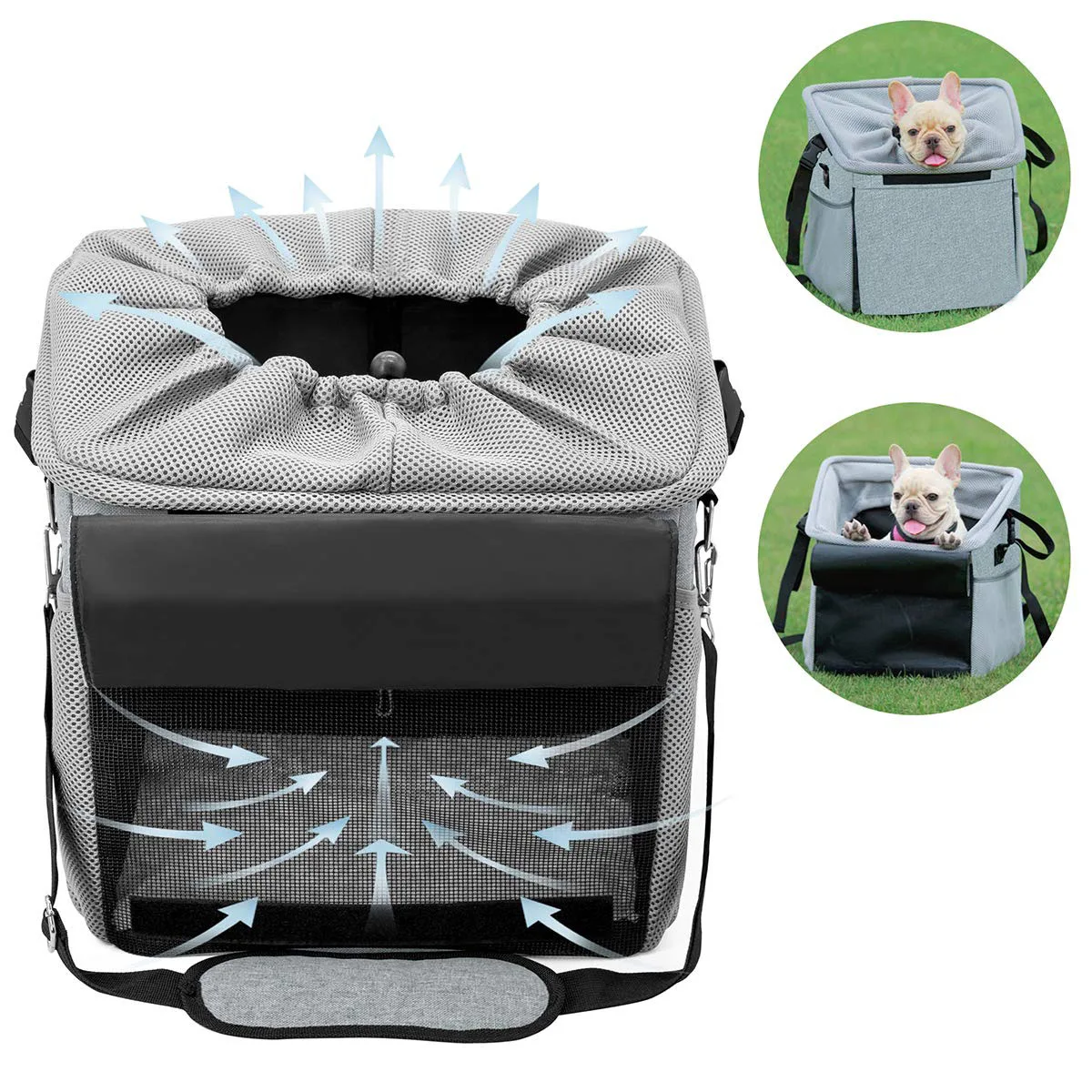
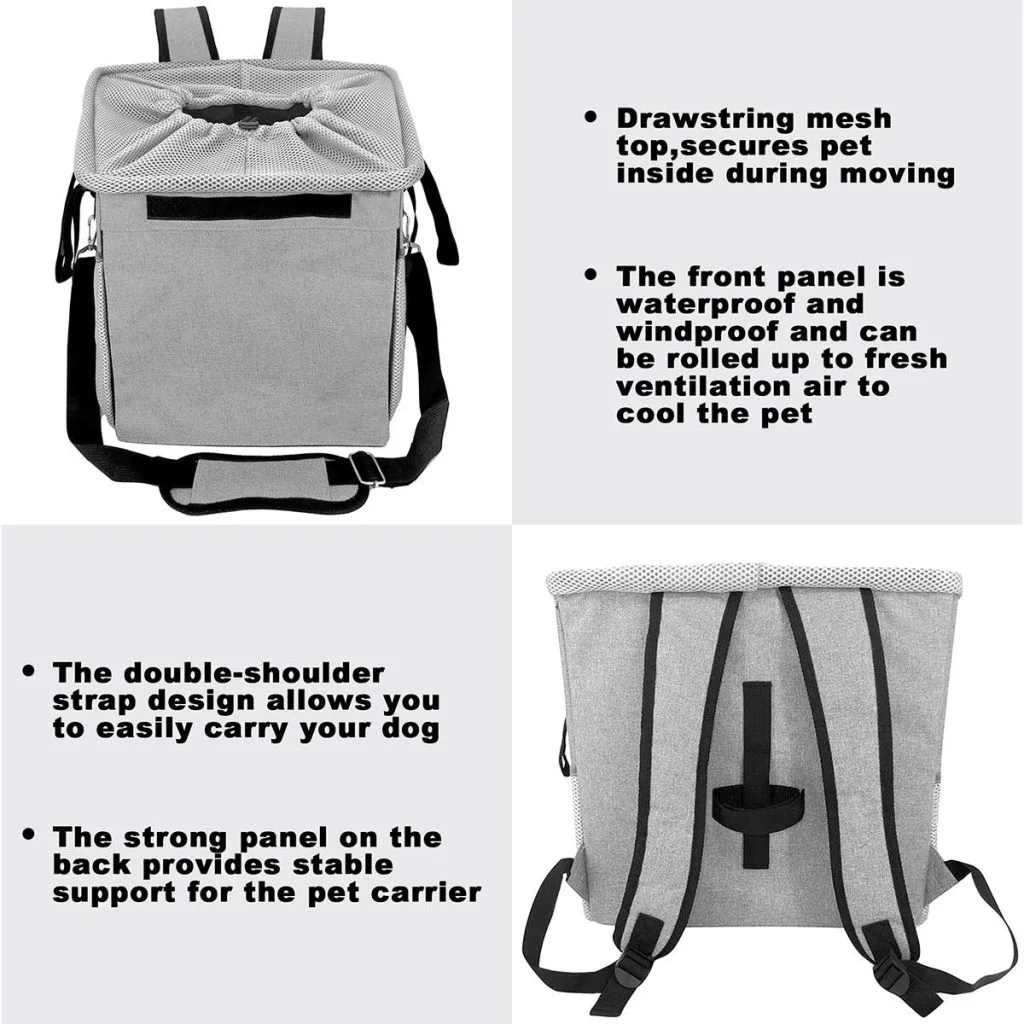
Wholesale hiking pet carrier programmes and wholesale airline approved pet carrier programmes pull in opposite directions - one needs ventilation area, the other needs a rigid footprint - and Material & Technology has to pick which constraint wins. Wholesale pet carrier for small dogs and wholesale pet carrier for large dogs can share a brand but rarely share a pattern.
What Textile Approval Actually Covers
Textile approval is a statement about an input, not about a finished product. It answers whether a specific fabric - defined by fibre composition, construction, weight, finish and colour - meets the parameters a buyer's market and channel require. A pet bag is an assembly of such inputs, and its compliance posture is the sum of theirs. This is why a bag can pass every assembly check and still fail a retailer's material review: the failure sits in the cloth.
The parameters fall into three families. Chemical parameters cover restricted substances - formaldehyde, azo dyes that can cleave to listed aromatic amines, heavy metals, pH, and, for coated cloth, plasticiser and solvent residues. Physical parameters cover the behaviours that determine service life: colour fastness to rubbing, washing, light and perspiration, tensile and tear strength, abrasion resistance, and dimensional stability after washing. Labelling parameters cover fibre composition and care instructions, and they matter because a misdeclared composition is a customs and marketplace issue rather than a quality one.
Approval has a scope boundary that buyers should hold firmly. It applies to a lot, identified by mill, article number, colour and finish. A report for a 600D polyester in black does not approve the same article in navy, because dye chemistry drives several of the chemical results. Approval is also time-bounded: mills change dye lots and finish suppliers, and a report older than twelve months is evidence about a process that may no longer exist.
That lot-specific nature is the reason approval belongs in the purchasing workflow rather than in the quality folder.
Buyers sometimes ask whether approval can be handled once at product-family level to save money. It can, but only where every SKU in the family shares the same qualified articles, colours and finishes. The moment a family member introduces a new trim, coating or print, that SKU needs its own line in the file. Defining the family boundary in writing - which articles it covers and which it does not - is what makes the saving legitimate rather than assumed. Every new colourway, every mill substitution and every coating change restarts the clock. Programs that budget for this - nominally four to seven parameters per lot at USD 250-700 - plan their season around it; programs that treat approval as a one-off certificate discover the cost at the worst moment, when the alternative is missing a retail date.
Building the Approval Package for a Pet Bag Programme
An approval package is a small, standard document set: mill identity and article number, technical data sheet, laboratory reports for the agreed parameters, a physical reference swatch signed off by both parties, and a lot identification rule that ties all of it to delivered rolls. Five items, one folder, filed against the BOM revision. Buyers who specify the package at RFQ get comparable quotes; buyers who ask for "compliant fabric" get whatever the supplier happens to hold.
Parameter selection should follow the product's exposure. A pet bag interior is in prolonged contact with an animal that chews, sheds and salivates, so salivation-adjacent colour fastness and odour parameters carry more weight than they would for a luggage lining. A coated shell that sits in a hot car needs plasticiser and heat-aging checks. A light-coloured canvas tote needs higher fastness-to-light than a dark backpack. One generic parameter list across all SKUs either over-tests cheap items or under-tests exposed ones.
| Parameter | Indicative acceptance band | Method family | Why a buyer cares |
|---|---|---|---|
| Formaldehyde | Under 75 ppm for adult-contact goods | Extraction and spectrophotometry | Skin and respiratory complaints, retailer limits |
| Azo dyes (cleavable amines) | Not detected at 30 ppm per amine | Reduction and chromatography | Legal prohibition in the EU market |
| pH of aqueous extract | 4.0 to 8.5 | Extraction and pH measurement | Irritation risk, dye stability |
| Colour fastness to rubbing | Grade 3-4 dry, 3 wet minimum | Crockmeter | Crocking onto clothing and car interiors |
| Colour fastness to light | Grade 4 for outdoor-use shells | Xenon arc exposure | Fading claims on premium product |
| Tensile and tear strength | Set per fabric weight and end use | Grab and tongue tear | Seam failure and load complaints |
| Abrasion resistance | Set by panel location | Abrasion cycles to end point | Pilling and wear at contact zones |
| Dimensional change | Within plus or minus 3 percent | Controlled laundering | Fit and panel alignment after washing |
Indicative bands are a starting point, not a specification. The correct limit depends on destination regulation, retailer policy and product positioning, and a buyer selling into Germany will face tighter expectations than one selling into a market with no national add-on. Write the limits into the technical file at RFQ so that both sides are testing to the same numbers, and resist the temptation to copy a generic table from a previous season without reviewing it.
Reference frameworks help. Independent textile schemes such as OEKO-TEX publish limit catalogues that many buyers accept as a baseline, and method bodies such as AATCC define the procedures laboratories follow. Naming the method, not just the parameter, is what makes a report comparable between suppliers.
National Textile Classes and What They Mean in Practice
China's national textile technical requirement classifies products by end use and sets different chemical limits for each class. The practical consequence for a pet bag buyer is that the classification of the cloth governs the limit, and a supplier who quotes a report for the wrong class has produced a document that does not answer the question. Checking the class line on a report takes seconds and prevents a mismatch that is otherwise invisible until review.
Classification interacts with product design in ways that are easy to overlook. A bag with a large fabric panel that rests against a wearer's clothing or an animal's coat sits in a different exposure category from a decorative trim of a few square centimetres. Panels are assessed individually, so a single non-conforming panel can pull a whole SKU out of compliance even when ninety percent of the surface passes. Designing with a small number of qualified fabrics reduces that exposure surface.
There is also a labelling dimension. Fibre composition and care content must match the physical product, and marketplace listings increasingly check the declared composition against the listing text. A bag declared as polyester with a nylon lining is a different declaration from the same bag with a polyester lining, and the difference matters both to customs classification and to consumer law. The composition line on the technical data sheet should be the source of truth for the listing copy.
Our production team handles classification by declaring it in the BOM rather than leaving it implicit. Each fabric line carries its class, its report number and its expiry, so a reviewer can see at a glance whether any line has drifted. That single habit removes most of the ambiguity from a compliance review, because the question stops being "is this bag compliant" and becomes "which line needs a new report".
Mill Qualification Before the First Bulk Lot
Mill qualification is the upstream version of supplier qualification, and it is where leverage is highest. A mill that runs consistent dye lots, controls its finish chemistry and keeps its own laboratory records produces predictable results across seasons. A mill that competes only on price produces cloth that passes a sample test and drifts in bulk. The difference shows up in colour consistency, hand feel and, occasionally, in a restricted-substance result that nobody expected.
Qualification evidence is unglamorous but decisive: business licence and scope, production capacity and equipment list, in-house laboratory capability or external laboratory relationship, recent test reports with dates, dye-lot control procedure, and a named technical contact. Requesting this from a mill through the bag supplier is normal and should not be treated as an imposition; suppliers with mature mill relationships provide it within days.
Consolidation is the payoff. A buyer running eight colourways across three qualified mills holds a manageable approval estate; the same eight colourways across eight mills holds eight sets of reports, eight sets of dye-lot risk and eight chances of a mid-season failure. Consolidation also improves pricing, because the bag supplier can buy fabric in fewer, larger lots and the mill can plan its dye house accordingly.
Change control closes the loop. Any mill substitution, finish change or colour restyling should trigger a re-approval before the new lot is cut, and the trigger should be written into the purchase terms. This is not bureaucracy: the most expensive failures in sewn goods are the ones where a substitution was made quietly to protect a price, and the resulting non-conformance surfaces only after the goods have shipped.
Fitting Approval Into a 6-10 Day Sample Window
Sampling and approval compete for the same calendar, and the usual mistake is running them in series. The efficient sequence is parallel: while the prototype is being sewn, the fabric approval package is already in the laboratory. Because fabric testing typically occupies one to three weeks, starting it at RFQ rather than at sample approval is what keeps a 6-10 working day sample window from becoming a six-week project.
The sequencing rule we recommend is three gates. Gate one at RFQ: mill and article nominated, existing reports reviewed, gaps identified. Gate two at prototype: physical swatch signed off, any missing parameters submitted. Gate three at pre-production: lot identification confirmed against the delivered rolls, and the file closed. A program that reaches gate three with no open items goes into bulk without rework.
Where a buyer needs speed, existing mill evidence can shorten gate one substantially. A current report for the same article and colour from the same mill is frequently acceptable to a retailer, particularly when accompanied by a letter confirming that the lot is unchanged. This is never guaranteed - acceptance depends on the recipient - but it is worth asking, and it frequently saves a fortnight on a tight season.
The remaining risk is colour. Several chemical results are dye-dependent, so a new colourway on a qualified article still needs testing even when the base cloth is approved. Buyers who launch six colourways at once should plan six submissions rather than one, and should stagger colourway launches if laboratory budget is constrained. Staggering also improves sell-through data, which is a commercial benefit rather than a compliance one.
One scheduling device helps where laboratory budget is fixed: approve the carry-over colourways first and treat new colours as a second wave. Carry-over shades usually have current reports that can be refreshed cheaply, while new shades need full submissions. Sequencing the programme this way keeps the core range on its original launch date and pushes only the experimental colours into the later window.
Recording Approval Status in the Purchase File
The purchase file is the right place for approval status, because it is the document the factory works to. A single column per fabric line - approved, submitted, or outstanding - reviewed at each order placement, prevents the common failure in which a colourway reaches the cutting room before its report returns. Our production team applies that column as a release gate alongside the standard production schedule.
What Approval Testing Costs and How to Reduce It
A single-parameter laboratory test typically sits in the low hundreds of US dollars, and a full fabric package with four to seven parameters runs USD 250-700 per lot depending on scope and laboratory. Multiplied across eight colourways and four fabrics, a season can reach several thousand dollars before a single bag is cut. That number surprises buyers, and the surprise is usually the result of scoping testing after design rather than during it.
Three reductions are legitimate. Consolidate fabrics, so that one approval covers several SKUs. Consolidate colours where the channel permits, because every additional dye lot is an additional submission. And reuse valid mill evidence rather than commissioning duplicate testing, which is usually the largest single saving available. None of these reduce assurance; they reduce duplication.
Two reductions are false economies and should be avoided. Testing fewer parameters than the destination requires saves money until the first retailer review, at which point the full set is commissioned under time pressure at premium rates. And accepting a supplier's internal data in place of an accredited laboratory report saves money until a claim, at which point it is worth nothing, because it is not independent.
Planning the annual testing budget is the mature approach. A buyer who knows the fabric count, colourway count and parameter list can forecast the spend before the season starts, negotiate a laboratory rate for volume, and schedule submissions into laboratory quiet periods. Laboratory capacity tightens in the months before the northern-hemisphere season, and submissions placed outside that peak are both cheaper and faster.
Common Failure Modes in Textile Submissions
Four failure modes account for most rejections. The first is entity mismatch: the report names a mill, the bag supplier names a different mill on the BOM, and no document links them. The second is scope mismatch: the report covers a different colour, weight or finish. The third is staleness: the report is older than the buyer's or retailer's validity window, commonly twelve months. The fourth is method mismatch: the parameter was tested to a method the recipient does not accept.
All four are administrative, and all four are preventable with a checklist applied before submission rather than after rejection. The checklist takes five minutes: confirm entity, article, colour and weight; confirm the method reference; confirm the date; confirm the result against the buyer's limit rather than the laboratory's default limit. Laboratories report against the standard they were asked to use, and a default limit is not necessarily the buyer's limit.
A fifth failure mode is subtler and more damaging: partial testing. A buyer commissions the chemical set because a retailer asked for it, and omits the physical set because nobody did. Six months later the product fails in the field on abrasion or seam strength, and there is no baseline to argue from. Physical parameters are cheap relative to a return wave, and they are the ones that generate customer complaints rather than compliance findings.
Our team's file convention addresses all five by tying every report to a BOM revision, a sample ID and a lot range, and by recording the acceptance limit used. When a reviewer asks why a result was accepted, the file answers without a meeting. That is the practical definition of a defensible approval record.
Turning Approval Records Into a Repeatable Sourcing System
Approval becomes cheap when it becomes routine. The instrument is a fabric register: one row per approved article, with mill, composition, weight, finish, colour list, report numbers, validity dates and the SKUs it serves. Maintained properly, it turns each new season into a review exercise rather than a testing project, because most rows are already current and only the new colourways need work.
The register also improves commercial decisions. A buyer can see which fabrics serve the most SKUs and consolidate accordingly, which mills have the best record on dye-lot consistency, and which articles are about to fall out of validity. That is sourcing intelligence derived from a compliance artefact, and it costs nothing beyond the discipline of keeping the register updated at each season close.
Integration with inspection closes the loop. When the AQL 2.5 inspection records fabric-related defects - shade variation between panels, coating hand-feel differences, unusual odour - those findings should feed back into the register as a note against the mill. Over two or three seasons this produces a supplier scorecard grounded in evidence rather than impression, which is exactly what a buying organisation needs when it renegotiates.
For wholesale pet bag programmes the payoff is straightforward: fewer mid-season surprises, faster retailer onboarding, and a smaller testing bill each year. Fabric approval is not glamorous work, but it is the layer of the compliance stack that everything else rests on, and it is the one that rewards consistency most reliably.
Trims, Coatings and the Inputs Buyers Forget to Approve
Approval conversations usually start with the shell fabric and stop there, which is exactly backwards from where risk concentrates. Webbing, binding tape, mesh, elastic, hook-and-loop, zipper tape, printed labels and foam laminate are all dyed and finished inputs with their own chemistry, and they frequently come from different mills than the shell. In a file review, trims are the lines most likely to be missing a report.
Coatings deserve separate attention. A PU or TPU coating changes the chemical profile of a cloth entirely, introducing plasticiser and solvent residue questions that a base-fabric report does not address. Coating also ages: hydrolysis in humid storage produces the tacky surface and peeling that generate warranty claims long after a compliance review is finished. A heat-aging or hydrolysis check on coated shells is inexpensive and directly predicts that failure.
Printed and coated branding is the third blind spot. Screen-printed logos, heat-transfer labels and PVC patches sit against an animal's mouth and against a wearer's hands, and they are applied in small shops that may not share the mill's discipline. Phthalate screening and adhesion testing on prints cost little relative to the exposure, and they are the parameters most often absent from a first submission.
The remedy is procedural rather than technical: build the approval register at BOM level rather than at fabric level, so every line - including the two-centimetre binding tape - has a status, a report number and a validity date. Our production team maintains the register that way, which is how a twenty-line BOM stays reviewable instead of becoming a compliance lottery at each season change.
Production capability
- SGS-verified production space of 4,950 m², 149 machines, 7 assembly lines
- Pet bag output since 2014 from a 137-person team
- 200,000 units shipped monthly under BSCI and ISO 9001 systems
People Also Ask
What does textile approval mean in a sourcing context?
It is lot-specific confirmation that a fabric meets agreed chemical, physical and labelling parameters for its intended market, evidenced by accredited laboratory reports filed against the bill of materials.
Why is approval tested at fabric level rather than on the finished bag?
Because compliance is inherited from inputs. A bag is an assembly of fabrics and trims, and the material risk sits in the cloth, not in the seam.
How early should fabric testing start in a development cycle?
At RFQ, in parallel with sampling. Laboratory work takes one to three weeks, so starting it after sample approval turns a short sample window into a long delay.
Can one approval package serve several bag styles?
Yes, where the styles share the same qualified fabric articles and colours. This is the main reason to consolidate materials across a range.
What happens if a mill substitution is made mid-season?
Re-approval is required before the new lot is cut. Substitutions made quietly to protect a price are the most expensive failure mode in sewn goods.
There is a commercial dividend to qualification as well. Mills that pass a documented qualification tend to hold steadier pricing across seasons, because they plan capacity against forecast rather than scrambling for spot orders. Buyers who qualify two or three mills per fabric category and commit volume to them routinely see better allocation during capacity shortages, which is when allocation matters most.
Are coating and finish covered by a standard fabric report?
Not always. Coated shells need plasticiser and solvent residue checks in addition to the base fabric set, and a change of finish supplier restarts those tests.
Frequently Asked Questions
Is textile approval the same as a product certificate for the bag?
No. Approval is lot-specific evidence about an input; a product certificate covers a finished article under a defined scheme. A bag inherits compliance from its fabrics, so the fabric package is the document that governs material risk.
How many parameters should one fabric lot be tested for?
Four to seven is the usual working range: formaldehyde, azo dyes, pH, colour fastness to rubbing and light, plus tensile or abrasion depending on panel location. Add coating-specific checks for coated shells.
Does an approval for one colourway cover the others?
No. Several chemical results are dye-dependent, so each colourway needs its own submission even when the base article is qualified. Plan one submission per colour per fabric.
How long is a fabric test report valid?
Most buyers and retailers accept reports for twelve months, after which mills may have changed dye lots or finish suppliers. Check the recipient's policy, because some accept longer and a few accept less.
Can existing mill reports be reused instead of commissioning new tests?
Often yes, where the article, colour and finish are identical and the report is current, ideally with a letter confirming the lot is unchanged. Acceptance depends on the retailer or marketplace reviewing the file.
What is the most common reason a fabric submission is rejected?
Administrative mismatch: the report names a different mill, colour, weight or finish than the BOM, or it was tested to a method the recipient does not accept. A five-minute pre-submission check prevents most of these.
How does fabric approval affect sampling and bulk timing?
It does not change the 6-10 working day sample window or the 35-50 day bulk window if the package is started at RFQ. Running approval in series after sampling is what adds weeks.
Should webbing and mesh be approved separately from the shell?
Yes. Each input has its own composition, dye and finish, and each carries its own exposure. Trims are frequently the weakest link in a file because buyers assume the shell report covers them.
What does fabric approval cost per season?
Budget USD 250-700 per fabric lot for four to seven parameters. Eight colourways across four fabrics can reach several thousand dollars, which is why consolidation and reuse of mill evidence matter.
Does approval cover odour, which customers complain about?
Odour can be assessed, but it is usually handled as a sensory check at incoming inspection alongside coating and solvent residue testing. Persistent odour complaints should be traced to a finish change at the mill.
Who should hold the approval file, buyer or supplier?
Both, with the same revision identifier. The supplier holds the laboratory originals and lot records; the buyer holds the review copy for retailer submissions. Divergent files cause rejection.
How does approval interact with AQL 2.5 inspection?
Inspection is the arithmetic check that the approved inputs are still being used and that they perform in assembly. Fabric-related defect findings should feed back into the mill record as evidence for future sourcing decisions.
Talk to QUANZHOU JUNYUAN BAGS about a wholesale pet bag order: MOQ 500 pieces per colourway, samples in 6-10 working days, bulk production in 35-50 days under AQL 2.5 inspection.
Get a free quote Request a sample