TISI Standards for Wholesale Pet Bags in Thailand
A sewn pet bag does not need a Thai industrial standards licence to clear Thai customs, because mandatory coverage lists product categories and made-up textile travel goods are not on it. Thai buyers instead ask for a recognised test file, Thai-language labelling and a correct HS line. Budget USD 900-2,600 per platform for that evidence and 10-18 days, not the 8-12 weeks a regulated SKU would take.
Thailand rewards buyers who separate two questions that most suppliers blur together: whether a SKU is inside mandatory certification scope, and whether the importer can produce an evidence file acceptable to a Thai retail partner. For an ordinary pet bag the first answer is no, the second answer is yes, and confusing them is what generates both wasted certification spend and blocked receipts. This page sets out the scope test, the duty and classification position, where testing money earns its keep, and how the production calendar interacts with Thai retail seasons.
The commercial framing matters as much as the regulatory one. Thai programmes are usually launched through a distributor or a modern-trade buyer who applies its own onboarding checklist on top of anything the law requires, and that checklist - not the statute - is what actually delays a launch. Our production team works to standard terms on this lane: MOQ 500 pieces per colourway, samples in 6-10 working days, bulk production in 35-50 days after approval, pre-shipment inspection to AQL 2.5, T/T 30/70 and shipment FOB Xiamen. Everything below assumes that baseline and shows where Thai-specific cost and time sit on top of it.
A wholesale dog carrier order and a wholesale cat carrier order rarely share one mould, so the Material & Technology decision has to be locked before tooling money moves. Wholesale pet carriers built on a single shared shell platform let a buyer cover both species from one fabric purchase, which is usually where the first real saving appears.
How Thai Mandatory Certification Is Structured
Thailand operates a two-track conformity system: a compulsory track covering product categories named in ministerial announcements, and a voluntary track where a standard exists but compliance is optional and marked accordingly. Only the compulsory track creates a legal gate, and the gate is enforced at import and at market surveillance rather than at the point of manufacture abroad.
Made-up textile travel articles are not among the compulsory categories, which means a pet bag built from fabric, webbing, mesh and hardware passes through without a licence. That single sentence resolves the majority of enquiries we receive on this market, and it is worth stating plainly because the alternative - paying for a mark nobody requires - consumes both money and calendar that a first season cannot spare.
What complicates the picture is that the compulsory list attaches to product behaviour, not to product naming. A bag stays outside scope until something inside it draws power from mains, transmits radio signals, or is presented as protective equipment. At that moment the SKU - not the programme, not the brand, and not the container - falls inside scope. Managing a Thai assortment therefore means maintaining a per-SKU scope column and updating it whenever a feature is added.
- Sewn soft goods. Outside compulsory scope; evidence file and labelling only.
- Mains-powered parts. Inside scope, with local representation and factory assessment.
- Radio modules. A separate notification track with its own timeline.
- Claims and packaging. Policed under consumer protection law, not certification.
The practical consequence for a wholesale buyer is that the scope question is answered once per SKU and then rarely revisited, which is exactly why it should be answered carefully the first time. A scope table built in week one costs an afternoon; a scope error discovered at the port costs a season.
One further distinction helps when a Thai partner pushes back. Voluntary marks are commercially useful - they signal that a product was built against a published method - but they are not a legal precondition for import, and a buyer should never be told otherwise. Where a partner insists on a voluntary mark, treat it as a commercial requirement with its own cost line and its own negotiation, not as a compliance obligation.
Running the Scope Test Across a Pet Bag Assortment
The scope test is mechanical once written down. Take the assortment line by line and record four attributes for each SKU: whether it contains a mains supply path, whether it contains an intentional transmitter, whether it is presented as safety equipment, and whether it makes a regulated performance claim. Four columns, one row per SKU, and the answer drops out.
In practice a typical wholesale pet bag assortment resolves cleanly. Carriers, totes, backpacks, slings and travel bags are sewn goods with no electrical content and no regulated claims. The exceptions cluster in three places: powered ventilation for tropical climates, heated liners for small animals, and GPS or Bluetooth trackers built into a hardware pocket. Each exception is small in unit terms and large in compliance terms, which is the defining tension of a Thai line plan.
The resolution is sequencing rather than avoidance. Launch the unpowered platform, let it establish sell-through, then add the powered SKU once volume justifies the fixed cost. Thai distributors are generally comfortable with this approach because it gives them a second-season news story rather than a first-season risk. Our own preference is to quote both versions at enquiry stage so that the powered SKU's cost and calendar are visible before anybody commits, rather than surfacing as a surprise in month four.
There is also a bundled-goods question worth settling early. If a pet bag is shipped with a powered accessory in the same retail carton, the treatment of the bundle can differ from the treatment of the bag alone. Decide deliberately whether the accessory ships inside the bag carton, in a separate inner carton, or as a separate line on the invoice, and record the decision, because the answer changes both the classification and the evidence requirement.
Finally, revisit the table after every range review. Thai assortments tend to accumulate SKUs quietly - a new colourway is harmless, but a new feature is not - and a table that is not maintained becomes a liability precisely when it is most needed, during a partner's due diligence.
Classification, Duty and the Landed Cost Line
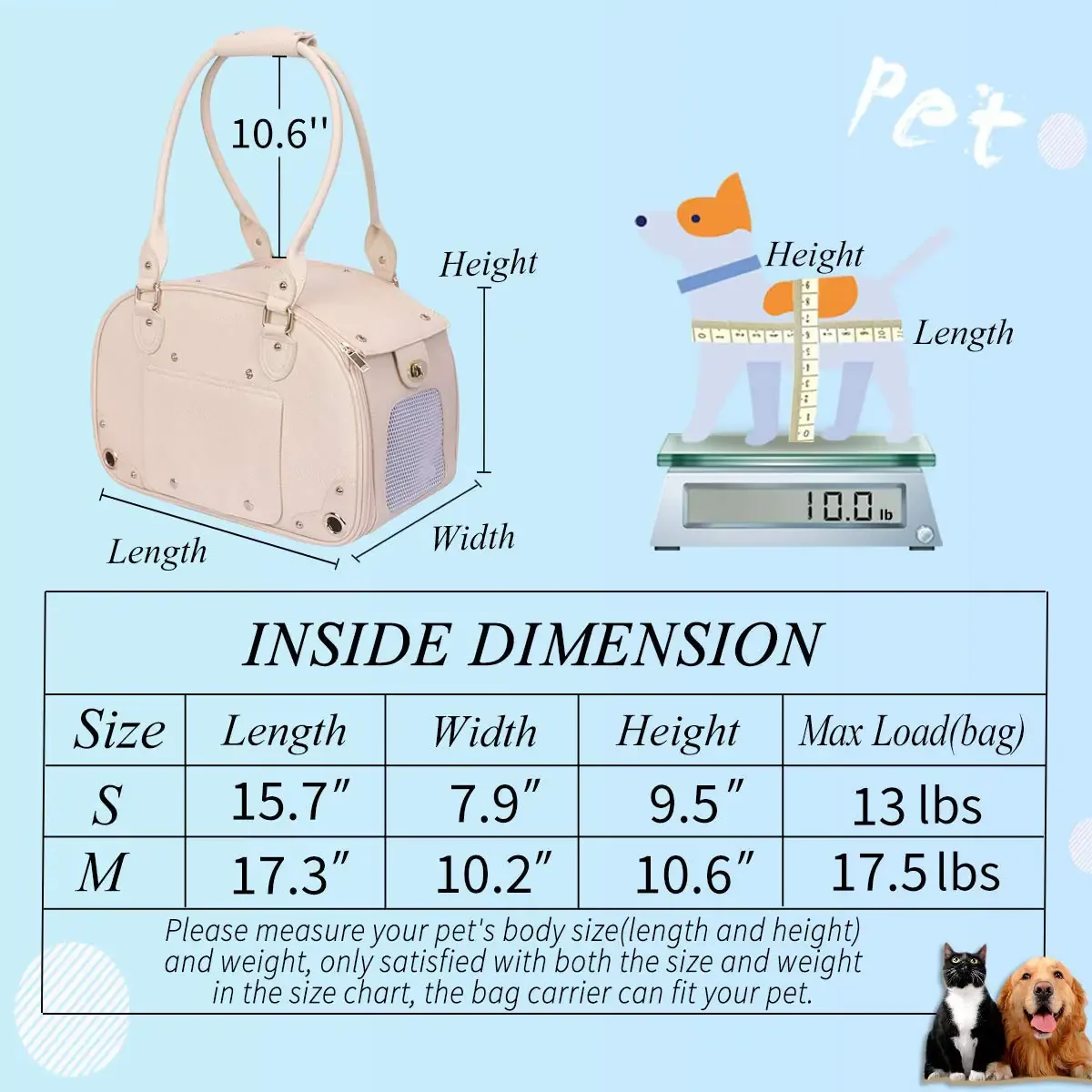
Classification drives duty, duty drives landed cost, and landed cost decides whether a Thai line review succeeds. Pet bags are classified by construction and material, not by the fact that a pet travels inside them, and this is where first-time exporters most often go wrong.
Two errors account for most reassessments. The first is declaring a pet-specific heading because the product is merchandised in a pet aisle; customs looks at what the article is made of and how it is constructed. The second is a declared value that does not reconcile across the commercial invoice, the payment record and the transport document, which invites a review that delays clearance far longer than the duty difference is worth.
Thai importers also care about origin, because preferential treatment under regional trade arrangements can move the duty line materially. Origin follows substantial transformation rather than the last port of loading, so a programme with multi-country inputs needs a defensible determination. We issue origin declarations from actual production records, and where a buyer maintains its own reporting to a Thai retail partner we align the wording in advance so that two internal documents never disagree.
Modelling the landed line properly is then a matter of allocating three things that quotations routinely omit: duty at the confirmed rate, port and inland charges, and administrative labour per shipment. The third is the one that quietly distorts decisions. At full-container scale it is negligible; at 500-unit scale it can exceed the fabric cost differential between two shell options, which means a buyer optimising unit price while ignoring administrative cost is optimising the wrong variable.
A useful discipline is to quote Thai programmes on landed cost from the first conversation rather than on FOB unit price. It changes the shape of the discussion: consolidation, cadence and carton efficiency become negotiable levers alongside price, and the resulting order is usually both cheaper and more reliable than one optimised on price alone.
Where Testing Spend Actually Earns Its Keep
Thai buyers are pragmatic about evidence. Overseas reports from recognised bodies are accepted across most of the market provided the method is named and the tested lot is referenced to the shipped lot. Testing everything locally because it feels safer is a habit that costs more than it protects.
The efficient structure is a single offshore panel built once per platform against the strictest method across all intended destinations, then reused. Local Thai work is reserved for two situations: where a specific retail partner demands a witnessed local result, or where a claim has been challenged and needs a local rebuttal. Everything else duplicated spend.
| Test group | Offshore acceptable | Local only when | Cadence | Indicative cost |
|---|---|---|---|---|
| Restricted substances screen | Yes | Retailer insists | Per dye lot | USD 250 - 900 |
| Colour fastness to rubbing and light | Yes | Almost never | Per dye lot | USD 120 - 400 |
| Seam strength and strap pull | Yes | Witnessed result demanded | Per platform | USD 200 - 700 |
| Hardware cycle and corrosion | Yes | Almost never | Per batch | USD 150 - 500 |
| Mesh and ventilation aperture check | Yes | Almost never | Per platform | USD 100 - 300 |
| Electrical safety (powered SKUs) | No | Always | Per model | THB 90,000 - 260,000 |
| Radio notification (tracker SKUs) | No | Always | Per model | THB 55,000 - 180,000 |
Method selection is where disputes are won or lost before they start. Results framed against published methods - the AATCC textile test methods are a routine reference for colour fastness and physical testing - and issued by internationally recognised laboratories such as SGS are rarely challenged. A result presented without a named method, by contrast, invites exactly the argument that both parties then pay to resolve.
Sequencing also matters. Commission the panel at sample stage rather than after the bulk order is placed, because a failing result obtained after production is a write-off whereas the same result obtained at sampling is a specification change. On a 35-50 day bulk window, the difference between testing early and testing late is the difference between a two-week slip and a two-month one.
Thai Labelling, Language and Marking Expectations
Thai consumer protection rules require product information to be comprehensible to the purchaser, which in practice means Thai-language labelling on retail packaging. Modern-trade buyers enforce this strictly because they carry the exposure if a shopper cannot read a warning or a care instruction.
Produce artwork against Thai copy from the outset rather than translating an English proof. Thai script changes line length and character height, and layout decisions that were settled in English frequently fail once translated, forcing a reprint at exactly the moment the goods are ready to load. Building the Thai text into the first artwork pass removes a delay that is otherwise almost guaranteed.
| Element | Requirement | Typical failure | Fix cost |
|---|---|---|---|
| Product name and function | Thai language, legible size | Translated at proof stage | Reprint of hang tags |
| Importer name and address | Local entity named | Overseas address only | Over-sticker or reprint |
| Material composition | Principal fibre or shell stated | Generic wording | Artwork amendment |
| Care instructions | Thai, with symbols | English-only care line | Reprint |
| Weight capacity | Stated and substantiated | Claim without test data | Test or remove claim |
| Country of origin | Made-in declaration | Conflicts with invoice | Document reconciliation |
Claims deserve the same discipline as elsewhere in the region. Water resistance, chew resistance, machine washability and weight capacity all appear routinely on pet bag packaging, all are supportable, and all require data behind them. A claims register - one page listing every statement printed on every pack element with the document supporting it - costs nothing to maintain and prevents a marketing team from reintroducing a claim nobody tested.
Barcodes are the other recurring friction point. Thai modern trade generally expects a scannable retail barcode registered to the brand owner rather than a supplier code, and obtaining one is a brand-side task that should start in week one. Programmes that discover this in week ten miss the shelf window.
Routing: Laem Chabang, Bangkok and Inland Distribution
Thai routing decisions are practical rather than exotic. Laem Chabang handles the majority of deep-sea volume and serves eastern seaboard distribution and onward Indochina movement well. Bangkok port suits central distribution and smaller consignments, while inland movement to the north is usually best planned around a single consolidation point rather than multiple drops.
Freight behaviour follows the routing. Direct services give a predictable dwell profile that a planner can build a retail launch around; indirect routings introduce variability that is difficult to absorb during peak season. For programmes shipping several times a year, predictability is worth more than a marginal ocean-rate difference, and it is worth paying for deliberately.
Consolidation is the second lever and the one most often neglected. Thai programmes frequently start below container scale because a first order is deliberately cautious, and less-than-container economics then erode the landed line quickly. Reaching full container every six to eight weeks is usually better than shipping smaller volumes monthly, even when the smaller option looks cheaper per shipment.
Seasonality deserves explicit planning. Thai retail promotional cycles and regional festivals compress sailing availability weeks in advance, and a programme that books late pays a premium for the same service it could have secured cheaply earlier. Treat the freight calendar as a production input: the booking date belongs in the same schedule as the sample approval date, not in a separate conversation after it.
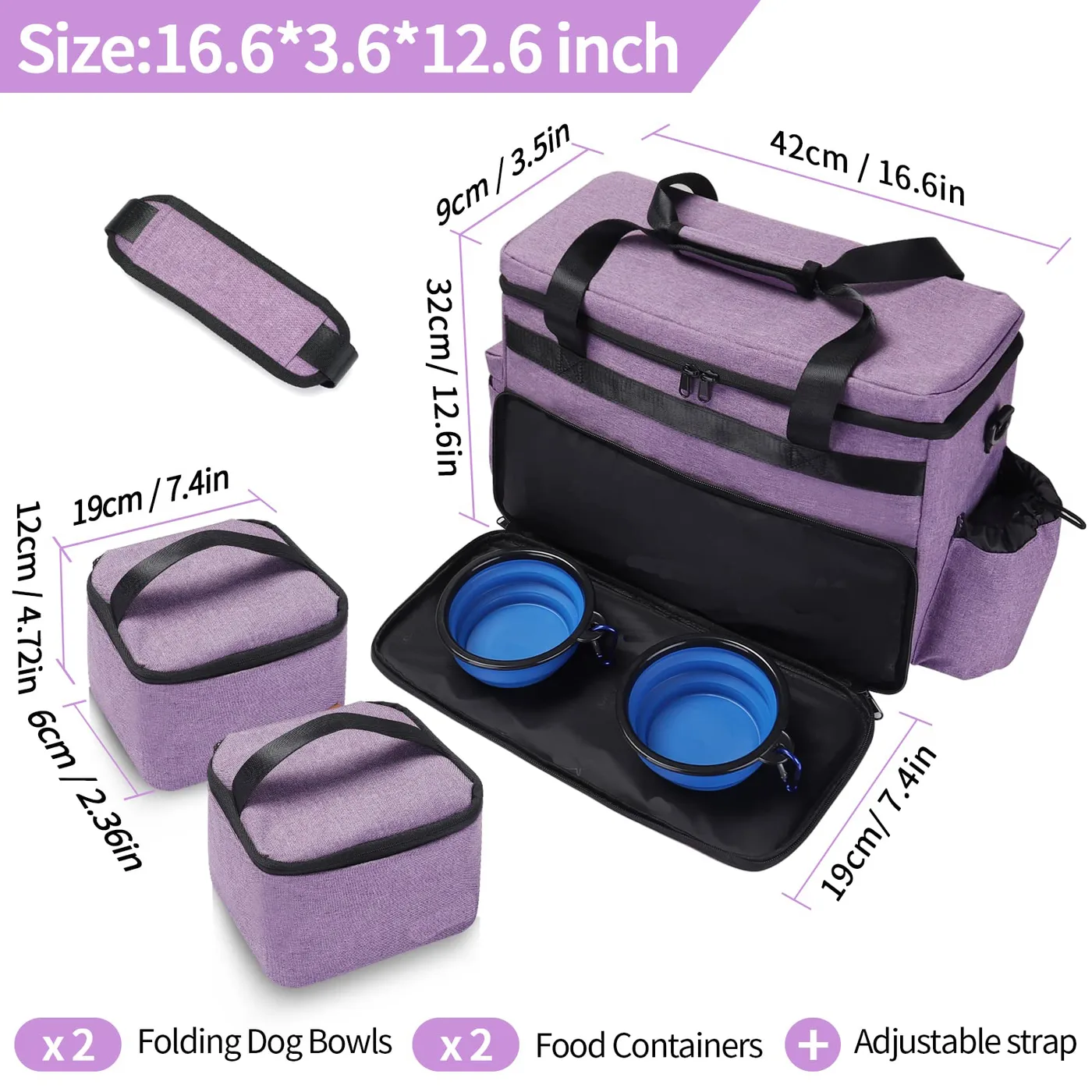
Carton configuration quietly influences all of this. Flat-packed or nested pet bags ship more units per carton than rigid assembled ones, and a small change in pack-out can move a programme from two containers to one. Because our production team builds the packing list from the final inspection count, we can model carton efficiency during costing rather than discovering it at booking.
Cost Structure Behind a Thai Line Review
A Thai line review is won or lost on landed cost, not on ex-works price, and the two diverge in ways that are entirely predictable once itemised. The ex-works line is fabric, hardware, trims, labour and packing. Everything below it is where Thai programmes either protect margin or leak it.
The biggest controllable leak is order shape. Fixed costs - sampling, testing, documentation, artwork, booking - behave like tooling: they amortise over units. A 500-unit shipment carries the same administrative load as a 2,000-unit shipment at four times the per-unit cost, which is why the colourway minimum is set where it is and why mixed colourways inside one order matter commercially. Three shades of one platform reach efficient volume without committing the buyer to a single colour risk.
The second leak is specification drift. Each change after sample approval - a different mesh, a heavier zipper, a new print method - triggers re-quoting, re-testing and frequently a fresh sample round. On a 35-50 day bulk window, a change approved in week three is manageable; the same change approved in week five can push a season. Freezing the specification at approval is the single cheapest margin protection available.
The third is payment and currency structure. T/T 30/70 with shipment FOB Xiamen keeps the buyer's exposure proportionate and leaves freight and insurance under their control. Buyers who move to landed terms without modelling the duty and handling components often discover that the convenience cost more than the risk it removed, which is a decision worth making with numbers rather than by instinct.
Putting these together, the buyer's real decision is rarely how to negotiate a cent off unit price. It is how to shape the order so that fixed costs amortise sensibly, specification stays frozen, and the calendar absorbs Thai seasonality without premium freight. Getting those three right delivers more margin than any discount realistically attainable at the same quality level.
Seasonal Planning Against the Thai Retail Calendar
Thai retail runs on a promotional calendar that differs enough from Western cycles to catch first-time exporters out. Songkran, regional shopping festivals and year-end gifting all compress buying decisions into windows that close earlier than a European or North American planner would assume, and the compression propagates backwards through freight, production and sampling.
Work backwards from the shelf date. If a promotional window opens in a given month, the goods need to be landed and cleared roughly four to six weeks earlier, which places loading two weeks before that, which places bulk production start roughly 60 days before loading given a 35-50 day window plus inspection and documentation. Sampling then needs to conclude another 6-10 working days before that, and artwork needs to be frozen before sampling begins because Thai text is built into the first artwork pass.
Read end to end, the critical path is longer than most buyers budget for, and the slack is almost always consumed by the part nobody scheduled: partner onboarding. A Thai distributor's checklist covering artwork, barcodes, packaging sustainability and delivery windows typically takes two to four weeks to satisfy, and it runs in parallel with production rather than after it.
The remedy is to ask for the checklist at quotation stage and to build the onboarding milestones into the same schedule as the production ones. Programmes that do this rarely miss a launch; programmes that receive the checklist in week ten usually do, because barcodes and artwork cannot be retrofitted quickly once the bulk order is running.
One final planning note concerns repeat seasons. Thai buyers reward consistency - a platform that returns in the same specification, the same carton configuration and the same document set is materially easier to onboard the second time - so resisting the urge to re-specify between seasons is itself a competitive advantage worth more than a marginal cost saving.
Working Terms, Inspection and the Document Set
Production terms on this lane are standard. MOQ is 500 pieces per colourway, with mixed colourways permitted within one order and size splits inside a single style counted toward the threshold. Samples take 6-10 working days from a confirmed tech pack. Bulk production takes 35-50 days after sample approval. Pre-shipment inspection runs to AQL 2.5, and the buyer or a nominated agency may attend, which we encourage whenever a new platform or a new Thai partner is involved.
The document set is issued with the goods rather than after them: bill of materials with named inputs, lot-referenced chemical and colour fastness reports, hardware declarations, origin information, a packing list generated from the final inspection count, and photographs of every marking position. Because that set is produced during inspection rather than reconstructed after loading, it reflects what actually shipped, which is precisely why Thai partners accept it without follow-up questions.
Where a Thai distributor maintains its own onboarding pack, send it at quotation stage. Our evidence file is built from the same quality annexe as the production specification, so absorbing extra requirements is usually a matter of adding lines to one table rather than reopening a programme - and doing it before costing saves at least one full quotation round.
Our SGS-verified production base operates to ISO 9001 quality management principles, with BSCI social compliance auditing in place, which is what allows the document set to be issued from production records instead of assembled retrospectively. Related reading on this site covers European conformity marking, textile safety certification and Malaysian standard requirements.
Production capability
- SGS-verified production space of 4,950 m², 149 machines, 7 assembly lines
- Pet bag output since 2014 from a 137-person team
- 200,000 units shipped monthly under BSCI and ISO 9001 systems
People Also Ask
How do we build a per-SKU scope table?
One row per SKU with columns for mains path, transmitter, protective-equipment presentation and regulated claims. Record the conclusion and the date checked, then keep it in the shipment file.
What should the document set contain?
Bill of materials with named inputs, lot-referenced chemical and fastness reports, hardware declarations, origin information, a packing list from the final inspection count, and marking photographs.
Does a bundled accessory change the treatment?
It can. A bag shipped with a powered accessory in the same retail carton may be treated differently from the bag alone, so decide the bundle structure deliberately before declaring.
Why model landed cost rather than unit price?
Because duty, port charges and administrative labour sit outside the unit price. Ignoring them converts a line that looks profitable into one that merely looks busy.
When should the test panel be commissioned?
At sample stage. A failing result before production is a specification change; the same result after production is a write-off and a two-month slip.
Can one platform serve Thailand and neighbouring markets?
Yes. Build the panel to the strictest applicable method once, then vary only labelling, language and paperwork between destinations.
What is the cheapest way to test the Thai market?
One standard platform, two colourways, one container, unpowered SKUs, Thai-language hang tags. Everything else is a second-season decision justified by sell-through.
Frequently Asked Questions
Do pet bags require TISI certification in Thailand?
No. Mandatory Thai certification applies to product categories named in ministerial announcements, and made-up textile travel goods are not among them. Powered or transmitting components can pull an individual SKU into scope.
Which pet bag features trigger mandatory approval?
A mains supply path, an intentional radio transmitter, or presentation as protective equipment. Powered ventilation, heated liners and built-in trackers are the three features that typically do it.
Are overseas test reports accepted in Thailand?
Yes, for the unregulated majority of an assortment, provided the method is named and the tested lot is referenced. Local testing is reserved for regulated SKUs and for specific retail demands.
How much should a Thai evidence file cost?
Typically USD 900-2,600 per platform for the routine textile, physical and chemical panel. Regulated SKUs add substantially more and should be sequenced after the base platform proves out.
What classification mistakes are most common?
Declaring a pet-specific heading rather than classifying by textile construction, and submitting values that do not reconcile across invoice, payment record and transport document.
Is Thai-language labelling mandatory?
Thai consumer protection rules require comprehensible product information, so retail packaging should carry Thai text. Produce artwork against Thai copy rather than translating an English proof.
Should we ship to Laem Chabang or Bangkok?
Laem Chabang suits deep-sea volume and eastern seaboard distribution; Bangkok suits central distribution and smaller consignments. Choose by distribution pattern and service frequency.
Is below-container shipping sensible for a first order?
Rarely. Per-unit logistics and administrative cost rise sharply below container scale. A standard platform with mixed colourways reaching full container is usually the better first order.
Who should hold the retail barcode?
The brand owner. Thai modern trade generally expects a barcode registered to the brand rather than a supplier code, and obtaining one is a week-one task.
How long do samples and bulk take?
Samples take 6-10 working days from a confirmed tech pack; bulk production takes 35-50 days after sample approval, with pre-shipment inspection to AQL 2.5.
Can several colourways sit in one order?
Yes. The minimum applies per colourway, mixed colourways are permitted within one order, and size splits inside one style count toward the threshold.
Should we freeze the specification at sample approval?
Yes. Every post-approval change triggers re-quoting, re-testing and often a fresh sample round, which on a 35-50 day window can push an entire season.
Can our nominated inspector attend?
Yes. Buyers and nominated agencies may attend the AQL 2.5 pre-shipment inspection, which we recommend whenever a new platform is released.
What payment and shipping terms apply?
T/T 30/70 with shipment FOB Xiamen. Buyers moving to landed terms should model duty and handling first, since the convenience can cost more than the risk it removes.
Talk to QUANZHOU JUNYUAN BAGS about a wholesale pet bag order: MOQ 500 pieces per colourway, samples in 6-10 working days, bulk production in 35-50 days under AQL 2.5 inspection.
Get a free quote Request a sample