CCC: China Compulsory Certification for Wholesale Pet Bags
Most wholesale pet bags sit outside the CCC catalogue, so a finished textile pet bag normally ships with no CCC mark at all. The mark becomes mandatory only when a bag integrates a listed electrical or electronic sub-assembly, a situation we see in roughly one of every twenty programs quoted. Where a listed module is present, budget USD 3,000-9,000 and 8-14 additional weeks; where the bill of materials is purely textile, hardware and foam, the certification cost is zero and the compliance file is test reports plus a supplier declaration.
Executive summary for buyers. CCC is a market-access gate that attaches to products sold into China and to listed modules imported for assembly, not a general seal of quality. Our production team therefore runs a scope check during RFQ rather than after tooling, because retrofitting a listed charger or heating controller into an approved design restarts type testing. Standard commercial terms are unchanged whether or not the mark applies: MOQ 500 pieces per colourway, samples in 6-10 working days, bulk production 35-50 days after written sample approval, and final random inspection at AQL 2.5 with T/T 30/70 and FOB Xiamen. SGS-verified production base capacity of 4,950 m2, 137 staff and 7 lines supports 200,000 pieces per month, which matters because certificate holders are audited on traceability and must show that the certified build matches the shipped build.
Wholesale waterproof pet bags and wholesale 600d pet carrier lines are quoted against coating weight rather than against fabric name, and Material & Technology specs have to say which test method applies. Wholesale durable pet carriers then hold their price because the failure cost - a returned unit - is far higher than the coating premium.
What CCC Covers, and What It Deliberately Does Not
CCC, the China Compulsory Certification scheme, is a legal market-access gate rather than a quality grade. It is administered by the national certification authority, implemented by designated certification bodies, and enforced at import and at retail. Three mechanisms sit inside one certificate: type testing of a representative sample at an accredited laboratory, an initial factory inspection, and ongoing surveillance. A product that has no entry in the published catalogue cannot legally carry the mark, and a factory cannot self-declare its way into the scheme. For a buyer, that single sentence resolves most of the noise: if your SKU is not in the catalogue, no amount of supplier enthusiasm makes CCC relevant.
The catalogue is built around risk categories - electrical safety, fire, electromagnetic compatibility, vehicle safety, child safety - and it is revised periodically. Textile bags, soft goods, and sewn accessories do not appear in it as finished articles. A pet travel bag made from 600D polyester, mesh panels, EVA backing, webbing, POM buckles and a nylon zipper has no catalogue entry, because none of the risk categories that justify compulsory certification attaches to a passive textile product. This is why export programs running FOB Xiamen into the US, EU, UK and Australia rarely see the mark in their documentation set.
Confusion arises because retail onboarding teams and marketplace compliance portals use the word "certified" loosely. A form asking for "product certification" is usually satisfied by third-party test reports against ASTM, EN or GB methods, plus a supplier declaration of conformity. Submitting a certificate number for a product outside scope, or accepting a document that shows a mark on a component rather than the finished bag, is a common and expensive error; certificates have scope statements that list model numbers, and a mismatch is treated as a false claim.
The practical rule we apply in sourcing reviews is simple: run the scope test on the finished SKU first, and only then on sub-assemblies. If neither is listed, document the exemption in writing with the catalogue reference and the bill of materials, and move the budget to the testing that actually governs your market - CPSIA lead and phthalates for the US, REACH SVHC and EN 71-3 migration for the EU, and GB 18401 for China-related buyers. The exemption note is itself a compliance artefact, and it is what an auditor asks for when a certificate is absent.
Mapping a Pet Bag Bill of Materials Against the Catalogue
A wholesale pet bag is an assembly of twenty to forty purchased inputs, and scope follows the input, not the stitch. The mapping exercise should therefore be done on the BOM sheet during costing, with the purchasing team, not after the sample is approved. Each line gets three columns: does the input have a catalogue entry, is the certificate held by the component maker or by the assembly plant, and what evidence do we file. In practice more than ninety percent of lines are textile or mechanical and fall away immediately; the residual risk concentrates in anything that plugs in, heats up, emits light or contains a battery.
Hardware deserves its own row set. Metal D-rings, carabiners, rivets and zippers are mechanical components and sit outside scope, but they carry their own chemistry obligations - nickel release under REACH Annex XVII, lead content under CPSIA, and corrosion resistance under salt-spray methods. Plastic buckles and ladderlocks are typically POM or nylon, again outside CCC but inside REACH SVHC and, for California shipments, Proposition 65 assessment. Treating hardware as "no certification needed" without recording the chemistry test report is the gap that surfaces during retailer audits.
| Component | Common specification | CCC relevance | Evidence to file |
|---|---|---|---|
| Shell fabric | 600D polyester, PU or TPU coating | Out of scope | GB 18401 or OEKO-TEX report |
| Lining and mesh | 210D polyester, air mesh | Out of scope | Colour fastness report |
| Structural board | EVA, PP or PE sheet | Out of scope | Density and thickness record |
| Webbing and binding | Polyester or nylon tape | Out of scope | Tensile test report |
| Zippers and sliders | Nylon coil or metal teeth | Out of scope | Cycle test, lead and nickel report |
| Plastic hardware | POM buckles, ladderlocks | Out of scope | SVHC screening, Prop 65 review |
| Silicone treat pouch | Food-grade silicone insert | Out of scope | FDA or LFGB food contact report |
| LED strip plus USB lead | Low-voltage lighting module | Likely in scope | Component certificate, model cross-reference |
| Power bank or charger | Lithium cell with charging circuit | In scope | CCC certificate, UN 38.3 transport test |
| Heating pad with controller | Resistive element plus thermostat | In scope | Certificate plus electrical safety report |
The table is a screening aid, not a legal opinion. Scope turns on the exact product category and on the certificate wording, so the purchasing team should request the certificate PDF and read the model list rather than accept a mark on a photograph. Where a listed module is unavoidable, the cheapest route is to buy from a component maker that already holds the certificate for that module and to keep the module as a purchased, sealed unit inside the bag; this avoids pulling the whole assembly into type testing.
When an Electrical Module Pulls a Pet Bag Into Scope
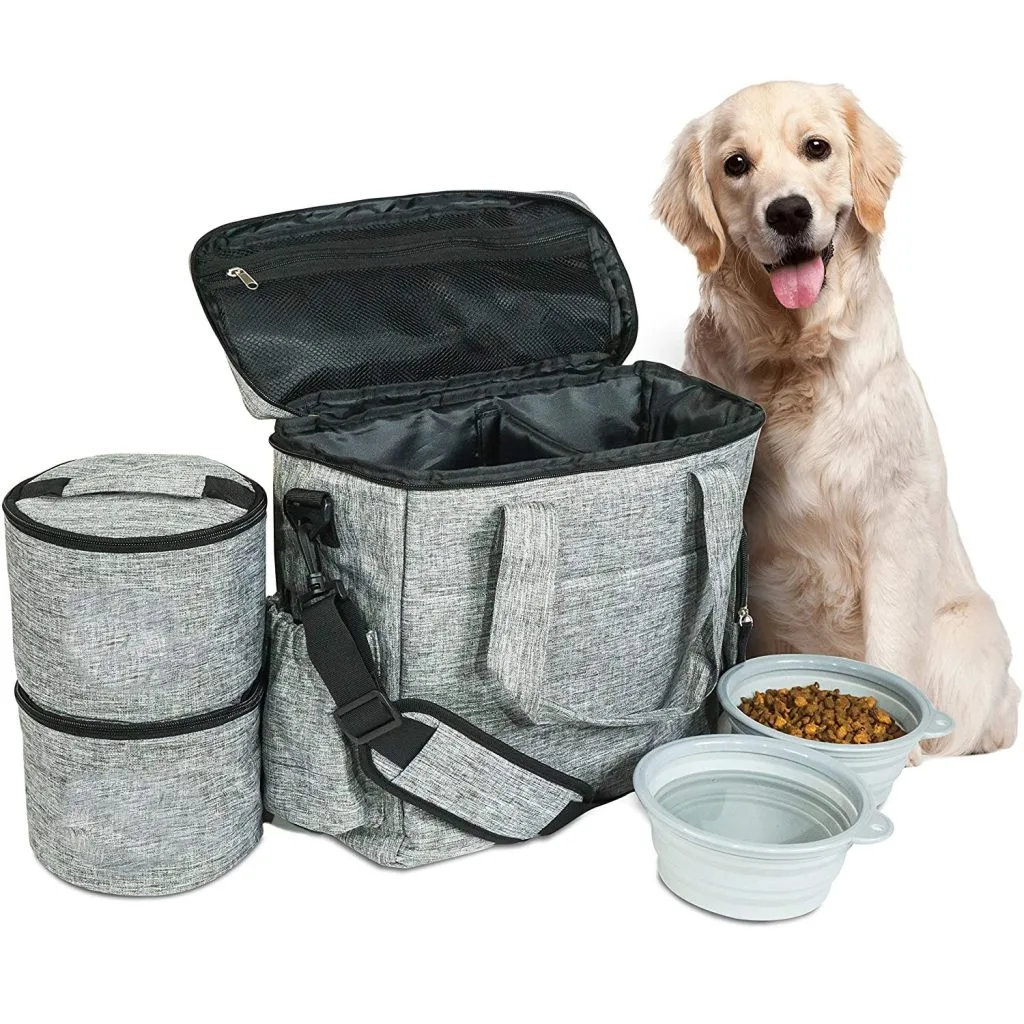
Three product families in the pet bag category carry real CCC exposure: illuminated bags with integrated LED strips, heated pads or liners with a control circuit, and bags built around a USB power bank or mains charger. Cooling fans, GPS trackers and Bluetooth speakers create the same exposure when they ship fitted rather than as a separate retail accessory. In each case the trigger is the electrical sub-assembly, and the certificate is normally held by the module manufacturer rather than by the sewing operation.
The commercial consequence is a schedule problem, not a quality problem. Type testing for an electrical module typically occupies four to eight weeks depending on laboratory queue, and the initial factory inspection at the module plant is a separate appointment. If the bag program is quoted on a 35-50 day bulk window, adding eight to fourteen weeks of certification in front of that window changes the landing date by more than a quarter. Buyers who discover the requirement at the pre-production sample stage end up either shipping without the feature or paying air freight to recover the retail date.
There is a structural workaround that our production team recommends for most programs: design the electrical function as a removable, separately certified module that the end user inserts, and ship the textile shell as a textile product. This keeps the sewn article outside scope, keeps the certificate with the module maker, and lets the same shell serve markets with different electrical approvals. It also simplifies after-sales, because a failed module is replaced without returning the whole bag.
Where the module must be integrated, lock three items into the technical file before tooling: the certificate number with its scope statement, the model cross-reference between certificate and BOM, and the transport test for any lithium cell. Lithium cells additionally require UN 38.3 test summary and correct dangerous-goods documentation for air freight, and a missing summary is one of the most common causes of held shipments in this category. Suppliers that cannot produce a certificate PDF within two working days are usually reselling an uncertified module.
Cost, Lead Time and Sampling on a Certificate-Exposed Build
Certification cost should be modelled as a programme cost, not a unit cost, because it does not scale with quantity. For a small electrical module the typical band runs USD 3,000-9,000 across application, type testing, factory inspection and first-year surveillance, with annual follow-up audits thereafter. Spread across a 5,000-piece order that is under USD 2 per unit; spread across a 500-piece first buy it approaches USD 15 per unit and can break the margin, which is why the decision belongs at RFQ stage when quantities are still flexible.
Sampling behaves differently on certificate-exposed builds. Where the mark applies, the sample is not free to change: a change of module supplier, cell capacity or controller firmware after type testing can invalidate the certificate scope, and the laboratory will require partial retest. Our standard sampling window is 6-10 working days for a conventional pet bag, but a build with an integrated module should be planned in two gates - a textile prototype in the normal window, then a certified-configuration sample held unchanged until the certificate is confirmed. Freezing the configuration is cheaper than re-testing it.
Bulk scheduling follows the same logic. Production runs 35-50 days after written sample approval on standard terms, and the certificate must be in hand before the first piece is packed, not before the first piece is cut. Procurement plans that tie the certificate milestone to the ex-factory date rather than to the cutting date are the ones that slip, because inspection booking, documentation review and any corrective action all queue behind the certificate. Booking the AQL 2.5 inspection slot at the same time as the production slot avoids a further week of dwell.
Payment and Incoterms do not change with certification, but risk allocation does. Under T/T 30/70 with FOB Xiamen, the buyer carries the risk that a certificate referenced in the contract is withdrawn or scope-reduced after deposit. A simple contractual remedy - certificate validity as a condition of the balance payment, plus a right to independent verification - costs nothing to draft and removes the asymmetry. For reference on testing and inspection practice, see the work of SGS and the quality-management framework published by ISO.
How to Verify a Certificate Before You Release the Deposit
Verification is a five-minute task that prevents a five-figure mistake, and it should be done by the buyer rather than delegated to the supplier. Ask for the certificate PDF, not a screenshot of the mark. Read four fields: certificate number, holder name, product scope including model numbers, and validity dates. Then confirm the holder name matches the legal entity on the proforma invoice, because certificates are issued to a manufacturing entity and a sourcing agent that names itself as holder is a red flag rather than a convenience.
Next, check the model list against the BOM. Certificates are granted for a model family, and factories routinely quote a certificate that covers a similar but different product. If the module in your bag is not named, the certificate does not cover your build. Where the certificate is held by the component maker, ask that maker for a letter confirming supply of the certified model to the assembly plant, and file both documents together; an auditor will want the chain, not one link of it.
Factory inspection is the second half of the scheme and is often overlooked. A valid certificate implies an inspected manufacturing site, and the inspection covers the ability to keep the certified build consistent, including incoming control on the critical component. Buyers can request the most recent surveillance audit summary through the certificate holder. Reluctance to share it usually means the audit found open non-conformities, which is precisely the information a sourcing decision needs.
Finally, treat the certificate as a living document. It expires, it is suspended for non-payment of fees, and it is amended when a component changes. A verification date should be recorded in the purchase file, and the same check repeated before each repeat order rather than assumed from the previous season. Our production team keeps a certificate register keyed to SKU and component, which is how repeat programs avoid re-discovering the same issue every twelve months.
CCC, CQC and Voluntary Marks in Buyer Specifications
CCC is compulsory and catalogue-driven; CQC operates the same certification body but also issues voluntary marks for products outside the catalogue. In buyer specifications the two are frequently conflated. A request that reads "supplier must hold CCC" can be satisfied only if the product is in scope, whereas a request for a quality-management certificate is satisfied by ISO 9001, and a request for a voluntary product mark is a commercial choice rather than a legal obligation. Writing the requirement correctly is the cheapest fix available to a buying organisation.
Where a buyer genuinely wants independent evidence for an out-of-scope product, a voluntary certification or a type test report is the appropriate instrument. It covers defined parameters - colour fastness, tensile strength, zipper cycles, chemical limits - and carries a laboratory name and a report number. That is auditable evidence. A compulsory mark issued for a product outside its catalogue is not evidence of anything and exposes both parties to a false-claim finding.
The same discipline applies to social-compliance documents. Factory audit programmes such as BSCI and management-system certification such as ISO 9001 address process, not product. A pet bag program sourced from an SGS-verified production base with BSCI and ISO 9001 registration is buying process assurance - consistent incoming inspection, documented corrective action, traceable batches - which is what actually reduces defect rates across a 35-50 day run. Product compliance and process compliance are separate files and should be requested separately.
From a negotiation standpoint, clarity on this point saves money. Suppliers price uncertainty. A specification that names the standard, the test method, the sampling plan and the acceptance criterion gets a tighter quote than one that says "certified". Our team returns a compliance matrix with each quotation for exactly this reason: it converts an open-ended demand into a defined, costed scope and prevents the mid-program addition of tests that were never priced.
Documentation Set for Clearance, Listing and Retail Onboarding
A pet bag file that survives an audit contains four layers. The first is product identification: SKU code, colourway, BOM with supplier names, and photographs of the approved sample. The second is testing: chemical reports for restricted substances, physical reports for strength and durability, and - where applicable - the electrical certificate with its scope statement. The third is process: inspection reports at AQL 2.5, corrective-action records, and batch traceability linking finished cartons to fabric and component lots. The fourth is declaration: a supplier declaration of conformity naming the regulations the product meets.
Clearance and listing ask for different subsets. Customs authorities want the commercial invoice, packing list, and any documents tied to regulated inputs; lithium cells, if present, require transport documentation. Marketplaces and retailers want the test reports and, increasingly, the traceability record. Buyers who send the whole file to every recipient create their own problem, because a document set containing an unrelated certificate invites a scope question. Send the subset, keep the master file complete.
Timing matters as much as content. Chemical testing for restricted substances typically takes one to three weeks at an accredited laboratory, and capacity tightens in the pre-season months of June through September for northern-hemisphere autumn ranges. Booking laboratory slots at sample approval rather than at pre-production keeps the 35-50 day bulk window intact. Where a buyer needs a faster route, an existing test report on the same fabric from the same mill can sometimes be accepted with a letter of equivalence, though this depends on the recipient and should never be assumed.
The final step is retention. Reports and certificates should be retained for the commercial life of the product plus the limitation period of the destination market, and stored with the BOM revision to which they relate. A test report without its BOM revision is close to worthless in a claim, because it cannot demonstrate that the tested article is the shipped article. Our file convention ties every report to a sample ID, a revision letter and a lot range.
An RFQ Checklist for Certificate-Exposed Pet Bag Programs
The checklist below is the version our production team asks buyers to complete before quotation on any program that might touch a regulated module. It takes about twenty minutes and removes most of the surprises that otherwise appear between sample approval and shipment. Each item has a cost consequence, which is why it belongs at RFQ rather than at pre-production.
- Finished product scope: confirm whether the SKU as sold has a catalogue entry, and record the exemption in writing where it does not.
- Component scope: list every electrical, heating, lighting or battery element separately with supplier and model, and flag which are certified.
- Certificate evidence: request PDFs, verify holder name and model list, and record the verification date.
- Chemistry obligations: name the destination regulations - CPSIA, REACH, Prop 65, GB 18401 - and the test methods that satisfy them.
- Sample gates: agree a textile prototype in 6-10 working days and, where relevant, a frozen certified-configuration sample before tooling.
- Bulk window: book production on the 35-50 day slot and the AQL 2.5 inspection in the same calendar action.
- Commercial terms: MOQ 500 per colourway, T/T 30/70, FOB Xiamen, with certificate validity as a condition of balance payment.
- Change control: require written approval for any component substitution, and re-verification of the certificate after any substitution.
Programs that complete this list quote faster and land closer to the promised date. Programs that skip it tend to discover scope at the worst possible moment. The difference is not diligence in the abstract; it is eight to fourteen weeks of schedule and a few dollars of unit cost, both of which are avoidable with a BOM review at the start.
For wholesale pet bag buyers consolidating several SKUs into one container, the same checklist can be run at program level rather than SKU level, with a single scope decision covering a family that shares the same module. That is the efficient path: decide once, document once, and apply the decision across the colourways and size variants that share the build.
Order and quality terms
- MOQ 500 pieces per colourway; samples in 6-10 working days
- Bulk production 35-50 days after approval; AQL 2.5 inspection standard
- T/T 30/70 terms, FOB Xiamen, full document set per shipment
People Also Ask
What does CCC stand for in product sourcing?
It stands for China Compulsory Certification, a market-access scheme combining type testing, factory inspection and surveillance for products named in a published catalogue. Products outside that catalogue cannot carry the mark.
Are textile products ever included in the compulsory catalogue?
Not as finished sewn articles. The catalogue targets risk categories such as electrical safety, fire and vehicle safety, so passive textile goods fall outside it unless they contain a listed sub-assembly.
Why do retailers ask for certification on pet bags?
Usually they mean third-party test reports against a recognised method, not a compulsory mark. Clarify the requirement before quoting, because pricing an unnecessary certification adds cost without adding compliance value.
What happens if a certified component is substituted after approval?
The certificate scope may no longer cover the build and a partial retest is likely. Require written approval for substitutions and re-verify the certificate after any change to the electrical bill of materials.
How early should certification be discussed with a supplier?
At RFQ stage, while quantities and design are still flexible. Discovering the requirement at pre-production sample adds eight to fourteen weeks and often forces air freight to protect the retail date.
Does an ISO 9001 certificate replace product certification?
No. ISO 9001 certifies a management system and process consistency, while product certification addresses defined product parameters. Both belong in the file, and each answers a different question.
Frequently Asked Questions
Is CCC required for a finished pet bag exported from China?
No. A finished textile pet bag has no entry in the compulsory catalogue, so the mark is not required for export. The obligation attaches to listed products placed on the Chinese market and to listed modules imported for assembly. Document the exemption with the BOM and a written scope note rather than leaving the file silent.
Which pet bag features most often trigger a certification review?
Integrated LED lighting, heated pads with a controller, USB power banks, mains chargers, cooling fans and fitted Bluetooth or GPS modules. All of them place an electrical sub-assembly inside a textile product, and the certificate normally sits with the module maker, not with the sewing operation.
Who normally holds the certificate, the bag supplier or the component maker?
The component maker. Certificates are issued to the manufacturing entity that produces the listed product, so a bag assembly plant supplies the module and inherits the certificate through the supply chain. Ask for the certificate plus a supply letter linking the certified model to your BOM.
How much does certification add to a pet bag program?
Typically USD 3,000-9,000 in programme cost for a small electrical module, covering application, type testing, first factory inspection and first-year surveillance. It is a fixed cost, so it matters far more on a 500-piece first buy than on a 5,000-piece reorder.
Can an uncertified module be shipped inside a bag to the US or EU?
Not lawfully if the module falls within a compulsory scheme for the destination market. US and EU markets use their own conformity routes rather than the Chinese scheme, so the practical question is whether the module meets the destination electrical and battery requirements, which is a separate evidence set.
Does a CCC mark on a component cover the finished bag?
No. A certificate covers the product named in its scope statement. Marking a finished bag because a fitted module is certified misrepresents the scope and is treated as a false claim. Keep the mark on the module and its documentation, and rely on test reports for the textile article.
How long does type testing take for a listed module?
Four to eight weeks is a working planning figure, depending on laboratory queue and the number of models in the family. Add time for any corrective action identified during testing, and treat the result as a gate that must close before bulk packing rather than before cutting.
What is the difference between compulsory and voluntary certification here?
Compulsory certification follows a published catalogue and is a legal precondition for the listed product. Voluntary certification is a commercial instrument chosen by the buyer and supplier to demonstrate defined parameters. An out-of-scope product cannot be brought into the compulsory scheme by agreement.
How do I check that a certificate is still valid?
Request the PDF and read the validity dates, holder name and model scope, then confirm the holder matches the invoicing entity. Repeat the check before each repeat order, because certificates expire, are suspended for unpaid fees, and are amended when a component changes.
Does certification affect MOQ or bulk lead time?
It does not change MOQ 500 per colourway or the 35-50 day bulk window, but it adds a certification gate in front of them. Plan the certificate milestone against the packing date and book the AQL 2.5 inspection at the same time as the production slot.
What documents should accompany a shipment with a lithium module?
The UN 38.3 test summary for the cell, dangerous-goods documentation appropriate to the transport mode, the module certificate with scope statement, and the commercial invoice and packing list. A missing UN 38.3 summary is a frequent cause of held air shipments.
Can the same shell be used in markets with different electrical rules?
Yes, and it is the recommended approach. Design the electrical function as a removable, separately certified module and ship the textile shell as a textile product. The same shell then serves multiple markets and after-sales replacement is limited to the module.
Talk to QUANZHOU JUNYUAN BAGS about a wholesale pet bag order: MOQ 500 pieces per colourway, samples in 6-10 working days, bulk production in 35-50 days under AQL 2.5 inspection.
Get a free quote Request a sample