Zero Waste Pet Bags: A Practical Wholesale Sourcing Guide
Cutting loss on a sewn pet bag normally runs 8-14% of the fabric issued to the table, and a zero-waste program is credible once that figure is pushed under 8% and every remaining kilogram has a recorded destination. Treat zero waste as a purchasing scope - cutting offcuts, rejected panels, unit rejects, and packing - that the supplier reports on each order, never as a claim that nothing is discarded.
Waste reduction on a wholesale pet bag program is won in the pattern room, not in the fabric catalogue. The first negotiation should be marker efficiency and trim standardisation, because those two levers move unit cost in the same direction as they move the waste number. Ask every bidder to quote a base marker and an optimised marker side by side so the delta is visible rather than buried in a single green premium.
Commercial planning runs on MOQ 500 pieces per color, samples in 6-10 working days, and bulk production of 35-50 days after sample approval, quoted T/T 30/70 FOB Xiamen. Finished shipments are inspected at AQL 2.5, with waste-record gaps, substituted input, and unsupported claims classified as defects before the goods are made, not after they land. Start with one style and two colors, keep a conventional control sample, and release the second order only when the waste ledger reconciles to fabric issue and finished output.
Two quotes that look comparable on unit price rarely are: one pet carrier supplier prices the carrier alone while another bundles the pad, the hang tag and the polybag. Split the bill of materials line by line before comparing, and ask each pet bag supplier to state the carton cubage, because that is where the freight difference hides.
Where the Missing Kilograms Actually Go
Before anyone quotes a zero-waste price, split the gap between material purchased and goods shipped into four streams, because each one has a different owner and a different fix. The first is cutting loss: fabric left on the table once panels are cut, governed by marker efficiency, roll width, and how well the spreading operator handles shade breaks. The second is rejected panels and re-cuts, triggered by fabric flaws, shading between rolls, or a mis-cut the line cannot recover. The third is finished-unit rejects, where a completed bag fails final inspection beyond repair. The fourth is packing: cartons, polybags, tissue, hangtags, and the void fill needed to survive a container voyage.
On a mid-specification pet bag - 600D polyester shell, 210D lining, webbing handles, mesh vent panel, and a zipper closure - total loss across those four streams usually lands between 9% and 15% of everything issued to the line, measured by weight. Cutting loss is normally the largest line at 6-12%. Finished-unit rejects should sit below 1.5% on a mature style and below 3% on the first run of a new style. Packing is small by weight but the most visible stream to retail reviewers and to anyone auditing your sustainability file.
The practical value of the split is that it tells you which conversation to have. Marker efficiency is a pattern-room decision made before a single roll is spread. Panel rejects are a fabric inspection and spreading discipline question. Unit rejects belong to sewing supervision and operator training. Packing waste is a specification you control directly and can cut in one season, often for no cost penalty at all.
Buyers who skip this split tend to ask a supplier for a percentage and then accept whatever comes back. A supplier can honestly report a low number by measuring only the cutting table and excluding rejects, packing, and lining. If you want a number you can put on a listing page, you must state the boundary in the purchase order: which materials are counted, where measurement starts and ends, and what counts as recovered rather than discarded.
A workable boundary sentence for a wholesale order is: waste rate equals kilograms issued to cutting minus kilograms present in approved finished units, divided by kilograms issued, reported per order, with recovered and disposed quantities listed separately. That single sentence removes most of the ambiguity that makes zero-waste claims impossible to compare between suppliers.
Marker Utilisation Is the Number Worth Negotiating
Marker efficiency describes how much of the spread fabric area ends up inside a cut panel rather than in the skeleton between panels. It is the fastest waste lever available to a buyer because it costs engineering time rather than material premium, and because it improves unit cost at the same time. A move from 82% to 90% utilisation on a shell fabric removes roughly 9% of shell purchases on the same order volume, which on a 600D polyester program is usually worth more than switching to a higher-priced recycled input.
Four things drive the number. Panel geometry comes first: rectangular panels nest far better than curved or tapered ones, and a design team that accepts square corners on hidden panels buys several points of utilisation. Second is size grading, because nesting two or three sizes of the same style in one marker recovers area that a single-size marker wastes. Third is roll width matching, where the pattern set is drafted to a stock width rather than a custom width that generates a permanent edge strip. Fourth is the bundling rule, since markers that ignore shade grouping force the cutting room to discard usable fabric at each shade break.
| Nesting method | Typical shell utilisation | Offcut shape | Best recovery route | Effect on unit cost |
|---|---|---|---|---|
| Manual nesting, one size | 78-84% | Long irregular strips | Fibre reclamation only | Baseline |
| Manual nesting, mixed sizes | 84-88% | Short strips | Small-part cutting | -1% to -2% |
| CAD nested markers, one size | 88-92% | Narrow skeleton | Limited; mostly reclamation | -2% to -4% |
| CAD nested, graded size set | 90-94% | Confetti | Reclamation, low value | -3% to -6% |
| CAD nested, width-matched rolls | 92-95% | Minimal edge trim | Reclamation, low value | -4% to -7% |
Read the table with a warning attached: higher utilisation produces smaller offcuts, and confetti-sized textile scrap has almost no recovery value. Chasing the last two points of utilisation can convert a sellable offcut stream into a disposal stream, which improves one metric while worsening the overall picture. The sensible target for a wholesale pet bag program is 88-93% shell utilisation with an offcut stream that is still large enough to be sorted and sold.
Ask for the marker report as a line item in the quotation, not as a favour later. The report should show the marker version, fabric width, number of sizes nested, utilisation percentage, and the date it was generated. When a supplier reuses an old marker after a pattern change, the waste number you approved quietly stops being the waste number you get.
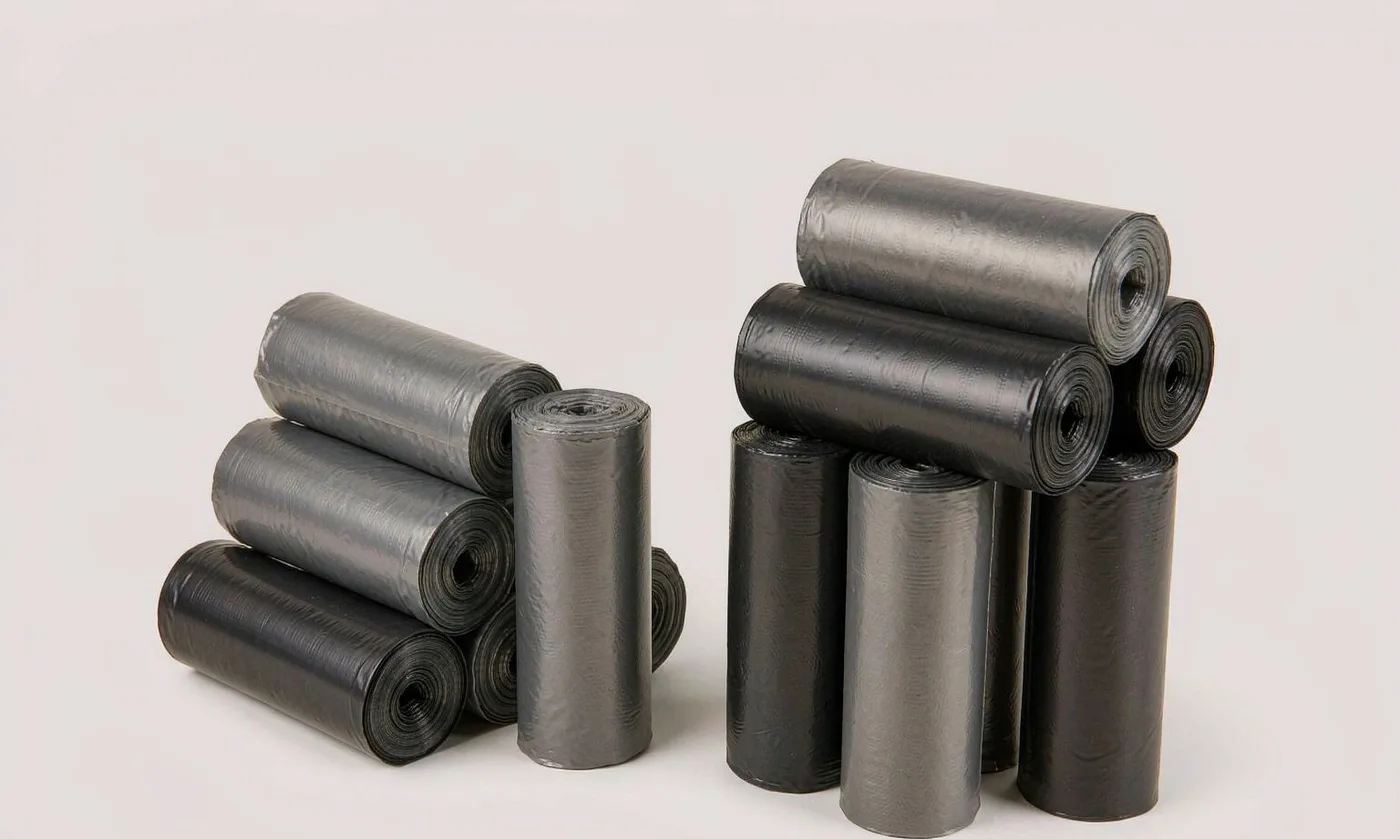
Sort the Offcuts Before You Promise to Recycle Them
Offcuts only have value when they are clean, single-fibre, and accumulated in a quantity worth collecting. A mixed pile of shell fabric, foam, adhesive-backed interlining, and zipper tape is refuse regardless of how it is labelled in a sustainability deck. Segregation has to be designed into the cutting room: labelled bins at each table, a rule that says which materials go in which bin, and someone accountable for keeping contaminated pieces out.
The streams worth separating in a pet bag cutting room are surprisingly few. Uncoated polyester or nylon shell offcuts are the most valuable, because mechanical reclamation and some chemical recycling routes accept them. Clean webbing ends have modest value and sell by weight to the same buyers. Foam and laminated panels usually have no route at all and should be minimised at the design stage instead. Coated or printed offcuts sit in the middle and depend entirely on what the local reclamation buyer will accept, which is why you should ask the supplier which facility actually collects before you write the word recycled on a hangtag.
Collection economics are the part buyers forget. A reclamation buyer will often set a pickup threshold, and below that threshold the material sits in a corner of the factory until it is quietly thrown away. On a single 500-piece order the clean offcut volume may be under the threshold, so the honest answer for a first order is that material is accumulated across orders and collected quarterly. That is a defensible statement; a per-order recycling claim on a sub-threshold quantity is not.
Set the segregation rule in writing and then verify it during a factory visit or a video walkthrough. Look for three bins, not one; look for a scale; look for a written total. If the cutting room cannot produce a weight record for the last closed order, the recycling narrative is aspirational, and any claim built on it should wait until it is real.
Put a Waste Clause in the Purchase Order
A sustainability requirement that lives in an email thread has no force once production starts. The waste clause belongs in the purchase order and in the inspection brief, expressed as something a checker can confirm or fail. Three clauses do most of the work: a reporting clause, a substituted-input clause, and a packing clause.
The reporting clause should name the document - an order waste ledger - and its contents: kilograms issued by material, kilograms in approved finished units, kilograms recovered by stream with the collector named, and kilograms disposed with the disposal route named. It should also state when the document is delivered, ideally before final payment release rather than on request months later. A clause without a deadline is a clause that gets ignored.
The substituted-input clause protects the whole exercise. Fabric, lining, foam, webbing, and coatings should be listed by specification, and any change should require written buyer approval with a fresh sample. A cheaper lining swapped in during bulk production changes both the waste profile and the recycling story, and it is the most common way a verified program quietly becomes an unverified one.
The packing clause is the easiest win. State carton size, polybag thickness or its elimination, tissue and insert count, and void fill type. Right-sizing the master carton alone often removes 8-15% of packing weight per unit, and because packing is specified by the buyer rather than engineered by the supplier, this reduction lands immediately without a development cycle.
Finally, attach a consequence. Define in the order what happens when the waste ledger is missing or cannot be reconciled - for example, that the shipment is treated as non-conforming for documentation purposes and final payment is held until the record is produced. Without a consequence the clause is a preference.
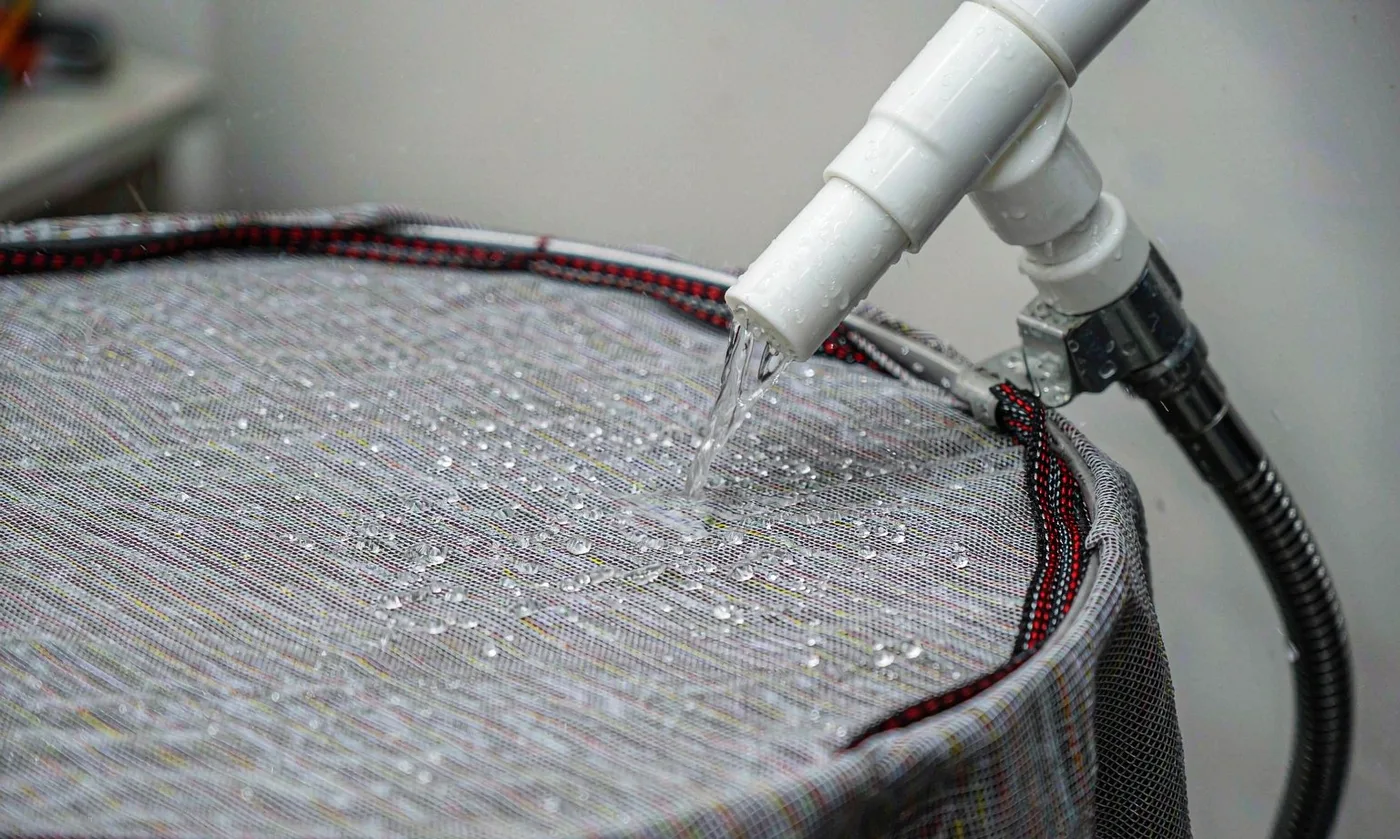
What the Production Side Should Report Each Order
A usable record set for one purchase order is short. It contains the fabric issue sheet, the marker report, the cutting waste tally by material, the reject log with reasons, the packing bill of materials with weights, and the recovery or disposal receipts. Six documents, each answering a different question, none of them a certificate. Buyers who ask for a certificate instead of these six records end up with a logo and no evidence.
Reconciliation is the test. Kilograms issued should equal kilograms in finished units plus kilograms recovered plus kilograms disposed, within a tolerance you set in advance - 2% is a reasonable figure for a cut-and-sew operation. When the two sides do not reconcile, the gap is usually either unrecorded disposal or an inaccurate issue sheet, and both are worth chasing because they also indicate weak inventory control.
Independent frameworks help structure the record rather than replace it. Quality management discipline under ISO 9001 quality management principles is what makes a factory keep consistent issue and reject records in the first place, and third-party verification through SGS testing and audit services can confirm that the records exist and describe the facility you are buying from. Neither converts a batch into a claim on its own; they establish that the numbers were produced by a controlled process.
Our production team works through an SGS-verified production base of 4,950 square meters with 137 people, 7 lines, 149 pieces of equipment, and monthly capacity near 200,000 pieces. Those figures let a buyer sanity-check whether a proposed order fits the disclosed resources, and they also explain why a waste ledger is feasible: a facility running at that scale already weighs material at issue and at dispatch for its own costing.
Store the records against the order number, not in a shared marketing folder. When a retail buyer or a marketplace compliance team asks for substantiation eighteen months later, the file you need is the one tied to that specific production lot, and a folder of generic supplier brochures will not answer the question.
Packing Weight Is the Cheapest Reduction Available
Packing is where a wholesale buyer can cut waste without waiting for a re-engineering cycle, because most of the decisions sit on the buyer's side of the table. A typical pet bag ships in a polybag, inside a printed retail box or a hangtag set, inside a master carton with void fill. Each layer exists for a reason - moisture protection, retail presentation, transit protection - and each one can be tested rather than assumed.
Start with the master carton. Cartons are frequently specified one size larger than necessary because nobody recalculated after a design change, and the cube penalty is paid twice: in corrugated weight and in freight cost per unit. A packing trial that measures the filled cube and compares it to the carton volume will usually find 10-20% of air in the box.
The polybag is the second decision. Removing it entirely is the obvious green move and, in a humid container or a damp warehouse, the fastest route to mould claims and returns. A middle path works better: keep the bag, drop from 50 microns to 30 microns, add ventilation holes, and confirm with a humidity chamber test that the shell and lining come out clean. If the test passes, the reduction is real and defensible; if it fails, the discarded-goods footprint dwarfs the plastic saved.
Inserts are the third lever. A multi-page care booklet, a separate brand card, a barcode sticker, and a compliance tag can often be consolidated into one printed card and one label. Printing disposal guidance and material content on the master carton rather than on a per-unit insert removes weight and keeps the information where the warehouse and the retailer can see it.
General guidance on material management hierarchy from the US Environmental Protection Agency is useful when writing internal policy: source reduction first, then reuse, then recycling, then disposal. Structuring your own specification in that order makes the trade-offs easier to explain to a merchandising team that wants the headline rather than the hierarchy.
Where Zero-Waste Language Exposes the Buyer
The word zero is the hazard. In a manufacturing context, zero waste is a target defined by a certification framework or an internal goal with a stated boundary, not a description of a single product. When a listing says a pet bag is zero waste without a boundary, a reviewer can reasonably read it as a claim that the product created no waste, which no cut-and-sew item can support.
Safer wording states the metric, the baseline, and the period. "Cutting waste reduced by 22% against the previous marker" is checkable. "Offcuts from this order collected for mechanical reclamation" is checkable if the receipt exists. "92% of recorded cutting waste diverted from landfill in Q3" is checkable if the ledger exists. Each of those sentences names a subject, a number, and a timeframe, which is exactly what makes them defensible and also what makes them less attractive on a hangtag.
The second exposure is scope creep. A reduction achieved on the shell fabric gets described on the product page in a way that implies the whole bag, including hardware, foam, coatings, and packing. Keep the subject next to the number: shell fabric, lining, packing, or the facility, and if the improvement applies to one component, say so in the same sentence rather than in a footnote.
The third exposure is the end-of-life implication. Zero waste in production says nothing about what happens when the customer throws the bag away, yet shoppers read it that way. If the product is not recyclable, compostable, or repairable, do not let production-side language drift into disposal-side promises.
Maintain one approved wording register per brand, listing the permitted sentence, the SKUs it covers, the markets where it is approved, the record that supports it, and the expiry date tied to the evidence. When a certificate lapses or the fabric changes, the register tells the e-commerce team which sentence to pull, and pulling it quickly is far cheaper than defending it later.
A First-Order Plan That Produces Evidence
The mistake most buyers make is launching a zero-waste range across six styles and nine colors. The information quality collapses, no baseline exists, and the waste ledger becomes an argument rather than a measurement. One style, two colors, three consecutive orders produces a clean trend line and a file you can actually show a retail buyer.
Order one should establish the baseline. Run the style on the supplier's standard marker, collect the full record set, and do not change anything. You now have a number for cutting loss, rejects, and packing weight on your own specification rather than an industry average. Order two applies the changes: optimised marker, width-matched rolls, right-sized carton, reduced polybag, consolidated inserts. Order three confirms the changes hold when the line is busy and the operator is new.
Sampling for the marker rework takes 6-10 working days once the specification and fabric are confirmed, because the pattern room needs to re-draft, re-nest, and cut a trial panel set. Bulk runs 35-50 days after sample approval on MOQ 500 pieces per color. Plan the waste review alongside the sample round rather than after bulk, since a physically acceptable sample can still carry a marker that was never issued to the cutting room.
Pre-shipment inspection at AQL 2.5 covers workmanship and specification conformity, and the documentation check belongs in the same brief: marker version matches the approved file, carton dimensions match the packing specification, label and claim text matches the approved register. Treat a missing waste ledger as a documentation defect with the same seriousness as a broken stitch, because both indicate the order was not produced under control.
Review after the third order and decide with numbers: cutting loss trend, reject rate, packing grams per unit, recovery receipts, and unit cost movement. Expand when the trend holds and the recovered quantity exceeds the collector's pickup threshold. Hold or redesign when the numbers move but the records do not, because a program that cannot be documented will not survive the first serious compliance question.
Production capability
- SGS-verified production space of 4,950 m², 149 machines, 7 assembly lines
- Pet bag output since 2014 from a 137-person team
- 200,000 units shipped monthly under BSCI and ISO 9001 systems
People Also Ask
What waste rate should a wholesale buyer ask a pet bag supplier to report?
Ask for kilograms issued to cutting minus kilograms in approved finished units, over kilograms issued, reported per order, with recovered and disposed quantities listed separately. A 2% reconciliation tolerance is reasonable for cut-and-sew work.
How do you cut fabric waste without changing the fabric?
Improve marker efficiency, match roll width to the pattern set, nest multiple sizes in one marker, and simplify panel geometry. These are pattern-room decisions that reduce both waste and unit cost.
Are textile offcuts from pet bag production worth money?
Clean, single-fibre, uncoated offcuts have resale value to reclamation buyers; foam, laminated panels, and mixed trim usually do not. Value depends on volume, since collectors set pickup thresholds that small orders may not reach.
What does zero waste mean in a factory work order?
It should mean a defined reduction target with a stated boundary - which materials, which period, which routes counted - not an absolute claim that nothing was discarded. Insist on the boundary sentence inside the purchase order.
How can packing weight be reduced without damaging goods?
Right-size the master carton after a fill trial, reduce polybag micron with ventilation holes and humidity testing, and consolidate inserts into one card. Validate with drop and humidity tests before release.
Is a certificate enough proof for a zero-waste claim?
No. Certificates cover a facility, system, or process. You still need the order-level ledger, marker report, reject log, packing weights, and recovery receipts tied to the specific production lot.
Frequently Asked Questions
How much fabric waste is normal on a bulk pet bag order?
Total material loss of 9-15% by weight of everything issued to the line is typical, with cutting loss alone at 6-12% before marker optimisation. Mature styles should hold finished-unit rejects below 1.5%, while a first run of a new style may reach 3%.
What is a realistic marker utilisation target?
Aim for 88-93% on shell fabric. Above roughly 93% the offcuts become too small to sort and sell, so the waste metric improves while the recovered quantity falls, which is usually the wrong trade.
Should a buyer ask for the marker report before placing the order?
Yes. Request marker version, fabric width, sizes nested, utilisation percentage, and generation date as a quotation line item. Reusing an old marker after a pattern change means the approved waste number no longer describes what is produced.
Who normally pays for third-party verification of waste records?
The buyer usually funds audits and tests it wants to rely on, while routine internal records are a supplier cost of doing business. Put the allocation in the quotation so it is not negotiated after the goods are finished.
Can small orders reach a recycler pickup threshold?
Often not. A single 500-piece order may generate less clean offcut than a reclamation buyer will collect, so the honest statement is accumulation across orders with quarterly collection rather than per-order recycling.
What happens if the supplier cannot reconcile kilograms issued to kilograms out?
Treat it as a documentation non-conformance. Set a reconciliation tolerance, commonly 2%, and hold final payment until the ledger is produced, since an unexplained gap usually means unrecorded disposal or weak inventory control.
How many samples are needed to validate a packing change?
One packed sample per carton option is enough for cube and drop checks, plus a humidity chamber run if polybag thickness changes. Samples take 6-10 working days once specification and material are confirmed.
Is removing the polybag always the right move?
No. In humid transit or damp warehousing, removing moisture protection can generate mould returns whose footprint exceeds the plastic saved. Test before removing, and consider thinner film with ventilation holes as a middle path.
Can brand decoration still be applied on a low-waste order?
Yes, provided inks, labels, and hangtags stay inside the approved material and documentation scope. Consolidating inserts into one printed card usually reduces both cost and packing weight.
How long does bulk production take for this type of program?
Bulk runs 35-50 days after sample approval, with MOQ 500 pieces per color and T/T 30/70 on FOB Xiamen terms. Material reservation for specified fabrics may sit ahead of that window.
What should an inspection brief say about documentation?
Require that marker version, carton dimensions, and claim text match the approved files, and classify a missing waste ledger as a defect. Pair this with AQL 2.5 for workmanship so documentation and physical quality are checked in the same visit.
When is the right time to expand a low-waste range?
After three consecutive orders show a stable trend in cutting loss, rejects, packing weight, and recovery receipts, and when recovered volume exceeds the collector threshold. Expand only if unit cost also moved favourably.
Talk to QUANZHOU JUNYUAN BAGS about a wholesale pet bag order: MOQ 500 pieces per colourway, samples in 6-10 working days, bulk production in 35-50 days under AQL 2.5 inspection.
Get a free quote Request a sample