Cotton Fabric: Soft and Breathable
Cotton is the strongest choice for surfaces the animal actually touches: it moves moisture away from the body, stays quiet under claws and feels neutral against fur, which reduces restlessness in transit. It is not a structural shell. Specify cotton as linings, removable mats and contact panels at 120-260 gsm, with a written residual shrinkage limit of 3% or less after laundering. Expect Enzyme or softener finishes rather than coatings.
Executive summary. Cotton earns its place in a pet bag where warmth, noise and comfort against fur determine whether an animal settles, and earns no place where structure or water shedding matter. Our production team specifies cotton in three roles - removable liners, quilted mat covers and summer-weight contact panels - and each carries different GSM, finish and wash requirements that should be priced separately rather than averaged across the bill of materials. Quotations assume MOQ 500 pieces per colourway.
The development calendar is unchanged by material: sampling takes 6-10 working days once the tech pack is frozen, and bulk takes 35-50 days after sample approval, since cotton requires additional pre-shrink and relaxation steps that cannot run late in the schedule. Pre-shipment inspection follows AQL 2.5 with critical defects at zero tolerance, and one production unit is laundered and re-measured before release so dimensional behaviour is recorded rather than assumed.
The commercial question buyers should answer first is whether their value proposition is comfort or performance. Cotton delivers the first convincingly and attacks the second, and pretending otherwise produces a specification that satisfies neither.
Orders for bulk pet carriers are quoted on the same three levers as Material & Technology work - fabric weight, hardware grade and carton count - because freight, not unit labour, decides the landed figure. Buyers who buy pet carriers in mixed sizes can consolidate several size runs into one booking, which keeps the per-unit spread tight without forcing a single colourway to carry the whole minimum.
The real reason to put cotton inside a pet bag
Synthetic linings do three things badly, all of which matter in transit. They make a crinkling noise that keeps nervous animals alert, they feel cool and slightly clammy against fur, and they generate static that lifts loose hair into the seams. Cotton solves all three cheaply, and its effect on behaviour is noticeable enough that many buyers see it reflected in reviews long before they see it in a test report.
Breathability is the mechanism. Cotton fibre is hygroscopic, absorbing moisture vapour from the boundary layer next to the animal and releasing it outward, so the contact surface stays closer to ambient rather than becoming a microclimate. In warm weather this is the difference between an animal that rests and one that paces, which for a carrier or sling is a functional difference rather than a comfort detail.
Quietness is the second benefit and easier to quantify than it sounds. Soft-finished cotton poplin moves almost silently, while coated polyester taffeta crackles audibly with every shift of weight. Buyers building products marketed for nervous or senior pets should treat quietness as a listed feature, verified by a simple comparison in the sample rather than by adjectives on the page.
Third is washability. Removable cotton liners survive domestic laundering far better than most coated synthetics, and an odour problem solved by a 40 C wash cycle is an odour problem removed rather than masked. For rental, boarding and veterinary channels, that matters more than any other single property.
There is a fourth benefit that only becomes visible in large programmes: cotton contact surfaces reduce the static charge that draws hair into stitch lines and zip coils, which keeps products looking cleaner between uses and reduces the cleaning effort owners report. For sellers whose reviews mention shedding and cleaning, this single change often moves scores more reliably than any finish upgrade.
Specifying cotton in these roles also simplifies compliance storytelling. Because cotton is familiar to customers, requires less explanation than technical fibres and supports straightforward care instructions, product pages written around it convert without needing to educate the buyer first. In categories where education cost delays purchase, that simplicity has real commercial value.
Cotton constructions used in pet bag assemblies
"Cotton" names a fibre, and the fabric built from it can behave almost nothing like another cotton fabric. Five constructions cover nearly every pet application, and they differ in weight, surface character and cost far more than buyers expect before sampling.
Poplin is a fine, tightly woven plain cloth, smooth and quiet, ideal for removable liners where the priority is a clean surface that releases hair easily. Twill shows diagonal ribs, resists creasing well and drapes better, making it the usual choice for mat covers and quilted pads. Jersey knit stretches and recovers, which suits contoured liners that hug rounded interiors, though it pills faster than woven options.
Two further constructions matter. Cotton fleece and brushed surfaces provide warmth for cold-climate programmes but pill visibly with use, which requires either an honest care story or a higher pilling resistance specification. And lightweight canvas, below 300 gsm, serves structured contact panels where a synthetic would feel too industrial but full canvas would add excessive weight.
Selection should start from the thickness of use rather than price alone. A poplin liner is cheap and pleasant but will thin at contact points within a season of daily service; a twill alternative costs more per metre and less per month. Buyers who model the difference over twelve months routinely reach different conclusions than those comparing metre prices in isolation.
Construction details matter equally. Because pets apply load unevenly, liners should be cut with adequate ease at corners and attached so that movement is possible without stress concentration - small pattern decisions that often decide whether an otherwise correct material choice succeeds.
Cotton constructions compared by role and cost
The table below maps the five constructions to their practical roles, with typical weights and a relative cost index anchored at 1.00 for 140 gsm cotton poplin. Note that finishing adds a meaningful share of cost on every row, which is where most under-quotations originate.
| Construction | Typical GSM | Role in a pet bag | Advantages | Limitations | Cost index |
|---|---|---|---|---|---|
| Poplin | 120-150 gsm | Removable liners, dust covers | Quiet, smooth, releases hair | Low abrasion life | 1.00 |
| Twill | 200-260 gsm | Mat covers, quilted pads | Resists creasing, durable | Heavier, slower drying | 1.42 |
| Jersey knit | 160-220 gsm | Contoured liners | Stretches to curved shapes | Pills, snags on claws | 1.30 |
| Brushed fleece | 240-320 gsm | Cold-weather pads | Warm, tactile | Pills and holds hair | 1.55 |
| Light canvas | 270-340 gsm | Structured contact panels | Natural look with structure | Shrinkage, drying time | 1.48 |
Cost per unit of service often favours twill even though poplin is cheapest per metre, because twill liners survive the brushing cycles that eventually thin poplin at pressure points. Where the design permits, mixing twill at contact zones with poplin elsewhere yields better performance at nearly poplin cost.
Buyers should also budget separately for replacement liners. Because cotton liners are washable and designed to wear, offering spare units is both a margin opportunity and a way to extend product life without re-engineering the outer shell.
Practical costing should also include replacement liners as a separate line rather than a spare-parts afterthought. Stocking them in matching colours creates repeat purchase revenue at attractive margin, extends the usable life of the shell and removes a common reason customers abandon a product they otherwise like.
Dimensional control: shrinkage measured, not promised
Cotton moves in water, and every cotton component in a pet bag will eventually meet water because washable interiors are the point of using them. The engineering response is to consume that shrinkage before cutting and to specify what remains.
The standard approach is a pre-shrink pass, either mechanical compressive shrinking or a wash-and-dry relaxation cycle, applied to the fabric before cutting. Either route reduces but never eliminates later movement, and the honest specification therefore sets a residual limit after a defined domestic wash cycle rather than claiming the fabric will not shrink. Three percent or less is achievable and reasonable for liners.
Pattern compensation is the second lever. Removable liners should be cut slightly generous so that after first wash they still fit the shell, and attachment points should use either generous seam allowances or elasticated fixings that tolerate movement. A liner that fits perfectly at sample stage frequently fails to fit after two washes, and the customer does not distinguish between the two experiences.
Finally, verify on a finished unit. Measuring flat fabric is easier and less meaningful, because quilting, binding and attached hardware constrain movement unevenly. Our standard procedure launders one production sample, records all key dimensions and issues the result with the inspection report, giving reorders a documented baseline.
Testing should be performed after construction rather than before, since quilting, binding and interfacing change how panels move in water. This sequence costs an extra day in sampling and removes the most unpredictable element of cotton component performance.
The same measurement discipline belongs in the purchase order rather than in the sample stage. State the wash cycle, the drying method, the number of cycles and the acceptance limit, then require the report before shipment rather than before production. A specification that reads "minimal shrinkage" cannot be enforced; one that reads "3% maximum on length and width after a single 40 degree domestic wash, line dried and measured on a finished liner" can be tested, quoted against and rejected if missed. Buyers who write the second version almost never end up paying for a dimensional dispute.
Finishes: what helps and what quietly hurts
Because cotton brings almost no inherent performance, finish carries most of the functional burden, and finishes are also where unnecessary cost enters a specification. Four deserve consideration; several others are best avoided in this application.
- Softener or enzyme wash. Improves hand and reduces initial stiffness, which matters for contact surfaces. Low cost, universally beneficial.
- Wicking finish. Enhances cotton's natural moisture transport and speeds drying. Useful where liners will be washed frequently.
- Antimicrobial treatment. Effective against odour bacteria, but any claim made on packaging requires article-specific evidence and compliance review in your destination market.
- Stain-release finish. Helps soiling come away in domestic washing, valuable for visible mat covers and light colours.
What to avoid is any heavy coating that closes the fabric's open structure, since the breathability that justified specifying cotton disappears the moment a film is applied. Buyers sometimes ask for coated cotton liners for cleanability, which defeats the purpose and costs more than simply specifying a coated synthetic panel where cleanability genuinely matters.
Colour behaviour deserves separate mention. Cotton takes reactive dyes beautifully but typically shows lower light fastness than polyester, particularly on bright shades. Where a mat cover will sit in sunlight, specify a light fastness minimum and test it using frameworks referenced by AATCC methods.
There is one more caution worth stating. Aggressive chemical finishes can occasionally introduce skin sensitivity issues in unusual cases, so where a claim is unnecessary, specifying a simpler finish is often both cheaper and safer than pursuing maximum performance.
Hygiene, laundering and the replacement liner model
Washable cotton interiors change the ownership economics of a pet bag, and buyers should sell that explicitly rather than treating it as a technical footnote. A shell that lasts three years with a liner replaced annually is a different product - and a different revenue line - from one that becomes unusable after its first serious soiling event.
Design supports this in three ways. Liners must remove cleanly, ideally on a zip or robust hook-and-loop interface rather than tacked stitching. Attachment hardware must survive repeated cycles, which means specifying cycle-tested zips rather than whichever slider matches the colour book. And the liner should be available as a spare part, stocked in the same colours as the original so replacements look intentional.
Buyers should also specify wash parameters honestly on the product page: temperature ceiling, whether tumble drying is acceptable and expected dimensional change. Over-promising here generates returns from customers who laundered correctly and saw the liner change shape, and those returns are attributed to quality rather than expectations.
Where additional hygiene control is required, such as veterinary or boarding channels, start with construction - removable, machine-washable, quick-drying - before considering chemical treatment. Construction solves most problems; treatments carry the claim burden. See also our note on odour-resistant construction.
Commercially, spare liners convert a consumable into a subscription-like revenue stream, and they do so without requiring any change to your manufacturing process beyond stocking.
Clear care labelling must accompany that model, and the honest parameters are straightforward: maximum wash temperature, drying method and realistic expected change in size.
From a merchandising view, the spare liner deserves listing logic of its own. It should carry the same colour names as the shell, ship in the same packaging language and appear at the point of sale rather than in a spare-parts category. Programmes that treat it as an accessory from launch generally reach attach rates that justify stocking it in the first season, and because the liner reuses the original cutting data, adding it to a later production run costs far less than developing an entirely new component.
Chemical compliance and certificate practice
Cotton's compliance burden is not heavier than synthetics, but it is different, and it shifts toward dyes and finishes rather than polymer chemistry. Three practices keep it simple.
First, require article-level evidence rather than mill-level assurances. Restricted substance frameworks for the European market are administered through ECHA, and the practical pattern most retailers accept is per-component certification under scheme criteria published by OEKO-TEX, with certificate numbers and expiry dates visible on the quotation.
Second, request certificates to be re-issued rather than renewed verbally. A certificate that expired six months ago is not evidence of the current dye lot, and this is the single most common documentation failure found when retailers audit.
Third, plan for destination-specific extras early. Organic fibre claims, cotton origin documentation and certain restricted subprocess bans vary by market; the cost of compliance is low when established at specification time and high when discovered at customs. Quality management systems accredited to frameworks such as those published by ISO 9001 help keep that documentation stable across lots.
Keeping a certificate register, with expiry tracked by whoever manages reorders, is the single most valuable compliance habit in this category and costs almost nothing to maintain.
Buyers selling into more than one market should also settle early whether the claim set differs by destination. A shade and finish combination that passes without comment in one jurisdiction may need different documentation in another, and the gap costs almost nothing when planned at specification time and considerably more when it appears at a border. The practical habit is a one-page certificate register per style, listing each component, its certificate number, its issuing body and its expiry month, maintained by whoever raises the reorder rather than by whoever happens to be answering an audit.
Cost structure of a cotton-lined build: where the money goes
Cotton is almost never the most expensive line on a pet bag bill of materials, and buyers who budget from fabric price per metre consistently under-quote the finished unit. The reason is that cotton components carry process cost - pre-shrink, laundering trials, separate cutting and an extra inspection step - that a single-material synthetic build does not incur. Knowing where that cost sits is the fastest route to a realistic target price without degrading the product.
The shell usually dominates material spend when a technical woven is specified, while the cotton lining contributes a modest share of fabric cost and a disproportionate share of handling. Batting or quilting behind a cotton face adds material and a slow operation at the same time. Binding and piping used to finish a removable liner are cheap per metre and expensive in minutes. And the cycle-rated zip that a removable design depends on costs several times a decorative slider of identical appearance - a substitution that looks like free money at quotation and returns as warranty cost eighteen months later.
| Cost driver | Share of unit cost | Main lever | What happens if it is cut |
|---|---|---|---|
| Shell fabric | 22-30% | GSM, weave and coating | Abrasion life and structure fail first |
| Cotton lining fabric | 10-16% | Construction and gsm | Owner feels it at once; reviews move |
| Batting and quilting | 8-12% | Loft and stitch pattern | Warmth falls, drying slows |
| Binding, tape and liner zip | 9-14% | Trim grade | Removable liner becomes the failure point |
| Cutting and sewing labour | 18-24% | Pattern efficiency and seam count | Defect rate rises |
| Pre-shrink and finishing | 3-6% | Mechanical versus wash route | Dimensional returns after first wash |
| Testing and compliance | 1-3% | Scope of the test plan | Retailer or marketplace rejection |
Read across the last column and the negotiation strategy becomes clear. Cutting shell gsm saves visible money and costs visible quality; deleting the pre-shrink step saves three to six percent of unit cost and can cost an entire season of dimensional returns. Our production team prices each of these lines separately for precisely this reason, so a buyer can see what a concession actually buys before agreeing to it.
Volume behaves predictably. The process overhead in the table is largely fixed per lot rather than per piece, so it shrinks as a share of unit cost once an order clears roughly 2,000 pieces in a single colourway. Below that threshold, spreading one specification across fewer units makes cotton look more expensive than it really is, which is a common source of false comparisons against synthetic builds quoted at higher volume.
One final costing caution: budget the replacement liner as its own SKU with its own cost rather than as a spare part. It uses a different cutting pattern, a different trim set and usually a different order profile, and programmes that discover this after the first bulk run almost always price spares at a loss.
MOQ, colourways and reorder economics for cotton programmes
Wholesale pet bag programmes run at MOQ 500 pieces per colourway, and cotton makes the colourway - not the style - the binding constraint. Mills dye to a lot, and a realistic dye lot for a woven cotton shade sits in the 300-500 metre band, which is close to what 500 units consume once cutting waste is counted. Ordering 250 units in four colours instead of 1,000 units in one therefore buys four set-ups, four lots of cutting waste and four opportunities for a shade mismatch, in exchange for no purchasing advantage at all.
The practical response is to decouple colour from fabric. Buy the shell in the colours the market asks for and standardise the cotton lining on one or two neutral shades across the whole range. Linings are largely hidden, so shade variety there delivers little commercial value, while standardising keeps every colourway above the mill minimum and raises the effective volume sitting behind the lining purchase.
Reorder economics matter more than first-order price for most buyers. Once a shade has been lab-dipped and approved, reorders should reference the original dip number rather than a swatch, because cotton dye lots drift measurably between runs and a visual match is not a specification. Keeping the approved dip inside the tech pack is the cheapest insurance available in this category.
Commercial terms follow the standard programme: T/T 30/70, FOB Xiamen, sampling in 6-10 working days and bulk in 35-50 days after sample approval. Because cotton adds pre-shrink and a laundering trial to the front of the schedule, buyers who want the 35-day end of that range should freeze the tech pack before the mill order is placed rather than during sampling - a sequencing detail that costs nothing and is worth roughly a fortnight.
The SGS-verified production base behind these programmes runs 7 lines with 149 machines and monthly output near 200,000 pieces, which is what allows a 500-piece colourway to be scheduled alongside larger runs without a small-lot penalty. BSCI and ISO 9001 certification cover the social and quality management systems that retailers audit, and independent verification bodies such as SGS are used for article-level testing when a buyer's own protocol is not already in place. For programmes that will repeat, ask for the shade standard and the laundering report to be archived against the style number; the reorder then starts at week one instead of week six.
Where cotton belongs in your next bill of materials
A useful way to settle the material strategy is to assign each component a job and then ask which fibre does it best. Outer shell: polyester or nylon for structure, water behaviour and abrasion. Base contact: synthetic or blended heavy canvas, because this area takes both weight and water. Interior contact surface: cotton, for quiet, breathability and washability. This map produces better products than deciding one fabric for the whole build, and it usually lowers total cost because expensive technical fabric is used only where it earns its premium.
The counter-argument is operational: more components means more line items, more inspections and marginally more cutting waste. That cost is real but small, typically dwarfed by the returns and review-quality benefits of getting touch surfaces right.
Our production team prices these hybrid builds routinely and can quote each component against written test targets, sampling in 6-10 working days and producing in 35-50 days after approval, with inspection at AQL 2.5. Buyers weighing heavy natural options should also read the canvas specification guide, while those prioritising low weight will want the polyester cost analysis.
The same logic extends to trims and hardware: assign each component a job, then specify the material that does it best rather than defaulting to one fabric for consistency's sake.
Order and quality terms
- MOQ 500 pieces per colourway; samples in 6-10 working days
- Bulk production 35-50 days after approval; AQL 2.5 inspection standard
- T/T 30/70 terms, FOB Xiamen, full document set per shipment
People Also Ask
Why use cotton inside a pet carrier?
It is quiet, absorbent and neutral against fur, so animals settle more readily. It also survives domestic laundering, which resolves odour problems rather than masking them.
What GSM cotton is best for liners?
120-150 gsm poplin for removable liners and 200-260 gsm twill for quilted pads. Thicker fabric adds durability but dries more slowly.
Is cotton safe for pets?
Yes when dyed and finished within restricted-substance limits, and it is the least reactive common contact surface. Verify with component-level certification rather than assuming.
Does cotton pill?
Brushed knits and fleece pill with friction; woven poplin and twill resist it well. Knit constructions need a written pilling resistance target.
Can I mix cotton and polyester in one bag?
Yes, and it is usually better than committing to a single fabric. Synthetics for structure and contact surfaces of cotton for comfort is the common hybrid build.
How often should a cotton liner be replaced?
Typically annually for daily-use products. Offering matching spares turns replacement into revenue and extends the shell's usable life.
Frequently Asked Questions
Is cotton durable enough for pet bag interiors?
Yes for liners, mat covers and contact panels. It abrades faster than synthetics, so it belongs inside the bag rather than on the structural shell, where polyester or nylon performs better.
Will cotton liners shrink and stop fitting?
They can without control. Specify pre-shrunk or relaxed fabric with a residual shrinkage ceiling under 3% after a defined wash cycle, cut generously, and launder-test a finished sample before bulk approval.
Is cotton more breathable than mesh?
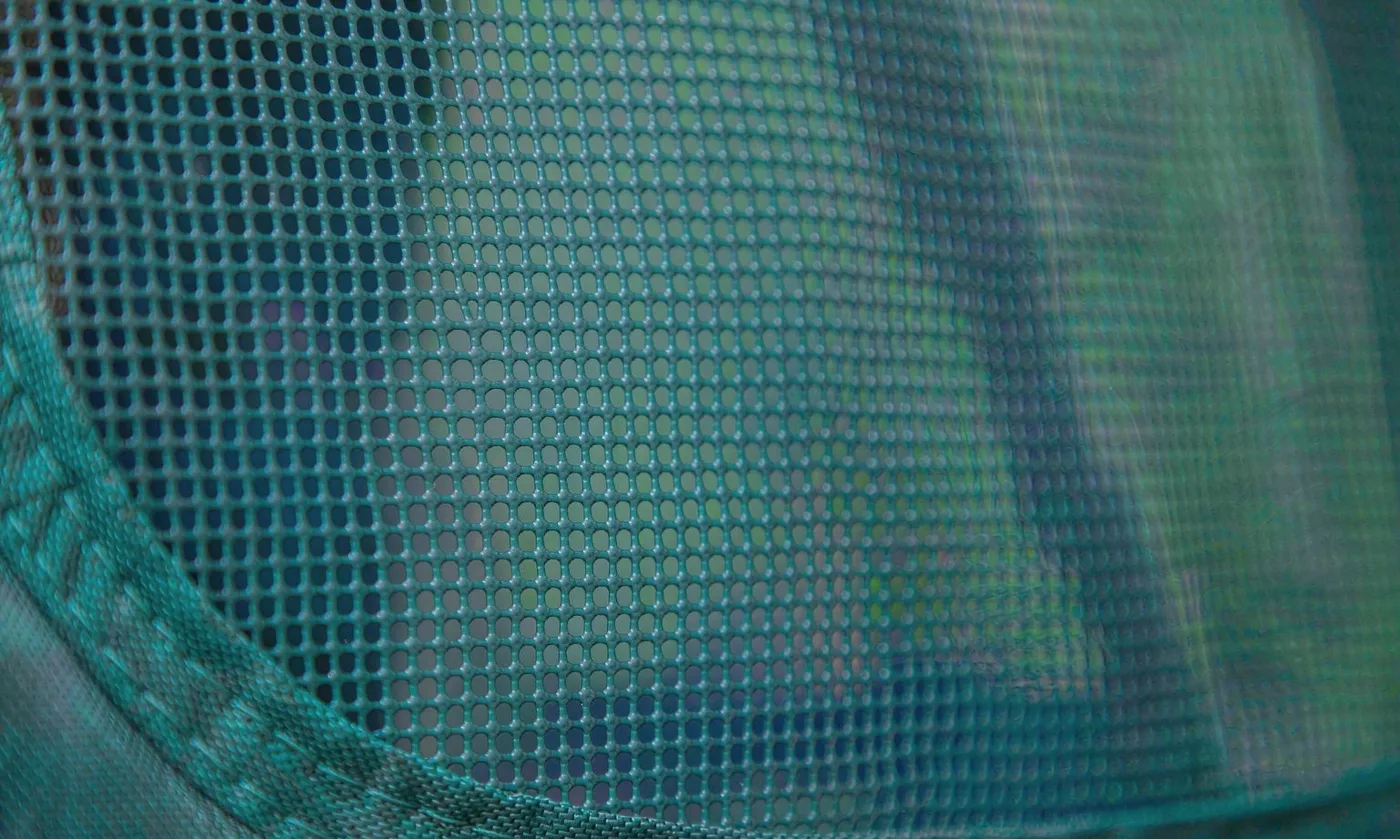
Cotton is more comfortable across a large area, while mesh admits more raw airflow. Many designs use both: mesh panels high on the body plus cotton contact surfaces below.
Can cotton liners be machine washed?
Yes, and that is the principal benefit. Removing and laundering a cotton liner restores hygiene in a way spot-cleaning a coated synthetic struggles to match.
Does cotton hold odour?
Less than most synthetics when it can be washed, more than synthetics when it cannot. Odour management is largely a construction question: removable, washable, quick-drying liners outperform treated surfaces.
Which cotton weight works best?
120-150 gsm poplin for liners, 200-260 gsm twill for mats and pads, and 240-320 gsm brushed fabric for cold-weather designs. Heavier options resist wear but dry slowly.
Does cotton fade faster than polyester?
Generally yes on bright and deep shades. Specify a light fastness minimum and test it, particularly for products displayed or used in direct sun.
Should I coat cotton for cleanability?
Rarely. Coating closes the pore structure that makes cotton worth specifying, and a coated synthetic panel does the cleanability job better and cheaper where it genuinely matters.
Is organic cotton worth the premium?
Only where the brand story carries documented value. It requires chain-of-custody evidence, adds cost and has little effect on functional performance.
Can cotton be used with printed graphics?
Yes, through pigment or reactive printing. Gradients and photographs reproduce well, though unlike polyester there is no sublimation route, so print cost structure differs.
What certificates should accompany cotton linings?
Per-component restricted-substance certificates under a recognised scheme, with numbers and expiry dates shown, plus any market-specific origin claims requested at quotation rather than at customs.
How fast does cotton dry compared with polyester?
Slower, because the fibre absorbs water into the cell wall rather than holding it on the surface. Thin liners dry quickly enough for overnight turnaround; heavy brushed fabrics should not be specified where rapid drying matters.
What is the MOQ for a cotton-lined pet bag programme?
MOQ 500 pieces per colourway. Where several colours are required, the usual solution is to vary the shell shade and keep the cotton lining on one or two neutral shades, so each fabric purchase still clears the mill dye-lot minimum.
How is shrinkage verified before a bulk order ships?
One finished production unit is laundered on the cycle named in the specification, dried by the stated method, then re-measured at the key dimensions, and the result is issued with the inspection report. Flat-fabric measurement is not an acceptable substitute because quilting and binding change how panels move.
Talk to QUANZHOU JUNYUAN BAGS about a wholesale pet bag order: MOQ 500 pieces per colourway, samples in 6-10 working days, bulk production in 35-50 days under AQL 2.5 inspection.
Get a free quote Request a sample