ISO 9001 Pet Bag Manufacturer: Quality Management
ISO 9001 certifies a supplier's quality management system, not the pet bag itself. It requires documented processes, internal audit, corrective action and management review, verified by an accredited body and re-assessed on a surveillance cycle. For a buyer, the value is predictability: certified sites hold specifications, keep records and can trace a defect back to a material lot.
Executive summary for buyers. A certified quality system changes how problems get solved rather than how many problems occur. On a wholesale pet bag programme at MOQ 500 pieces per colour, our production team issues the specification sheet, the inspection plan and the traceability record as a set, so a defect found at goods-in can be traced to a fabric lot, a shift and a machine. Sample development takes 6-10 working days and bulk runs 35-50 days from approved sample and deposit; a documented system is what keeps those windows stable when a revision is requested mid-programme.
Do not let a certificate replace inspection. The management system governs process; AQL 2.5 inspection governs the lot you are actually buying. Ask for both and cross-check them: the reference on the inspection record should match the reference on the approved sample and the specification sheet. Where those three documents disagree, the disagreement itself is the finding, regardless of what the certificate says.
Pet bag moq is quoted per colourway, not per order, so Material & Technology planning decides how many shades a launch can carry. A pet bag wholesale price that looks attractive at 500 units often shifts once the dye-lot minimum is added, and pet bag sample cost is normally credited back against the first production run.
What ISO 9001 certification covers in a pet bag supply chain
ISO 9001 sets requirements for a quality management system: how an organisation defines customer requirements, controls documents, manages suppliers, runs production under controlled conditions, handles non-conforming output, and improves. It is deliberately generic, which is why it applies equally to a machine shop and to a cut-and-sew bag operation producing wholesale pet bags.
The genericity is a feature rather than a weakness. The standard does not tell anyone how to sew a pet backpack; it requires the organisation to define how it will do so, to record what it did, to check the result, and to fix the gap when the result misses. For a buyer, that converts quality from a matter of trust into a matter of records.
Certification is issued by an external body against a defined scope and maintained through surveillance audits, typically annual, with a full recertification cycle every three years. The certificate is evidence that the system was found conforming at the time of audit. It is not a warranty on any individual shipment.
Three practical consequences follow for a pet bag buyer. A certified supplier should be able to produce the current revision of any controlled document on request. A certified supplier should have a recorded process for handling a non-conforming lot, including what happens to the goods. A certified supplier should be able to identify which material lot went into which production order.
Those three capabilities are exactly what a wholesale buyer needs when a retailer raises a quality question months after delivery. Without them, the answer is a reconstruction from memory and email threads. With them, the answer is a record.
The honest caveat is that certification is a floor, not a ceiling. A well-run uncertified site can outperform a certified one with a stale system. The certificate tells you the machinery exists; a short document request tells you whether it is being used this season.
The scope statement: the clause that decides whether the certificate applies
Every ISO 9001 certificate carries a scope, and the scope is the only part that matters to a buyer. A certificate scoped to "design and manufacture of textile bags" covers a different activity from one scoped to "trading of luggage products", even though both are valid certifications issued to legitimate organisations.
Buyers should read the scope against three questions. Does the scope name the activity that will actually be performed for this order? Does it name the site where that activity will happen? Does it cover the product category, or a narrower or unrelated one? If any answer is no, the certificate is real but not relevant.
The most common mismatch in bag sourcing is the trading-versus-manufacturing scope. A trading entity holds certification for sourcing and sales; production happens at partner facilities that sit outside the certificate unless explicitly listed. That arrangement is legitimate and common, but a buyer who assumes the certificate covers the cutting floor has misread it.
Site listing is the second trap. Multi-site certificates exist and list addresses in an annex. A production site added after the last audit may not appear. Buyers placing volume should ask for the certificate annex and confirm that the address where their order will run is on it.
The third trap is product category drift. Certificates are sometimes quoted for a category the supplier would like to sell rather than the one the scope covers. Pet bags sit near luggage, backpacks and textile accessories; the scope wording should be close enough that a compliance reviewer would not raise an eyebrow.
The check takes two minutes and prevents a rejected vendor submission. Request the certificate with its annex, read the scope line aloud against your purchase order, and file the result. That single habit resolves most certificate disputes before they become correspondence.

Process certification versus product conformance
The distinction that buyers most often blur is between a conforming process and a conforming product. ISO 9001 governs the process. A supplier can run a fully conforming quality system and still ship a pet bag that fails abrasion testing, because the system ensures the specification is followed, not that the specification was well written.
This is why the specification matters so much. In a certified environment, the controlled document is king: production follows the specification sheet, inspection checks against it, and non-conforming output is measured against it. If the specification sheet says 600 denier polyester with a PU coating and a 12-kilogram strap load, the system will faithfully deliver that. If nobody wrote the strap load requirement down, the system has nothing to enforce.
The buyer's leverage therefore sits in the specification, and the certificate is what makes the specification enforceable. This is a genuinely useful combination for a wholesale programme: write a demanding specification, and a certified supplier has a documented obligation to meet it and a documented process for correcting it when it misses.
Product conformance is established by testing and inspection, which sit outside ISO 9001. Laboratory testing validates the design and material once. AQL inspection validates each production lot. The management system governs how those results are recorded, how a failure triggers an investigation, and how the corrective action is verified.
A useful test of whether the system is live: ask what happened the last time a lot failed. A certified supplier with an active system can describe the non-conformance record, the root cause, the corrective action and the verification. A supplier with a decorative certificate will describe the failure and then stop.
For buyers running repeat seasonal programmes, this is the difference between a supplier who improves and one who repeats. Both can hold the same certificate; only one uses it.
Document control: what a certified line can show you on request
Document control is the least glamorous and most diagnostic clause in the standard. It requires that controlled documents carry revision status, that obsolete versions are removed from use, and that the current version is available where the work is done. In a bag operation, that means the specification sheet on the line matches the one in the buyer's file.
| Document | What it controls | What the buyer should see | Red flag |
|---|---|---|---|
| Specification sheet | Materials, dimensions, construction | Revision number and effective date | Two versions in circulation |
| Bill of materials | Component list with supplier references | Matches the approved sample record | Generic description, no mill reference |
| Incoming material record | Fabric and trim verification | Lot number and inspection result | No record for the current lot |
| Production work instruction | How the operation is performed | Available at the workstation | Verbal instruction only |
| Inspection record | What was checked and what failed | Sampling level, defect counts, disposition | Pass/fail only, no counts |
| Non-conformance record | Failure handling and root cause | Corrective action with closure date | Failure described, no action recorded |
Ask for three of these on a first order: the specification sheet with revision status, the incoming material record for the current fabric lot, and the inspection record with defect counts. A certified supplier can produce all three within a couple of working days. The speed and completeness of that response tells you more about the quality culture than any certificate scan.
Revision discipline deserves specific attention because it is where most wholesale disputes originate. A buyer approves sample revision two; production builds to revision one because the line sheet was never updated. In a controlled system, the obsolete sheet should have been withdrawn from the workstation, and the line should have no revision one in hand.
Buyers can reinforce this cheaply. Put the revision number on your own purchase order and on every email about the product. Require the supplier to quote the revision number back when confirming. That one field prevents a category of error that no amount of final inspection can catch, because the goods will conform perfectly to the wrong document.
Where a supplier cannot produce controlled documents quickly, assume the system is not live for your programme and compensate with heavier inspection. That is a legitimate strategy, but it should be a decision rather than a surprise.
Finally, keep your own copy of every revision. When a dispute arises about what was agreed, the party with the dated document wins, and the cost of keeping that file is essentially zero.
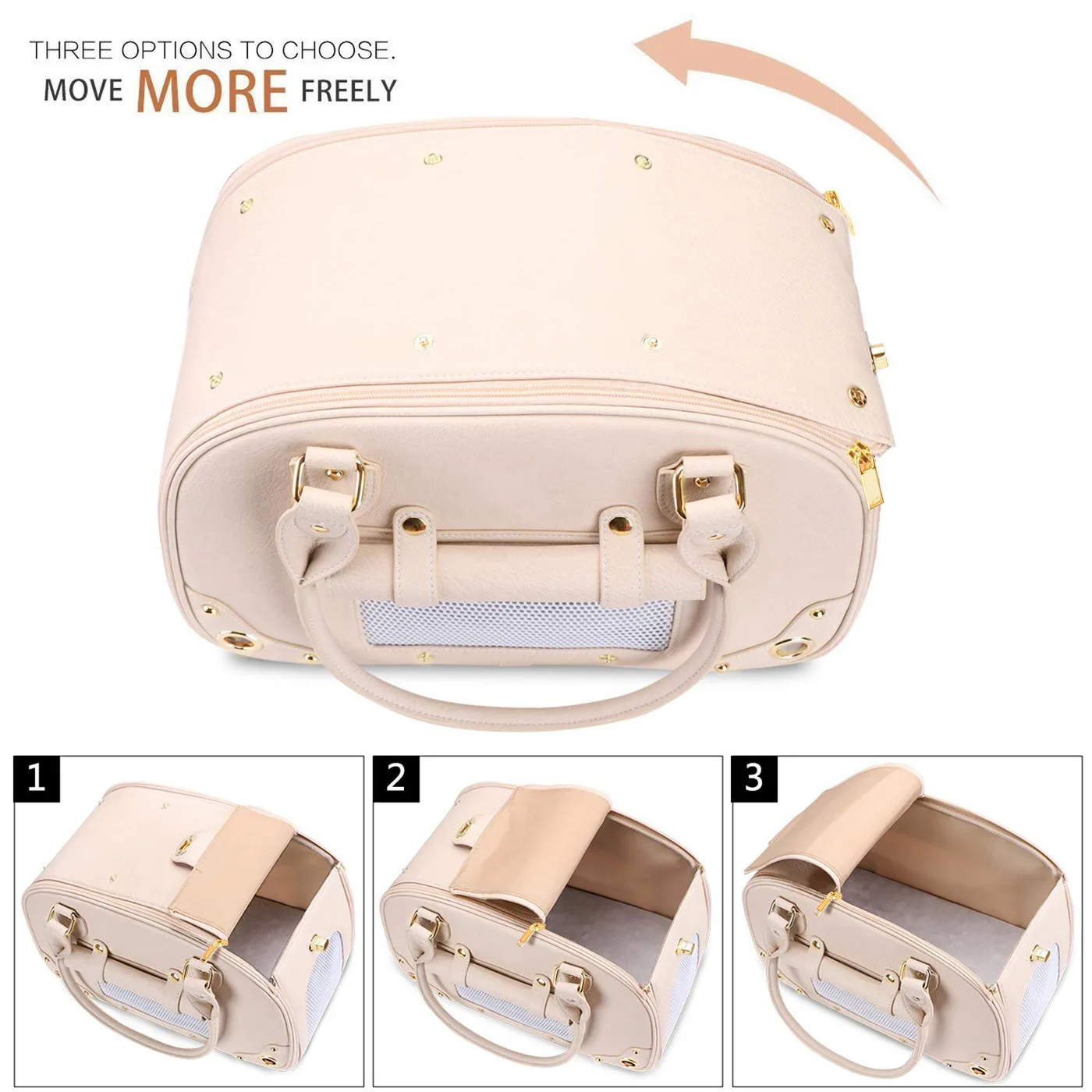
Traceability and corrective action in a wholesale programme
Traceability is what turns a quality system into a recall tool. In a cut-and-sew operation, it means the ability to connect a finished carton back through the production order to the fabric lot, the trim batch and the shift that made it. The standard requires identification and traceability where it is needed to assure conformity; a competent bag operation implements it at lot level.
For a wholesale pet bag buyer, lot-level traceability has a commercial purpose beyond compliance. When a retailer reports a field failure, the question is never "is this supplier good" but "how many units are affected". A supplier with lot records can answer with a number in a day. A supplier without them answers with a guess, and the buyer ends up either over-recalling or under-recalling.
Corrective action is the second half. A non-conformance record should capture the defect, the quantity affected, the root cause, the action taken, the person responsible and the closure date. The root cause section is the part worth reading, because "operator error" is not a root cause and usually means the investigation stopped early.
Good corrective actions change something structural: a revised work instruction, a changed incoming inspection, a different component supplier, a tooling adjustment. If the corrective action is "retrain the operator" and nothing else changed, expect recurrence. Buyers should read the action field rather than the closure field.
The commercial framing is straightforward. Traceability limits the cost of a failure to the affected lot; corrective action prevents the failure from recurring in the next lot. Together they convert a quality incident from an open-ended liability into a bounded, one-time event, which is what makes a seasonal programme financeable.
Our production team ties inspection records to the sample reference used for laboratory testing, which is the practical reason the traceability chain stays intact from approved sample to shipped carton on wholesale pet bag orders.
Cost and lead-time effects of a certified management system
Certification carries real cost: external audit fees, internal audit time, document control labour, management review, and the overhead of running corrective action properly. Those costs are fixed rather than per-unit, which means they weigh more heavily on small orders and are amortised easily across a season.
The lead-time effect is more nuanced than buyers expect. Documentation adds time at the front of a programme: a specification sheet must be written and approved, a bill of materials raised, an inspection plan agreed. On a first order this can add several working days before cutting starts. On repeat orders it adds almost nothing, because the documents already exist and only need revision.
The offsetting benefit shows up in rework. Programmes with controlled specifications and agreed inspection plans produce fewer surprises at final inspection, and surprises at final inspection are what push a 35-50 day bulk window past its end date. The documentation investment is therefore partly a schedule insurance premium, paid at the start and recovered at the end.
Sampling and inspection discipline also changes the cost picture. A supplier running an agreed inspection plan at AQL 2.5 catches defects while the line is still running rather than after the cartons are packed. Rework during production is dramatically cheaper than rework after packing, and much cheaper than a return from a retail warehouse.
Buyers should also budget for the re-certification calendar. Surveillance audits happen annually and consume management time; a supplier in the middle of a recertification cycle may be slower to respond to document requests. Placing a large order with awareness of that window costs nothing and avoids a frustrating fortnight.
Net assessment: certification adds a small fixed cost and a small front-end delay, and returns schedule stability and bounded failure cost. For any programme with a retail launch date attached, that trade is strongly positive.
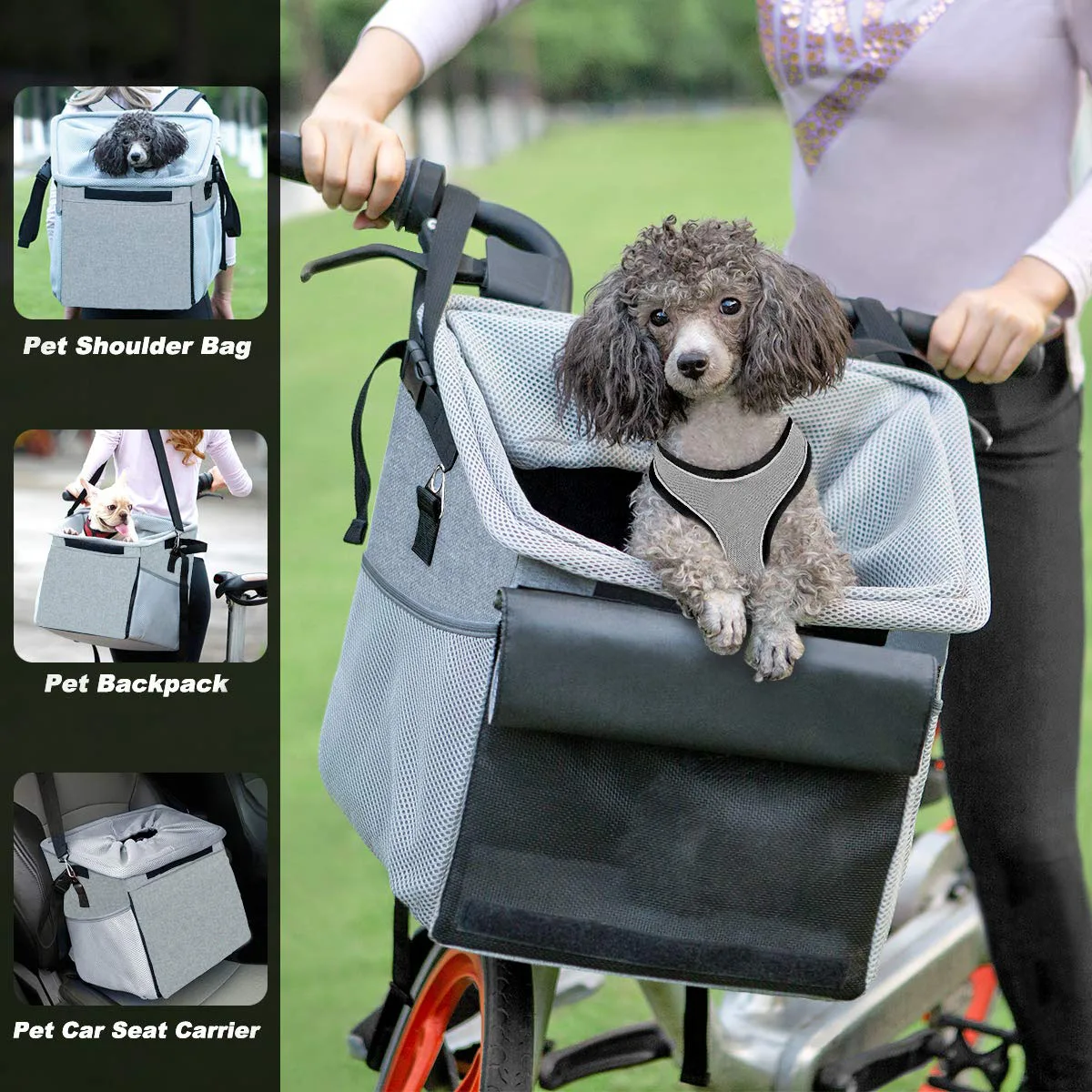
Verifying an ISO 9001 certificate: accreditation and numbers
Verification is a two-step exercise: confirm the certificate is genuine, then confirm it is relevant. Both steps are quick, and both are worth doing before the first deposit rather than after the first shipment.
Start with the accreditation mark. A certificate issued by an accredited certification body carries the mark of a national accreditation body, and that mark is the difference between an audited system and a purchased document. Certificates without an accreditation mark are not necessarily fraudulent, but they carry far less assurance and are rejected by many retail compliance teams.
Next, record three numbers: the certificate number, the certification body name and the issue and expiry dates. These let the certification body confirm the record directly. Most bodies maintain online validation, and a confirmation screenshot belongs in your compliance file.
Then read the scope and the site annex, as described earlier. Genuine plus relevant is the requirement; genuine alone is not sufficient. A certificate for a trading activity does not evidence control of a production line, regardless of how authentic the document is.
Check the surveillance status if it is shown. Certificates are maintained through periodic audits, and a certificate suspended for missed surveillance is a real risk that does not always show on the PDF. Asking the certification body directly is the reliable route.
Authoritative references help buyers understand what they are looking at. The standard itself is described by ISO 9001 quality management, and accredited bodies such as SGS certification services publish validation channels for the certificates they issue. Two minutes with those sources replaces guesswork with a dated confirmation.
Writing ISO 9001 requirements into purchase terms
A certificate sitting in a folder does nothing for an individual order. The requirements have to be written into the purchase terms, in language that a supplier can act on and a buyer can enforce. Four clauses do most of the work.
The first clause ties production to a controlled document. State that goods will be manufactured to the buyer-approved specification sheet at a named revision, and that any change requires written approval and a revised sample. This is the clause that prevents the obsolete-revision problem and gives a clear basis for rejection.
The second clause sets inspection. Name the acceptance level, the inspection stage, and who pays for re-inspection if the first inspection fails. Naming AQL 2.5 for major defects with a zero-tolerance critical list is standard for wholesale pet bags and removes ambiguity at the only moment it matters.
The third clause sets records. Require the supplier to retain production and inspection records for a defined period and to provide them on request within a stated number of working days. This is what makes traceability usable months later rather than theoretical.
The fourth clause sets corrective action. Require written root cause and corrective action for any rejected lot, with a verification step before the replacement ships. Without this clause, a rejected lot is simply rebuilt the same way and the buyer discovers the recurrence at destination.
Add a fifth if the programme spans seasons: require evidence of current certification at the time of each repeat order. Certificates lapse, and the lapse is usually discovered at the worst possible moment, which is during a retailer's annual vendor review.
Keep the clauses short and specific. Purchase terms that read like a standards document get ignored; four or five sentences naming documents, numbers and deadlines get followed.
Internal audits and management review
Two mechanisms keep a quality system from going stale. Internal audit tests whether the documented process is actually followed, and management review tests whether the results are still adequate for the business. Both are required by the standard, and both are visible to a buyer who asks.
Ask what the last internal audit found in the production area relevant to your order. A supplier who can name a finding and its closure has a live system. A supplier who reports no findings across several cycles is either exceptional or not looking, and the second is far more common.
How certification interacts with AATCC and ISO test methods
A quality management system specifies processes, not test methods. When the specification sheet names a performance requirement, it should also name the method used to measure it, referencing bodies such as AATCC textile test methods or ISO equivalents. Without a named method, a performance requirement is unenforceable, because two laboratories can produce two different numbers from the same fabric.
Specification sheets: the buyer's most valuable document
In a certified environment the specification sheet is the enforceable document. Production follows it, inspection checks against it, and non-conformance is measured against it. A buyer who invests in one well-written sheet gets leverage across every subsequent order on that style.
The sheet should name materials with references, dimensions with tolerances, construction details, performance requirements with methods, and a revision number with an effective date. Six fields, one page, and it prevents more disputes than any certificate.
What an incoming material record should contain
An incoming material record ties a delivered fabric or trim lot to a supplier, a quantity and a verification result. It is the document that makes traceability possible, and it is the one most often missing when a buyer needs it.
Ask for three fields at minimum: the supplier and mill reference, the lot number, and the inspection or verification outcome. Where a site maintains these routinely, a field failure can be bounded to specific units. Where it does not, the buyer is left recalling on suspicion.
When certification genuinely changes a sourcing decision
Certification matters most where the buyer needs leverage rather than assurance. A certified supplier has a documented obligation to meet a written specification and a documented process for correcting a miss, which converts a quality argument from opinion into record.
It matters least where the product is simple, the volume is small and the buyer inspects heavily anyway. Buyers should match the weight they place on certification to how much they actually intend to use the system.
Production capability
- SGS-verified production space of 4,950 m², 149 machines, 7 assembly lines
- Pet bag output since 2014 from a 137-person team
- 200,000 units shipped monthly under BSCI and ISO 9001 systems
People Also Ask
What does ISO 9001 mean for a pet bag supplier?
It means the supplier runs a documented and externally audited quality management system covering specification control, supplier management, production control, inspection and corrective action. It evidences process discipline, not product performance.
How do I verify an ISO 9001 certificate is real?
Record the certificate number, issuing body and dates, then validate them with the certification body or its accreditation registry. Confirm the scope statement and site annex cover the activity and address where your order will actually be produced.
Is ISO 9001 required to import pet bags?
It is not a legal import requirement. It is a commercial one: many retail vendor onboarding systems and marketplace compliance reviews ask for it, and a supplier without it can be blocked from channels regardless of product quality.
What is the difference between ISO 9001 and product testing?
ISO 9001 covers the management system used to make the product; testing measures the product against a named method. One governs how a specification is followed, the other whether the specification produces an acceptable result.
Does ISO 9001 reduce defects?
Indirectly. It does not set performance limits, but it requires inspection, non-conformance handling and corrective action, which means recurring defects are investigated and structurally fixed rather than repeatedly reworked.
Which documents should I request from a certified pet bag supplier?
Request the specification sheet with revision status, the bill of materials with component references, the incoming material record for the current fabric lot, and the inspection record with defect counts. Speed and completeness of the response is the real diagnostic.
Frequently Asked Questions
Does ISO 9001 mean the pet bags are good?
No. It means the supplier operates a documented, audited quality management system. Product quality is evidenced by laboratory testing against named methods and by AQL inspection of the finished lot. The certificate makes a written specification enforceable; it does not write the specification for you.
What should I look for on an ISO 9001 certificate?
Check the accreditation mark, the certificate number, the issuing body, the issue and expiry dates, the scope statement and the site annex. Genuine and relevant are separate tests: a legitimate certificate scoped to trading activity does not evidence control of a production line.
How often is ISO 9001 recertified?
Certification is maintained through surveillance audits, typically annual, with a full recertification cycle every three years. Ask for evidence of current status at each repeat order, because a lapsed certificate is usually discovered during a retailer's annual vendor review.
Can a sourcing agent hold ISO 9001 for production it does not perform?
It can hold certification for its own sourcing and sales activity. The production site needs to be covered by the same certificate or hold its own. Read the scope line and the site annex to see which activities and addresses are actually included.
Does certification increase the price of a pet bag order?
It adds fixed overhead that is amortised across volume, so the effect is small on a full container and larger on a trial order. The offsetting benefit is fewer surprises at final inspection and a shorter, more predictable rework loop.
What is a non-conformance record and why should I ask for one?
It documents a defect, the affected quantity, the root cause, the corrective action and the closure date. Asking to see one from a previous order tells you whether the supplier investigates failures or merely rebuilds the rejected quantity.
How does ISO 9001 relate to AQL 2.5 inspection?
The standard governs how inspection is planned, recorded and acted upon; AQL 2.5 sets the acceptance threshold for a specific lot. Certificates do not replace inspection, and inspection without a system produces arguments rather than corrective action.
What is document control in practical terms?
Every controlled document carries a revision number and effective date, obsolete versions are withdrawn from the workstation, and the current version is available where the work is done. In bag production, that means the line builds to the revision the buyer approved.
Should I write certification requirements into my purchase order?
Yes. Require production to a named specification revision, name the inspection level and who pays for re-inspection, set record retention, and require written corrective action before a replacement ships. Four short clauses do more than any certificate scan.
How long should a supplier retain production records?
Retention should follow product liability exposure rather than convenience. Seven years is a common baseline for production and inspection records on wholesale programmes, with longer retention where a safety claim or an age-graded declaration is involved.
What is a scope statement on a certificate?
It is the sentence that defines which activities, products and sites the certification covers. It is the only part of the certificate that determines relevance to your order, and it should be read against your purchase order rather than skimmed.
Is an unaccredited certificate worthless?
Not worthless, but much weaker. Many retail compliance teams reject certificates without a national accreditation mark because the mark is what evidences independent oversight of the certification body itself.
Talk to QUANZHOU JUNYUAN BAGS about a wholesale pet bag order: MOQ 500 pieces per colourway, samples in 6-10 working days, bulk production in 35-50 days under AQL 2.5 inspection.
Get a free quote Request a sample