Buy Pet Carriers Wholesale: First Order Checklist
Short answer: to buy pet carriers wholesale successfully on the first order, clear ten gates in sequence: internal brief, written enquiry, sample round one, golden sample approval, deposit and document set, production start, pre-shipment inspection, balance payment, document release, and post-delivery review. Budget 6-10 working days for samples and 35-50 days for bulk production.
A first order fails for predictable reasons, and almost none of them are about price. It fails because the brief was never settled internally, because the enquiry asked for a quotation rather than a specification, because the approved sample was never physical, or because inspection was treated as a formality at the end rather than a gate in the middle. This checklist is written for importers, distributors and chain buyers placing their opening order on a pet carrier range and needing it to arrive sellable, compliant and on the calendar. QUANZHOU JUNYUAN BAGS has handled pet bag programmes since 2014, with a founder in the bag trade since 2004, and every first order we run follows the same commercial frame: MOQ 500 per colourway, samples in 6-10 working days, bulk production 35-50 days from sample approval and deposit, AQL 2.5 final inspection, T/T 30/70 and FOB Xiamen. Our production team operates from an SGS-verified production base of 4,950 square metres with 7 lines, 149 machines and 137 staff at roughly 200,000 pieces monthly under BSCI and ISO 9001. Work the ten gates in order; each one exists because skipping it has a known cost.
Wholesale pet bags uk and wholesale pet bags australia share most of the same test file, but Market & Business Strategy still has to be matched to the retailer's own checklist. Pet bags wholesale china terms are usually quoted FOB, so pet bags import export cost is a separate line the buyer has to model.
Gate Zero: What Has to Be Settled Before Any Enquiry Goes Out
The most expensive first-order mistake happens before the supplier is contacted. It is the order placed while the buyer's own organisation has not agreed what it is buying. Three questions must be answered in writing internally: which channel the goods are for, what the retail or resale price point must be, and which compliance regime applies in the destination market. Everything downstream depends on those three answers, and every one of them changes the specification.
Channel determines construction. Goods destined for a marketplaces fulfilment network need to survive individual handling and arrive in a scannable polybag. Goods destined for a pet specialty chain need retail-ready presentation and a vendor-compliant carton. Goods destined for a discount grocery channel need a price point that dictates material grade before any design conversation starts. A brief that says only soft pet carrier is not a brief.
Price point determines material, and it should be worked backwards from shelf, not forwards from factory. Take the target retail price, remove your channel margin, remove freight, duty and handling, and what remains is the FOB ceiling. If the ceiling is below what the required construction costs, the decision to make is at the brief stage — change channel, change price, or change specification — not at the quotation stage, where the only remaining lever is quality.
Compliance determines the document set, and it must be identified now because some of it takes weeks. US-bound goods need CPSIA and California Prop 65 screening considerations; EU-bound goods need REACH declarations; textile skin-contact claims generally lean on OEKO-TEX documentation. Some tests can only be run on production fabric, so the requirement has to be known before bulk material is purchased.
Write the brief as one page and circulate it. Buyers who buy pet carriers wholesale across multiple entities should use the same one-page format every time, because it turns a series of ad hoc decisions into a repeatable process and it makes the second order dramatically cheaper to run than the first.
The brief should also state which formats are in scope, because format determines both unit cost and carton cube. A range that mixes a sling, a backpack and a wheeled case is three development projects rather than one, and the first-order timeline should reflect that. Buyers planning to buy dog carriers in bulk for a single channel usually find that narrowing to two formats at the outset halves the sample rounds and lets a bulk pet carriers order consolidate into one container rather than a part-shipment.
Gate One: Writing an Enquiry That Produces a Quotable Answer
An enquiry that asks how much produces a number. An enquiry that specifies produces a quotation. The difference is whether the supplier has to guess, and every guess is resolved later in the supplier's favour. A quotable enquiry contains the target construction, the material basis, dimensions, hardware grade, colourway count, quantity per colourway, packing requirement, destination and compliance requirement.
| Enquiry field | Why the supplier needs it | What happens if omitted |
|---|---|---|
| Material basis (denier, coating, backing) | Fabric is the largest cost line | Quotation defaults to the cheapest available grade |
| External dimensions and target weight band | Drives cutting yield and foam volume | Sample arrives oversized or undersized for the pet |
| Hardware grade and finish | Buckles and sliders vary fourfold in cost | Substitution mid-run, invisible until failure |
| Colourway count and pieces per colourway | Sets dye lots and line changeovers | MOQ surprises after the price is agreed |
| Packing method and carton target | Determines freight per unit | Cube exceeds plan, freight absorbs the margin |
| Destination market and compliance list | Sets testing and documentation scope | Goods shipped without certificates, held at import |
Quantify the volume honestly. Buyers routinely understate first-order volume to test a supplier and then discover that the price they were given does not survive at the real quantity, or overstate it and lose credibility when the order lands at a third of the projection. State the first order quantity and the twelve-month projection as separate figures; suppliers plan capacity on the second and price on the first.
Ask for the quotation in a fixed structure: unit price by quantity tier, material basis stated explicitly, sample cost and lead time, bulk lead time, packing specification, payment terms, and validity period. A quotation without a validity period is not a quotation, it is an indication, and fabric moves.
Ask one diagnostic question alongside the commercial ones: which three styles does the production base make most often? The answer tells you whether your product sits inside the base's competence. A supplier whose top three styles resemble yours will quote better and deliver better than one treating your product as an exception.
Gate Two: Sample Round One and What It Is Actually For
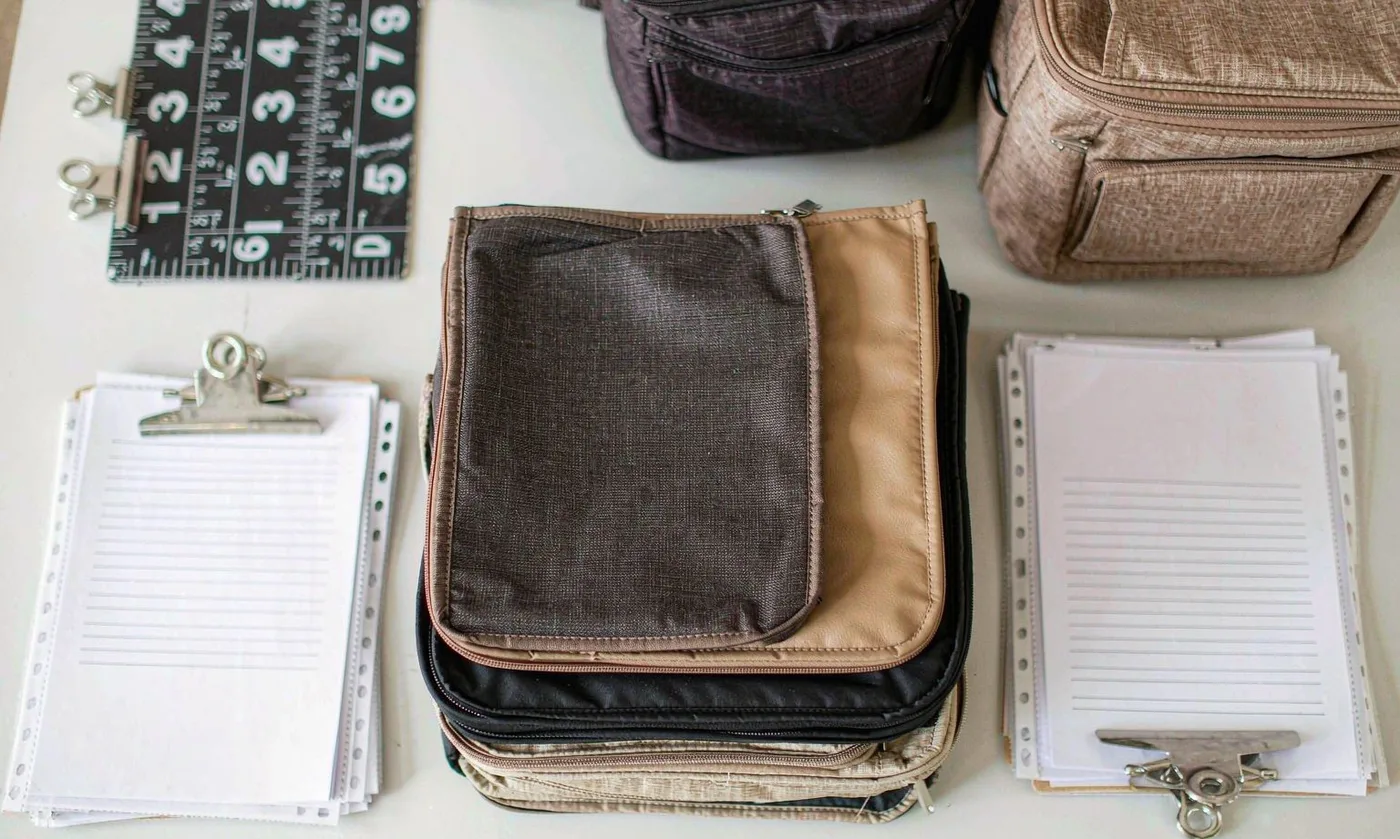
The purpose of the first sample is not to confirm that you like the bag. It is to confirm that the specification was understood. A first sample should be assessed against the written brief line by line, with a written response per line, before any aesthetic opinion is offered. Most first samples are rejected for reasons that were never specified, and those rejections cost a round.
Assess construction first. Check seam type and stitch density, stress-point reinforcement at handle and strap roots, whether bar-tacks are present where load is carried, zipper grade and smoothness under load, mesh panel attachment, and whether the internal base board is removable and how it is supported. These are the features that determine whether the bag survives three months of use, and they are all specified, not subjective.
Assess dimensions second, and do it with a pet or with a weight-equivalent load rather than by eye. Interior length, interior height and the usable floor area are the three measures that matter, and they should be checked against the weight band the style claims to serve. A carrier labelled for 8 kg that cannot accommodate an 8 kg animal lying down is a returns problem, not a marketing problem.
Assess materials third, and request the material card alongside the sample: fabric specification with denier and coating, foam density, webbing tensile rating, hardware material and finish, and lining specification. The card is what production will be held to, and a sample approved without a card is a sample that cannot be enforced.
Then, and only then, assess appearance. Colour, hand feel, hardware colour, print and logo placement. Keep this section separate in your feedback document, because aesthetic comments and structural comments have different costs and different urgency, and mixing them in one paragraph is how a cheap change gets quoted as an expensive one.
Gate Three: The Golden Sample and the Approval Certificate
Sample round two should produce the golden sample: a physical unit, signed and dated, retained by both sides, against which production will be judged. It is the single most useful artefact in a first order and the one most often skipped because it feels administrative. Without it, an inspection argument has no reference point and both parties argue from memory.
A golden sample set should be two units minimum: one retained by the buyer, one retained by the production team, ideally one retained by the inspection company. Each should be tagged with style code, colourway, approval date, and the version number of the specification it represents. When a revision happens later, the version number changes and the old sample is superseded in writing.
The approval certificate is the document half of the same gate. It should state the style, the approved materials by specification, the approved hardware, the approved construction details, the packing specification, and the date from which the bulk lead time runs. Signature by both parties on that document is what starts the 35-50 day clock, not the date on a friendly email saying looks good.
Be explicit about what approval does and does not cover. Approval of a golden sample approves the product as built; it does not approve a colourway that was never sampled, a size band that was never made, or a material substitution that has not been declared. Sample rounds cost 6-10 working days each, so a buyer who approves before all variants exist will spend another round later and lose the slot.
Finally, seal the specification freeze in writing. After approval, changes cost money and time, and the price of a change should be quoted before it is made rather than discovered in the final invoice. A short clause stating that post-approval changes are quoted in writing and may extend the lead time prevents the most common first-order dispute there is.
Gate Four: Deposit, Documents and Starting the Production Clock
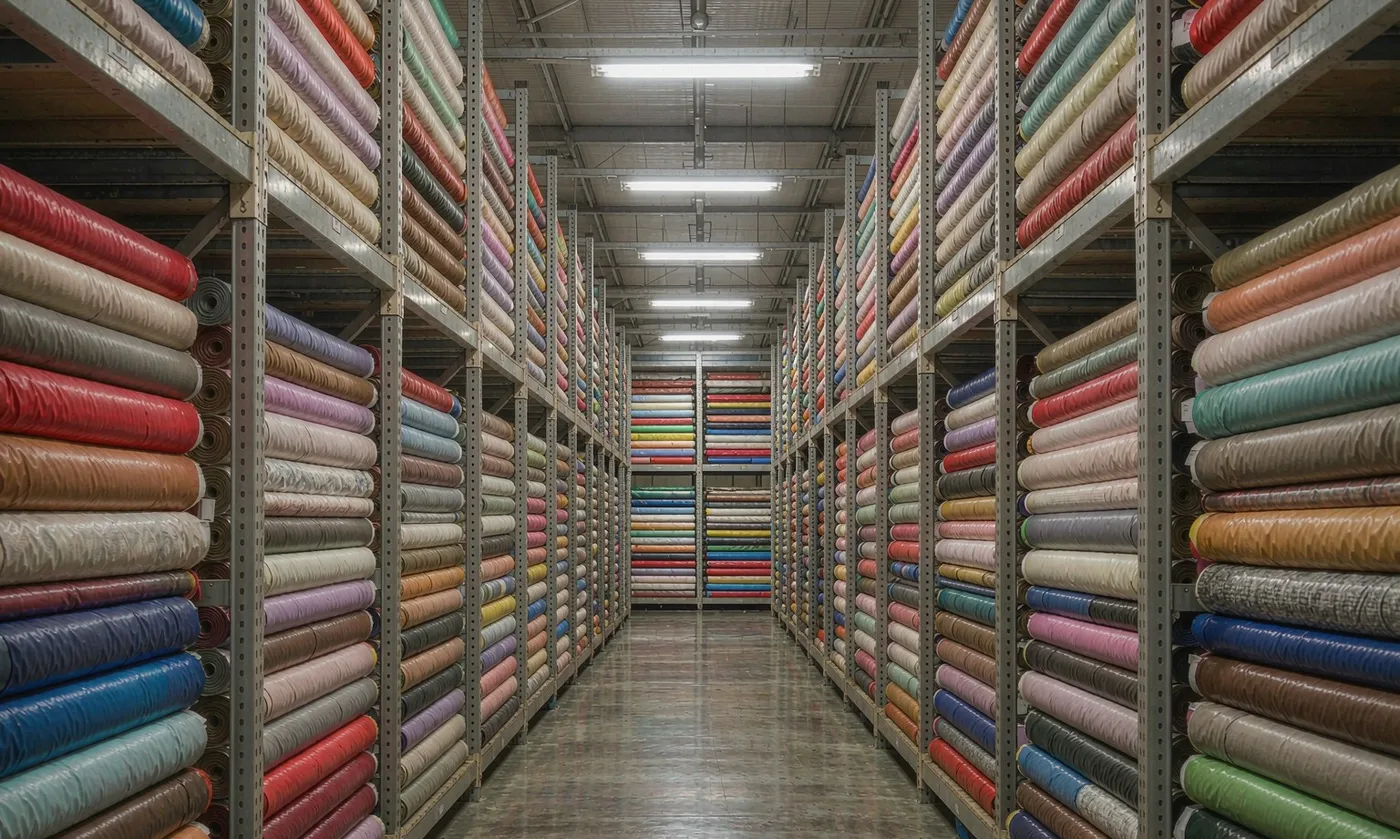
The deposit is not a goodwill payment; it is the mechanism that books material and reserves a production slot. On standard T/T 30/70 terms the 30 percent deposit triggers fabric purchase, hardware ordering, pattern finalisation and slot booking. Understanding what the deposit buys makes it much easier to negotiate its timing, because you are negotiating against real commitments rather than against a convention.
Ask what the deposit covers in writing. A supplier that can say the deposit buys the fabric lot, the hardware lot and the line booking for a named week is describing a plan. One that says it covers the start of production is describing nothing, and when material prices move you will discover who absorbed the difference.
Documents travel with the deposit. Before production starts you should hold: the signed specification sheet, the golden sample approval record, the material card, the packing specification, the compliance test plan, and a proforma invoice that restates every commercial term including Incoterm, payment split, lead time and inspection standard. The proforma invoice is the contract in most first orders, so it must be correct.
Confirm the production slot in dated form. Bulk production 35-50 days is a window, not a promise, and the window is only meaningful once a start date and a completion date are named. Ask for both, and ask what happens to the completion date if your artwork, label files or packaging inserts arrive late. Most delays in a first order originate on the buyer's side of that exchange.
Set a mid-production checkpoint. Agree now that at roughly the halfway point you will receive photographs of cut parts, first-off assembly, in-line inspection records and packing of the first carton. Buyers who buy dog carriers in bulk for a fixed retail window should treat that checkpoint as mandatory, because it is the last point at which a correction is cheap.
Gate Five: Pre-Shipment Inspection Beyond the Product Itself
Final random inspection at AQL 2.5 is the standard, and it is a statistical check on units, not an audit of the shipment. Buyers who treat it as the only gate are surprised by short cartons, wrong labels and packing errors, none of which are reliably caught by a unit-level sample. Write a separate carton-level checklist and require it on the same visit.
The carton checklist has five items. Carton count against the packing list; carton numbering sequence and marking accuracy; a count check on a defined sample of opened cartons; gross weight against specification; and carton condition, including whether any carton shows crushing, moisture staining or tape failure. Five items, one hour, and they cover the categories that generate destination disputes.
Product-level checks should be classified, not generic. Critical defects are those that make the product unsafe or unsaleable: broken hardware, failed load-bearing seams, sharp edges, missing ventilation. Major defects affect saleability: visible soiling, colour shade outside tolerance, misaligned panels, faulty zippers. Minor defects are cosmetic within tolerance. AQL 2.5 sets the acceptance number for each class, and the classification list should be agreed before inspection rather than argued during it.
Documentation should be verified at the same time, not later. Confirm that test reports referenced in the compliance file carry report numbers that match the production lot, that certificates are within validity, and that country-of-origin marking matches the packing and the documents. A mismatch discovered at import costs weeks; the same mismatch discovered at inspection costs an afternoon. US market obligations are summarised by the Consumer Product Safety Commission, while textile and material test methods are commonly referenced to ASTM standards.
Decide the disposition rules in advance. What happens on a marginal pass, on a fail, and on a fail where the buyer's retail window cannot absorb a rework cycle? Rework, re-inspection at a tightened level, and shipment release conditions should all be written before there is a result to argue about. Our note on pre-shipment inspection structure sets out the checklist in full.

Gate Six: Balance Payment, Release and the First Delivery
The 70 percent balance is triggered by a defined event, and the event must be named in the proforma invoice. The three common triggers are inspection pass, readiness notice, and Bill of Lading date. Each allocates risk differently. Payment against inspection pass is the most protective for the buyer; payment against Bill of Lading is the most common and sits in the middle; payment before inspection is the least protective and should be declined on a first order.
Ask for the inspection report before releasing the balance, and read three things rather than skimming the summary: the defect classification counts, the photographs, and the packed quantity. The packed quantity is the one most often misread, because a shipment can be ready in part. Confirm whether the report covers the full order or a completed portion, and pay proportionally.
Documents should be released in a defined sequence: commercial invoice, packing list, Bill of Lading or sea waybill, certificate of origin where required, and the compliance file with test reports. Original documents versus scanned copies should be agreed in advance, because some destination banks and customs regimes still require originals and courier time is real.
Set up the receiving side before the container sails. Somebody at destination needs the packing list, the carton numbering scheme, the SKU-to-carton map and a reconciliation rule. Warehouses that receive without a map count cartons twice and still file discrepancies, and the discrepancies then cost more in administration than the goods did in freight.
Then do the first delivery review within two weeks of receipt. Count what arrived against what shipped, record any damage by carton number, and photograph anything you intend to claim. Claims made with carton numbers and photographs are settled; claims made with adjectives are negotiated.
Importers running wholesale dog carriers and wholesale cat carriers lines in parallel should keep a separate receiving map for each, because carton numbering that is unique per line prevents a mix-up at the distribution centre. Wholesale pet carrier programmes that skip this step typically discover the error at shelf replenishment, when one species format is filed in the wrong bay and the system reports stock that cannot be found.
Gate Seven: The Review That Earns Better Terms Next Time
The tenth gate is the one that changes the economics of every subsequent order, and it is the one most buyers never run. Within thirty days of delivery, write a one-page review covering five things: specification accuracy, sample rounds used, production timeliness against the named dates, inspection result by defect class, and landed cost against the original model.
Specification accuracy is measured by how many changes were needed after approval. Zero or one means the brief was good. Three or more means the brief was not, and the fix belongs in your internal process rather than in the supplier relationship.
Sample rounds used is directly monetisable. Each round costs 6-10 working days and a sample fee, and each round on a first order pushes the season later. A buyer who consistently approves in two rounds has a process advantage worth more than a small price concession, and can say so in negotiation.
Production timeliness should be measured against the named dates, not against the generic window. If the window was 35-50 days and delivery landed at 44, record 44. Three orders of data on actual versus quoted lead time is the most reliable predictor you will ever have of whether a supplier's dates mean anything, and it is the basis for a realistic retail calendar.
Then bring the review into the second-order conversation explicitly. Buyers who present a scorecard get better terms than buyers who present a complaint, because a scorecard implies an ongoing relationship and a complaint implies the last one. On the second and third order, deposit ratios, lead-time priority and colourway flexibility all become negotiable, and the review is what makes them negotiable. Terms for bulk dog carriers and wholesale cat carriers programmes improve on the same evidence, and the record is also the basis for the discussion in pet bag payment terms.
One further note on quotation basis. Suppliers quote per colourway and per band, and the two are not interchangeable: a bulk dog carriers order quoted per colourway across four size bands is four minimums, while the same order quoted per band is one minimum per band. Confirm which basis is being used before comparing two quotations, because the difference is frequently larger than any price concession on the table. Bulk pet carriers orders quoted on a blended basis are the most common source of that confusion, and a pet carrier wholesale price quoted without the basis stated should be treated as provisional.
Order and quality terms
- MOQ 500 pieces per colourway; samples in 6-10 working days
- Bulk production 35-50 days after approval; AQL 2.5 inspection standard
- T/T 30/70 terms, FOB Xiamen, full document set per shipment
People Also Ask
What should I prepare before contacting a pet carrier supplier?
A one-page brief stating the sales channel, the target retail price worked back to an FOB ceiling, the destination compliance regime, the size bands required and the colourway count. Without those four, any quotation you receive is built on the supplier's assumptions rather than your requirements.
How many sample rounds should a first order take?
Two is normal and three is acceptable for a complex style. Each round takes 6-10 working days, so a fourth round typically costs a month and can push past a retail window. Approving all colourways and size bands in round two is what keeps the count down.
What is a golden sample and do I need one?
A golden sample is a signed, dated physical unit retained by both parties as the reference for production and inspection. You need one on every first order, because without a physical reference an inspection dispute has no objective basis and both sides argue from memory.
When should I pay the balance on a first order?
Pay against inspection pass wherever possible; paying against Bill of Lading date is the common middle ground. Avoid paying before inspection on a first order, because that removes the only leverage you have over quality at the point where quality is finally measurable.
What does AQL 2.5 actually cover?
AQL 2.5 sets the acceptable number of defects per class in a random sample of finished units. It does not verify carton counts, carton marking, packing accuracy or documentation, which is why a separate carton-level checklist is needed on the same inspection visit.
How do I avoid a first-order delay caused by my own side?
Deliver artwork, label files, barcode allocations and packaging inserts before the deposit is paid, not during production. Most first-order slippage originates in buyer-supplied inputs arriving after the line has been booked.
Frequently Asked Questions
What is the realistic total timeline for a first wholesale order?
Plan 12-16 weeks from enquiry to delivery. Two sample rounds at 6-10 working days each, approval administration, 35-50 days of bulk production, inspection, and sea transit on your lane. Air freight shortens transit but not development or production.
Should I order one colourway or several on the first order?
Two colourways is usually right. One colourway under-tests the market, four multiplies both cube and working capital at the point where you know least. Two gives a read on colour preference while keeping the minimum at a manageable 1,000 pieces.
How much should I budget for samples?
Budget a sample fee per style plus courier, and treat the fee as a development cost rather than a negotiable nuisance. Many suppliers credit the sample fee against the first bulk order once the order is placed, which is worth asking about at enquiry stage. Wholesale pet carrier programmes usually credit it in full, so ask at the point of enquiry rather than after approval.
What is the difference between a proforma invoice and a contract?
In most first orders the proforma invoice functions as the contract, because it restates price, quantity, Incoterm, payment split, lead time and inspection standard in one signed document. Treat it as binding and check every field before signing.
Do I need to test before or after bulk production?
Both, in different ways. Material-level chemical testing should be planned before bulk fabric is purchased, because some certificates require production-lot samples. Finished-product testing happens on or before the pre-shipment inspection.
What if the first sample is close but not right?
Write the gap as a specification delta rather than an opinion. State the measured value you received and the value you require, with tolerance. Suppliers act on deltas; they guess at opinions, and a guessed interpretation costs another round.
How do I verify that production used the approved materials?
Require a material confirmation card referencing the fabric lot, hardware lot and test status, signed before cutting started. Cross-check it against the golden sample material card and keep both in the style file for reorders.
Who should pay for the pre-shipment inspection?
The buyer, normally, because the inspector works for the buyer. Expect a per-man-day fee plus travel. It is the cheapest risk control in a first order and it produces the report your own compliance team will need later.
What documents should arrive with the goods?
Commercial invoice, packing list with carton numbering, Bill of Lading or sea waybill, certificate of origin where required, and the compliance file with test report numbers. Confirm who holds originals and whether your destination requires paper documents. For a pet carrier wholesale shipment, also confirm that the packing list separates each size band, because destination receiving allocates by band.
How do I handle a short shipment discovered at destination?
Reconcile by carton number against the packing list, photograph the discrepancy, and notify the supplier with the carton range affected before the container is broken down. Claims supported by carton numbers and images settle; general shortage claims rarely do.
Can I change the order after production has started?
Technically yes, practically expensive. After the specification freeze, changes are quoted in writing and usually extend the lead time, because material has been cut and the line booked. Make changes before approval, not after.
What earns better terms on the second order?
A documented record: approvals in two rounds, clean inspection results, accurate forecasts and on-time payments. Present that as a scorecard in the second-order negotiation and lead-time priority, colourway flexibility and deposit ratios all become discussable. Wholesale dog carriers reorders benefit most, because band volumes are predictable by that point.
Talk to QUANZHOU JUNYUAN BAGS about a wholesale pet bag order: MOQ 500 pieces per colourway, samples in 6-10 working days, bulk production in 35-50 days under AQL 2.5 inspection.
Get a free quote Request a sample