Import Pet Carriers From China: Duty and Documents
Importing pet carriers from China costs four layers above the FOB price: duty of roughly 0-20% depending on classification and destination, VAT or sales tax of 0-27%, freight and insurance, and brokerage and handling. Nine documents are required, and the single most common cause of a held shipment is a mismatch between the commercial invoice and the packing list.
Duty is the number buyers fixate on and the one that usually matters least to the landed total. On a typical soft-sided consignment, duty is a mid-single-digit percentage, freight is comparable, and the difference between a well-prepared document set and a sloppy one is measured in days of demurrage rather than in percentage points. That said, duty is the only one of the four layers a buyer can legitimately influence before the goods move, through classification, origin documentation and valuation method, and it is worth an hour of attention for that reason, starting with a correct HS code classification for the specific construction being bought. The structure our production team works to on the supply side stays constant regardless of destination: MOQ 500 pieces per colourway, samples in 6-10 working days, bulk production 35-50 days after approval and release at AQL 2.5, quoted FOB Xiamen so that the buyer controls the main carriage and the declared value starts from a clean, documented ex-works position. Everything after that point is the importer's side of the transaction and it decomposes into four questions: what classification applies, what rate that classification carries in the destination market, what documents prove it, and who files them. Getting those four right in advance is what separates a consignment that clears in a day from one that sits in a bonded warehouse accruing charges while somebody searches for a missing mill certificate.
Orders for bulk pet carriers are quoted on the same three levers as Market & Business Strategy work - fabric weight, hardware grade and carton count - because freight, not unit labour, decides the landed figure. Buyers who buy pet carriers in mixed sizes can consolidate several size runs into one booking, which keeps the per-unit spread tight without forcing a single colourway to carry the whole minimum.
Duty Is One Line of the Landed Cost Rather Than the Whole Story
Landed cost has four layers above the ex-works or FOB figure, and buyers who optimise the first one while ignoring the other three routinely end up with a worse total. Buyers who source pet bags from China at scale tend to model all four before they negotiate any of them. The layers are duty, tax, transport and transaction cost, and their relative size surprises people who have only ever negotiated unit price.
Duty is usually the smallest of the four on soft goods in most major markets, ranging from zero to the high teens depending on classification and destination. Value-added tax or sales tax is applied on the duty-inclusive value in VAT regimes and can be the largest single addition, though it is usually recoverable by a registered importer, which is why the accounting treatment matters as much as the rate. Transport on a sea consolidation is modest per unit but volatile by season, and air freight on a bulky low-density article is often several times the manufacturing cost. Transaction cost covers brokerage, terminal handling, documentation fees and, critically, the cost of delay when documents are wrong.
The practical consequence is that classification work has a limited return and document accuracy has a large one. Moving a classification that saves two percentage points of duty is worth doing once. Avoiding a single three-day hold at port saves more, and it is repeatable on every shipment.
There is also a cash-flow dimension that is invisible in a landed cost spreadsheet. Duty and tax are paid at entry, weeks or months before the goods are sold, which means the landed figure is also a working capital figure. A buyer importing at volume should model duty as a cash outflow on the arrival date rather than as a cost amortised over the selling period.
Finally, note which of the four layers the supplier controls. On FOB terms the supplier controls nothing beyond loading; on DDP they control all four and price the risk of doing so. Comparing a FOB quote against a DDP quote on headline price alone is not a comparison at all.
Optimise the layer you can repeat, which is document accuracy, and take the duty saving if it is available without risk.
Classification: Where Pet Carriers Actually Sit in the Tariff Schedule
Classification decides the duty rate, and it is decided by what the article is rather than by what the buyer calls it. That distinction causes most of the disputes, because a product marketed as a pet carrier can be classified as a travel bag, as a container of textile material, or as an article of a different heading depending on its construction and its essential character.
The reasoning runs in a fixed order. First, identify the material that gives the article its essential character: a soft-sided carrier with an outer surface of textile man-made fibre behaves differently in the schedule from a rigid moulded shell of plastic. Second, consider whether the article is of a kind covered by a more specific heading than the general one for containers. Third, apply the relevant general rules of interpretation, which resolve composite articles in favour of the material or component that gives the essential character.
Outer surface material is the decisive variable in practice. A bag with an outer surface of sheeting of plastics or of textile material falls in different places, and a carrier with a rigid outer shell is treated differently again from one with a soft shell over a frame. Suppliers rarely know the destination market's classification, and buyers should not expect them to; what a supplier can and should provide is an accurate statement of construction, materials by weight and proportion, and function, which is the raw input a broker needs. Pet bag wholesale suppliers who have exported to the destination before may hold a previous classification, which is a useful starting point and not a determination.
| Construction of the carrier | Outer surface material | Typical classification logic | Duty sensitivity |
|---|---|---|---|
| Soft-sided, no frame | Woven man-made fibre | Classified by textile container heading | Moderate |
| Soft-sided over internal frame | Woven man-made fibre | Essential character still textile | Moderate |
| Rigid moulded shell | Plastics | Classified by plastics article heading | Higher |
| Hard shell with textile cover | Mixed | Resolved by essential character | Variable |
| Carrier with wheels and telescopic handle | Mixed | Often treated as travel goods | Higher |
| Sling or leg-out garment style | Textile, worn | May fall outside container headings | Lowest |
The right professional for this decision is a licensed customs broker in the destination market, not the supplier and not a freight forwarder working from a description. Provide the broker with a photograph, a full materials breakdown including lining and trim, dimensions, weight and intended function, and ask for a written classification with the reasoning. That written advice is also the defence if the classification is later challenged.
Do not ask for a classification that minimises duty. Ask for the correct one; the penalty exposure on a deliberately wrong classification far exceeds the saving, and a corrected classification applies to past entries as well as future ones.
Classification is a legal determination about construction, and the only durable answer is a written one from a licensed broker.

Duty and VAT by Destination Market: What the Ranges Really Look Like
Rates vary by destination, by classification and by trade programme, and the ranges below are planning figures rather than determinations. They exist so a buyer can build a landed cost model before spending money on formal advice, and the model should be replaced with actual rates at the point of entry.
| Destination market | Indicative duty on soft carriers | Consumption tax applied at import | Practical note |
|---|---|---|---|
| United States | Moderate single to high teens | No federal VAT; state sales tax on resale | Classification and any additional programme duty dominate |
| European Union | Low to mid single digits | VAT 17-27% on duty-inclusive value | VAT recoverable by registered importers |
| United Kingdom | Low to mid single digits | VAT 20% on duty-inclusive value | Separate tariff schedule post-separation |
| Canada | Mid single digits and up | GST 5% plus provincial tax | Trade programme may reduce or remove duty |
| Australia | Commonly low or zero | GST 10% on value | Low-value threshold rules differ |
| Japan | Low to mid single digits | Consumption tax 10% | Tariff schedule is product-specific |
The striking feature of that table is how small duty is relative to consumption tax in most markets. A European importer whose pet bag wholesale price is 100 ex-works might pay a few points of duty and twenty points of VAT, and the VAT is recoverable while the duty is not, which inverts the usual intuition about which number to chase. Pet bag wholesale vendors quoting on different bases will present that same arithmetic differently, which is why the Incoterm must be equalised first. The exception is the United States, where there is no federal VAT and duty, plus any additional programme measures, is the whole tax layer.
Preferential programmes change the duty column and are the one lever genuinely worth checking. Where a trade agreement or a preference programme applies, duty can drop to zero, but the preference is only available with correct origin documentation, and the paperwork requirement is strict enough that a technically eligible shipment can still be assessed at the standard rate for want of a form.
De minimis thresholds matter for sample shipments rather than bulk. Buyers who source pet bags from China repeatedly should still confirm the threshold, because it changes and because samples are the only shipments that ever benefit. Small parcels below a threshold value clear without duty in several markets, which is why a sample sent by courier is cheap and the same article in a container is not.
Build the model with ranges, not point estimates, and put the broker's confirmed figures in before committing to a retail price. A landed cost built on an assumed rate is a retail price built on an assumption, and the margin absorbs the error either way.
Duty is the visible tax and consumption tax is the large one; model both or model neither.
The Document Set: Nine Papers, Who Issues Them and When
A consignment is a document set with goods attached. Most holds, penalties and delays are caused by inconsistency between documents rather than by a missing one, and the inconsistency is usually in quantity, value or description.
| Document | Issued by | When it is produced | What fails if it is wrong |
|---|---|---|---|
| Commercial invoice | Supplier | Before shipment | Valuation and duty assessment |
| Packing list | Supplier | Before shipment | Quantity verification at examination |
| Bill of lading or airway bill | Carrier | On dispatch | Release of goods and title transfer |
| Certificate of origin | Chamber of commerce or authority | Before shipment | Preference eligibility |
| Export declaration | Supplier or agent | Before loading | Legal export from origin |
| Material test reports | Accredited laboratory | Before bulk production | Retailer and market compliance |
| Fumigation or material declaration | Supplier or treatment provider | Before shipment | Quarantine clearance on wood packaging |
| Insurance certificate | Insurer or broker | At dispatch | Claim recovery if cargo is damaged |
| Entry or declaration documents | Customs broker | At arrival | Formal admission into the market |
The invoice and the packing list are the two that must agree, and they disagree more often than buyers expect. Carton count, piece count, net and gross weight, and the description of goods should be identical across both. A packing list showing 480 cartons against an invoice for 482 is a discrepancy that invites an examination, and an examination costs days. Pet bag wholesale suppliers issue both documents, and the mismatch is almost always introduced when one is revised and the other is not.
Descriptions should be specific enough to support the classification. A line reading pet products invites a question; a line stating the construction, material composition and function supports the classification the broker has already advised, and the consistency between invoice description and entry classification is one of the first things an officer checks.
Origin documentation is the third sensitive item, and it is covered in more detail below. The practical point here is timing: a certificate of origin takes days to obtain and must be arranged before loading, not requested after the vessel sails. For bulk pet bag orders in particular, the document set is prepared in parallel with production rather than after it.
Test reports should be held by the importer, not requested at the port. Retailer compliance questions arrive weeks after delivery, and a buyer who has the report numbers on file answers them in an afternoon.
Keep every document for the statutory retention period, which is typically several years, because a classification challenge retroactively affects past entries and the only defence is the file.
A consistent document set clears quickly; an inconsistent one clears eventually and expensively.
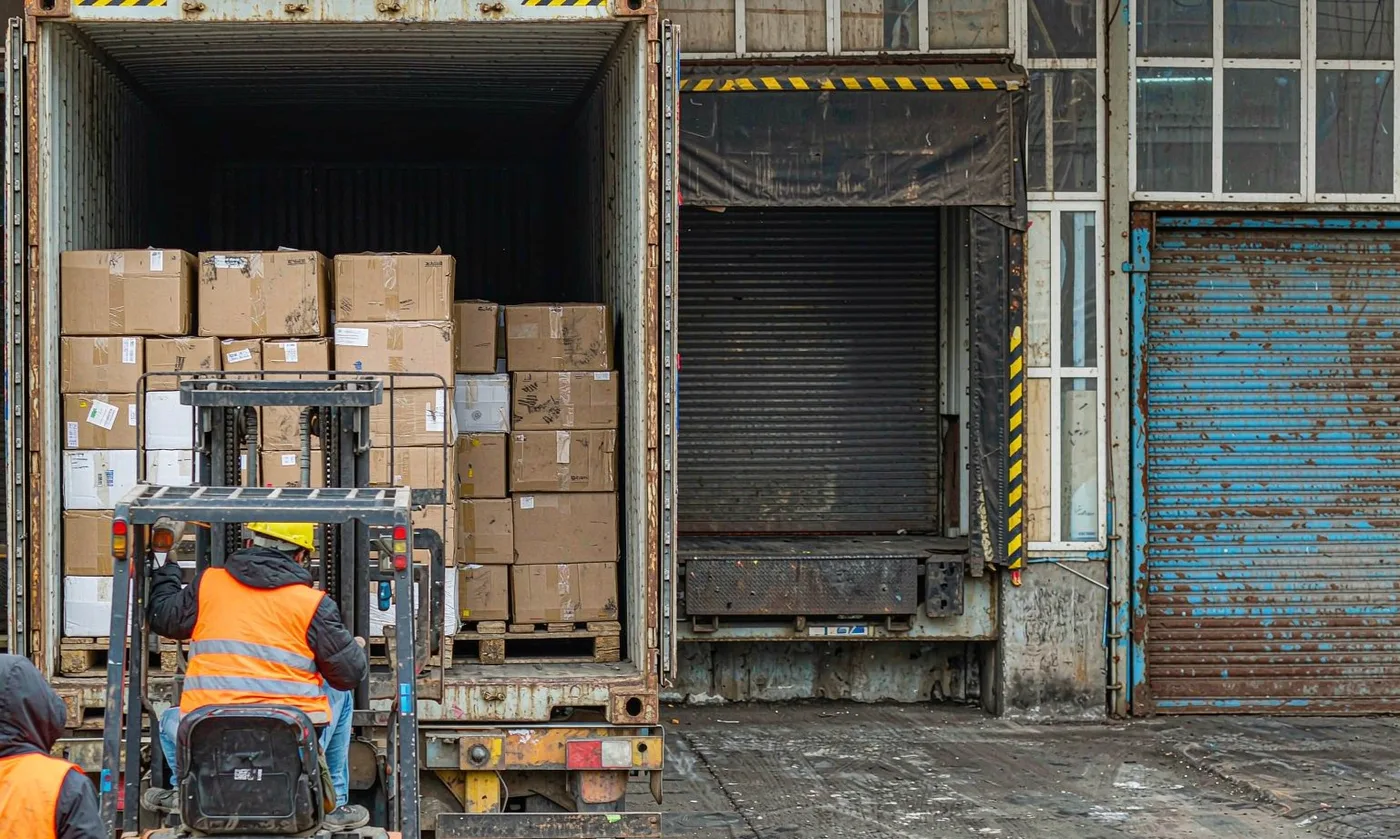
Valuation: What Customs Actually Counts as the Dutiable Value
Valuation is the least understood layer and the one with the most avoidable cost. Customs in most markets starts from the transaction value, being the price actually paid or payable for the goods, and then asks whether specific additions should be included.
The additions are where buyers get caught. Assists, meaning materials, tooling, dies or design work supplied to the producer free or at reduced cost by the buyer, are generally dutiable and must be declared. A buyer who supplies branded hardware, custom zipper pulls or a printed label roll to the supplier has made an assist, and the value of it belongs in the declared value even though it never appeared on the commercial invoice.
Royalties and licence fees payable as a condition of sale are also generally dutiable. Where a brand owner licenses a character or a mark and the supplier must pay a fee to produce the goods, that fee is part of the value. This catches own-brand programmes that use licensed artwork far more often than buyers expect, and it applies equally whether the goods move as samples or as bulk pet bag orders.
Conversely, some costs are excluded if they are itemised separately: international freight and insurance where the declared basis is FOB, and certain post-importation charges such as construction, assembly or marketing costs in the destination market. The exclusion depends on the declared basis, which is why the Incoterm on the invoice has to match the valuation method used at entry.
Related-party transactions attract the closest attention. Where the buying entity and the supplying entity are related, the transaction value must be shown to be unaffected by that relationship, usually by reference to comparable sales. Most importers in this category are unrelated and the point does not arise, but it is worth knowing before structuring anything unusual.
Declare assists proactively. An undeclared assist discovered later is treated as undervaluation, and the exposure includes back duty, interest and a penalty that is unrelated to the size of the original omission.
Declare what you supplied for free; the value you did not invoice is still value that entered the country.
Country of Origin, Marking and What the Rules Are Actually Worth
Origin has two separate jobs and buyers routinely confuse them. The first is preferential origin, which determines whether a reduced or zero duty rate applies under a trade arrangement. The second is non-preferential origin, which determines what the label must say and whether any additional measures apply to goods of that origin.
Preferential origin is only available with the correct document, usually a certificate of origin or a statement of origin on the invoice, issued by an authorised body or made by an approved exporter depending on the arrangement. The substantive test is whether the article has undergone sufficient transformation in the originating country, and for sewn bags the relevant transformation is usually the cutting and assembly of the fabric rather than its weaving. A carrier assembled in China from Chinese fabric has Chinese origin; the same design assembled in China from imported fabric may or may not, depending on the specific rule for the heading. Pet bag manufacturers in China can usually state which of the two applies, and the answer should be recorded before the certificate is requested.
Non-preferential origin drives marking. Most markets require the country of origin to be marked on the article in a legible, permanent and conspicuous way, and the marking requirements differ on the acceptable wording, the permitted location and the font size. Pet bags are usually marked with a sewn-in label, and the buyer should specify the exact wording and placement in the tech pack rather than leaving it to the supplier's habit, because a non-compliant marking is corrected at the port at the importer's expense.
Marking errors are the most common and most avoidable compliance failure in this category. Three checks prevent most of them: the wording matches the requirement exactly, the label survives the life of the article, and the marking is visible at the point of sale without unpacking.
Origin documentation also has a commercial use beyond duty. Some retail channels and some public procurement processes require a documented origin statement, and pet bag wholesale vendors who export routinely will have the certificate process already routinised, and having the certificate on file turns a two-week questionnaire into a one-day response.
Origin is worth real money through preference and costs real money through marking; both are document problems, not product problems.

Product Compliance Files That Travel Beside the Shipment
Product compliance is separate from customs compliance and is the set of files that lets the goods be sold after they have been admitted. Three regimes matter for pet carriers in the major markets, and each produces a document rather than a certificate on a wall.
In the European Union, chemical substances in articles are governed by the REACH framework administered by ECHA, and the practical obligation for an importer is to know whether any substance of very high concern above the threshold is present in the articles being placed on the market. For textile and coated articles this is answered by material-level test reports and supplier declarations, and the file should name the fabric construction actually used; the full requirement is set out under pet bag REACH compliance.
In the United States, consumer product safety obligations are enforced by the Consumer Product Safety Commission, and general-use pet articles carry obligations around substantial product hazard reporting and, where an article is marketed for children, additional requirements. Separately, California's Proposition 65 programme administered by OEHHA imposes warning obligations for listed substances, and a warning decision is a commercial judgement the importer makes rather than a test the product passes, as set out in the Prop 65 warning guidance.
Where an article makes a performance or safety claim, such as a crash-tested restraint or a load rating, the claim needs a test report behind it from a laboratory using a recognised method. A claim without a report is a liability rather than a marketing asset, and it is the fastest way to turn a good product into a recall.
Assemble the file into one folder indexed by style and material: fabric test report with report number, hardware and trim declarations, coating documentation where applied, marking artwork, and the warning text where applicable. Retailers ask for this file before listing, and a complete one shortens the onboarding process by weeks.
The file should be requested at RFQ stage and verified before the deposit, not assembled after the goods land. Chemical compliance is a property of the materials ordered, not of the shipment inspected, and pet bag manufacturers in China hold those material files rather than creating them per order.
Customs admits the goods; the compliance file is what permits them to be sold.
The Broker Handoff, Entry Filing and What to Keep Afterwards
The last stage is administrative and it is where good preparation converts into a fast clearance. A customs broker cannot fix a document set, only file one, so the handoff should happen before the vessel sails rather than after it berths.
Send the broker five things at least a week before arrival: the commercial invoice and packing list in final form, the bill of lading draft, the classification advice you already obtained, the certificate of origin, and the test report file. Sending them at arrival means the entry is filed reactively, and a reactive entry is where descriptive errors and valuation queries originate.
Give the broker a single named contact and a decision rule. When an officer asks a question, the broker needs an answer within hours, and the answer is usually a document that already exists. A buyer who has pre-authorised the broker to release the test report file and origin certificate saves a day per query.
Understand the two outcomes that follow filing. Release means the goods may move; liquidation means the entry has been finalised and the duty assessed is confirmed, which can happen weeks later. A buyer who treats release as the end of the process is surprised by a subsequent adjustment, and a buyer who tracks liquidation catches assessment errors while they are still correctable.
Reconcile the entry against the purchase order afterwards. Confirm that the quantity, value and classification filed match what was ordered and invoiced, and record any difference. This reconciliation is the cheapest audit available, and it is also how a misclassified article is discovered before it has been imported twenty times.
Retain the file for the statutory period. Classification challenges and compliance questions arrive years later, and the importer of record carries the burden of proof.
Prepare the handoff before the vessel sails and clearance becomes a formality; prepare it at the berth and it becomes a negotiation.
Building a Landed Cost Model That Survives Contact With Reality
A landed cost model is a planning tool and it fails in predictable ways. Four disciplines make it useful rather than decorative, and all four are cheap.
Separate the layers and label them. Put ex-works or FOB cost, inland and origin charges, freight and insurance, duty, consumption tax, brokerage and handling, and an allowance for damage and shrinkage on separate lines. A single blended multiplier hides the fact that freight is volatile and duty is not, and it makes the model useless for answering what-if questions.
Use ranges for the volatile lines and point estimates for the fixed ones. Freight on a bulky article swings with the season and with bunker costs; duty does not move once the classification is settled. Modelling both as single figures produces a number that looks precise and behaves badly.
Add a document-error allowance. A buyer with no allowance is assuming every shipment clears first time, and the first one that does not will consume the entire contingency on demurrage. One to two percent of cargo value is a reasonable planning figure for a new import lane, and on a pet bag moq of 500 pieces per colourway it is small enough to be invisible per unit and large enough to matter per container.
Model the cash timing, not just the total. The pet bag moq sets the order value, and the order value sets the duty and tax payment that lands weeks before any sale. Duty and tax are paid at entry, freight is often paid before or at arrival, and the supplier balance is paid against documents, which means the cash peak lands weeks before the first retail sale. A profitable programme can still break a cash cycle, and the model should show the peak.
Finally, re-run the model after the first shipment with actual figures, and set the pet bag wholesale price you assumed against the landed figure you actually achieved. Brokerage invoices, terminal charges and actual freight reveal which assumptions were optimistic, and the second model is usually accurate enough to set retail price with confidence.
A landed cost model is not there to be right on the first try; it is there to be wrong in a way that is visible and correctable.
Why brands source here
- Pet bag programmes run since 2014; founding team in sewn goods since 2004
- SGS-verified production floor of 4,950 m² with 137 workers across 7 lines
- Monthly capacity of 200,000 units, audited to BSCI and ISO 9001
People Also Ask
What documents are needed to import pet carriers from China?
Nine: commercial invoice, packing list, bill of lading, certificate of origin, export declaration, material test reports, any treatment or material declaration, insurance certificate, and the entry documents filed by a customs broker. Invoice and packing list must agree exactly.
How much duty applies to pet carriers imported from China?
It depends on classification and destination. Soft textile carriers typically attract a low to mid single-digit rate in the EU and UK and a moderate to high-teens rate in the US, with preferential programmes sometimes reducing it to zero.
How are pet carriers classified for customs purposes?
By construction and the material giving the article its essential character. A soft textile shell and a rigid moulded shell fall in different headings, and a wheeled carrier with a telescopic handle is often treated as travel goods.
Do I need a certificate of origin for pet bags?
You need one to claim a preferential duty rate, and it must be obtained before loading. You also need a correct non-preferential origin marking on the article itself, which is a separate requirement enforced at the point of sale.
What is dutiable value and what must be added to it?
It starts from the price actually paid or payable and generally includes buyer-supplied assists such as tooling, hardware or artwork supplied free or at reduced cost, plus royalties or licence fees payable as a condition of sale.
Who files the customs entry for an imported pet bag shipment?
A licensed customs broker in the destination market, working from documents the importer provides before arrival. The broker files rather than fixes, so the document set must be consistent before it reaches them.
Frequently Asked Questions
Is duty or VAT the larger cost when importing into Europe?
VAT is considerably larger, applied at 17-27% on the duty-inclusive value against duty of a few percentage points. It is usually recoverable by a registered importer, which is why the accounting treatment matters more than the headline rate.
What is an assist and why does it affect duty?
An assist is anything the buyer supplies to the producer free or at reduced cost, such as branded hardware, custom pulls, printed labels or tooling. Its value is generally dutiable and must be declared even though it never appears on the commercial invoice.
Can I ask a supplier to declare a lower value to reduce duty?
No. Undervaluation is the most heavily penalised customs offence and exposure includes back duty, interest and penalties across past entries. The correct lever is classification and origin, both of which are legitimate.
What happens if the invoice and packing list do not match?
The discrepancy invites a physical examination, which costs days of demurrage and terminal charges that usually exceed any duty at stake. Reconcile carton count, piece count, weights and description before dispatch.
How far in advance should I give documents to my broker?
At least a week before arrival, and ideally before the vessel sails. Filing reactively at the berth is where descriptive and valuation errors originate, because there is no time to obtain the correct document.
What is the difference between release and liquidation?
Release permits the goods to move. Liquidation finalises the entry and confirms the duty assessed, often weeks later. Tracking liquidation is how an assessment error is caught while it can still be corrected.
Do pet carriers need chemical compliance documentation?
Yes in the EU, where the REACH framework requires importers to know whether substances of very high concern above threshold are present. This is answered by material-level test reports naming the fabric construction actually used.
What are the marking requirements for country of origin?
Most markets require the origin to be marked legibly, permanently and conspicuously on the article. Specify exact wording and placement in the tech pack rather than relying on supplier habit, because corrections at the port are at the importer's expense.
Is air freight ever sensible for pet bag consignments?
Only for samples and for urgent top-up quantities. Pet bags are bulky and low in density, so air freight on a full order is often several times the manufacturing cost per unit and destroys the economics of the programme.
How should I plan the cash timing of an import?
Model it as a peak rather than an average. Duty, tax, freight and the supplier balance are commonly all payable within a few weeks of each other, well before the first retail sale, and that peak breaks more import programmes than margin does.
Does the supplier control any part of the import process?
On FOB terms, only export formalities and loading. On DDP terms they control the whole chain and price the risk of doing so, which is why FOB and DDP quotes cannot be compared on headline price alone.
How long should import records be kept?
For the statutory retention period in the destination market, commonly several years. Classification challenges and compliance questions arrive long after delivery, and the importer of record carries the burden of proof.
Talk to QUANZHOU JUNYUAN BAGS about a wholesale pet bag order: MOQ 500 pieces per colourway, samples in 6-10 working days, bulk production in 35-50 days under AQL 2.5 inspection.
Get a free quote Request a sample