Pet Bag Shopify DTC: Shipping and Packaging Specs
A direct-to-consumer pet bag business lives or dies on its packed shipping profile, because the brand pays outbound freight on every unit rather than amortising it across a pallet. A move from 9 cm to 6 cm packed thickness typically cuts parcel cost by USD 0.80-2.60 per order depending on zone. Unboxing materials add USD 0.45-1.40 against a return-rate reduction of three to six points.
Direct-to-consumer selling removes every intermediary between the specification decision and the customer's hands, which is liberating and unforgiving at once: unboxing quality, carrier performance and return handling all sit inside one margin. Our production team supports pet bag programs at MOQ 500 pieces per colourway, with samples in 6-10 working days and bulk production in 35-50 days after approval, inspected to AQL 2.5 before release, and the specification choices made then decide the freight cost the store will carry for years. Five areas determine the outcome: packed dimension and carrier weight thresholds, the insert and presentation layer, variant data quality behind the size chart, the true cost of a returned unit, and how the first purchase is structured into a second one. Direct channels reward brands that resolve those five before the first carton ships, because fixing them later means repacking inventory that has already landed and already been paid for.
Bulk pet bag orders consolidate best when carton dimensions are fixed early, and Market & Business Strategy decisions are what fix them. Bulk pet carrier orders that mix sizes inside one carton save freight but complicate the packing line, so the trade-off should be priced rather than assumed.
What Direct Selling Demands From the Pet Bag Pack
In wholesale, packaging is designed for pallets. In a direct channel, packaging is designed for a single parcel moving through a carrier network to a doorstep, and every design decision has a freight consequence. That reframing is the first thing most buyers have to make when they launch their own store alongside an existing wholesale business.
The most immediate requirement is a defined packed profile. Length, width and height must be known to the centimetre and consistent across every unit, because carriers bill on bands and the store quotes shipping from whatever profile is entered. An inaccurate profile systematically under-quotes or over-quotes every order the store ever takes.
The second requirement is durability without bulk. A pet bag must survive conveyor sortation, stacking under other parcels and the occasional wet porch, but the protection cannot add two centimetres of height. That pushes toward engineered solutions - corner protection, folded base boards, mailers sized to the compressed unit - rather than toward thicker cartons.
The third requirement is presentation consistency. Unlike wholesale, where cartons are opened by store staff, here the customer opens everything, and the interior arrangement is part of the product. Specifying how the bag is folded, where the strap sits and what the customer sees first belongs in the packing instruction.
The fourth requirement is the return path. A unit that cannot be refolded into its original presentation will, when returned, arrive unsellable. Direct channels therefore want packaging designed for reopening and refolding, which is a different specification from shrink-wrapped retail presentation.
A citable sentence for planning documents: in a direct pet bag business, every centimetre of packed height is a recurring charge against every future order, which makes the packing instruction a financial document rather than a warehouse one. Buyers who review it alongside the cost sheet, rather than after the first hundred orders have shipped, usually recover the equivalent of a full margin point before the season ends, and they do it without touching the price or the product.
Unboxing as a Specification Rather Than an Afterthought
Unboxing content is often treated as a marketing expense, but its return is measurable in two places: repeat purchase rate and return rate. A customer who understands how to assemble and adjust the product within ninety seconds returns it far less often than one left guessing, and occasionally those two costs outweigh the need for presentation.
The insert layer should therefore be specified by function. A single folded card performing four jobs - assembly guidance, size confirmation, care instruction and a route back to support - outperforms three separate cards, simply because three cards usually end up in the bin unread.
Material choice inside the parcel is the next decision. Tissue wrapping adds perceived value at low cost but slows pack-out; branded mailers reduce pack-out time and give stronger branding per dollar, though they do less for perceived care. Most programs converge on a printed mailer plus one tissue wrap plus a single card.
Print quality then becomes a specification item. Cards printed on uncoated stock photograph better under warm light but scuff; coated stock resists scuffing but shows glare. Either is acceptable, but the choice should be made deliberately and approved against physical samples rather than digital proofs.
Finally, unboxing materials need their own supply plan. Inserts, cards and mailers are printed to their own minimums and lead times, and they are the most common cause of a delayed launch where the product is ready and the packaging is not. Order these against the same calendar as the goods.
Brand trust is also built by what is absent. Over-packaging in pet categories draws criticism quickly, and a right-sized mailer with minimal fill frequently photographs better than an elaborate layered reveal, particularly once customers begin posting their own unboxing images and comparing them across brands.
Recyclability has become part of that judgement. A mailer carrying a recognised fibre recovery marking and a card printed on recycled stock costs little and answers the question many customers now ask before purchase rather than after.
Shipping Profiles, Zones and Carrier Thresholds
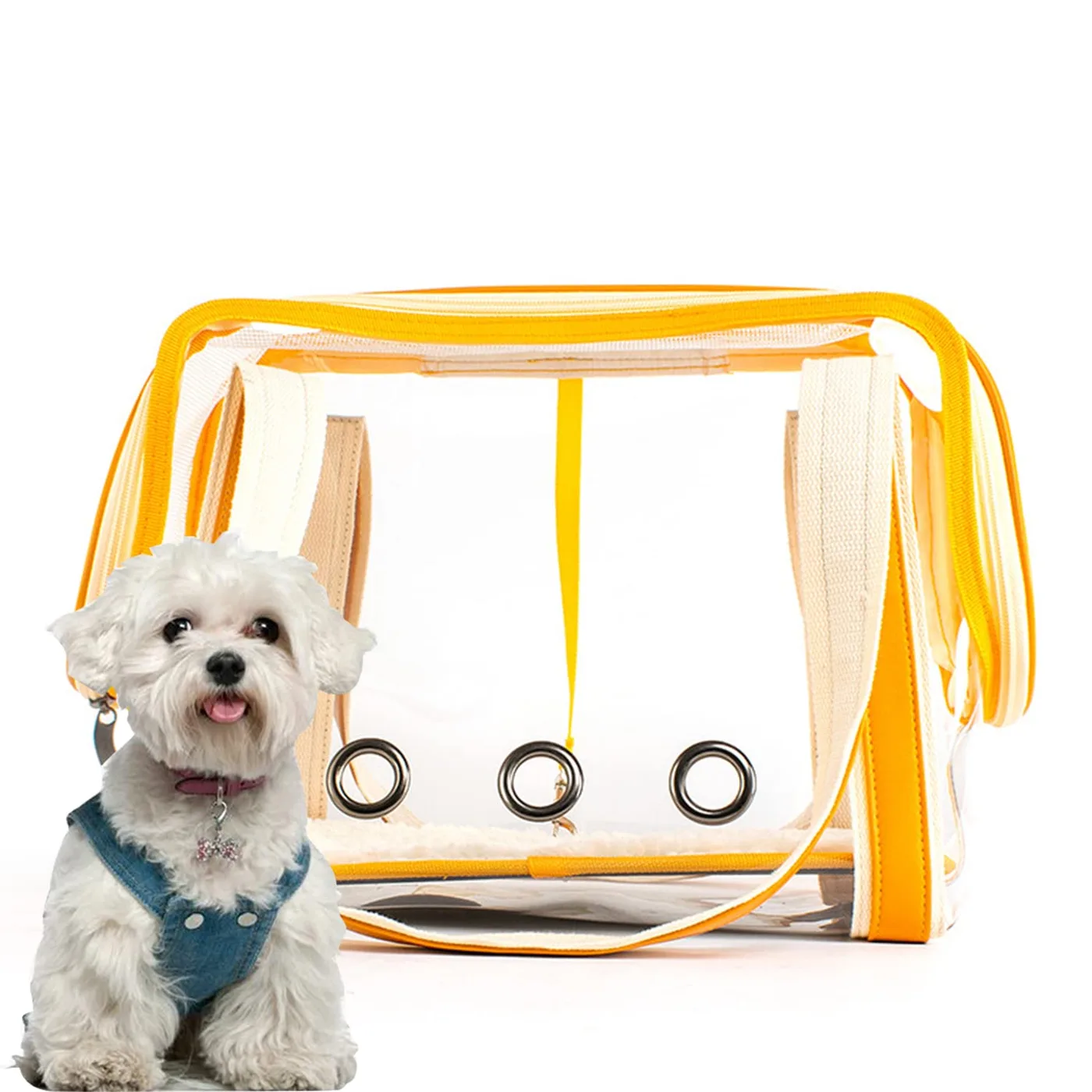
Carrier pricing is banded, and the bands have hard edges. A parcel measuring 35 cm on its longest edge may sit one price below the same unit packed at 36 cm, which means the difference between profit and loss on a cheap SKU can be ten millimetres of packed bulk.
The practical method is to identify the thresholds first, then design to stay under them with margin. Where a zone-based network applies its own dimensional divisor, the relevant figure is the billed weight rather than the actual one, and it should be calculated per variant rather than once for the range.
| Packed profile | Billed band | Parcel cost | Notes |
|---|---|---|---|
| 45 x 34 x 12 cm | Oversize tier | USD 12.40 | Loose fold, heavy void fill |
| 42 x 32 x 9 cm | Standard upper | USD 8.90 | Compressed fold |
| 38 x 30 x 6 cm | Standard mid | USD 6.30 | Flat fold, strap tucked |
| 38 x 30 x 6 cm, regional zone | Standard mid | USD 5.10 | Shipped from nearer node |
The last row illustrates the second lever available to a direct brand: ship-from location. Splitting inventory between two regional nodes converts a long-zone shipment into a short-zone one, saving real money even after the carrying cost of a second stocking point is counted.
Free shipping thresholds should be set against these numbers rather than against competitors. A threshold set below the blended cost of freight plus pick-and-pack quietly converts every order below it into a loss, and pet bags, being bulky, are the category where this most often happens.
Carrier mix matters as well. Networks differ in how they treat soft-sided parcels, and a bag that is cheap on one network can be expensive on another due to how their dim divisor is applied. The cost comparison should also include the stock-out penalty. In a direct channel every unavailable variant wastes the advertising that produced the visit, so the practical arithmetic weighs unit price against the probability of actually having stock when demand arrives rather than against unit price alone.
Variant Data, Size Charts and Merchandising Structure
A pet bag catalogue in a direct store typically fails not because the product is wrong but because variant structure is confused. Size and colour sit in one menu, a bundle shares a parent listing, or two colourways are sold under a single image, and each of those decisions pushes customers toward the wrong purchase.
The cleanest structure treats each physical variant as its own row with its own identifier, image set and dimension set, grouped under a parent product for merchandising. Bundles get separate identifiers, because they are physically different shipments and behave differently in inventory and returns.
Size charts then need real numbers. Publishing a recommended animal weight range plus internal floor measurements plus usable height gives the customer enough to self-select. Publishing a breed list does not, because breeds vary widely and the customer's mental image may be wrong.
The dimension set itself should come from approved samples rather than drawings. Allowing a tolerance of several millimetres is normal in sewn goods, so the published figure should be a conservative one that every unit will meet rather than a nominal one that half of them will miss.
Photography must match variant exactly. A size medium photographed on the large listing is the fastest route to a size-related return, and unlike a marketplace, the direct store bears the full return cost along with the reputational hit.
Finally, availability should be honest. Direct stores convert far better when a variant that is genuinely unavailable is shown as unavailable rather than back-orderable with a vague promise, because pet purchases are frequently time-specific around travel or a new animal.
Attribute completeness deserves its own check before every launch. Missing weight limits, care instructions or composition fields do not merely look untidy; they remove the information customers use to self-select, and every empty field quietly converts into either an abandoned basket or a size-related return some weeks later.
Photography-Driven Specification Requirements
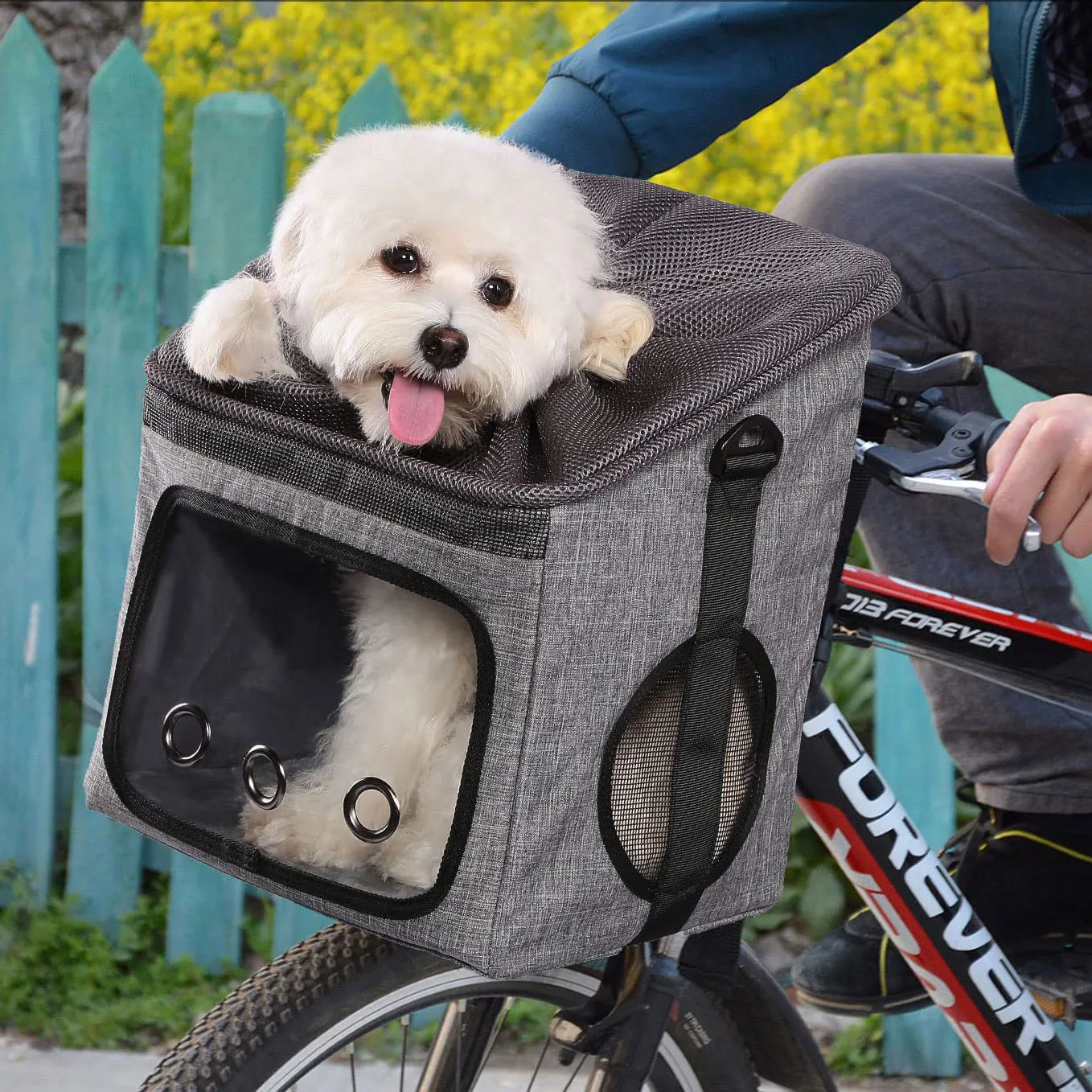
Direct store imagery carries more conversion weight than any other element, and it imposes requirements that reach all the way back into product specification. Nothing reveals this faster than a pet bag shot close against a plain background, where the construction details a shopper never noticed on a shelf become the deciding factor.
The first requirement is dimensional honesty in the frame. Any image should include one shot against a measurable reference, because customers estimate size from context and estimate badly when none is offered. Manufacturers can support this by shipping each new SKU with a photographed measurement sheet produced from the approved sample.
The second requirement is finish consistency across units. Topstitch spacing, hardware alignment and print placement need to be consistent at sample level and maintained in bulk, because minor variation that passes inspection still produces visibly different units in side-by-side imagery after customers compare unboxing photos.
The third requirement concerns colour rendering. Textile dye lots shift slightly, and if a production run drifts from the approved reference, imagery taken earlier no longer matches delivered product. Holding a signed reference swatch and comparing every bulk lot against it under standard lighting prevents that drift from reaching photography.
The fourth requirement is what the camera sees inside the bag. Linings, seam tape and base boards are photographed constantly because owners photograph their animal using the product. Specifying interior finishes to the same cosmetic standard as the exterior is a small cost with disproportionate content value.
Material documentation supports all of this. Where composition and chemical safety of textiles are claimed, credible substantiation comes from recognised schemes such as OEKO-TEX alongside consumer product expectations overseen in the United States by the Consumer Product Safety Commission.
Return Economics in a Direct Pet Bag Channel
A returned unit in a direct channel costs more than most founders model. It carries outbound freight already spent, return freight frequently paid by the brand, assessment labour, repacking or write-off, and the customer service time that sits around it. Depending on price point, one return can consume the contribution of three or four successful orders.
The dominant cause is again size, followed by animal acceptance, followed by expectation gaps about structure and support. None are defects, and all respond better to disclosure than to engineering.
The practical hierarchy of fixes starts with measurement disclosure, moves to fit charts tied to animal weight, then to imagery showing real animals at the edges of the weight range rather than only at the comfortable middle. Each step costs less than the cheapest possible return.
Repackability is the second control. A bag that can be refolded and returned to its mailer with the original inserts can be resold at near-full value; one that arrives crushed or with a lifted label becomes clearance stock. Specifying a resealable mailer and minimal, repositionable inserts directly protects resale value.
Exchange rather than refund should also be encouraged structurally. A customers who wants a different size is worth retaining, and making the exchange path cheaper than the refund path converts a loss into a retained order plus one additional shipment.
Finally, the returned-unit data belongs in product development. Tracking why units come back and feeding that into the next tech pack revision is the only mechanism by which the return rate structurally improves season after season.
Return window length deserves the same scrutiny as return causes. A generous window reduces purchase hesitation and therefore lifts conversion, but it also lengthens the period during which inventory is financially in limbo. Most direct pet bag programs settle somewhere between thirty and sixty days, and the right answer depends entirely on how fast the brand actually resells returned units.
Bundles, Accessories and Second-Purchase Mechanics
Direct pet bag brands rarely make their margin on the first unit; they make it on the second purchase. The accessory and consumable layer attached to a pet bag is what turns a one-time purchase into a repeat relationship, and it can be planned at production stage rather than improvised at marketing stage.
Four accessory categories work well with pet bags. Washable liners and base pads are the strongest, because they wear out and therefore genuinely replace. Travel accessories such as collapsible bowls and waste bag dispensers sit naturally in bags used for transit. Identification and travel document holders fit airline-oriented purchases. Storage and organisation accessories suit customers who already own a bag.
All of them should be specified to ship together. Accessories that arrive in their own separate parcel introduce a second freight cost and a reconciliation problem, whereas items designed to nest inside the bag ship free inside the original shipment. Specifying the nest dimensions early, so that the accessory range is engineered against the interior volume of the stamped pattern rather than found afterwards, is what keeps that saving available across the whole line rather than on a single lucky combination.
Bundles at the point of first sale different from cross-sell afterwards. A bundle built into the original carton saves the second shipment entirely and is the cheapest form of increased basket value available to a new brand.
Replenishment timing then follows usage cycles rather than campaigns. Washable liners realistically need replacement every few months in heavy use, so a reminder keyed to purchase date outperforms a generic seasonal promotion.
The one caution is specification discipline. Every accessory adds a supply line, a minimum quantity and a quality risk, and new brands that add five accessories in year one usually spend year two rationalising them.
Labelling, Documentation and Market Access in Direct Channels
A direct store removes the retailer that would otherwise police documentation, which places the whole compliance burden on the seller. Pet bags sit at an awkward intersection of categories, so the labelling set tends to be larger than new brands expect.
Origin marking comes first and must be legible at the point the customer receives the unit. Where a poly bag is used inside a mailer, origin marking printed on a sewn label rather than on a removable hang tag survives both retail and direct pathways without rework.
Composition labelling follows, and it should match what the marketing copy claims. A listing describing a recycled shell while the label states a different composition creates an advertising accuracy problem that is cheap to avoid and expensive to defend.
Care labelling must be truthful rather than optimistic. Writing machine washable when only the liner detaches produces returns, negative reviews and occasionally a damaged product claim. The care instruction written into the tech pack should be the same one printed on the label and shown on the listing.
Safety documentation is the fourth area. Where a pet bag incorporates structural elements, load-bearing components or accessories that may attract additional scrutiny, test evidence should be generated during development rather than after a complaint. Buyers selling into multiple regions should expect the documentation set to differ between them.
The final area is traceability. Keeping a per-lot record linking production batch, inspection report and shipping documents allows a direct brand to respond to a customer query in hours rather than weeks, and it is the cheapest form of liability management available to a business that sells without a retailer standing in between.
A single citable rule summarises it: in a direct channel, the label is the least expensive proof you will ever buy, so make it agree with everything the page says.
Cash Flow Against Inventory and Seasonal Buys
A direct channel ties up cash differently from wholesale. Wholesale converts inventory into receivables on known terms; a direct store converts inventory into cash gradually, and only if the traffic arrives. The inventory commitment therefore has to be sized against realistic sell-through rather than against enthusiasm.
The first discipline is buying against a proven conversion assumption. New stores convert somewhere around one to two percent of sessions on considered pet purchases, and assuming more produces inventory that sits. A first buy should be sized to the lower end of credible, even when the lower end feels pessimistic.
The second is variant concentration. Spending the first buy across six colourways guarantees that four of them underperform while the winners stock out. Concentrating into two strong colourways, then extending once real demand data exists, produces less dead stock and a faster learning loop.
Third, the buying calendar has to sit ahead of the selling calendar. With bulk production at 35-50 days plus transit and customs, a Q4 launch is already a mid-year purchase commitment. Missing that window is a common and expensive first-year mistake.
Fourth, partial shipment strategies preserve cash. Taking half a production order on the first vessel and holding the balance for a later one costs slightly more per unit but keeps working capital available for the advertising that actually drives sell-through.
Finally, the cost of a stock-out should be priced correctly. In a direct store it is rarely just the lost order; it is the advertising spend that produced a click to an unavailable product, and that combination is the single most expensive outcome in the channel.
Production capability
- SGS-verified production space of 4,950 m², 149 machines, 7 assembly lines
- Pet bag output since 2014 from a 137-person team
- 200,000 units shipped monthly under BSCI and ISO 9001 systems
People Also Ask
What makes a pet bag expensive to ship direct?
Volume rather than weight. Soft pet bags bill on dimensional weight, so packed profile drives parcel cost more than gram weight does.
How do baseline expectations for shipping profit arise?
They do not. Pet bags are bulky relative to price, so a free-shipping threshold must be set above blended freight plus pick-and-pack cost rather than copied from competitors.
Should more than one carrier be used?
Testing two networks over a month of real orders is worthwhile, because dimensional divisors and soft-parcel handling differ materially between them.
Does splitting inventory between regional nodes save money?
Frequently. A nearer origin converts long-zone rates to short-zone rates, and the saving often exceeds the carrying cost of the second stocking point.
How often should size charts be reviewed?
Whenever a pattern or dimension set changes, and at least once per season against real return reasons rather than against drawings.
What is the most expensive mistake in a direct pet bag store?
Advertising a variant that is out of stock. It loses the order and wastes the acquisition spend that produced the click.
Frequently Asked Questions
Why does packed thickness matter so much in direct selling?
Every carrier prices on bands, and a few centimetres of height can move a parcel up a tier. Unlike wholesale, the brand pays that cost on every single order.
How much should unboxing materials cost per order?
Typically USD 0.45-1.40. Judged purely on materials it looks expensive; judged against a three-to-six point reduction in returns it usually pays back.
Should size charts use breed lists or measurements?
Measurements with a recommended animal weight range. Breeds vary too widely for a breed list to predict fit accurately, and internal floor dimensions let customers self-select.
What is the most common variant structure mistake?
Mixing size and colour into one menu or selling bundles under the same identifier as the single unit. Each physical variant and each bundle needs its own row and image set.
Where should product dimensions be taken from?
From approved physical samples, using a conservative figure every unit will meet rather than the nominal drawing dimension.
What does one returned pet bag actually cost?
Outbound freight already spent, return freight, assessment labour, repacking or write-off, and support time. It commonly consumes the contribution of three or four successful orders.
Should exchanges be made easier than refunds?
Yes. A size-driven return is often a retained customer, so making the exchange path cheaper than the refund path converts a write-off into an order plus one extra shipment.
Which accessories attach best to a pet bag purchase?
Washable liners and base pads first, because they genuinely wear out. Travel accessories, document holders and organisation items follow.
Should accessories ship separately?
Rarely. Items designed to nest inside the bag ship free inside the original parcel, avoiding a second freight cost and a reconciliation problem.
How should a first inventory buy be sized?
Against the lower end of credible conversion assumptions, concentrated into one or two strong colourways rather than spread across six.
How far ahead must a Q4 purchase order be placed?
Roughly six months, allowing for approval, a 35-50 day bulk schedule, transit and customs. Missing that window is a common first-year error.
Is splitting the production shipment worth the extra freight?
Often yes. Taking half the order on the first vessel preserves working capital for advertising, which is what actually drives sell-through.
Talk to QUANZHOU JUNYUAN BAGS about a wholesale pet bag order: MOQ 500 pieces per colourway, samples in 6-10 working days, bulk production in 35-50 days under AQL 2.5 inspection.
Get a free quote Request a sample